
At a flea market off North Eldridge, the drum calls the dancers in, and the bleachers fill with everybody else.
By Jim Towers, M.J.A., J.D. | Photographs by Jim Towers
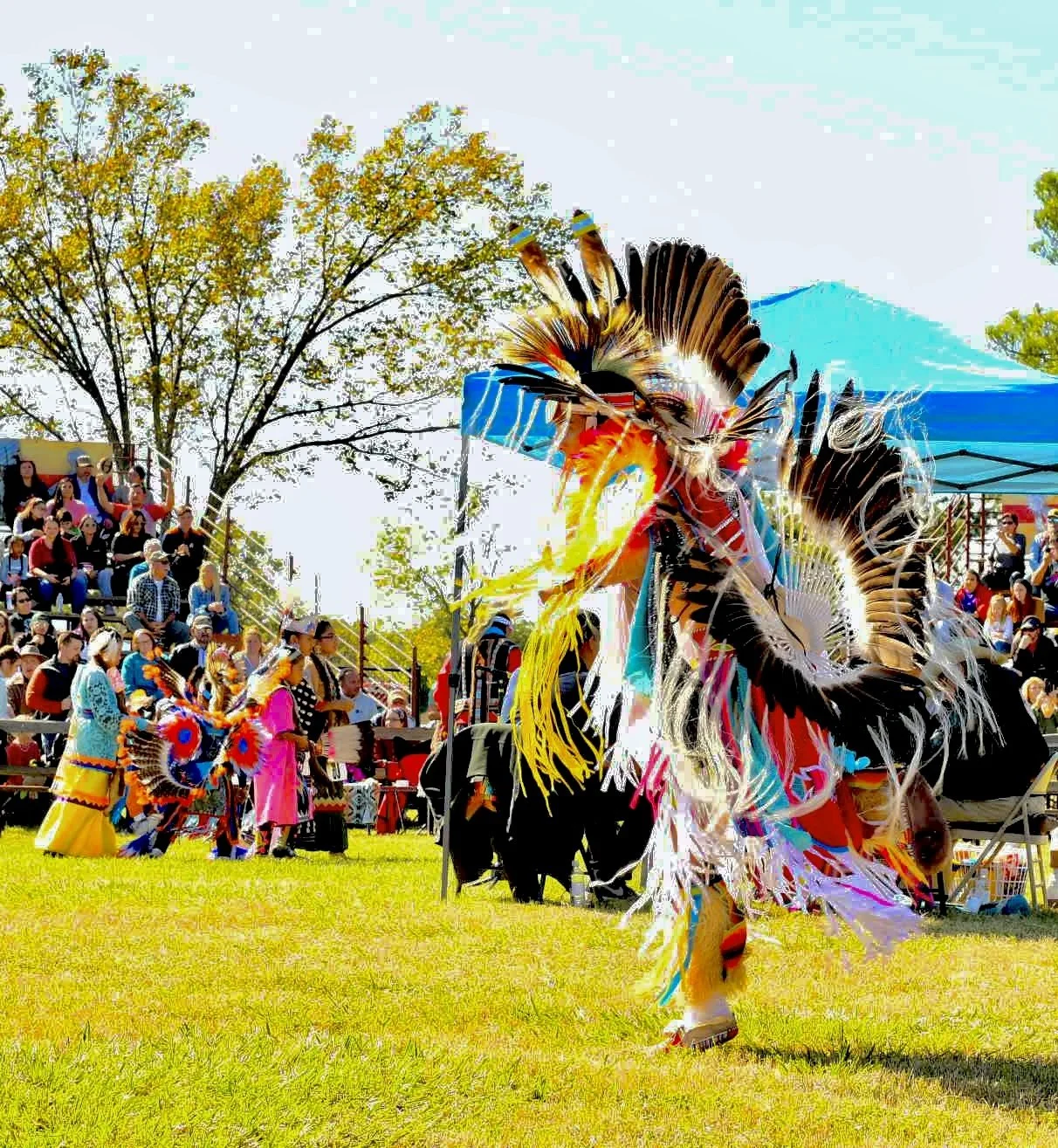
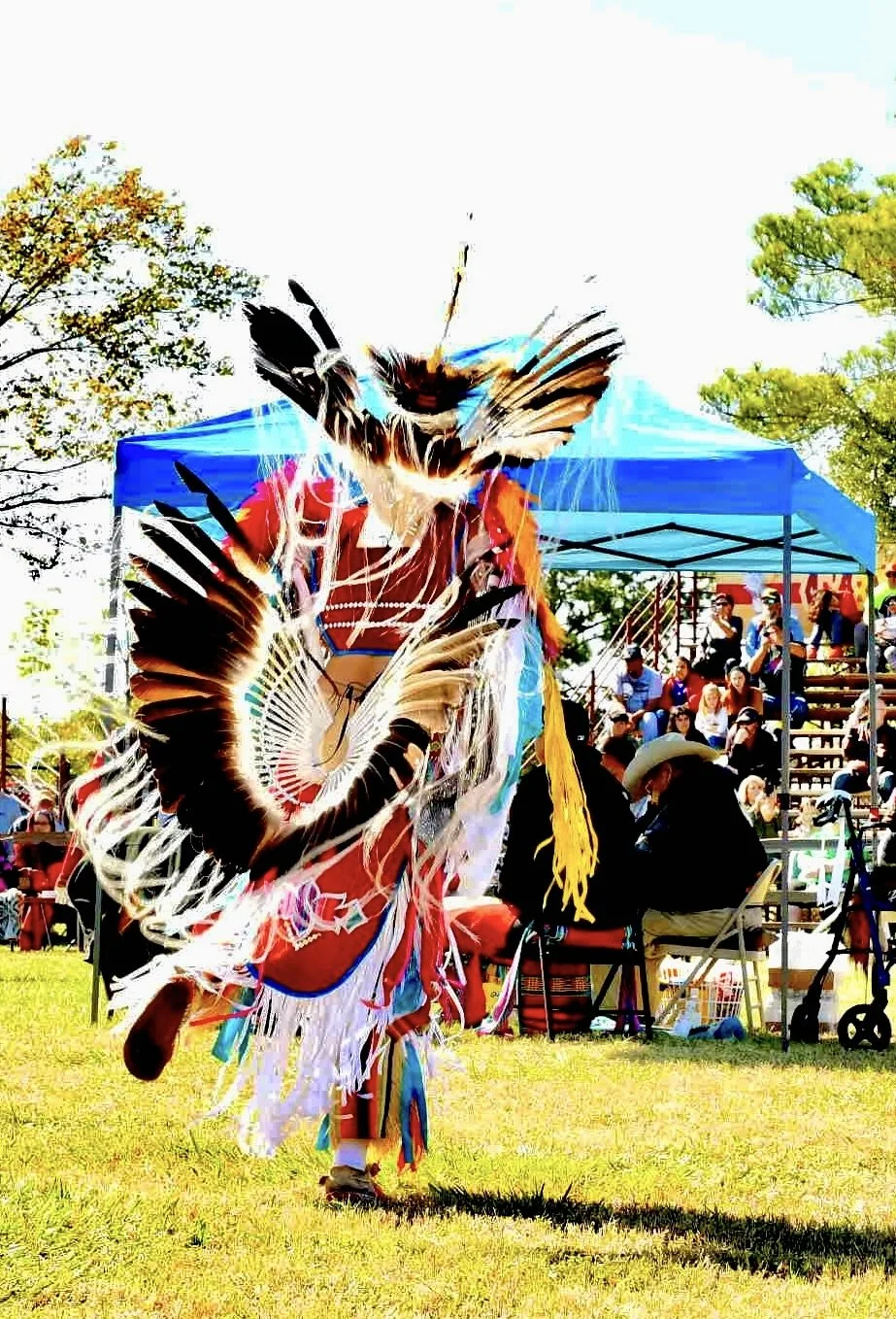
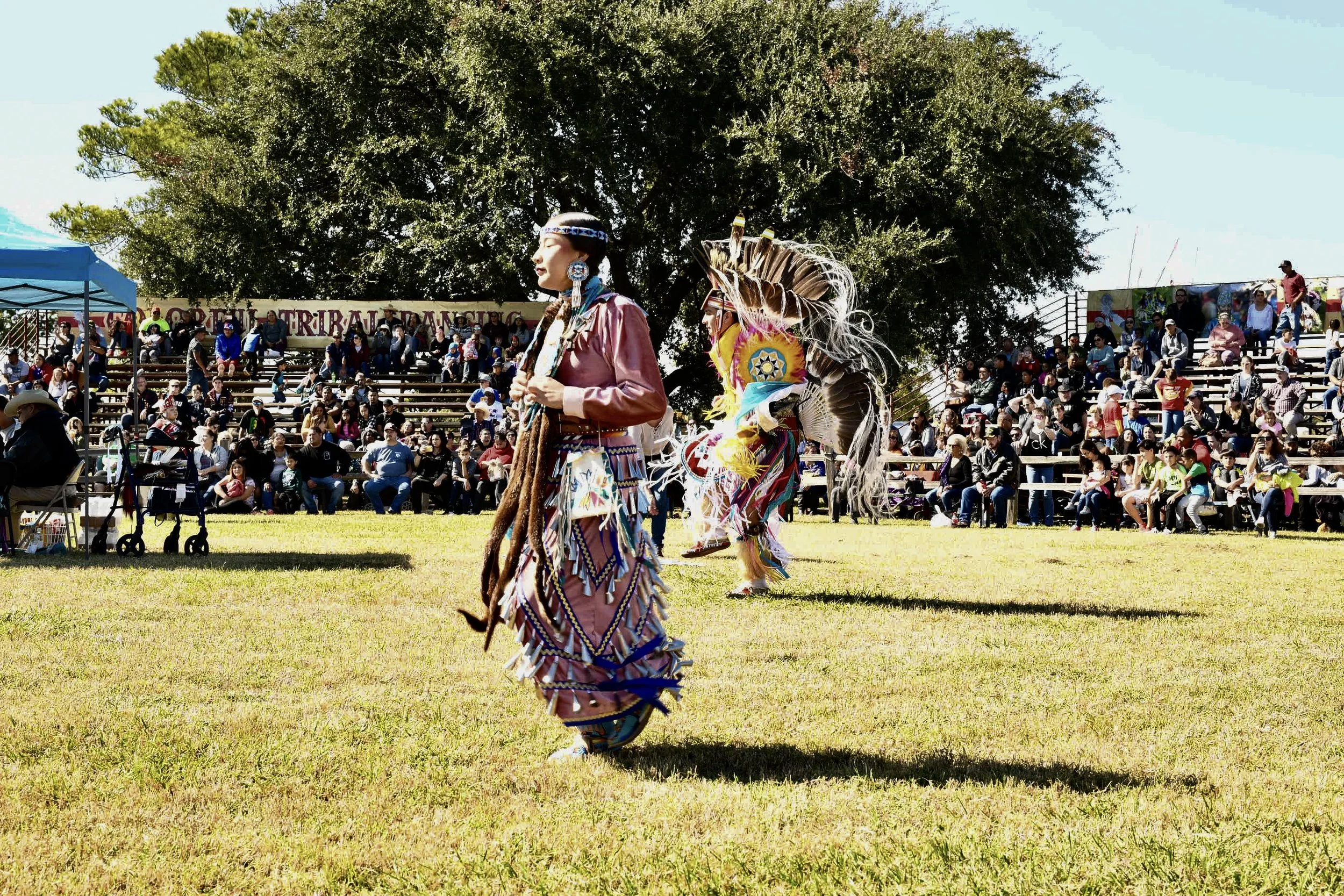
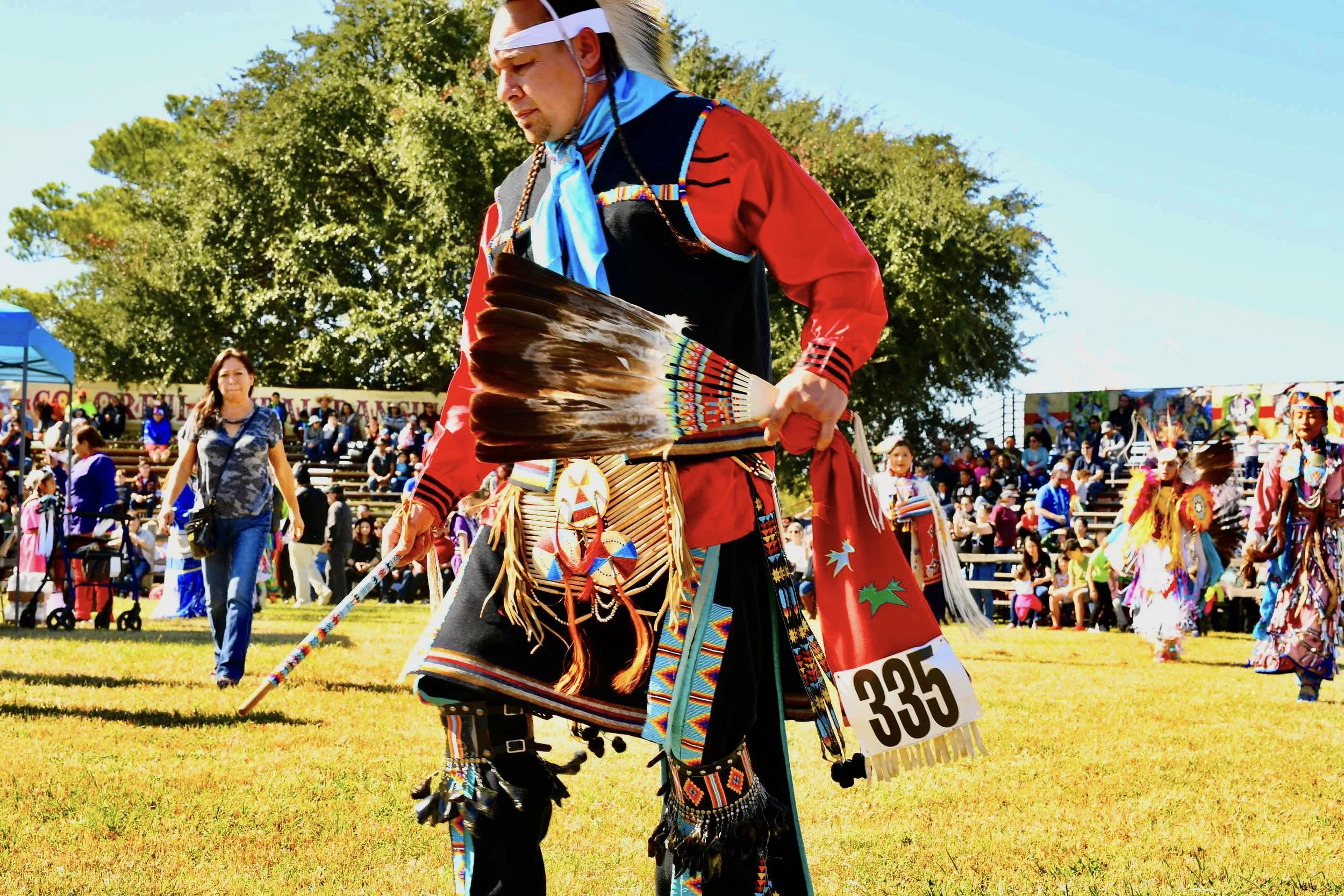
A dancer turns in front of the bleachers at the Traders Village Native American Pow Wow in Houston.
The banner over the bleachers tells you what the afternoon is supposed to be. Traders Village Presents: Indian Dancing • Arts & Crafts • Indian Tacos & More! Below it, in letters big enough to read from the parking lot: NATIVE AMERICAN POW WOW.
It is an honest sign, as far as it goes. There are arts and crafts. There are Indian tacos. There are rides, and a thousand vendor stalls, and a parking fee, because this is Traders Village on North Eldridge, the big open-air market off 290 where Houston goes on weekends to buy tools, tube socks and things it did not know it needed.
But the sign leaves out the drum.
The drum sits at the edge of the arena grass, ringed by folding chairs. One of the chairs is an Academy camp chair. A can of soda rests in the grass by somebody’s boot. The men around the drum are dressed the way men dress on a cool Saturday in Houston — a red T-shirt, a ball cap, a dark windbreaker — and one of them wears a breastplate of long white bone pipes over a red shirt. A few feet away the MC stands with a microphone in one hand and a sheet of paper in the other, working the program.
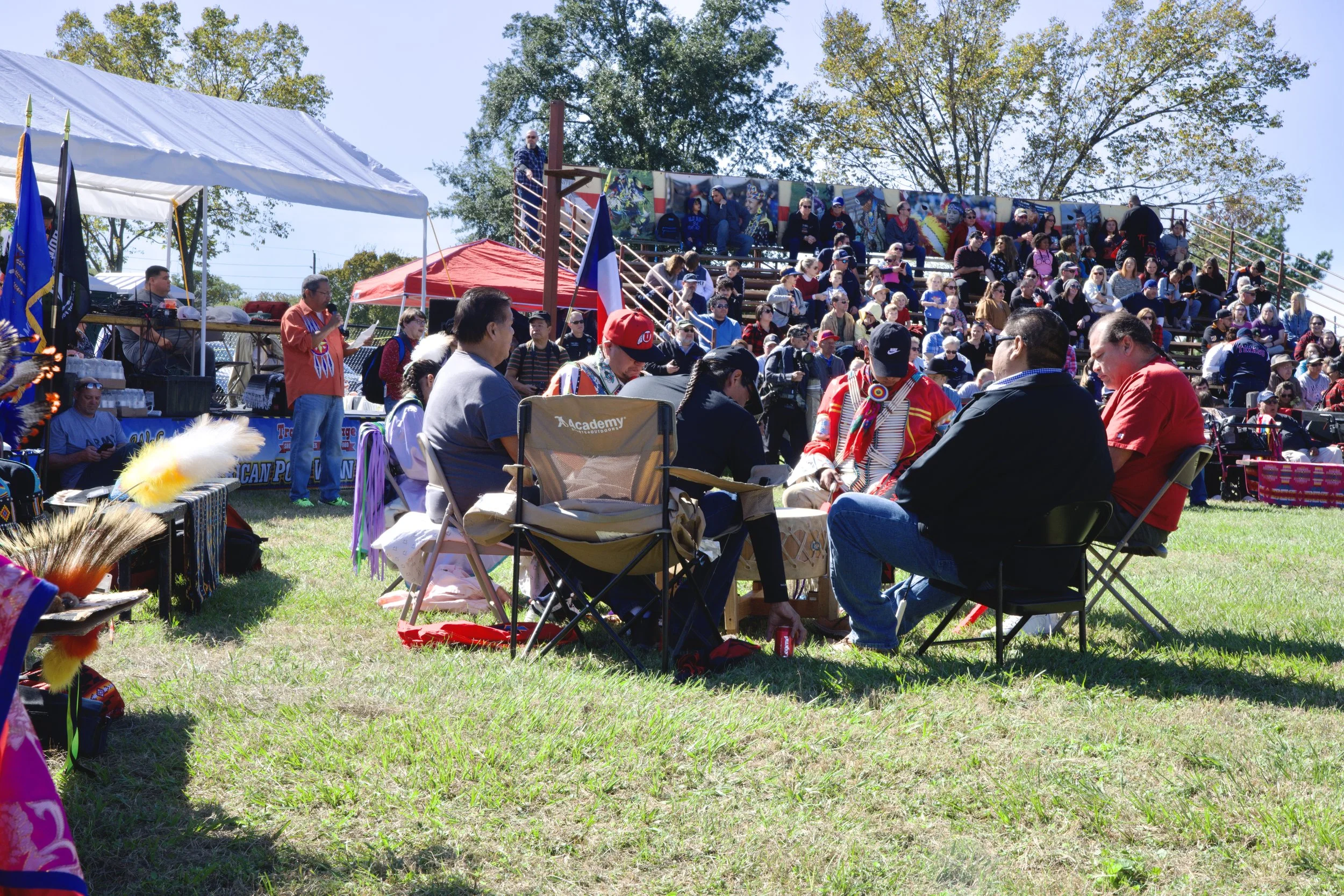
Nothing about that scene is staged for the bleachers. It is the least photogenic thing in the arena, and it is the reason everything else happens. When the drum starts, the grass fills up.
The arena
The Traders Village powwow has been held every November for more than three decades. The 2021 edition was billed as the 31st annual; the 2024 edition, the 34th. Admission is free.
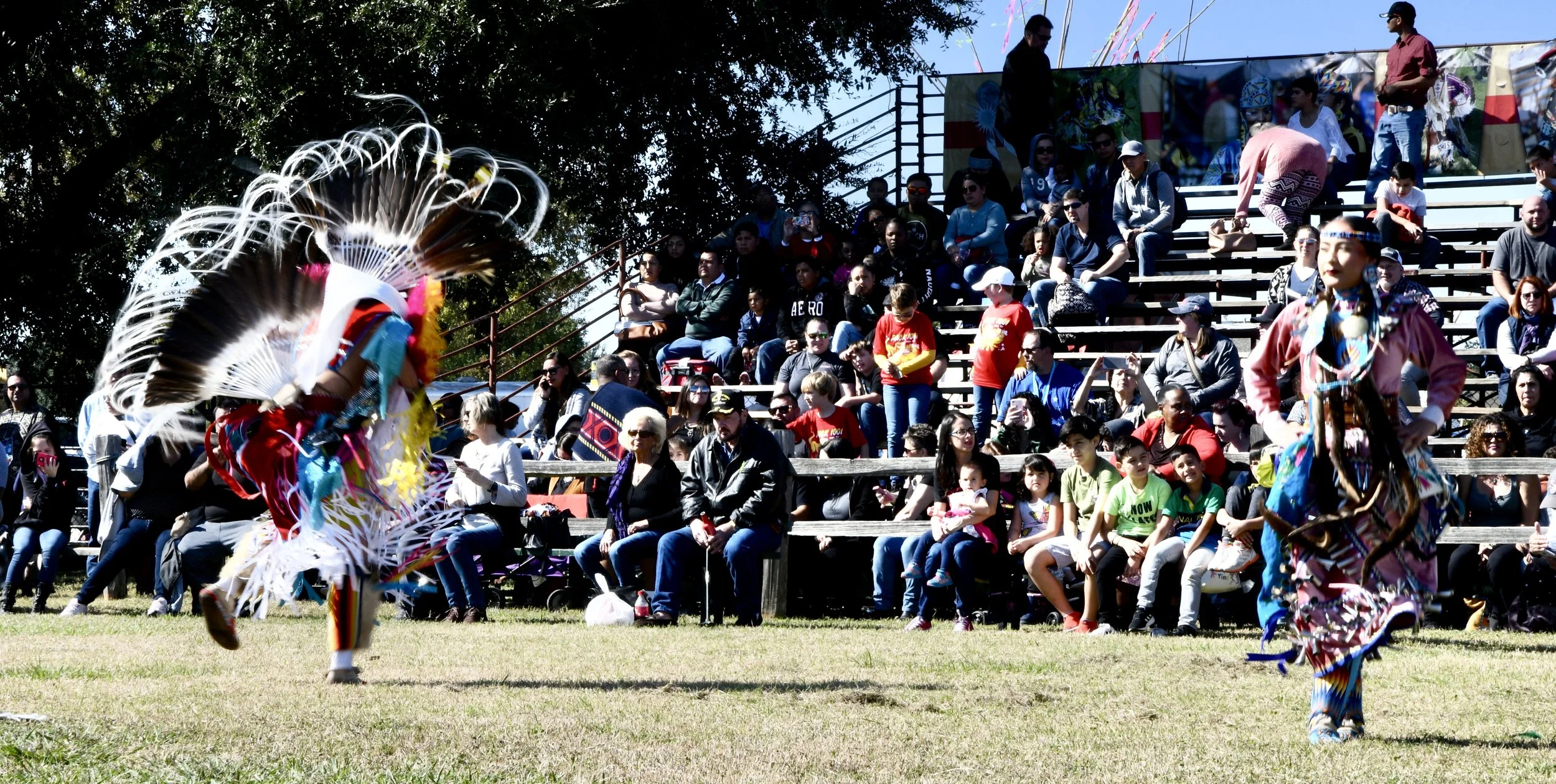
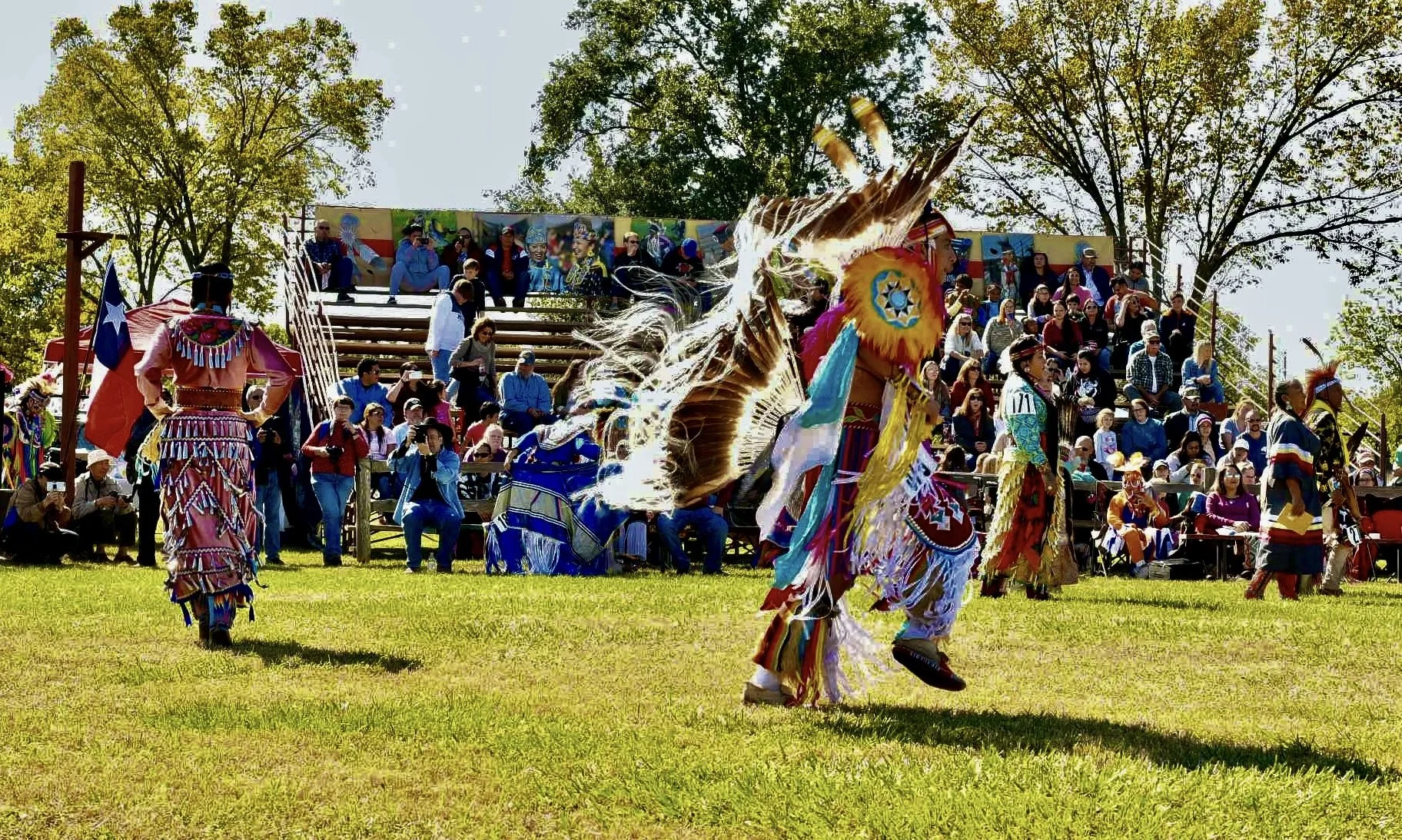
The arena is a rectangle of St. Augustine grass framed by steel bleachers, a pipe railing and a pair of live oaks. Blue pop-up canopies shade the judges and the drum. The Texas flag stands on a pole near the announcer’s table.
Then the dancers come in, and the rectangle stops looking like a flea-market lot.
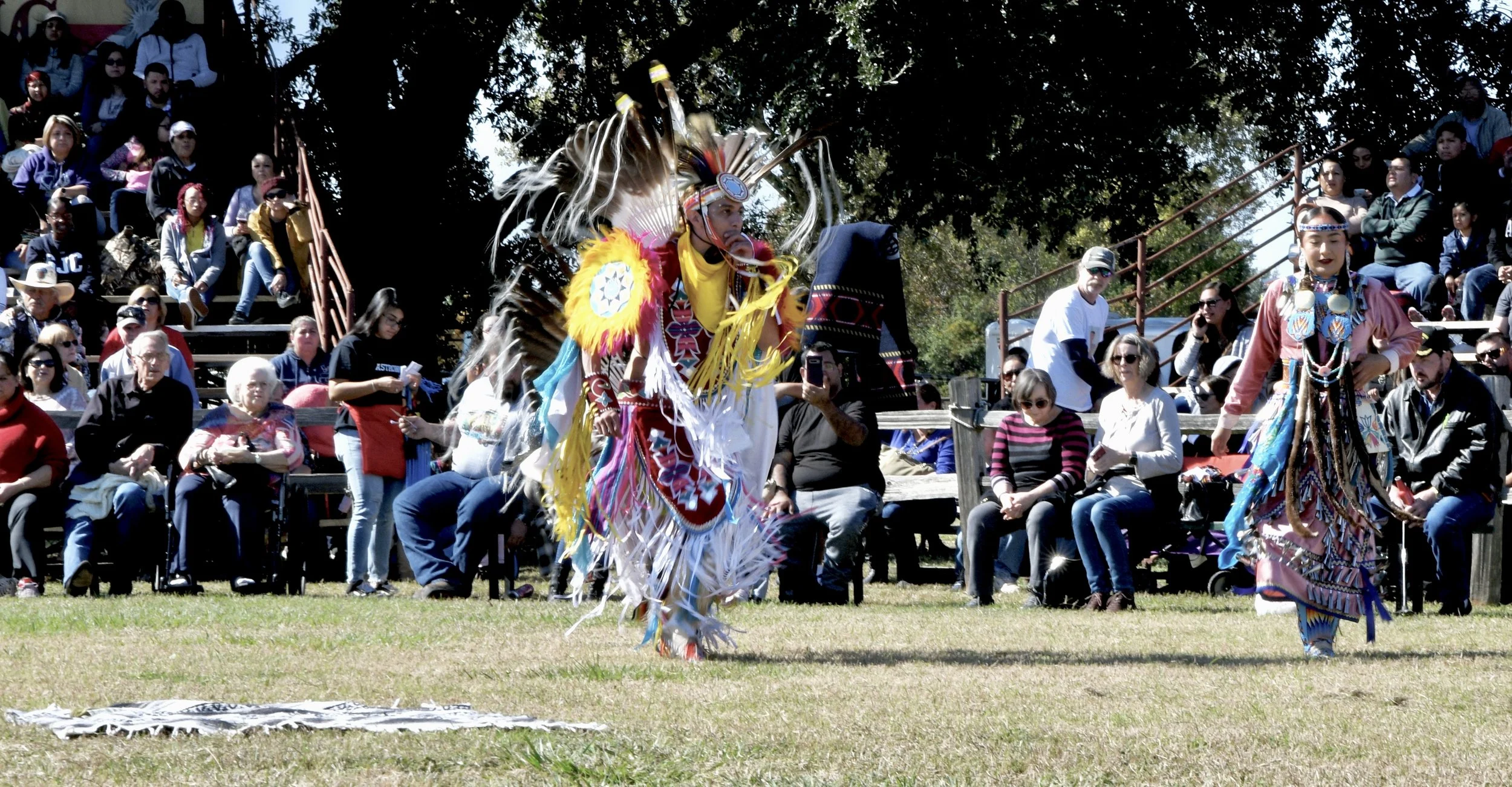
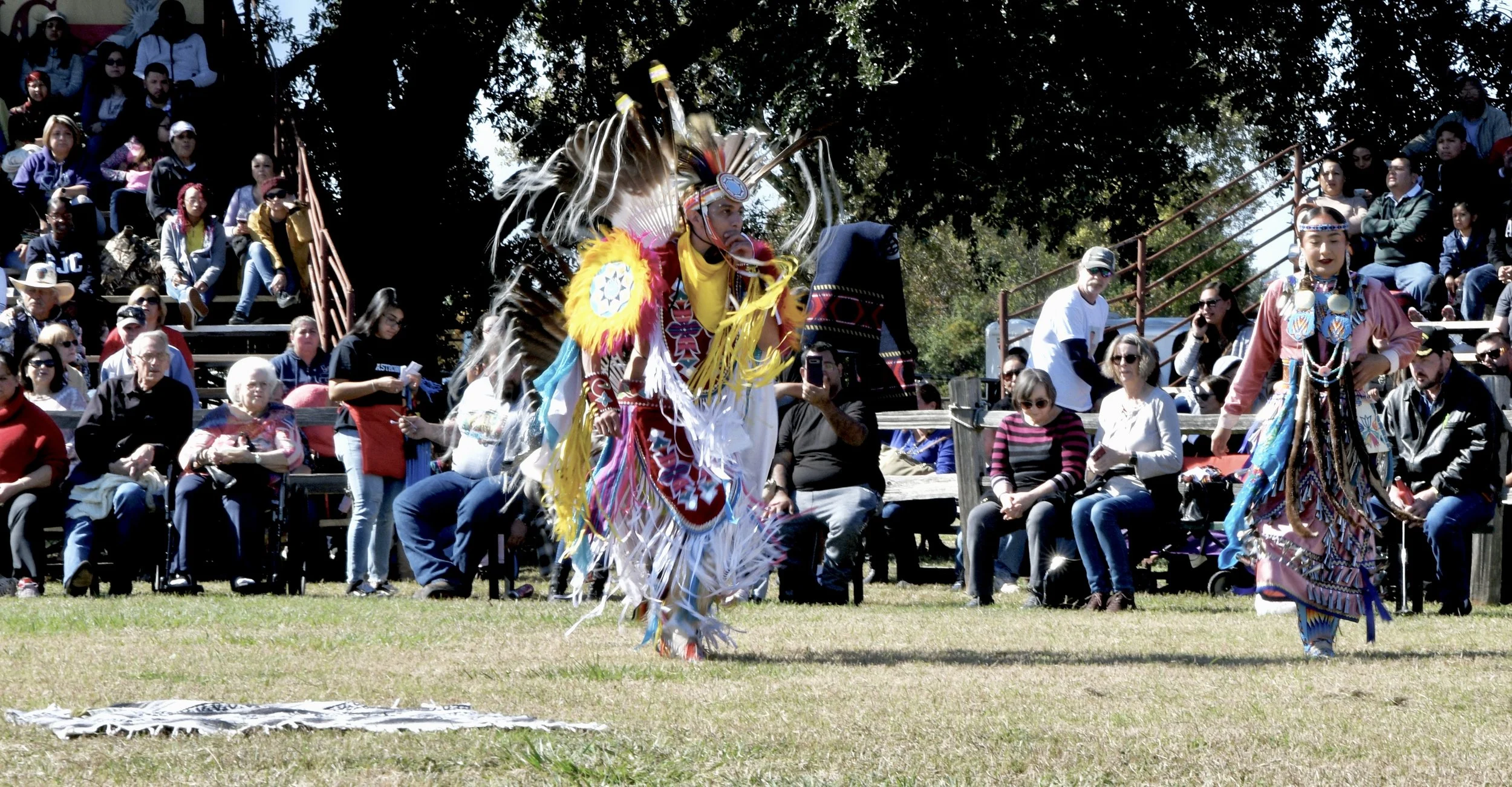
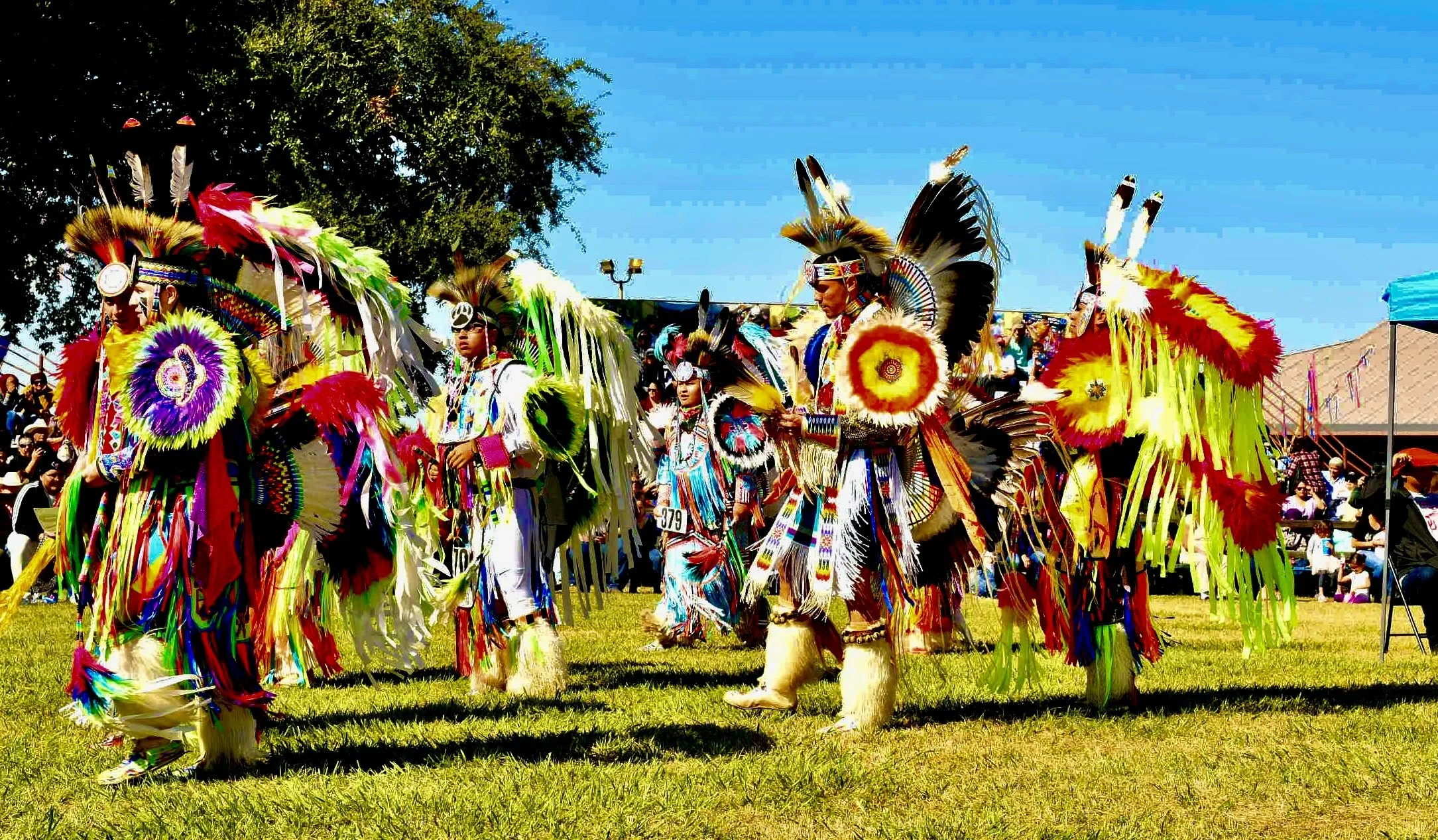
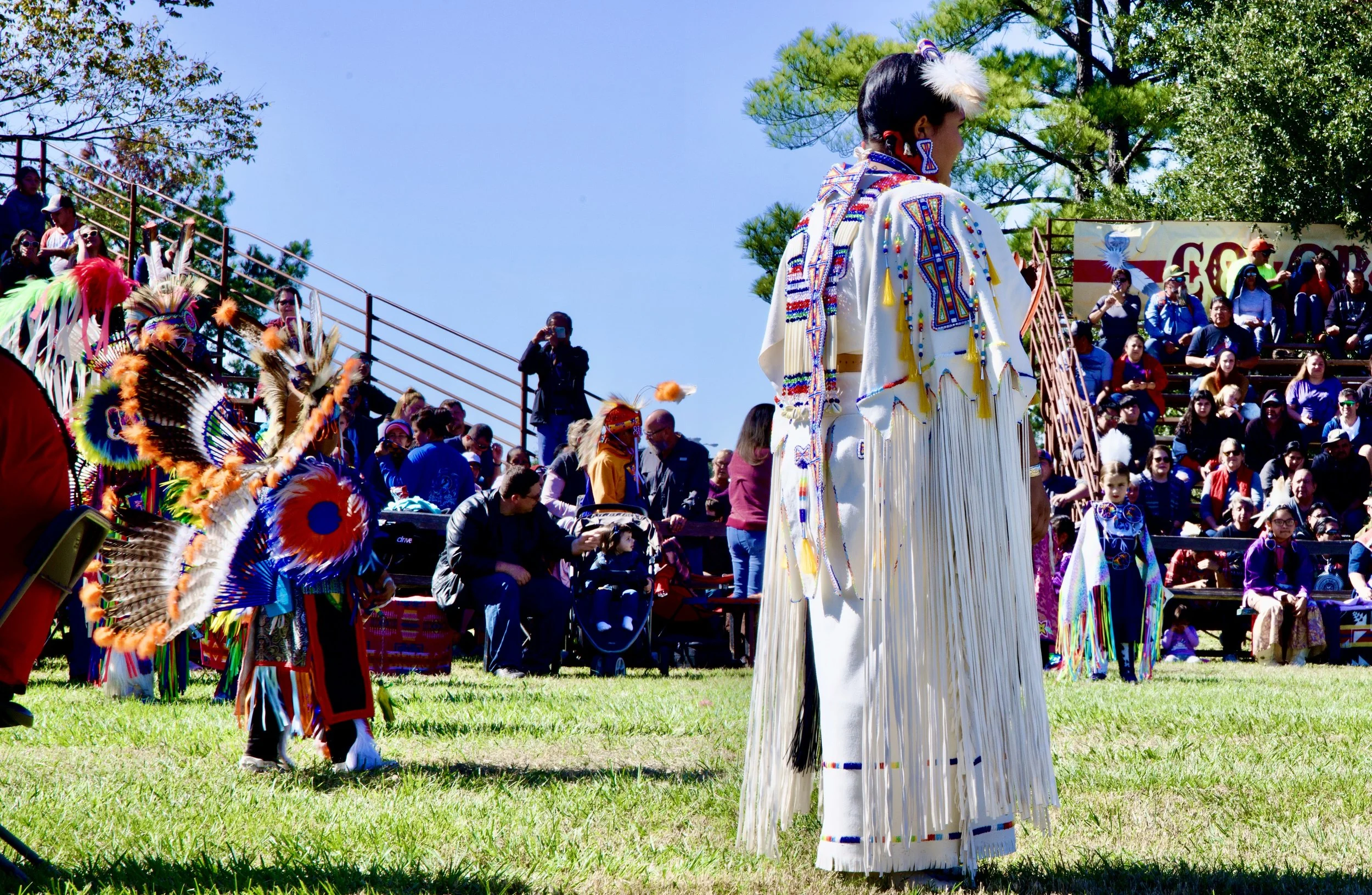
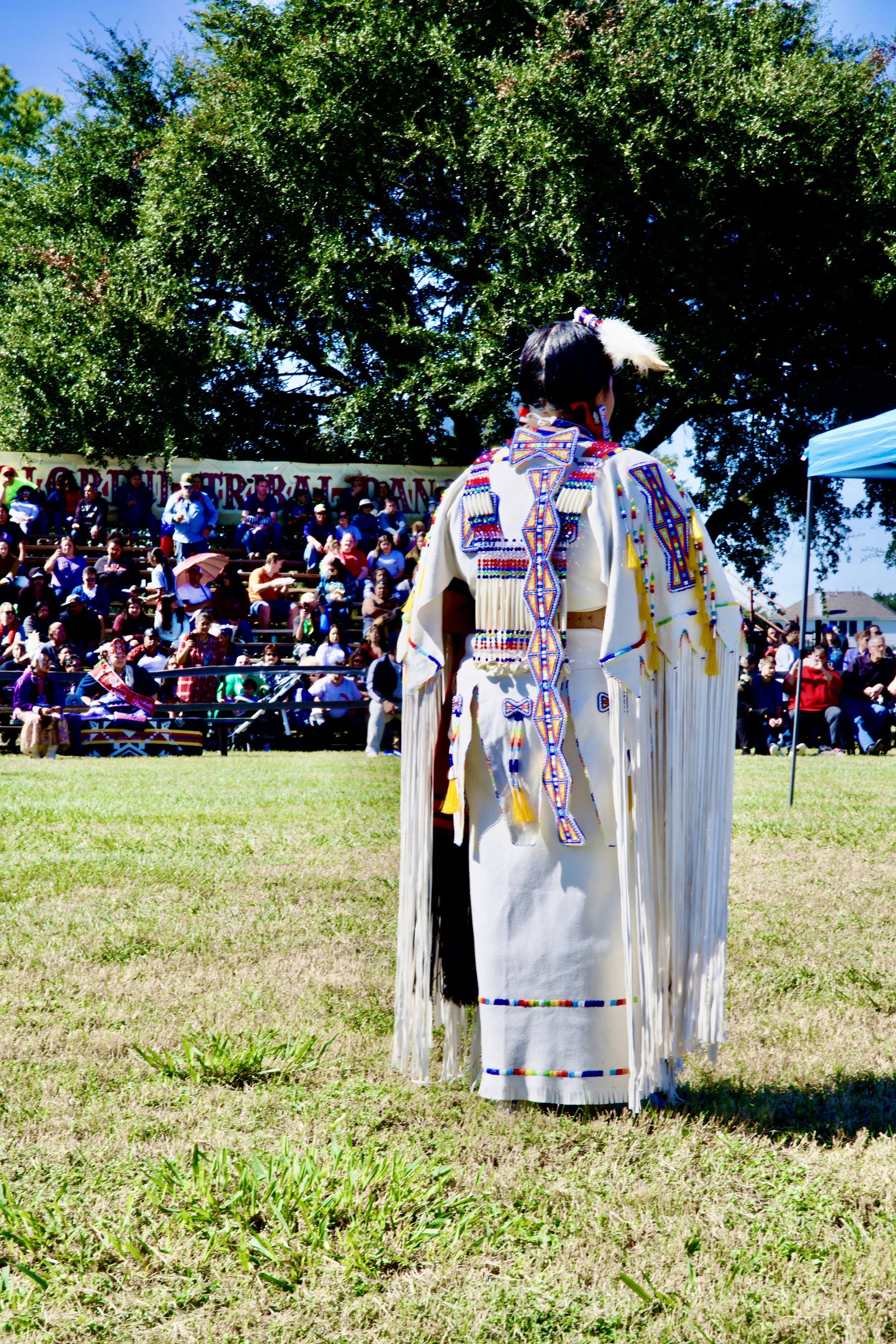
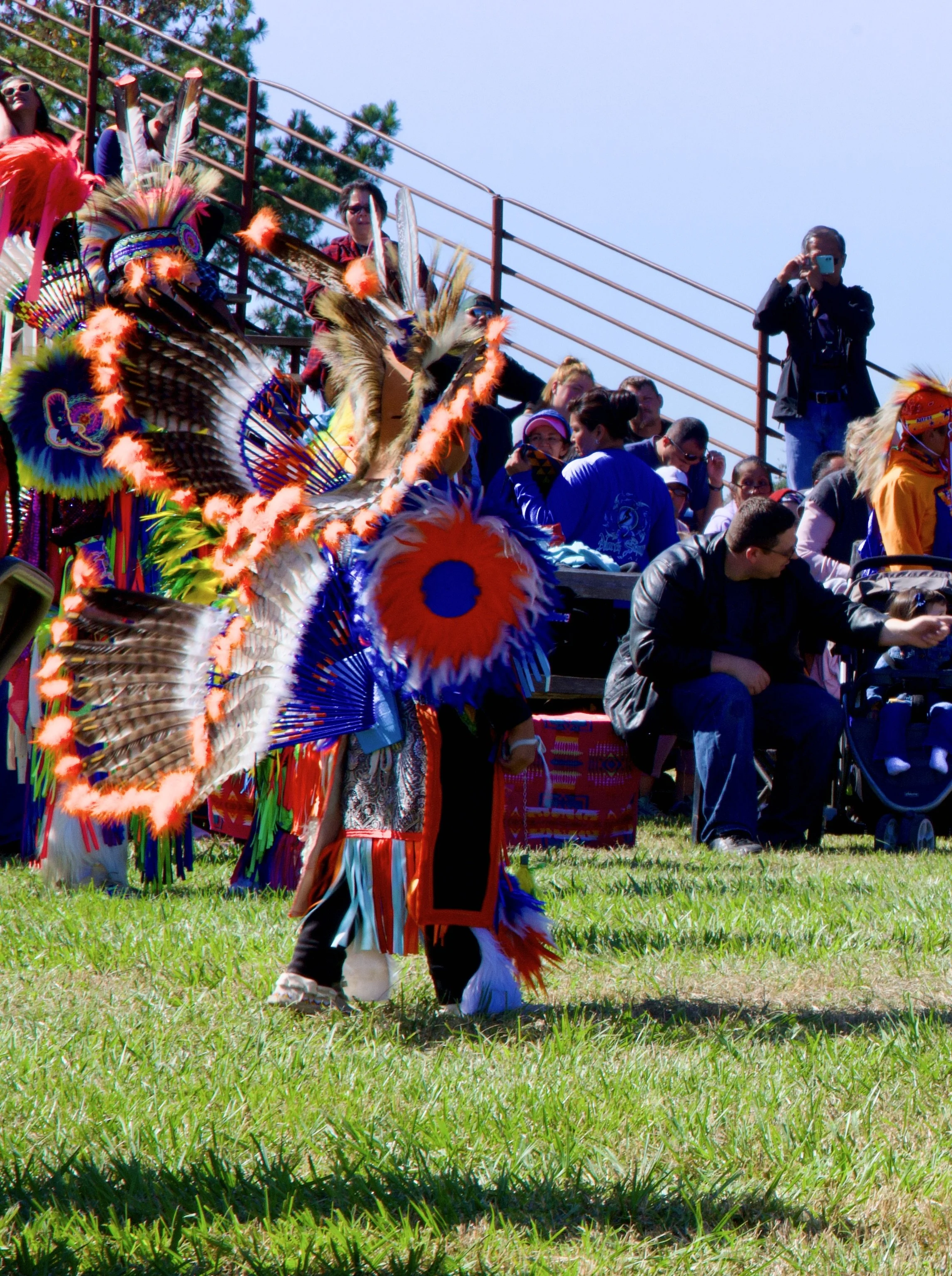
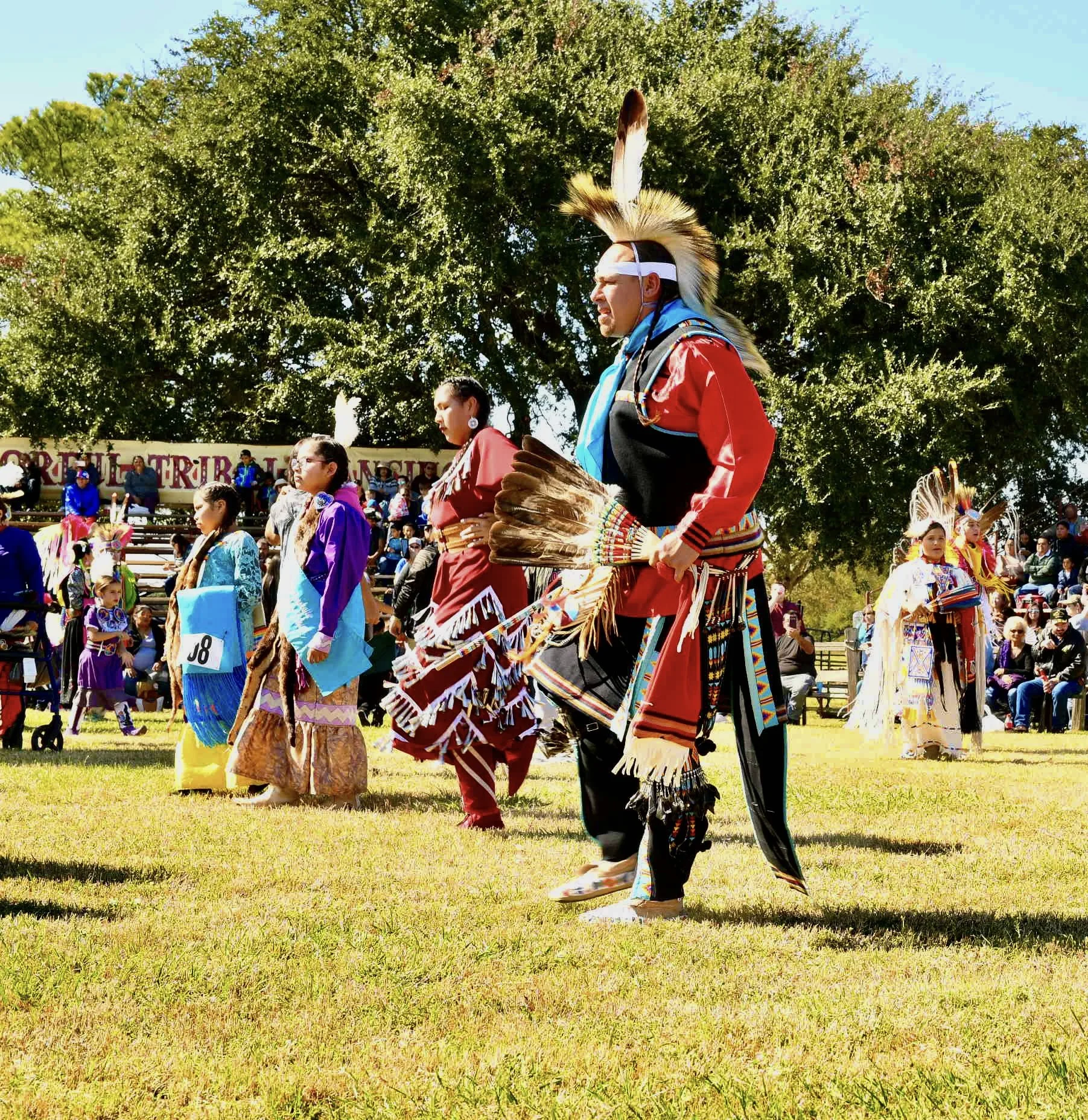
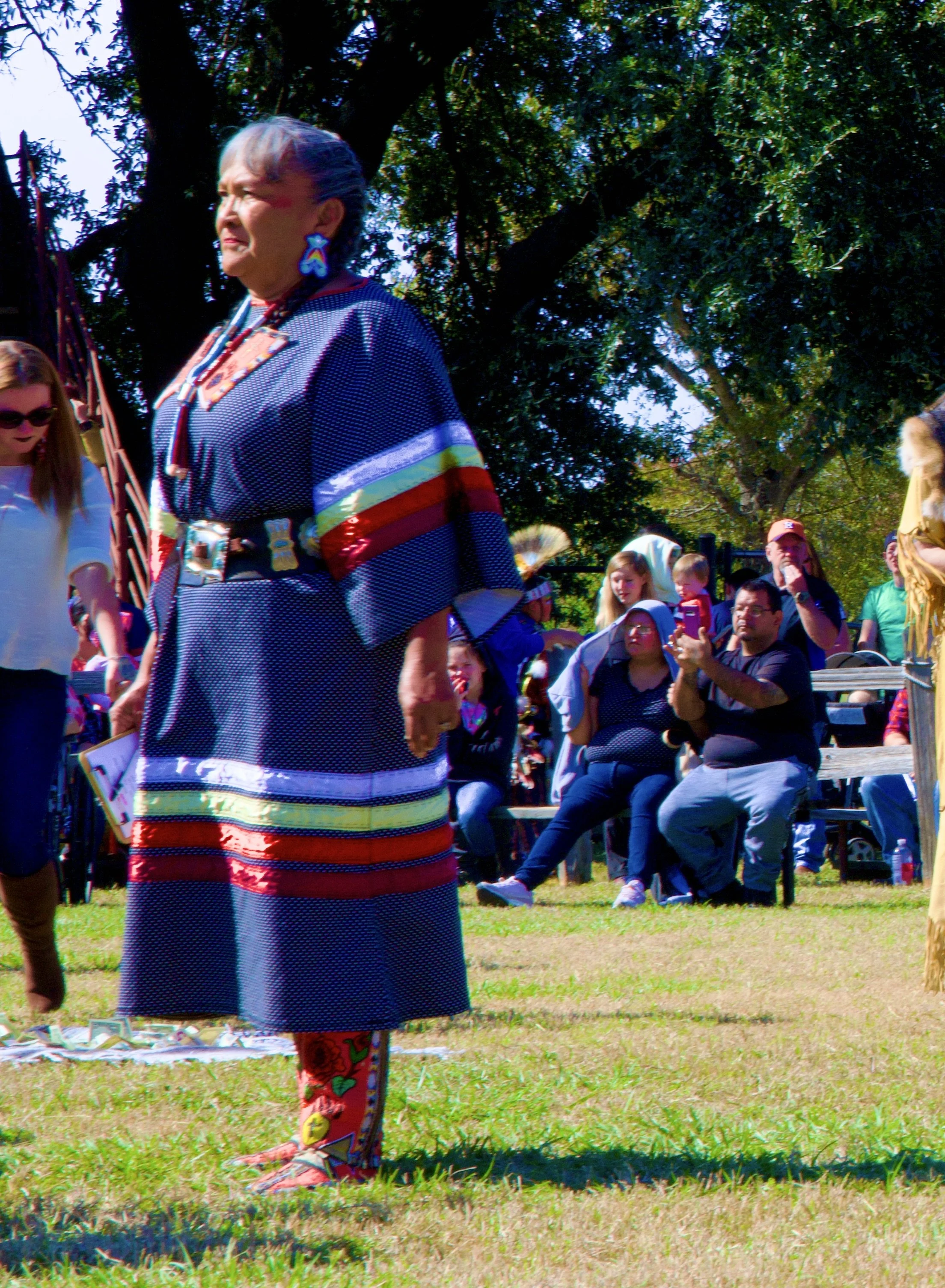
Men in feather bustles turn in the sun, the quills fanned wide behind them, angora at the ankles, bells at the knees. A dancer in yellow yarn fringe [confirm category — grass dance?] cuts low across the grass. Women in jingle dresses move past the bleachers in rows of small metal cones. A woman in white buckskin stands nearly still, the beadwork running down her back in diamonds of red, yellow and blue, fringe hanging almost to the ground.
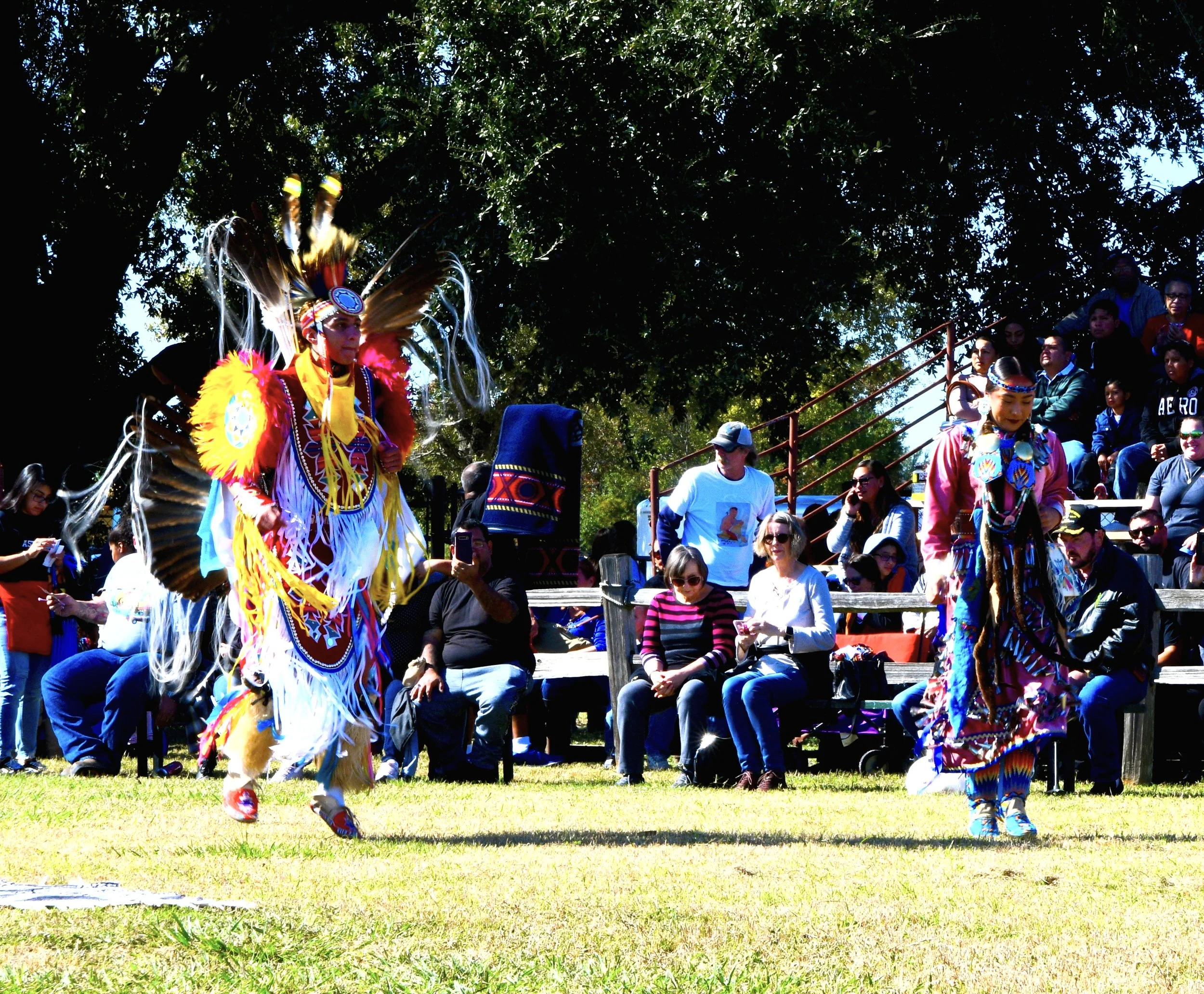
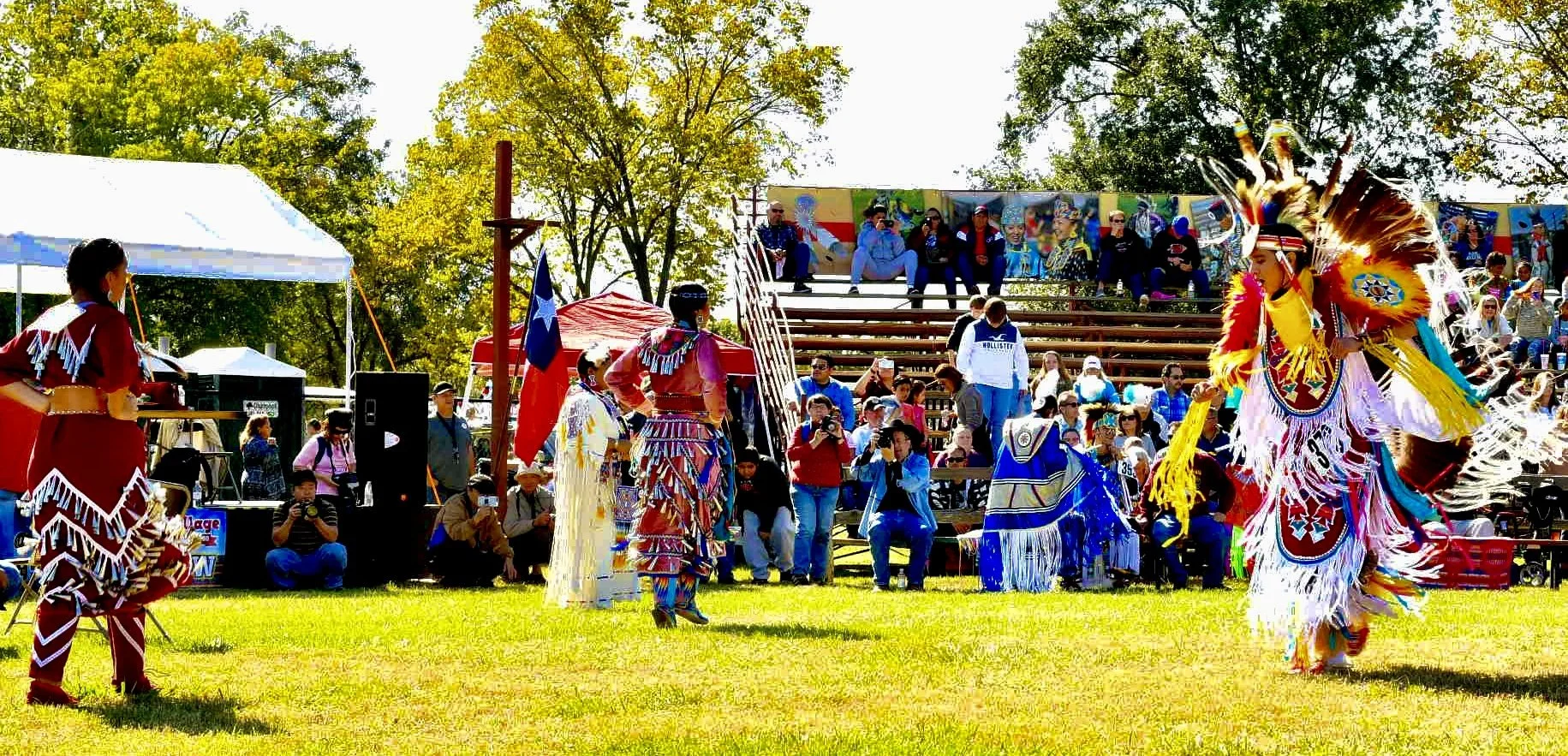
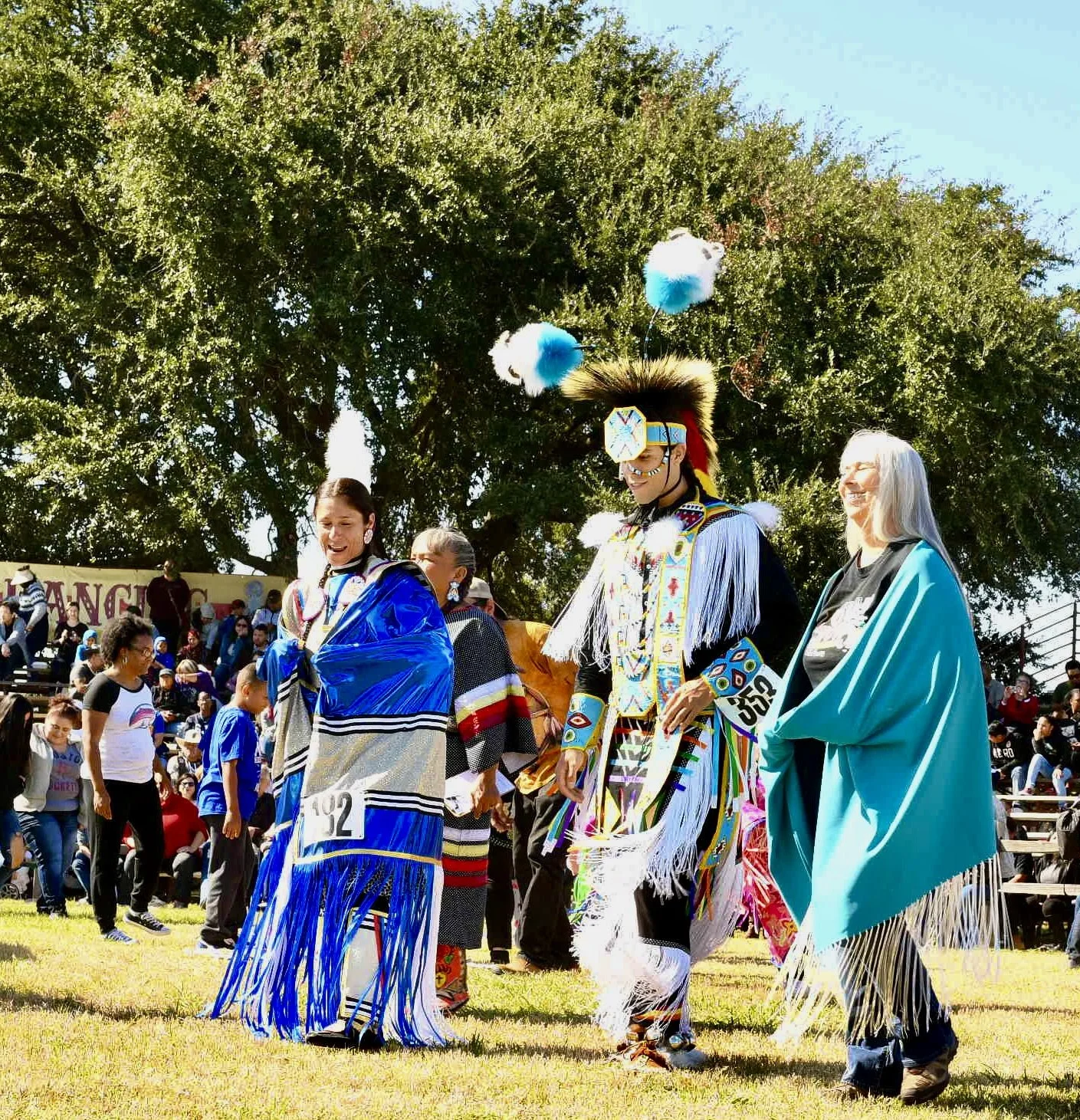
Every dancer wears a number. 17. 14. 24. 304. 379. It is a contest, with judges under the canopy and categories by age and style, and the numbers are how the judges keep track of who danced what. They are also, for anyone paying attention, a reminder that nearly all of this regalia was made by hand, by the dancer or by someone who loves them, and that it is being worn to be measured against the best in the arena.
The little ones
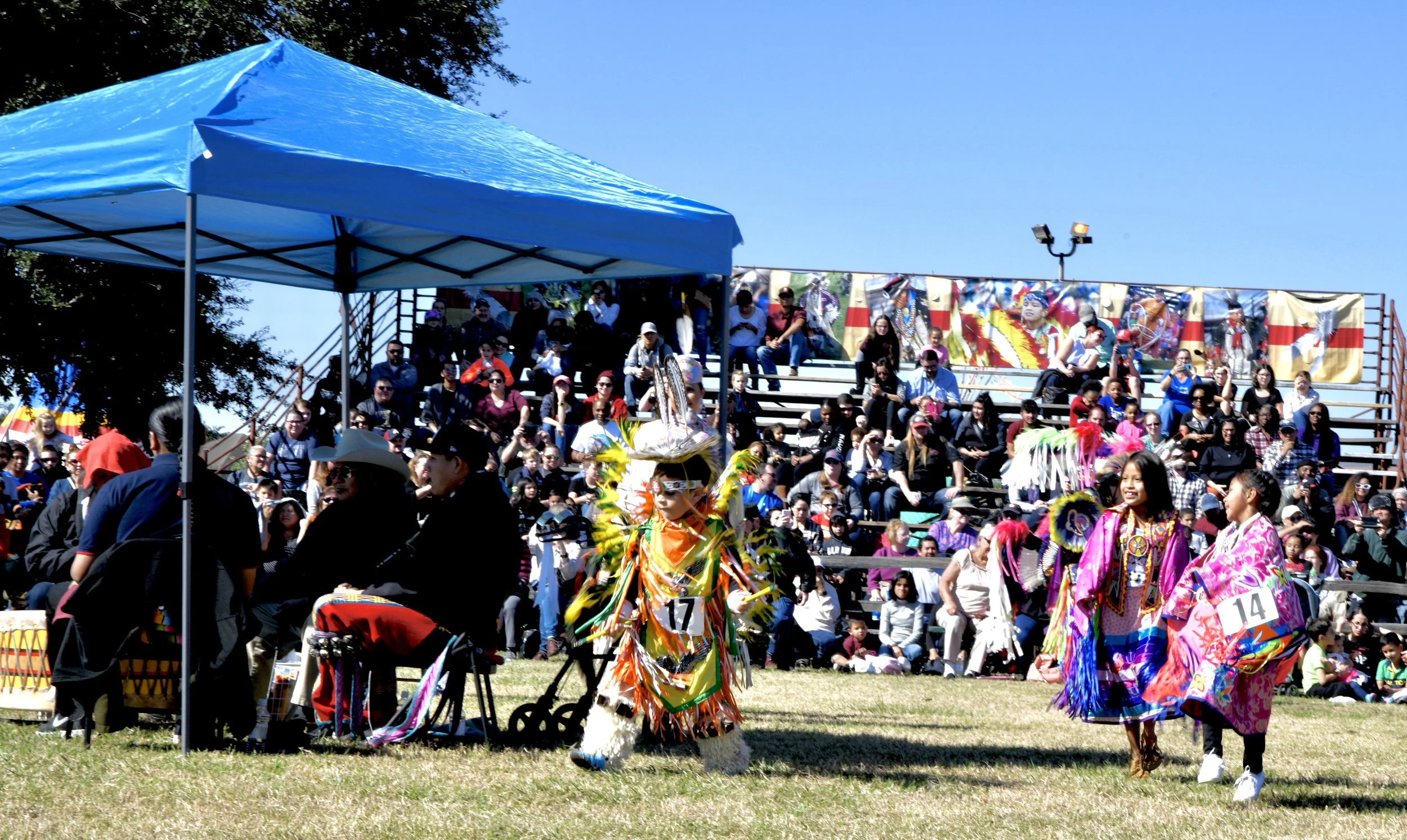
The youngest competitors are the ones the crowd watches hardest.
Number 17 is a small boy in orange and yellow fringe, white angora to the knees, a roach on his head nearly as wide as his shoulders. He dances past the judges’ canopy with total seriousness. Behind him, two girls in shawls — one of them number 14, grinning — run their own line across the grass, their fringe flying.
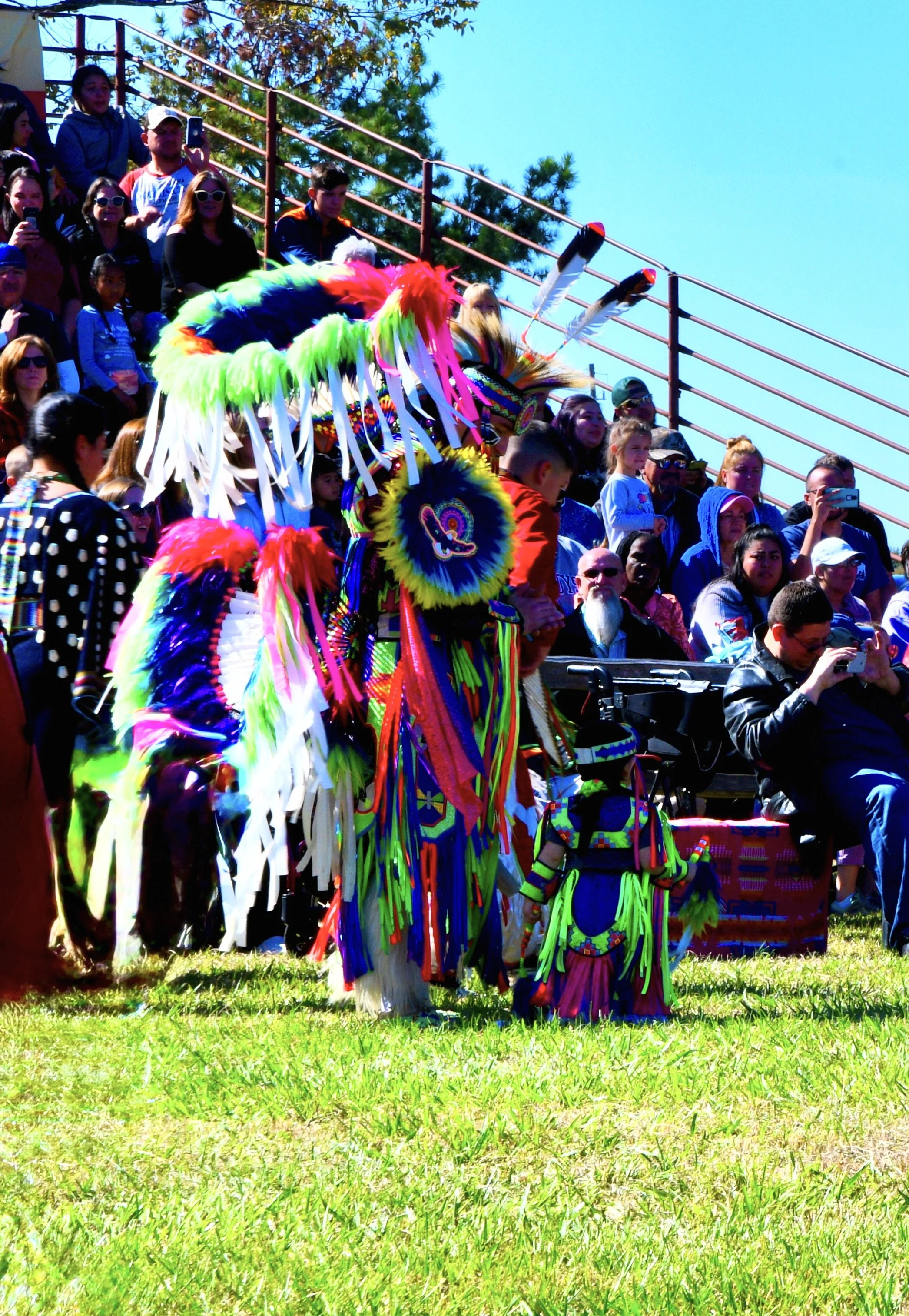
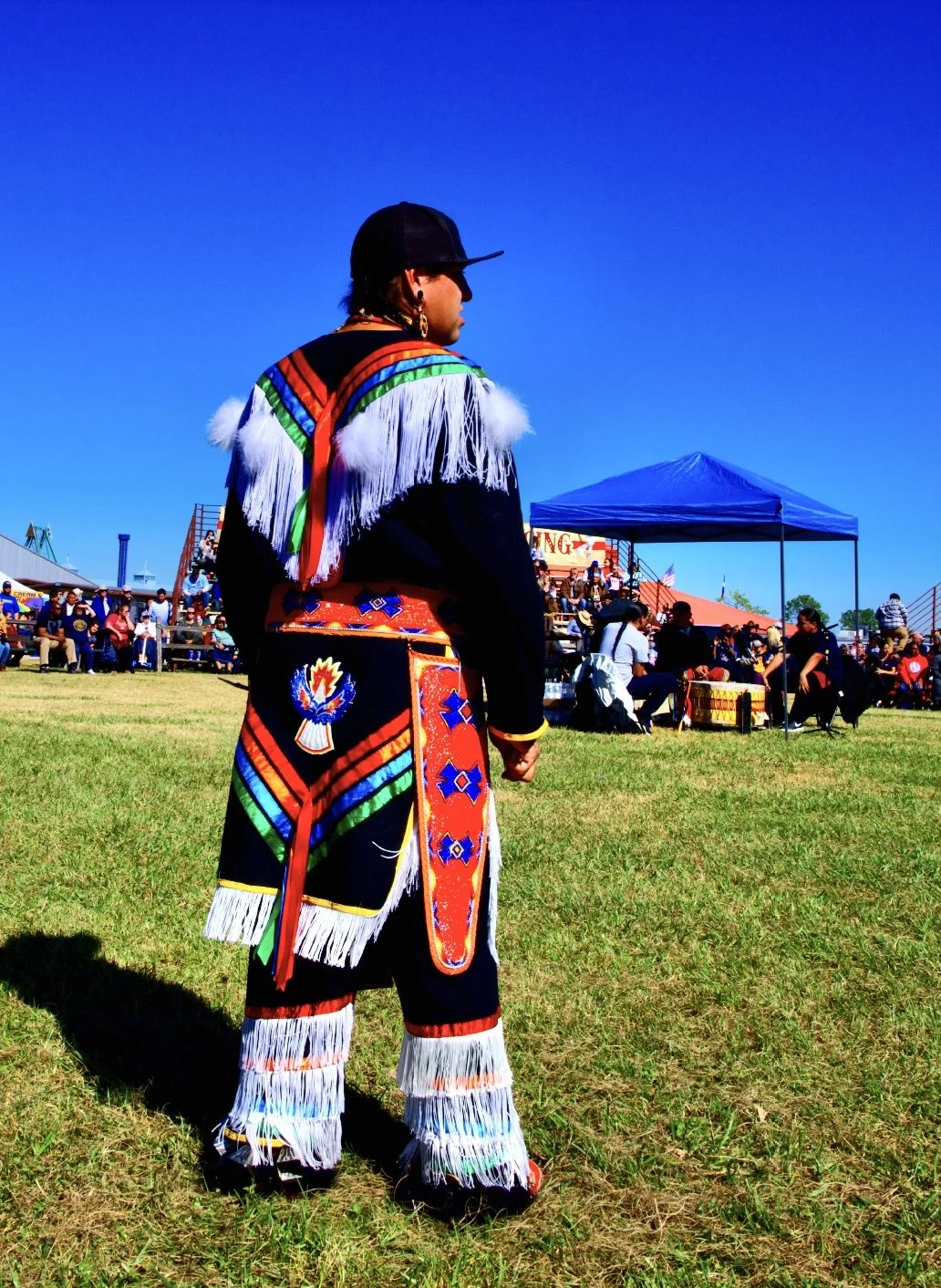
The judges under the canopy watch the children the same way they watch the adults. That is the point. The dance does not get easier because you are small.
The bleachers
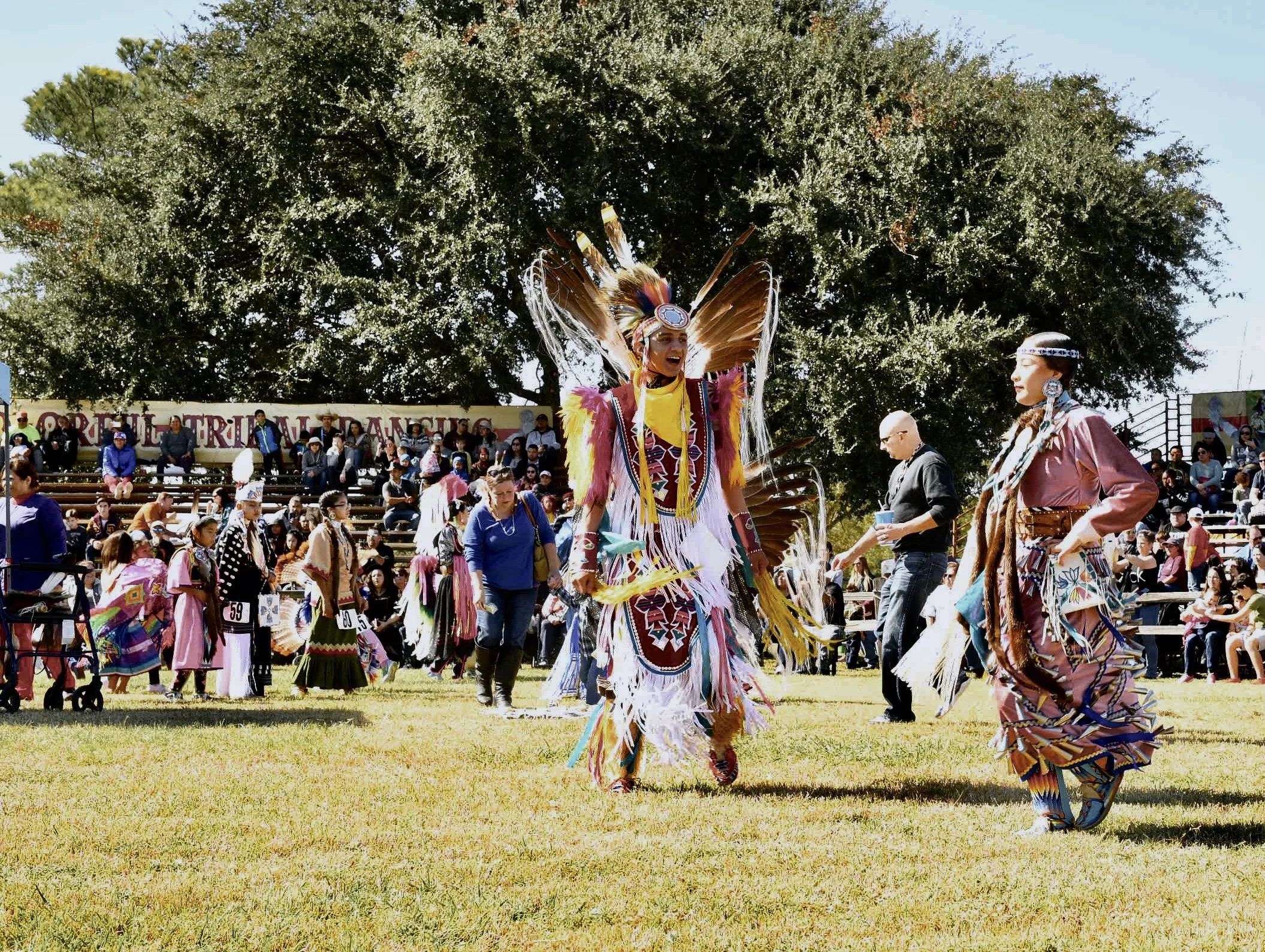
The bleachers tell their own story. Phones are up in every row. A woman holds a toddler on her lap. Boys in bright T-shirts crowd the front rail. An older man in a veteran’s cap sits with his hands folded over a cane, watching a bustle dancer go by close enough to touch. Up top, two men and a boy lean on the railing next to the banner, looking down on the whole thing.
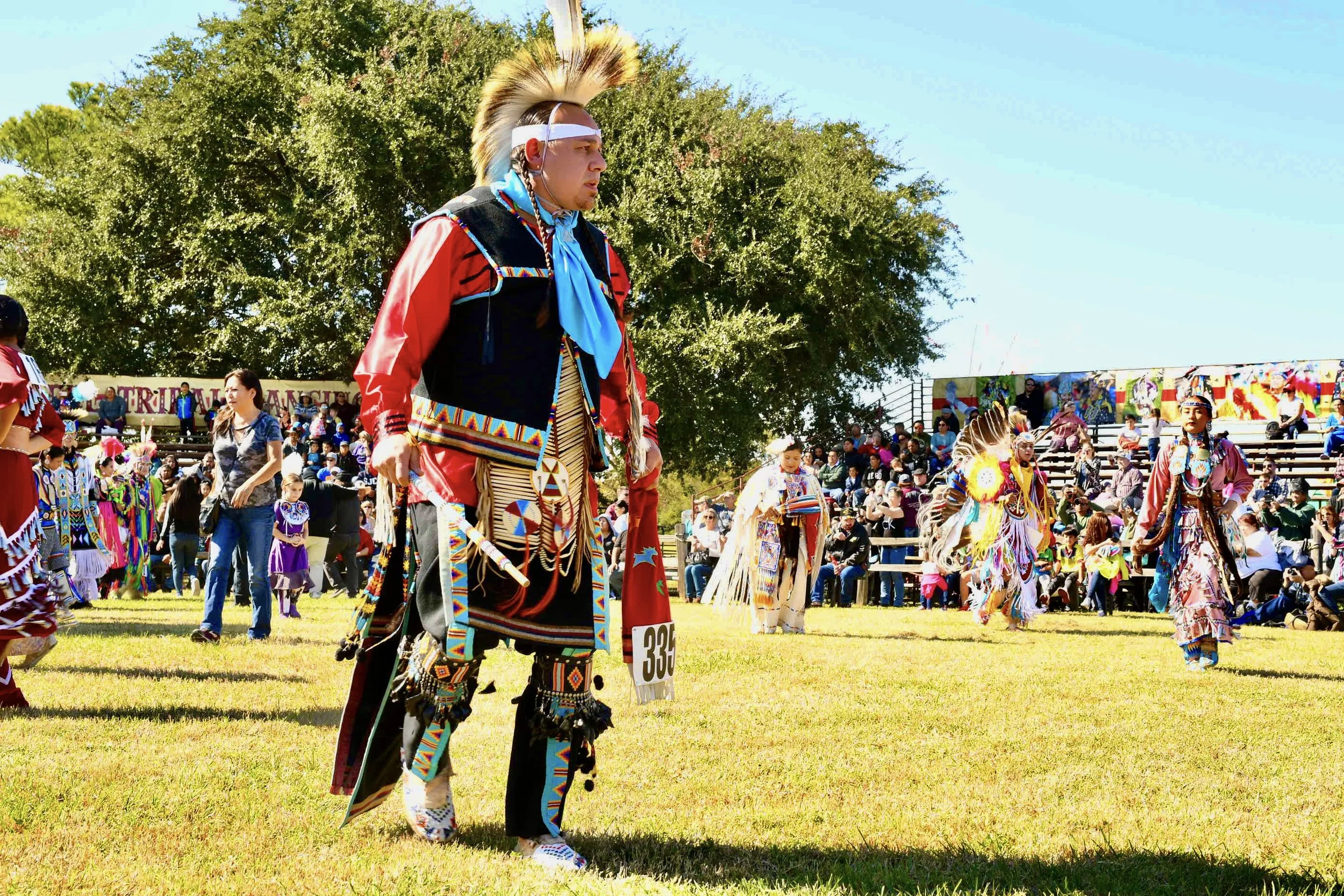
Some of them came for the powwow. Some came to buy a ceiling fan and followed the sound. By the middle of the afternoon it is hard to tell which is which.
What the sign doesn’t say
A powwow at a flea market is easy to misread. The banner sells it as an attraction, one more thing to do between the rides and the funnel cake. The people in the arena are not attractions. They are competitors, families and drum groups who build their year around a circuit of gatherings like this one, and who chose to bring it here, to a lot off North Eldridge, where anyone can walk in for free.
The sign promises Indian dancing, arts and crafts, Indian tacos and more.
The more is the drum. It is the oldest thing in the arena, and like their land , it is not for sale.
Houston Heights Independent. James Towers, Photojournalist HHI.
ATTENTION ASSIGNMENT DESKS & MEDIA PRODUCERS:
All text, video, and original photography covering this story are the exclusive property of the Houston Heights Independent. Broadcast, digital replication, or social scraping of these assets without an active license is strictly prohibited. To license clean, high-density, unwatermarked frames for TV broadcast or regional news print, contact our newsroom immediately, at houstonheightsindependent@gmail.com. or 210-288-3034. Standard licensing fees apply.
© 2026 Houston Heights Independent. All rights reserved. Registered under Jim Towers, AA. BS.MJA.JD. No part of this publication, including text, layout, and original photography, may be reproduced, distributed, broadcast, or transmitted in any form or by any means without prior written permission from the Editor-in-Chief. For media licensing inquiries or syndication requests, contact at houstonheightsindependent@gmail.com. or 210-288-3034. Standard licensing fees apply.
