
The House Under the Gazebo
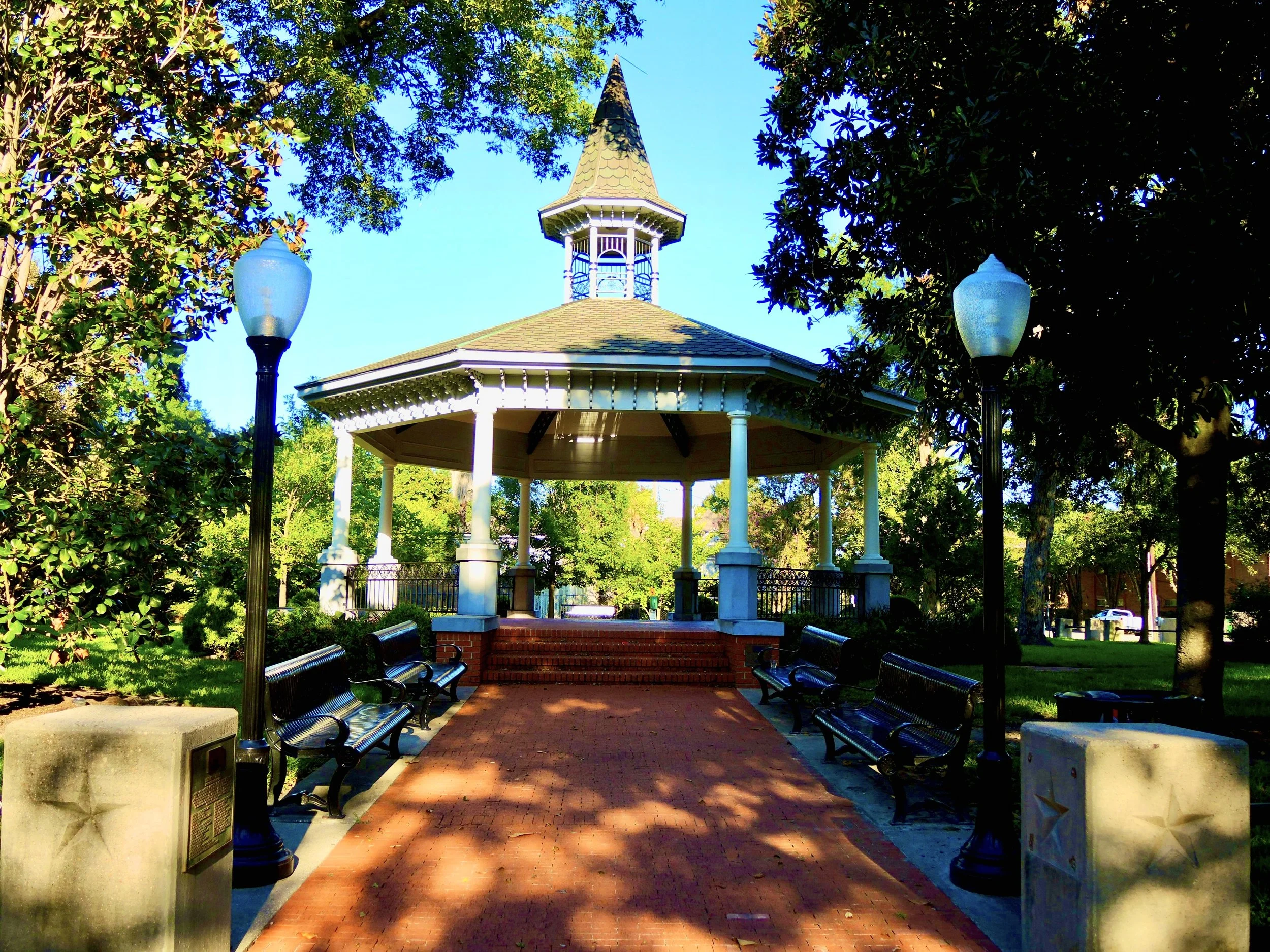
Marmion Park’s Victorian bandstand is a memory of a mansion the Heights lost, and the people who remember it left their names in the grass.
By Jim Towers, M.J.A., J.D. photojournalist, HHI
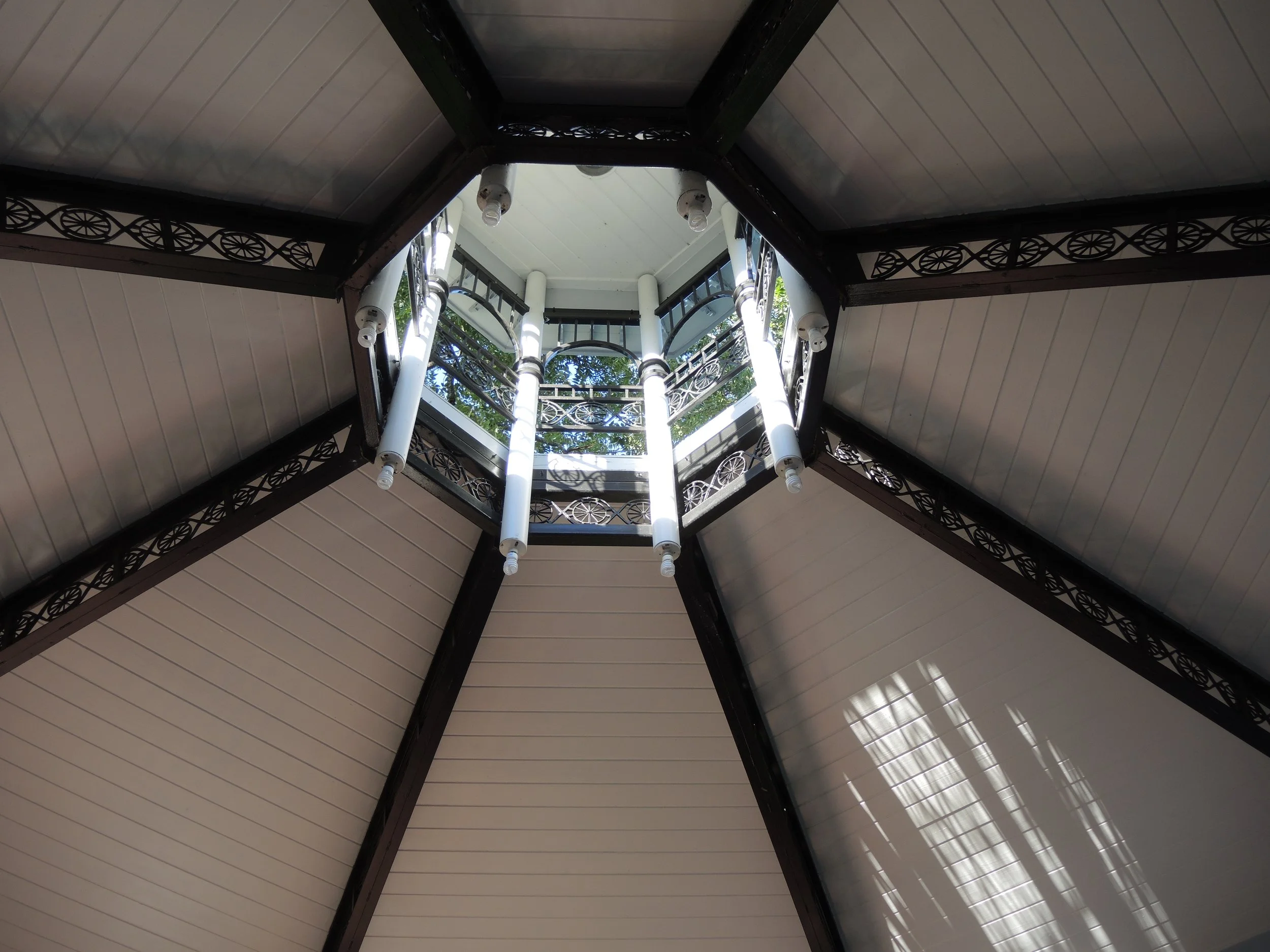
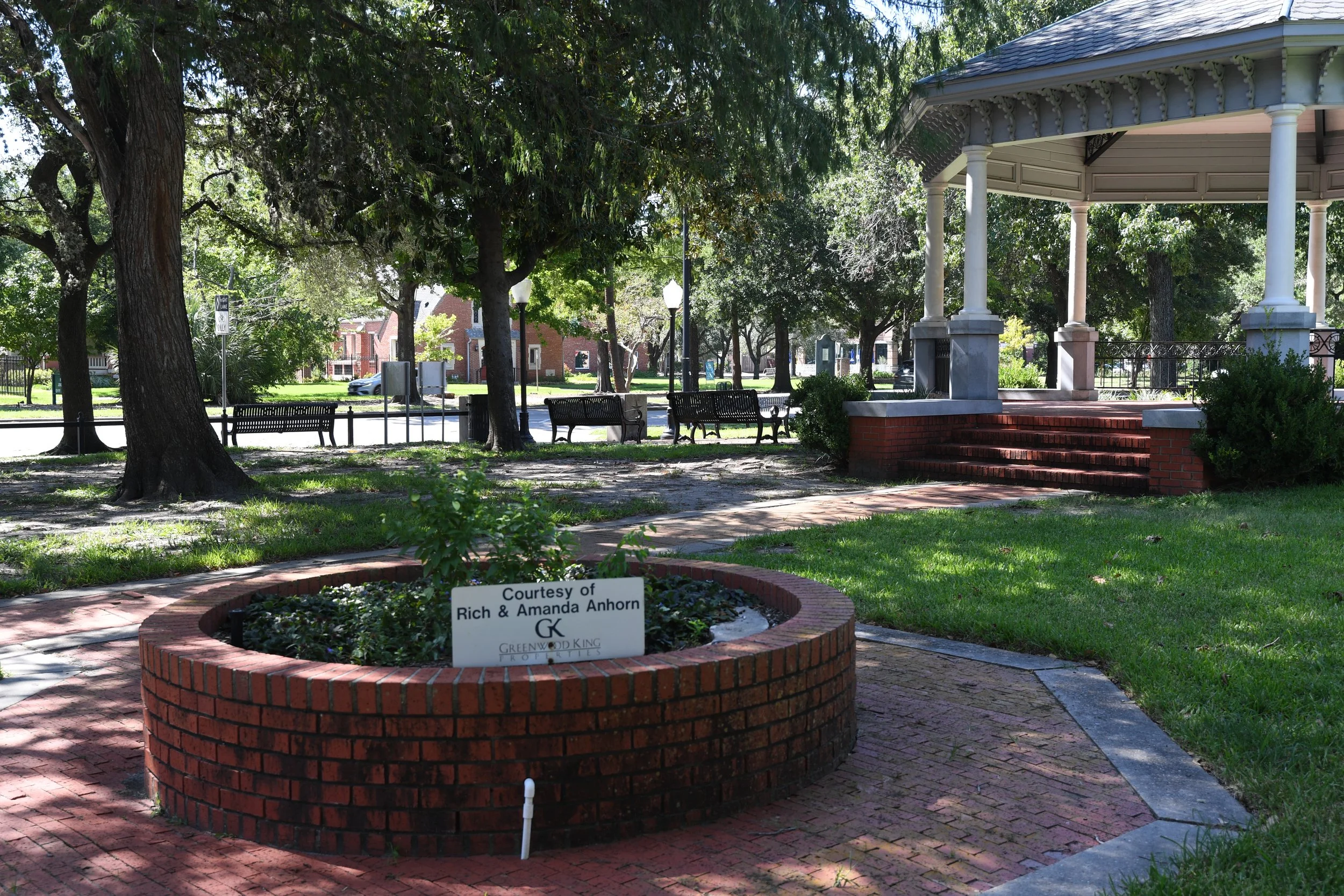
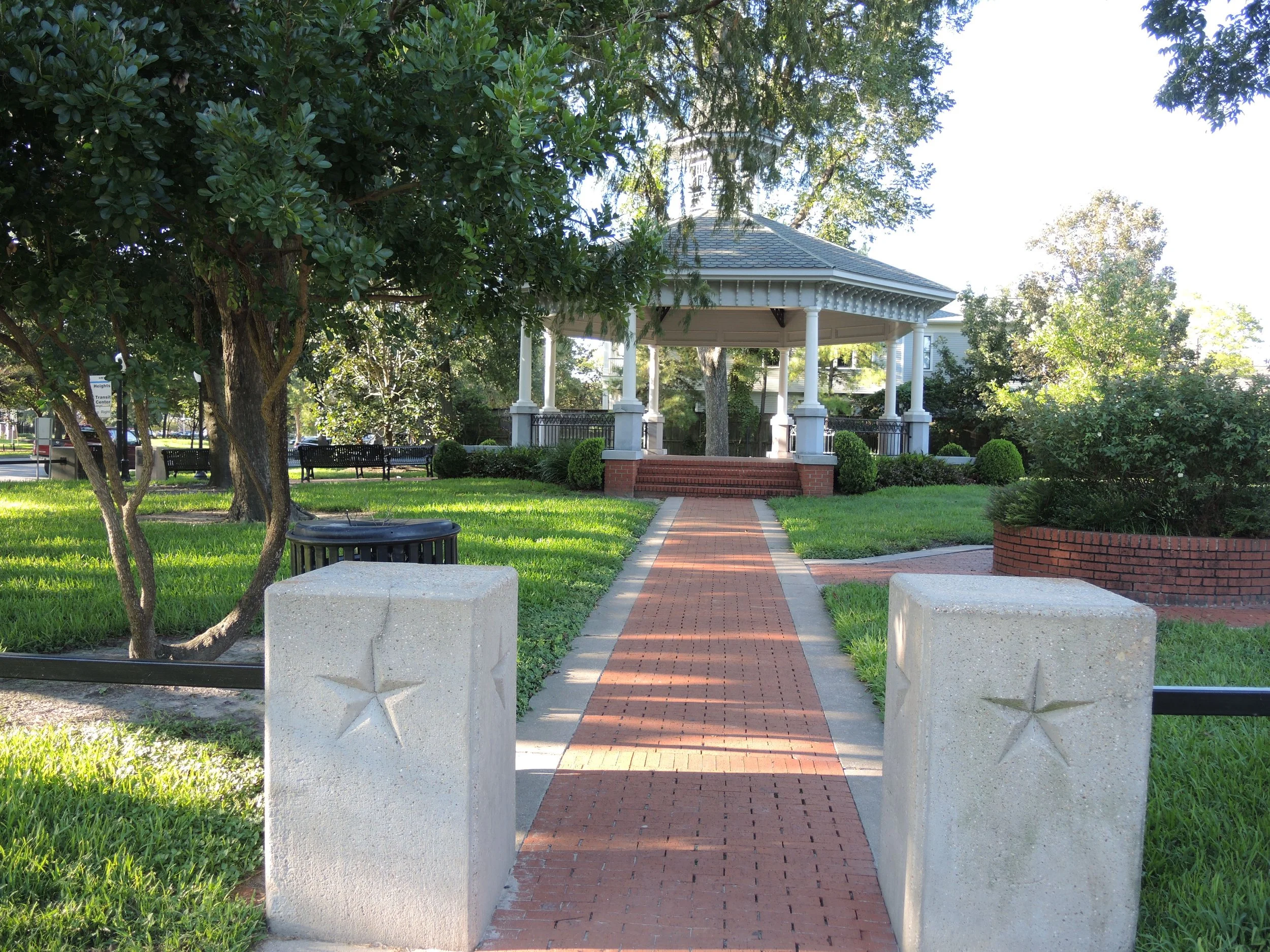
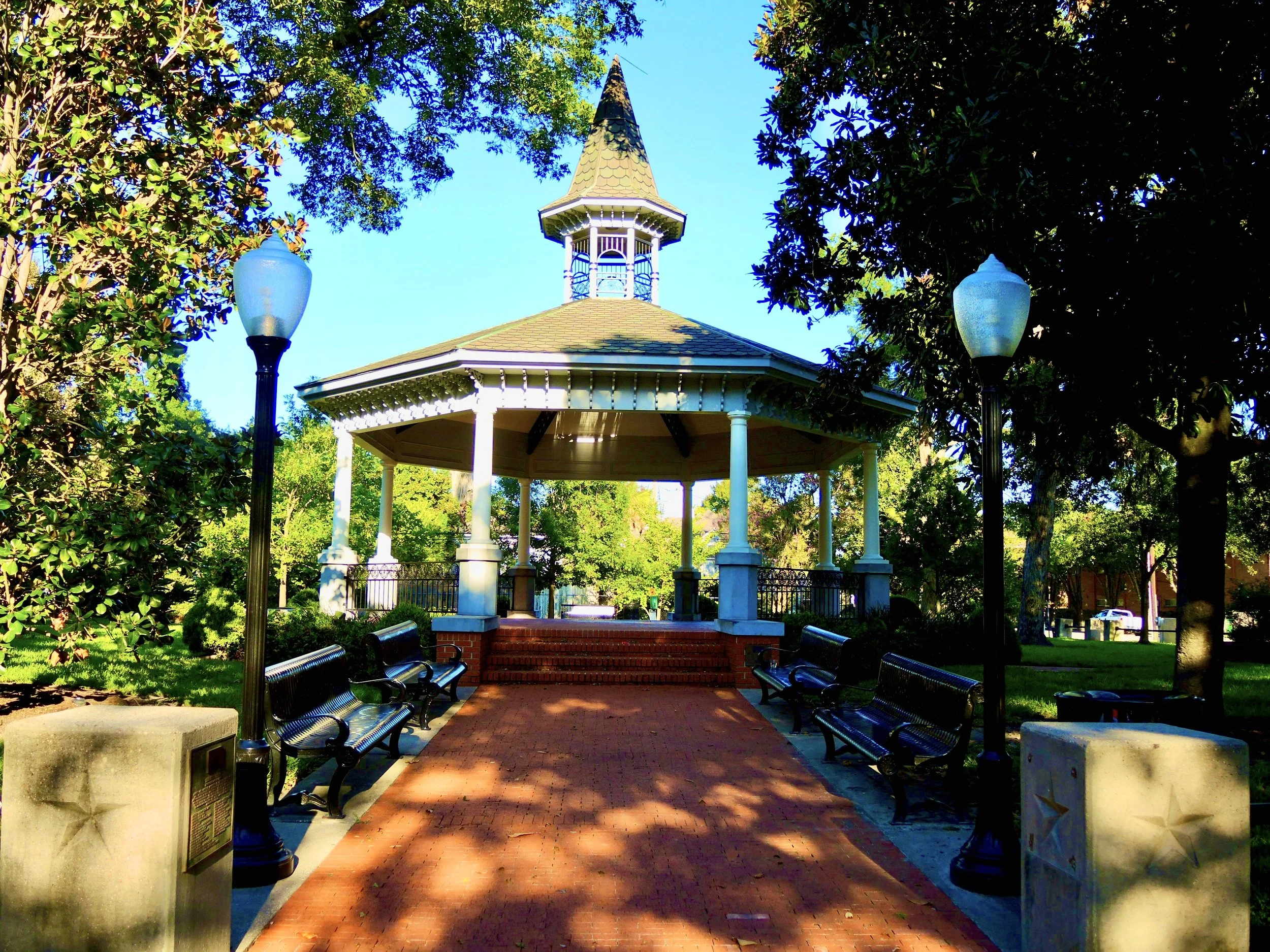
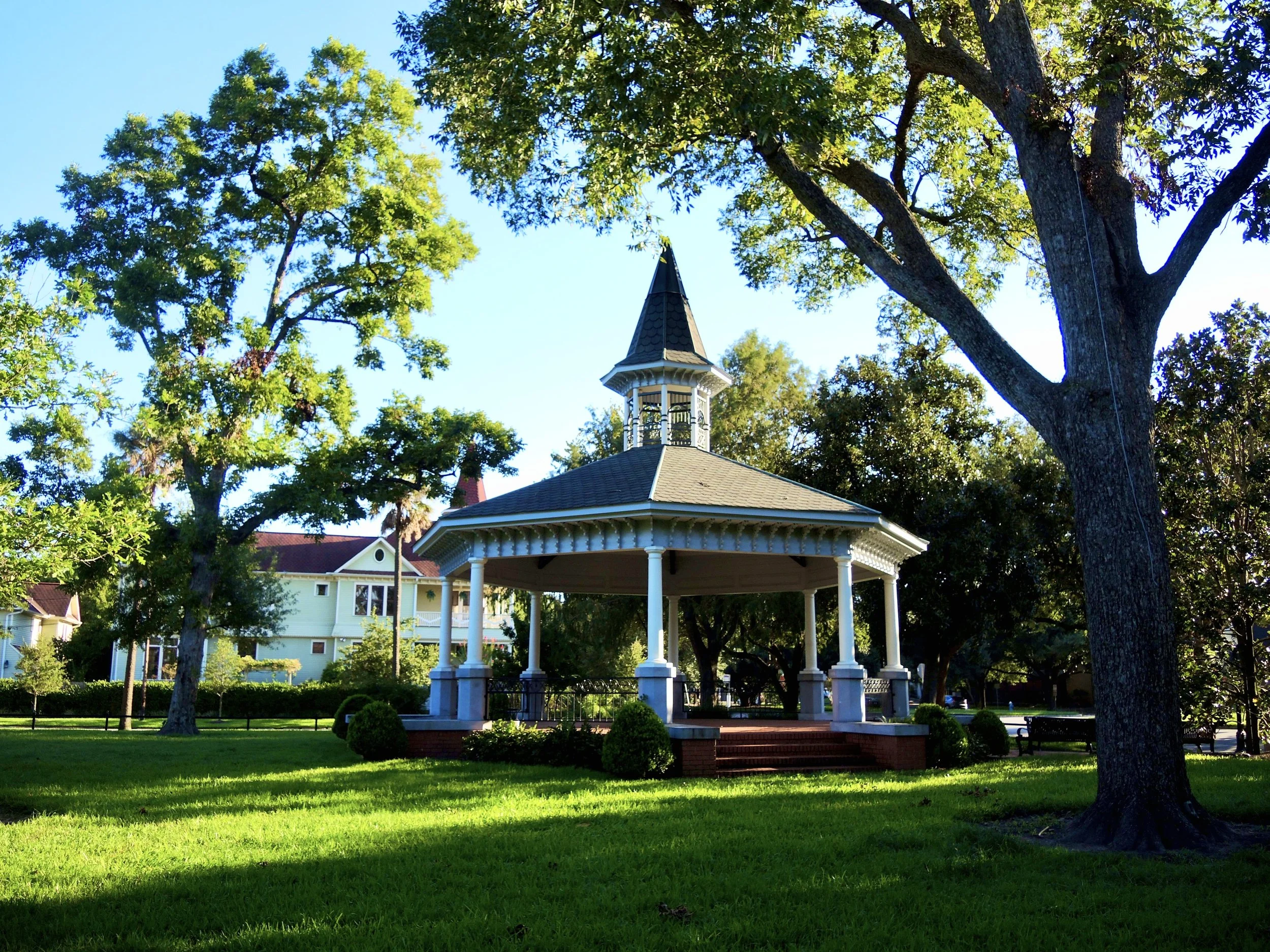
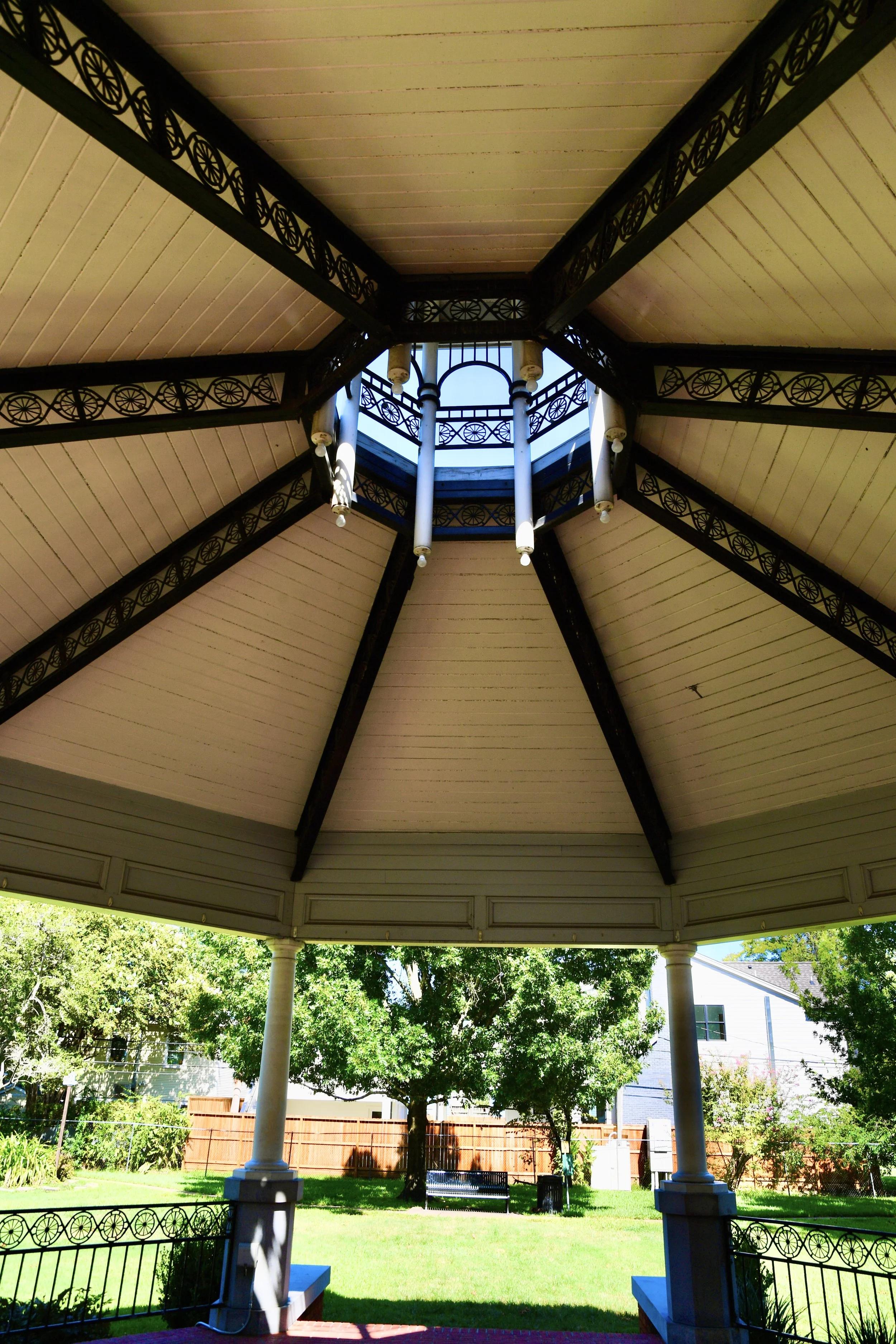
Most people who pass Marmion Park on Heights Boulevard see a gazebo: white columns, iron railings with a wagon-wheel pattern, a shingled cupola rising through the oaks. It looks like it has always stood there, and it hasn’t. What stood there first was a house.
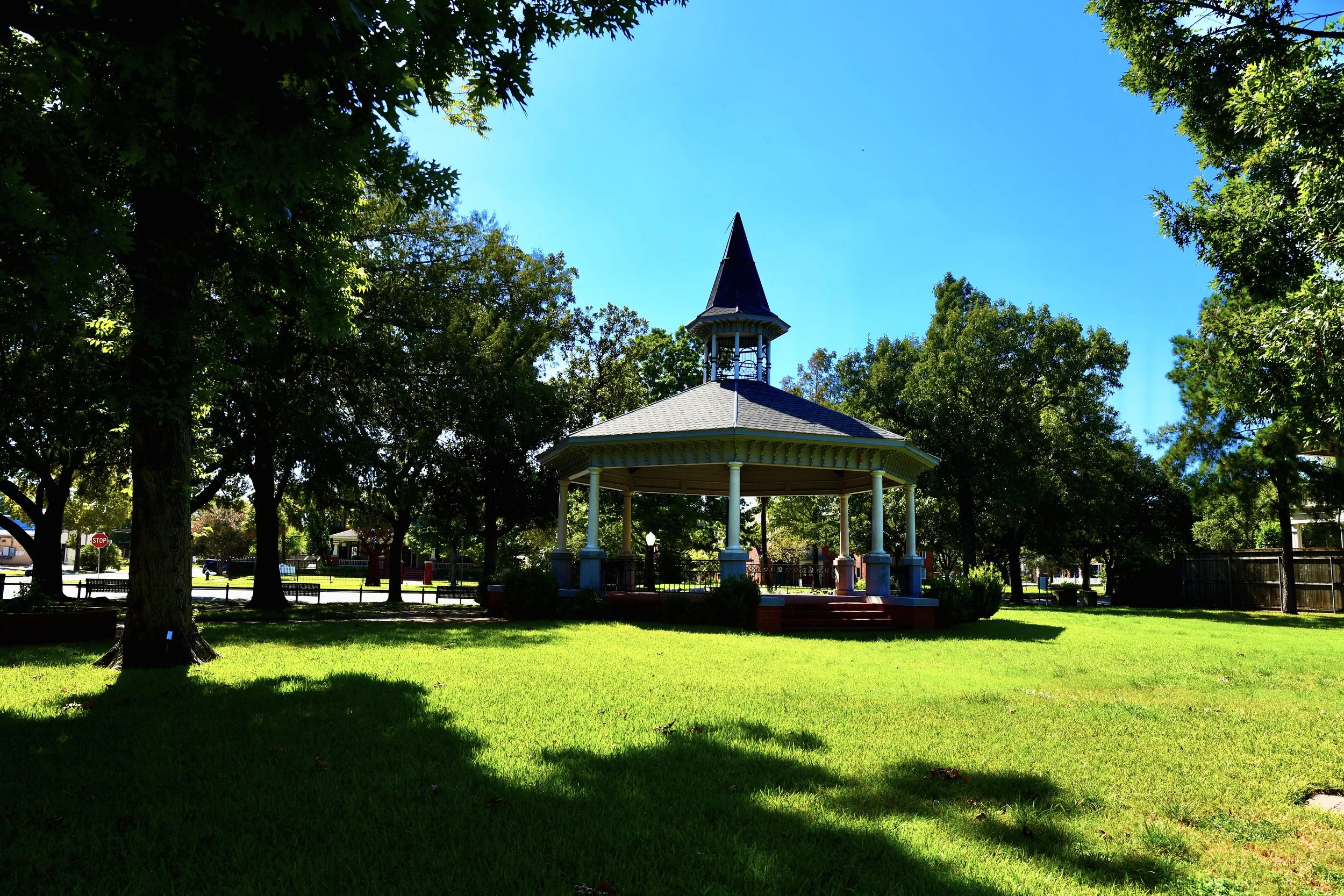
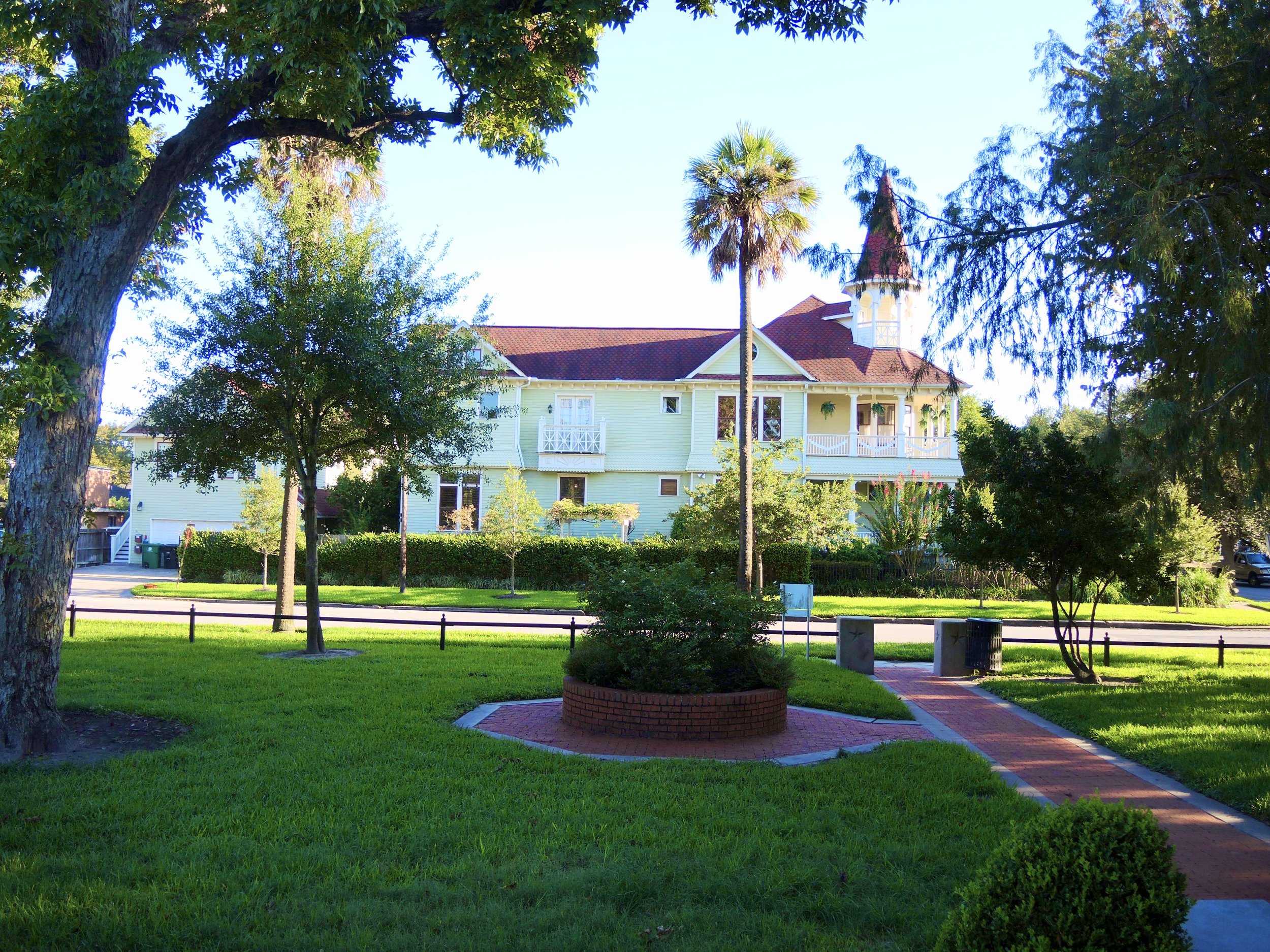
Built in 1892–93 at Heights Boulevard and 18th Street, the Cooley mansion was one of the first homes the Omaha and South Texas Land Company put up in the new Houston Heights. Its owner, D.D. Cooley, had come down from Nebraska as the company’s treasurer and promoter. The Heights was a sales pitch in those years, a planned suburb on high ground that needed showpiece homes to persuade buyers. The company hired the Houston Land and Trust Company to build 17 elaborate homes along Heights Boulevard and Harvard Street, and Cooley’s own was among them, on the northeast corner of 18th and the Boulevard.
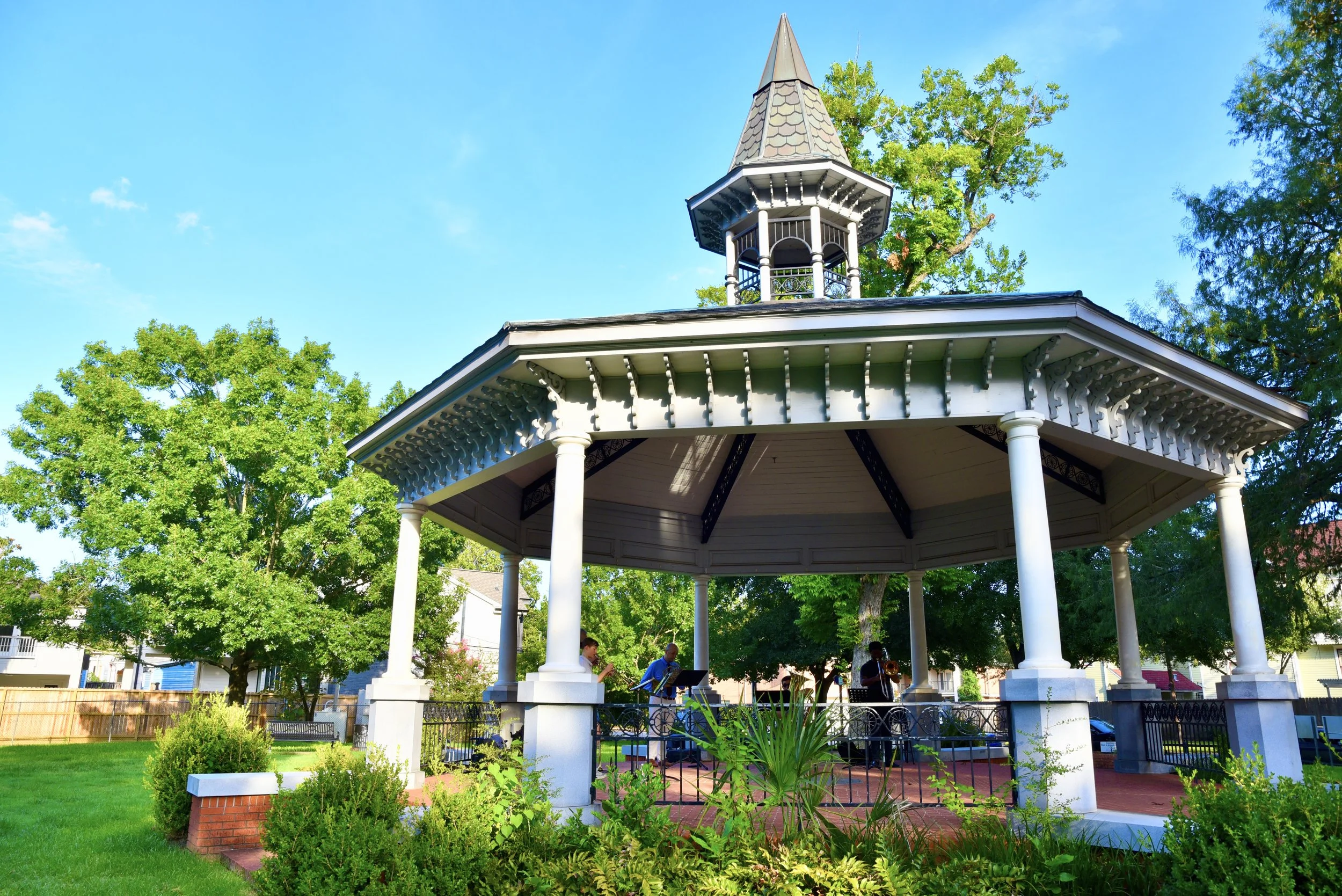
The Cooley house was modern for its time. When electric trolley lines went in along the Boulevard, Cooley tapped into them, giving his house electricity ahead of nearly everyone else in the Heights.
It lasted about seventy years. After Arthur Cooley died in 1962, the grandsons, Ralph Jr. and Dr. Denton Cooley, could not find a buyer at $45,000. They finally sold to Olshan Demolishing Company, which took the house apart and sold the pieces. A Houston Public Library photograph from October 1965 shows the house a few months before demolition.
For fourteen years the half-acre sat vacant. In 1979 the Houston Heights Association bought it to build a park and named it for J.B. Marmion, the last mayor of Houston Heights. Marmion was the mayor who, after the old city hall burned in 1912, had the council commission a new building to serve as city offices, fire station and jail. The Heights remained its own town until 1918, when it voted to join Houston.
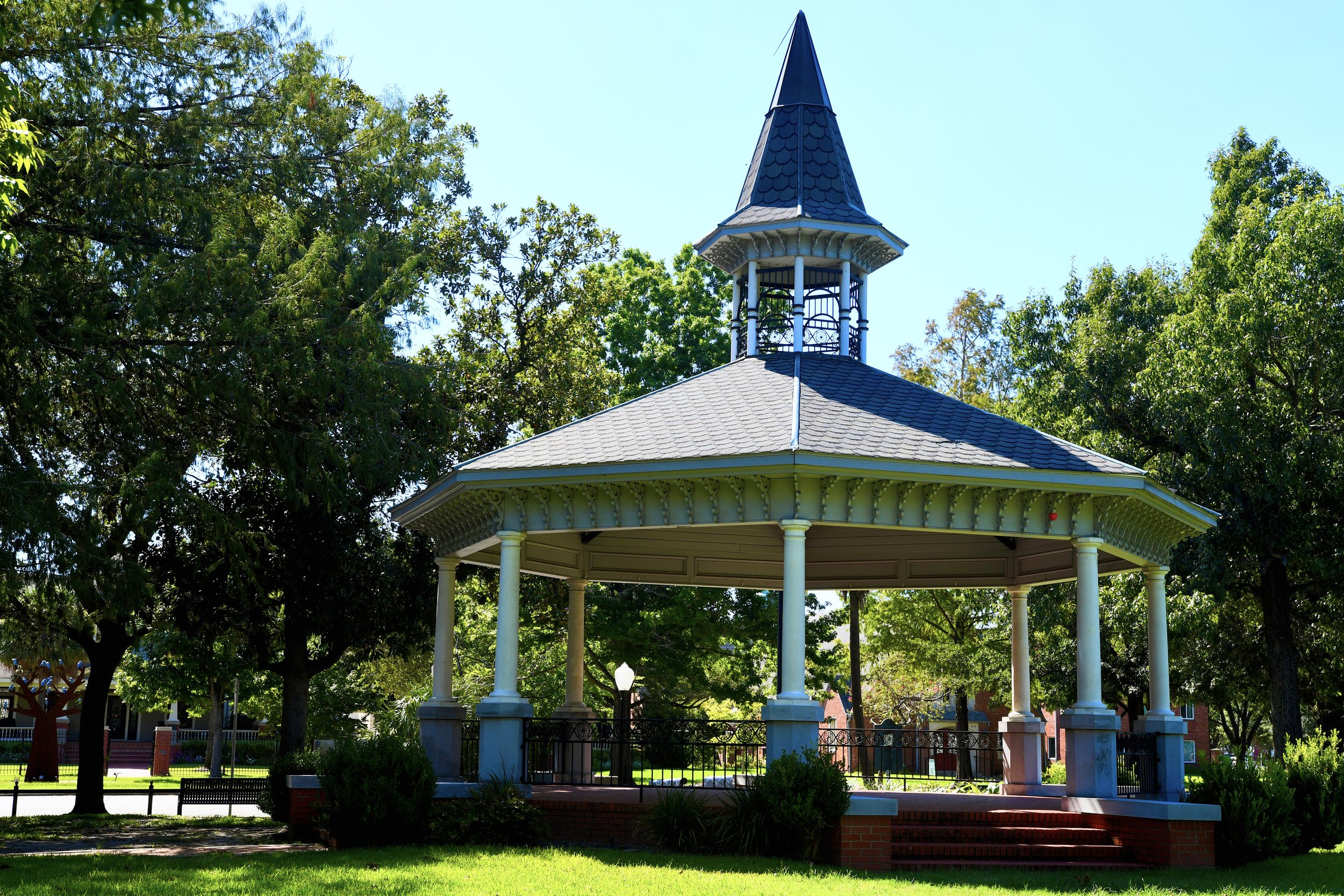
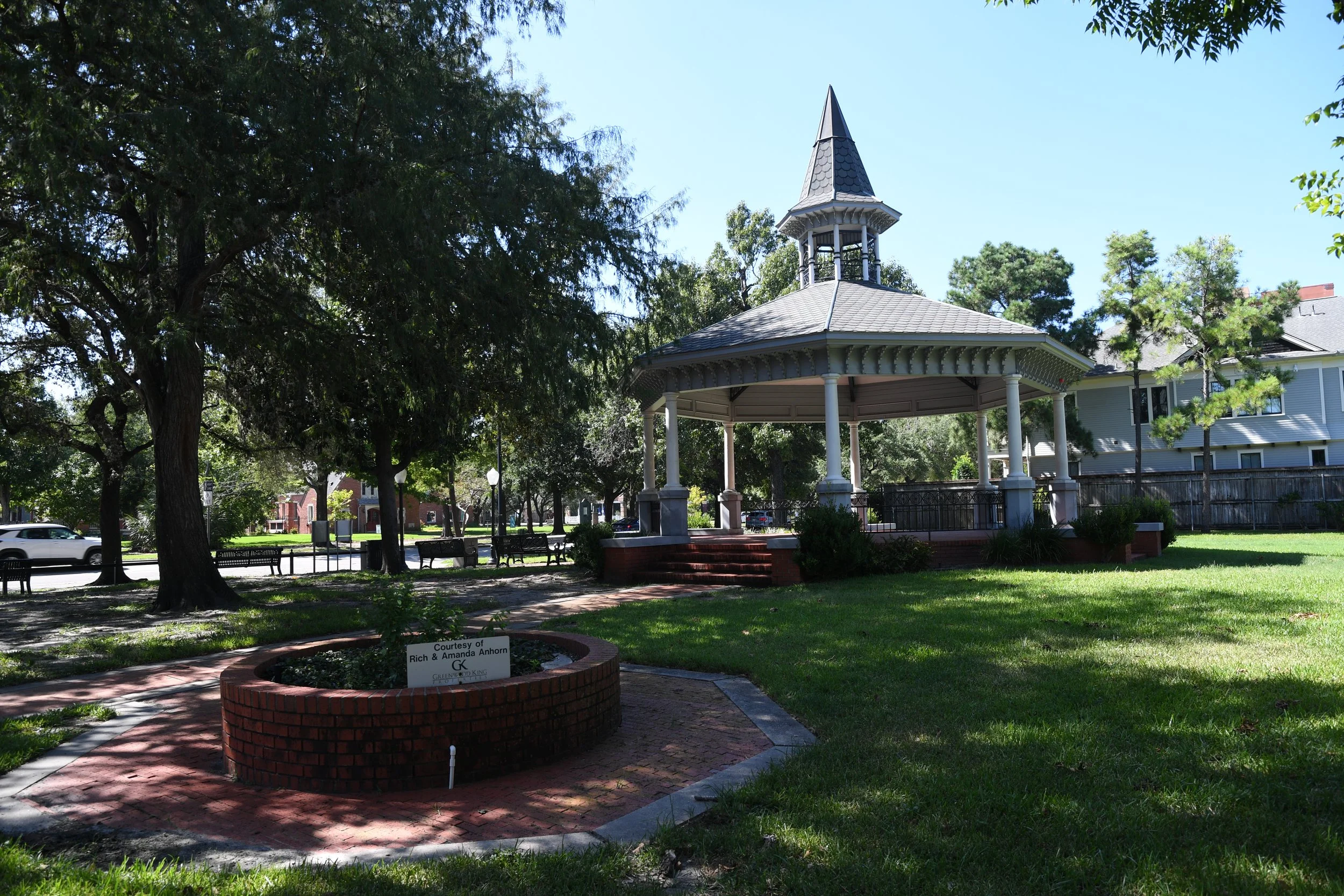
Then the Association did something I didn’t know until I went looking. The park’s award-winning Kaiser Pavilion was designed to emulate the distinctive turret of the Cooley home. The gazebo isn’t a generic Victorian ornament. It’s a deliberate echo of the house that stood on the same ground, raised by neighbors who had watched that house come down.
A cornerstone set in the brick reads Marmion Park, 1985, Houston Heights Association.
Names in the grass
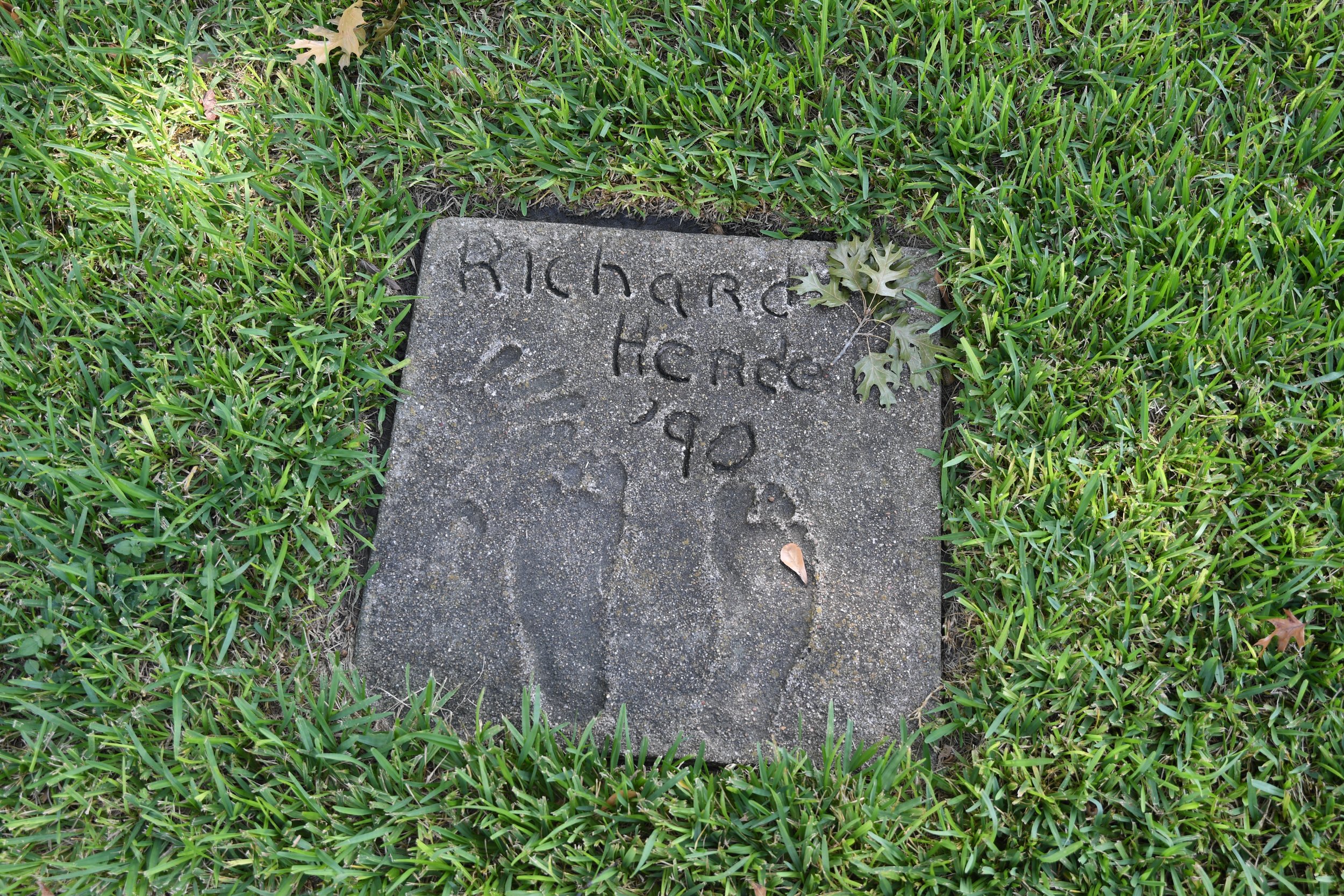
Walk the park’s edges and look down. Set flush in the St. Augustine are concrete squares, some with handprints, some with bare footprints, each with a name scratched in by hand while the cement was wet.
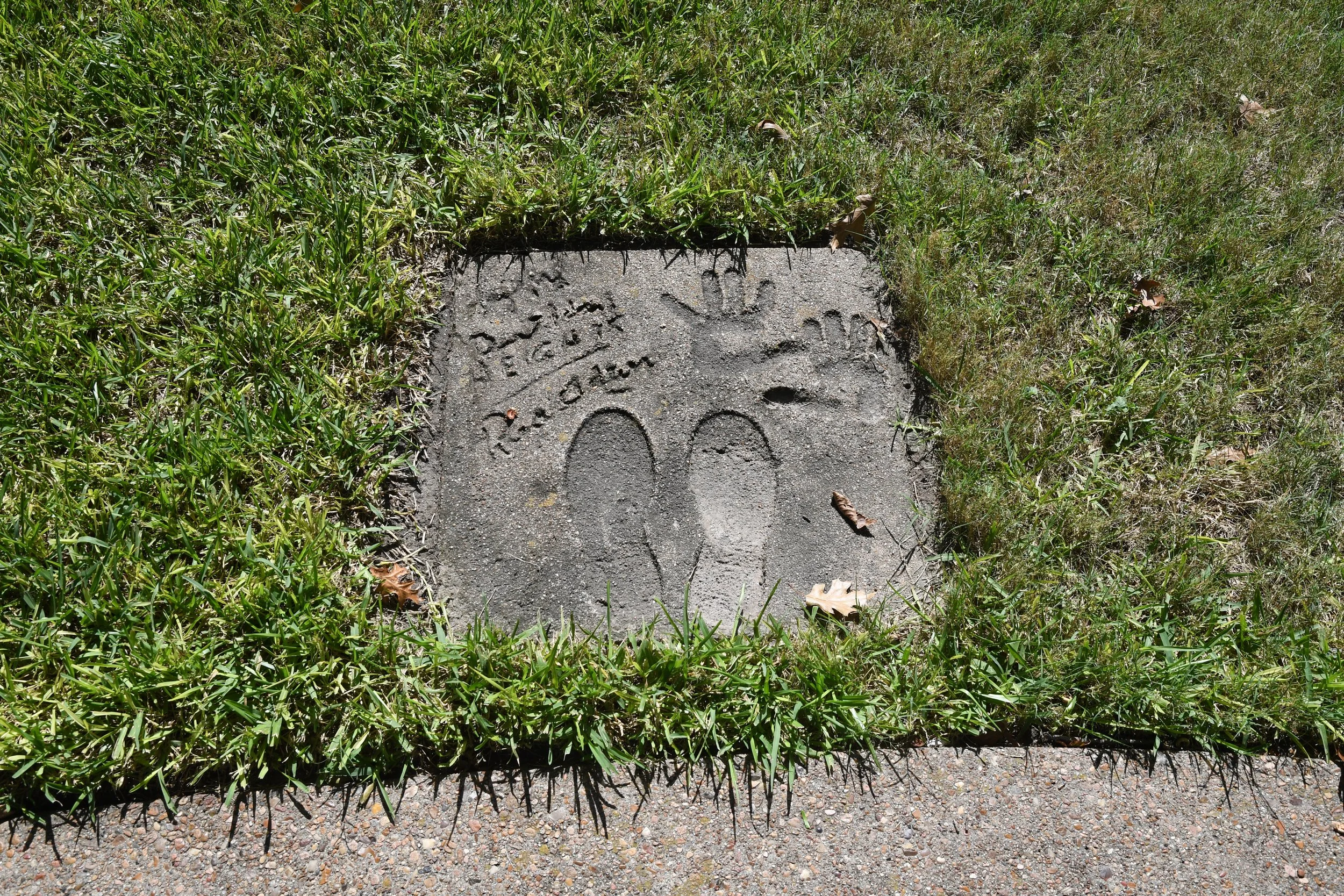
One reads BART TRUXILLO, with 1987 at the bottom and two palms pressed into the center. Truxillo was about as close as the Heights had to an official ambassador, a man whose life ran on art, preservation and community. He co-founded Preservation Houston, which still runs a program series in his memory. He died suddenly of an aneurysm on April 19, 2017, a month before his 75th birthday.
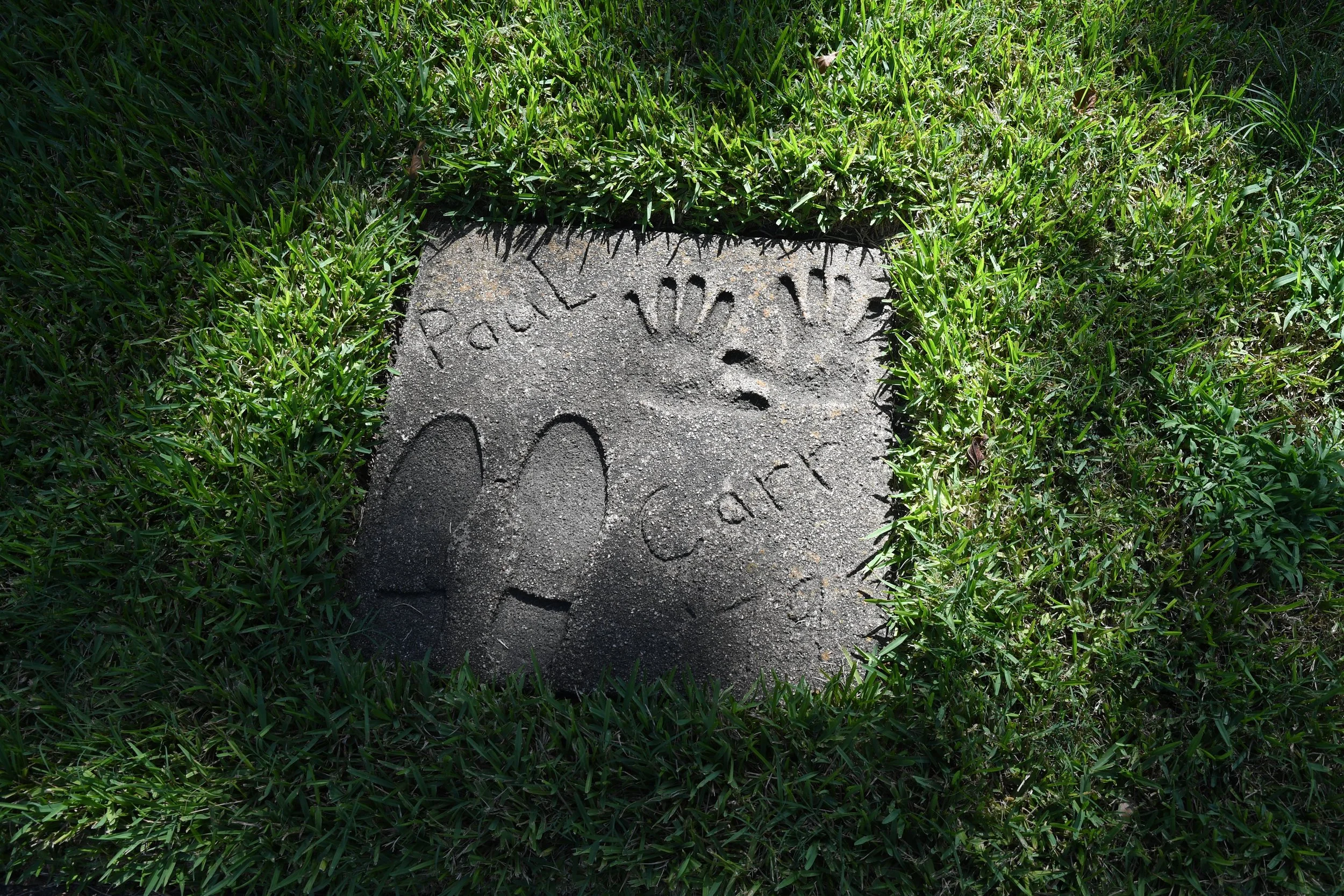
A few steps away is another stone, lettered in careful capitals: DENTON ARTHUR COOLEY, with what looks like “MD” pressed in beside the name and a faint ’91 in the corner. That is the heart surgeon who founded the Texas Heart Institute and in 1969 implanted the first total artificial heart. He was also the grandson of the man who built the house, and one of the two who had to sell it for demolition. Twenty-five years later he pressed his name into the ground where it had stood.
Cooley died in November 2016 at 96. Truxillo followed five months later. Their stones are still here, a few yards apart, going gray under the oaks.
There are others. One is signed by a Richard, dated ’90, whose surname disappears under a scatter of oak leaves. Another is worn so smooth that only the outline of two feet remains.
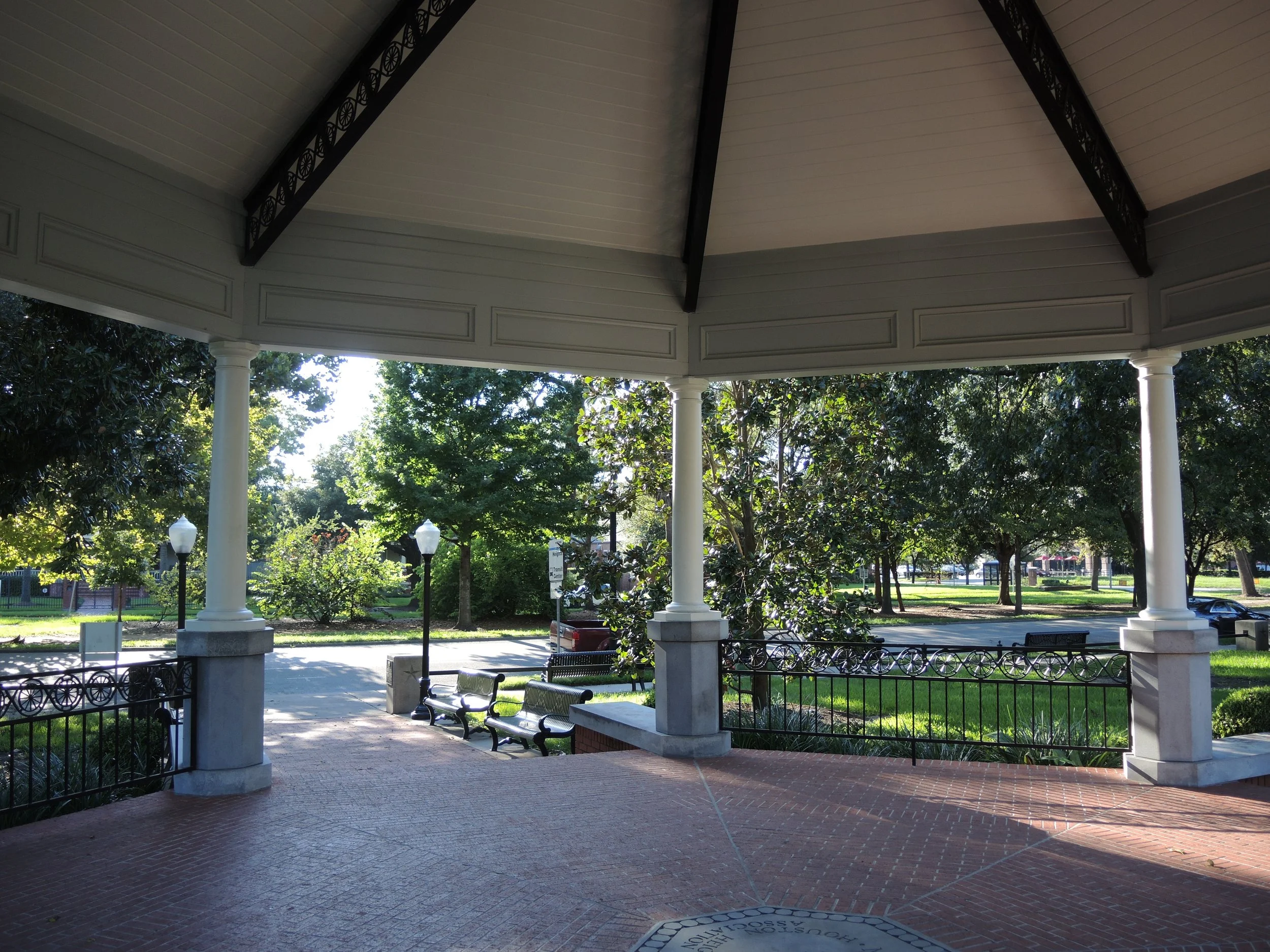
What the park holds
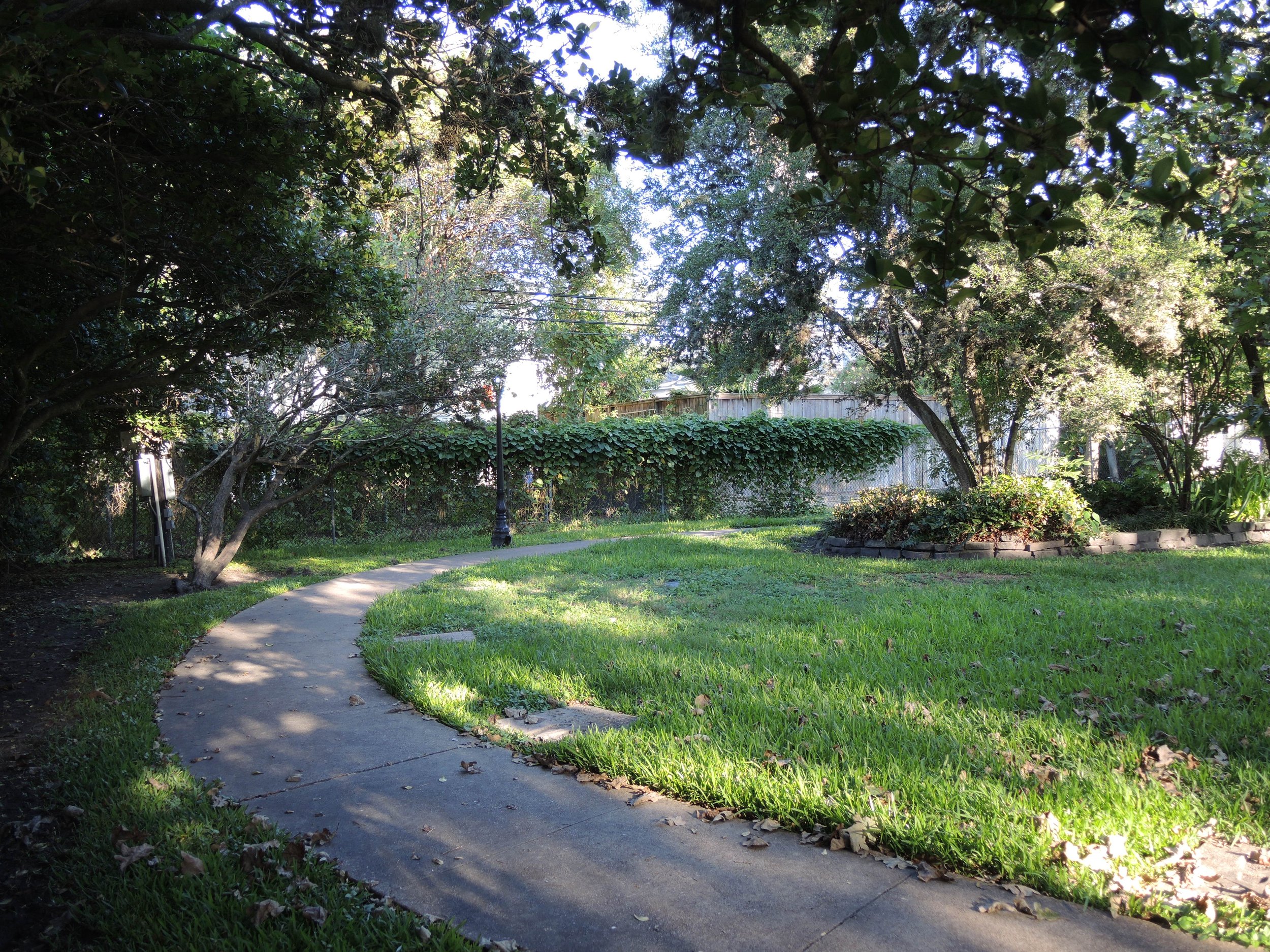
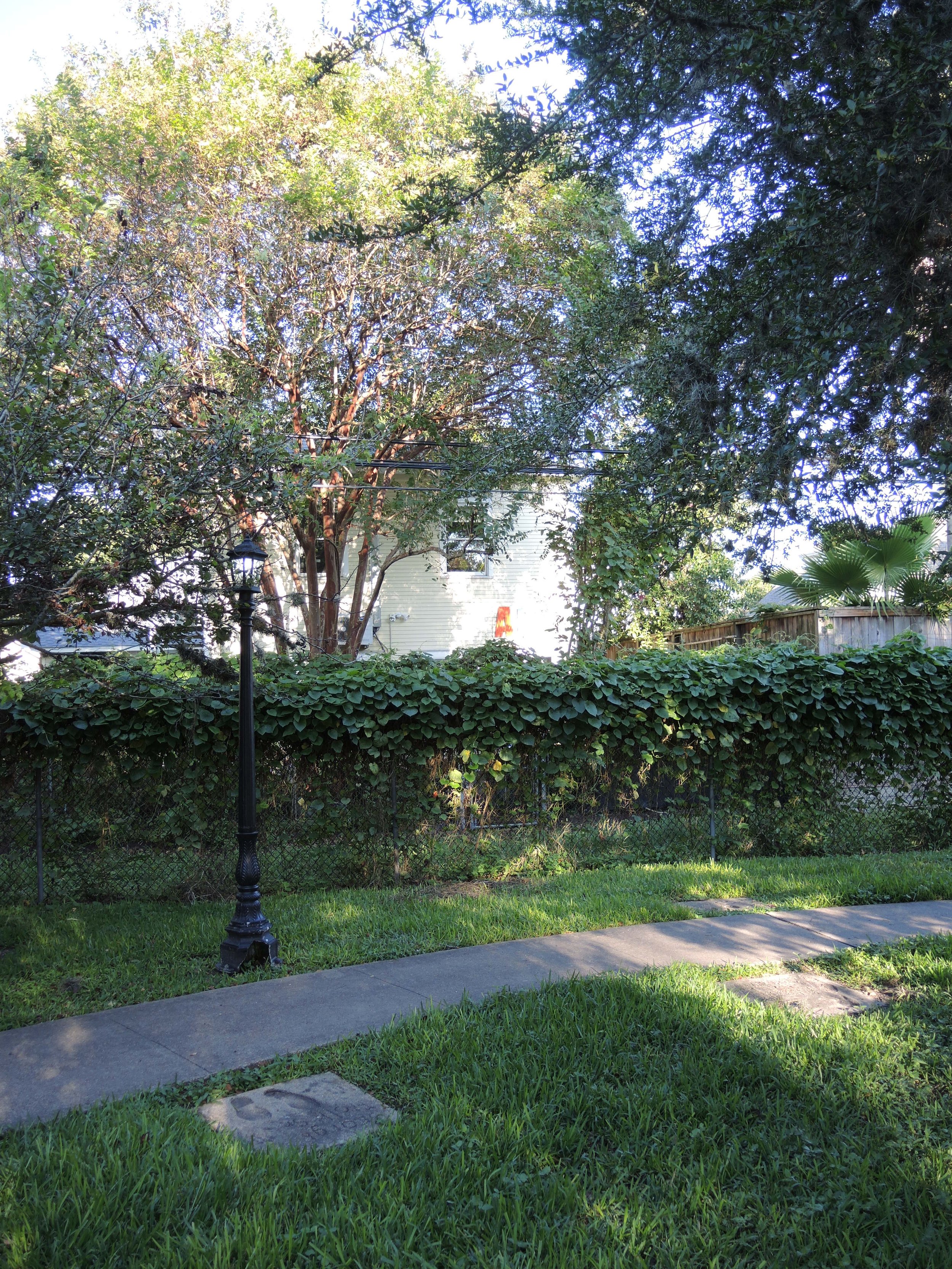
Marmion Park is small. You can cross it in thirty seconds, and most people do, heading to the bus stop or the Boulevard trail. On weekday afternoons it’s mostly empty, a lamp post, a few iron benches and a gazebo waiting for a band.
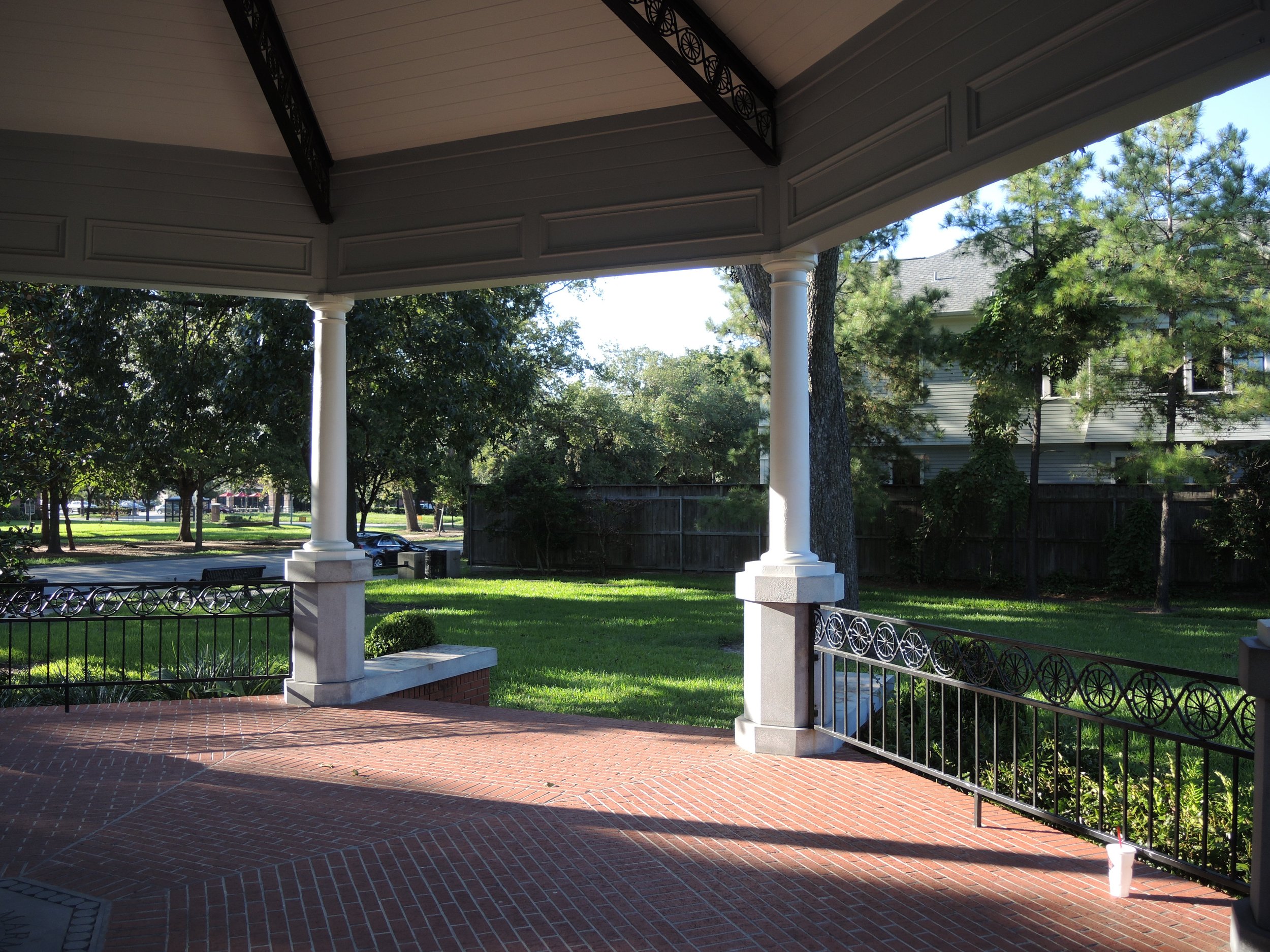
It’s worth slowing down. The pavilion tells you what was lost here. The stones tell you who cared enough to mark the spot. Between them is a short history of the Heights: a Nebraska land company’s showpiece, a family that couldn’t hold on to it, a wrecking crew, a vacant lot, and a neighborhood association that decided the corner deserved better than a parking lot and built something that looks like it has always been there.
The spaces we live in matter.
Photos: Jim Towers / Houston Heights Independent
ATTENTION ASSIGNMENT DESKS & MEDIA PRODUCERS:
All text, video, and original photography covering this story are the exclusive property of the Houston Heights Independent. Broadcast, digital replication, or social scraping of these assets without an active license is strictly prohibited. To license clean, high-density, unwatermarked frames for TV broadcast or regional news print, contact our newsroom immediately, at houstonheightsindependent@gmail.com. or 210-288-3034. Standard licensing fees apply.
© 2026 Houston Heights Independent. All rights reserved. Registered under Jim Towers MJA.JD. No part of this publication, including text, layout, and original photography, may be reproduced, distributed, broadcast, or transmitted in any form or by any means without prior written permission from the Editor-in-Chief. For media licensing inquiries or syndication requests, contact at houstonheightsindependent@gmail.com. or 210-288-3034. Standard licensing fees apply.
HOUSTON HEIGHTS INDEPENDENT
Houston Heights Independent covered this story on the ground. HHI is a civic journalism publication operating on the Murrow standard.
