
THE LAST MORNING
By Jim Towers, M.J.A., J.D.
Houston Heights Independent
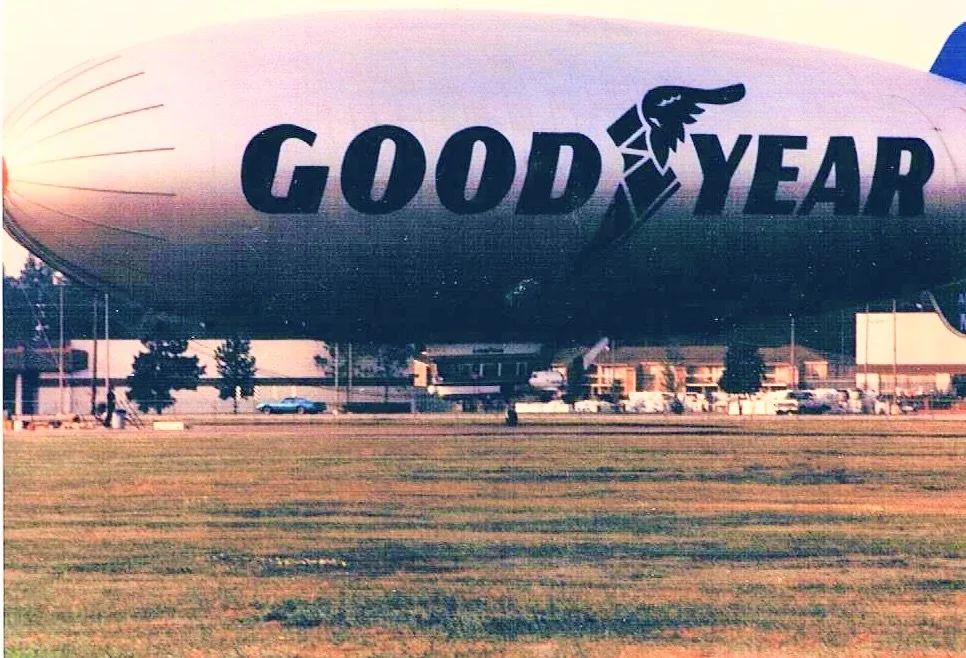
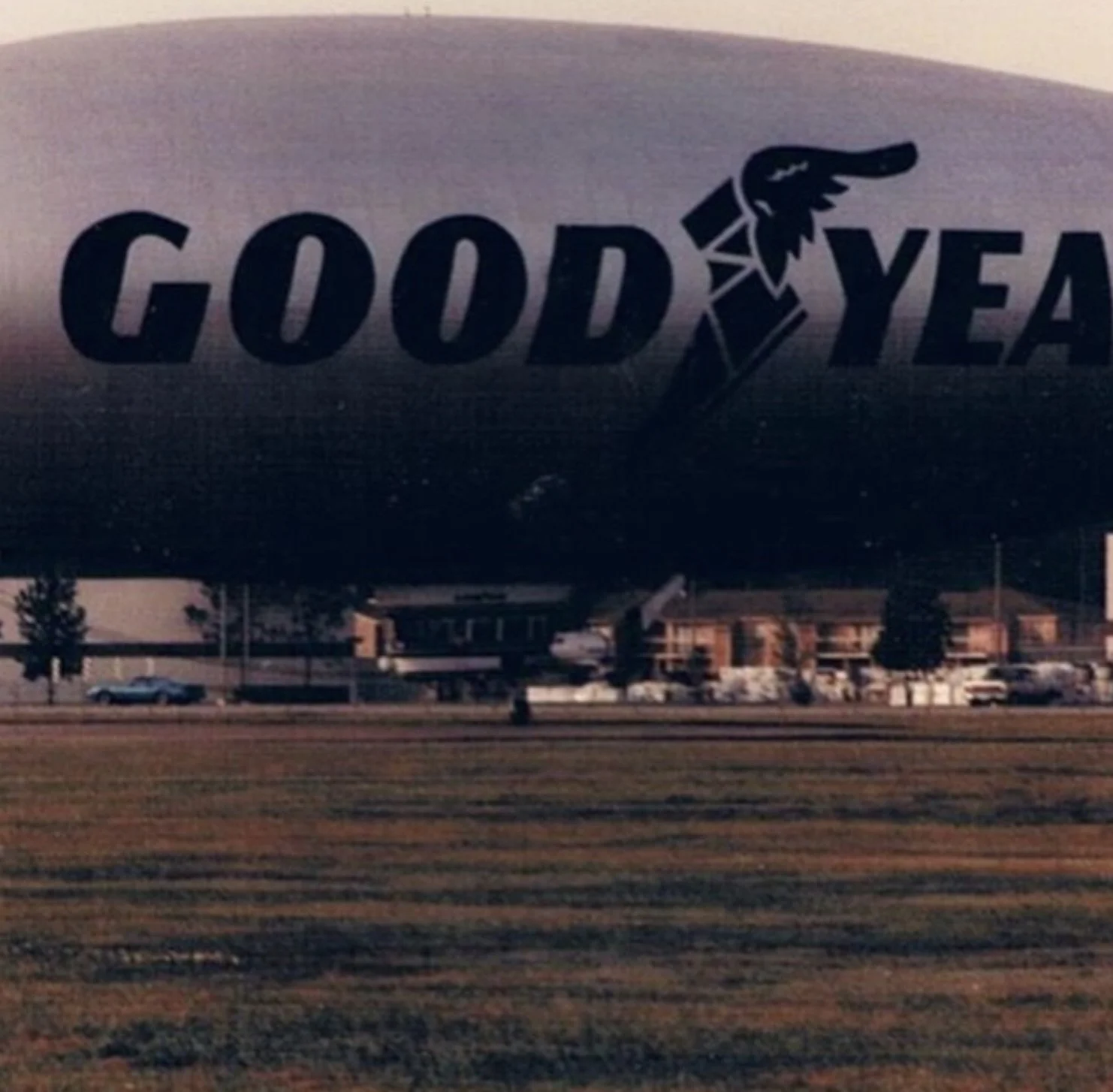
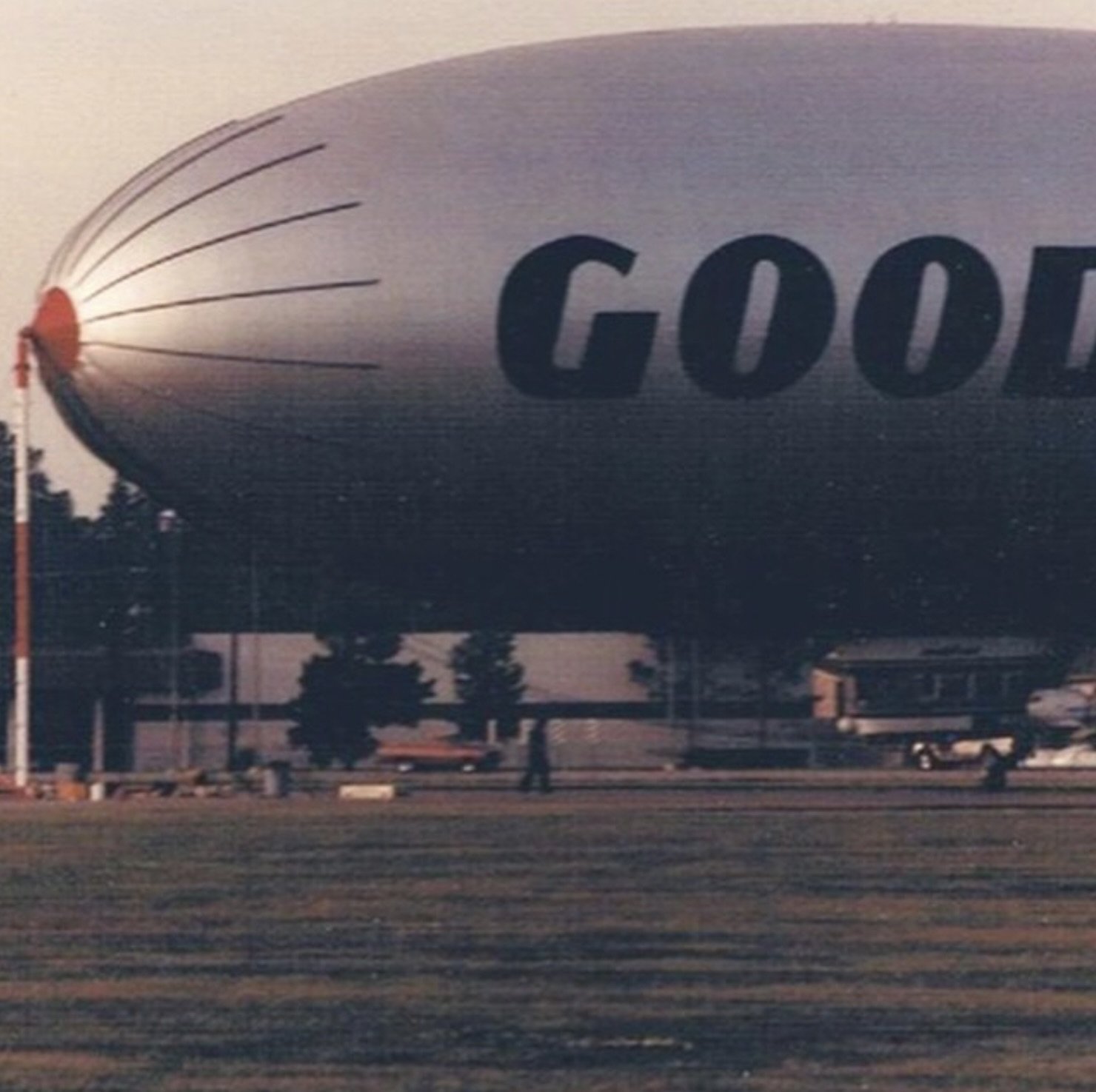
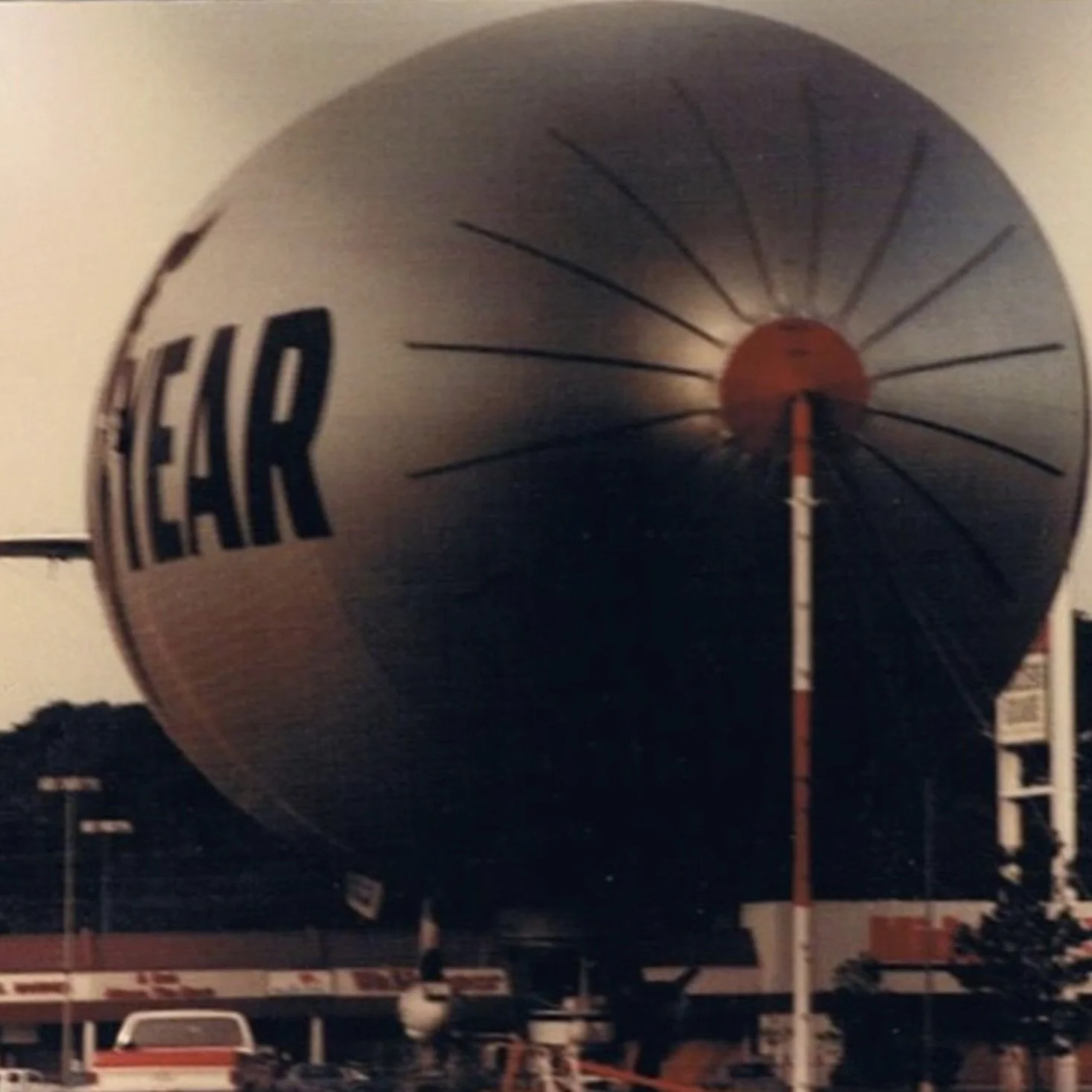
Photographs by Jim Towers. Spring, Texas, 1992. Believed to be the only existing ground-level record of the final departure.
I used to see it from the football field at Heights High School.
It would come in low and slow over the neighborhood, silver against whatever the Houston sky was doing that day, and everything would stop. Practice stopped. Conversation stopped. You just looked up. Everybody looked up. That's what it did — it made strangers out of the same city look at the same thing at the same time. For a moment nobody was arguing about anything.
That was the Goodyear blimp. And for 23 years, it was ours.
Houston, 1969.
The country was coming apart. Vietnam had swallowed a generation. Martin Luther King Jr. had been shot dead the year before, then Bobby Kennedy eight weeks later. Campuses were burning. The civil rights movement was in full confrontation with a system that didn't want to move. Hispanic communities across the Southwest were demanding rights, education, recognition. Native Americans were in open revolt. Asian Americans were fighting for a place in a country that had imprisoned their parents. The war at home was as real as the one overseas, and nobody knew how it ended.
That was the year the Goodyear Tire & Rubber Company brought its blimp to Spring, Texas.
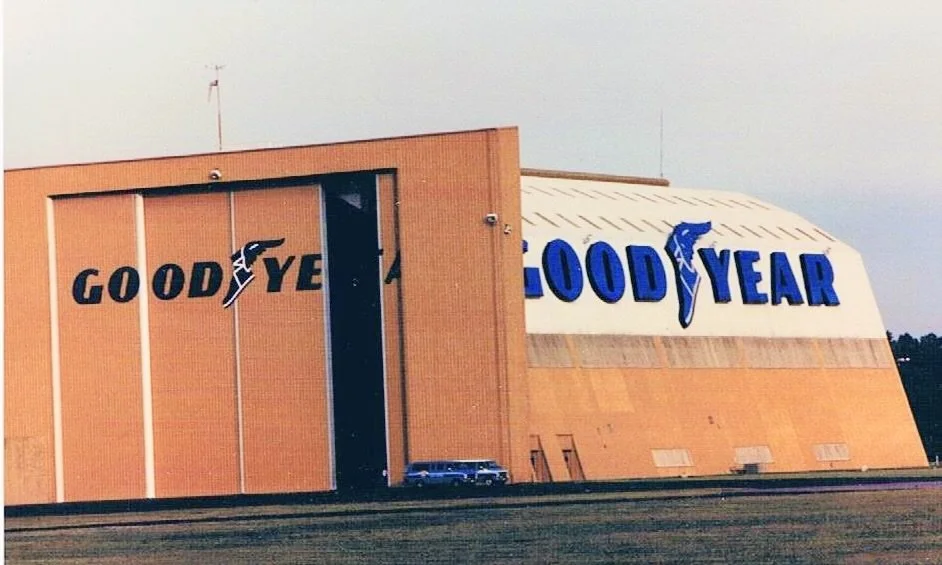
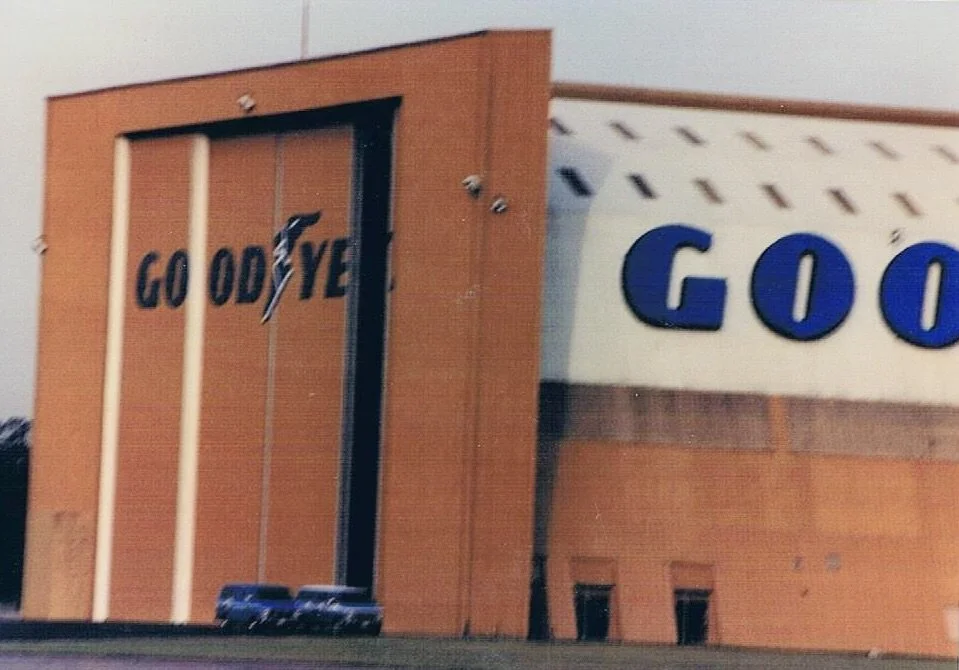
They built a hangar off I-45 near Cypresswood — a massive orange structure with GOODYEAR painted in blue letters across the curved roof, visible from the freeway for miles. It became a landmark before most people even knew it was there. And then the blimp itself emerged, slow and enormous and somehow gentle, and Houston had something it hadn't expected: a reason to look up.
It flew over the Astrodome during Oilers games. It drifted over the ship channel. It crossed the Heights on its way to wherever it was going, and kids on football fields stopped practice to watch it pass. In a city and a country full of things to argue about, the blimp belonged to everyone equally. You couldn't claim it. You couldn't fight over it. It just floated.
Heights High School. 1987. 1988.
The band was out there, and the ROTC, and the cheerleaders, and the flag corps, and all the ordinary noise of a Houston afternoon practice. And then someone would see it first and say something, and then everyone would look up.
You could hear the engines before you saw it. A low, distant sound that didn't belong to cars or planes — something older and slower. And then it would come into view, enormous and silver and unhurried, floating over the Heights like it had all the time in the world. Howard Cosell had talked about it in that unmistakable voice during Monday Night Football broadcasts while it drifted overhead in the stadium lights. You'd seen it cross the Galveston seawall on summer trips, heard it above the Medical Center, watched it move over the ship channel like it belonged to a different century.
Because it did. The technology went back to the 1920s, to an era before television, before the interstate highway, before the world got loud and fast and disposable. A blimp was something most American cities never saw, not once, not ever. Like a Model T still running on a freeway. Like a biplane at a jet airport. Like a dinosaur or a unicorn — something the world had quietly stopped making while nobody was looking.
But in the Heights, in 1987 and 1988, for a brief moment on an afternoon practice field, kids looked up and saw something real from the old world. The band stopped. The flag corps stopped. The ROTC cadets stopped. Everyone just looked up together.
Spring, Texas. Early morning, 1992.
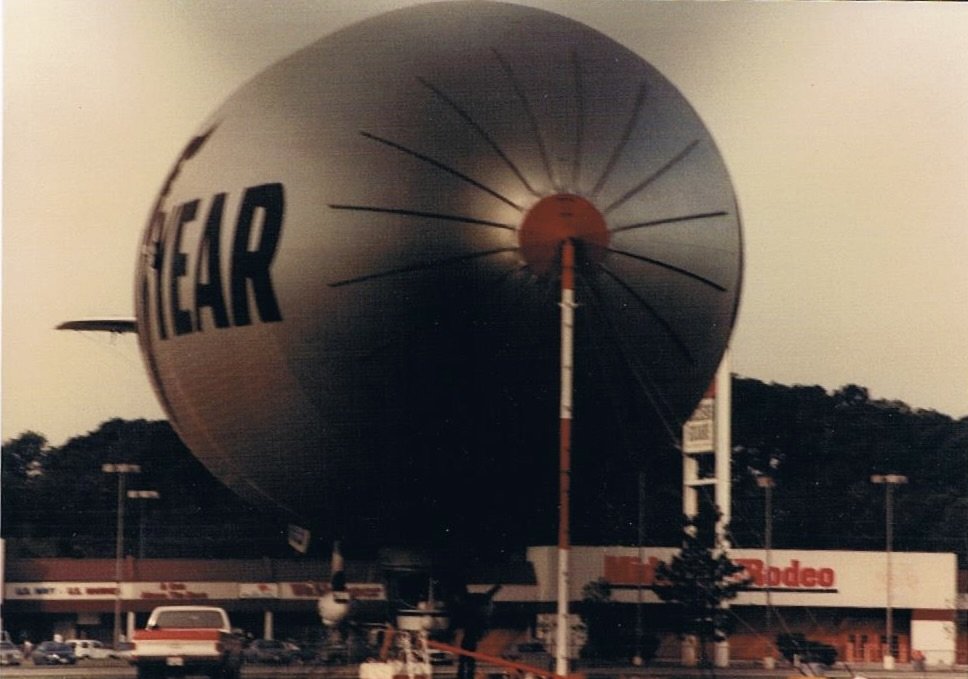
I was coming off a shift. It was cold — cold for Houston, the kind of cold that surprises you. I was a Metro cop by then, working routes out that way sometimes, familiar enough with the I-45 corridor and the FM 1960 strip to know what it was and what it wasn't.
Spring had changed since the blimp arrived. The suburbs had spread north along the freeway, bringing money and then conflict in its wake. The Greenspoint development had opened to the east — meant to be a professional corridor for college graduates, clean and new. Then Metro brought its bus routes out, and the demographics shifted, and the arguments started, and the neighborhood became something different from what the planners intended. That's Houston. It never becomes what the planners intend.
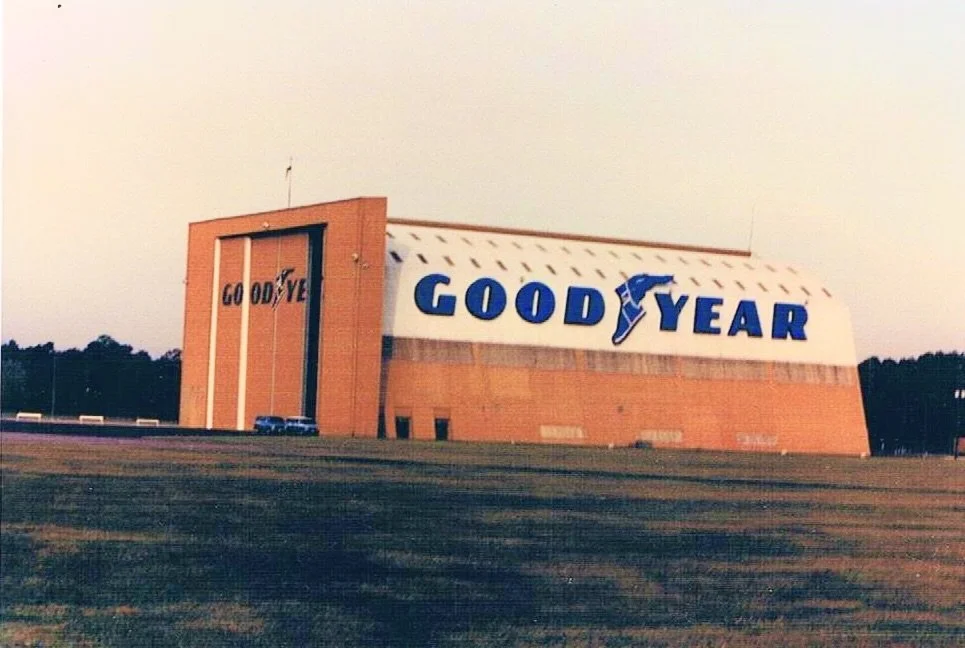
But out near Cypresswood, the hangar was still there. Had been there since 1969. And I'd heard this was the last day.
I didn't have a press credential. I didn't have an assignment. I had whatever camera was in the car — I think it was a 110, or maybe a disc camera, I genuinely can't remember now — and I had the feeling that somebody should have something of this. That it mattered. That you don't let something end without at least pressing the shutter.
I pulled over on the side of the freeway. The light was just coming up. The hangar doors were open.
The blimp came out slow.
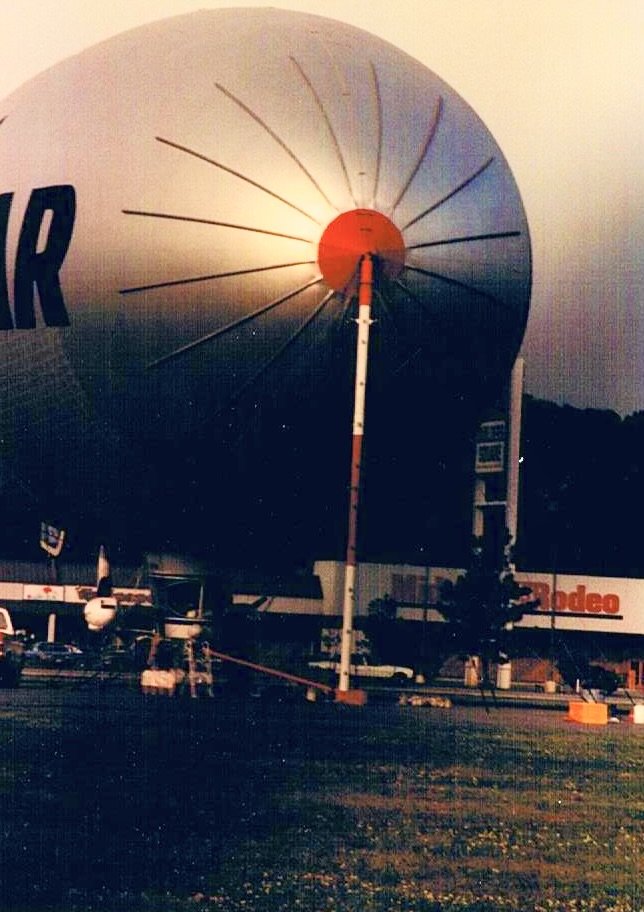
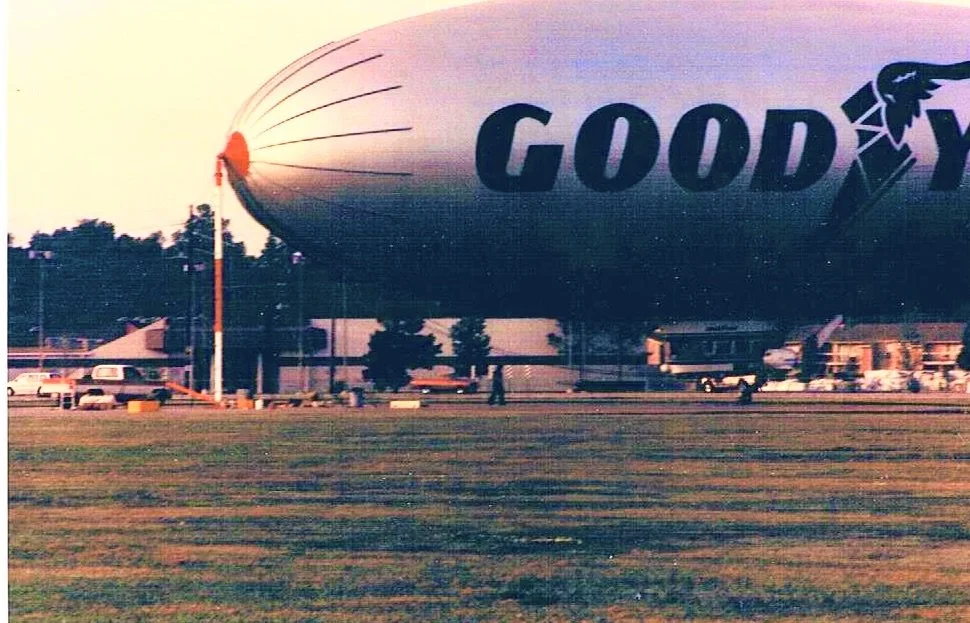
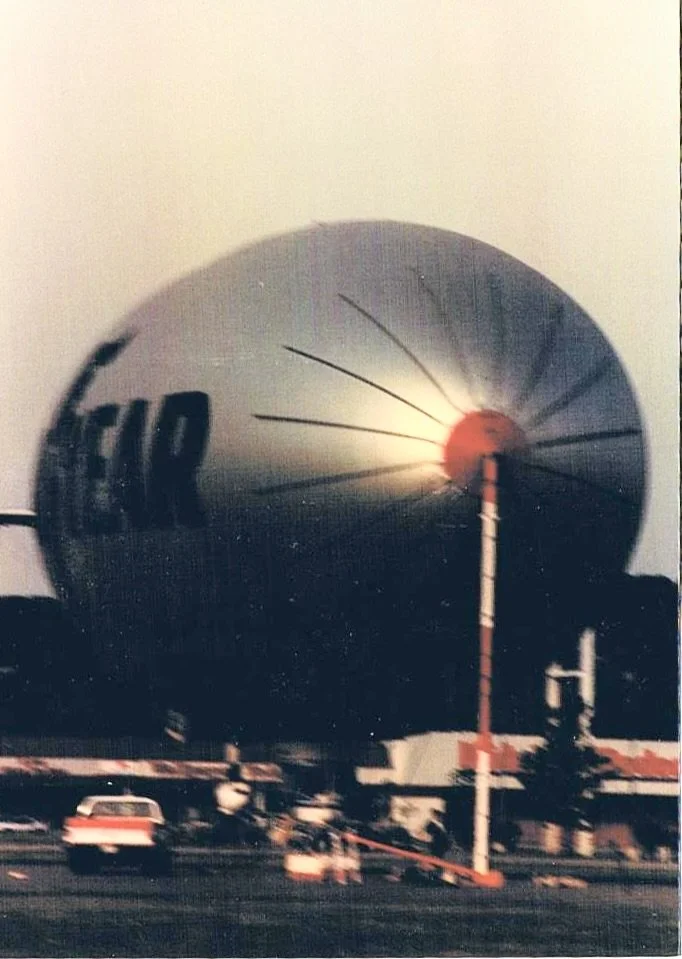
It was bigger than you remembered, always bigger than you remembered, and in the early light it caught the sky and held it. The mooring mast stood in the foreground, red hub and orange-striped pole, the ground crew moving around the base of it in the cold. Strip mall signs along the service road — a Rodeo store, parking lot lights still on. A blue Corvette parked along the fence. The ordinary geography of a Houston morning.
And above all of it, enormous and quiet, GOODYEAR in black letters across silver, the winged foot logo facing east.
I shot what I had. Hangar. Profile. Tail section. Ground crew. The whole operation, documented on whatever film was in whatever camera I was carrying, by a cop on his way home from a night shift who thought somebody should have something of it.
I didn't know then that nobody else had done the same thing. That these would be the only known ground-level photographs of that last morning. I was just a guy with a camera who didn't want something to end without a witness.
Goodyear closed the Spring base later that year. The hangar came down. The field was sold, developed, paved. Today it's a Home Depot and a Lowe's, sitting on the foundation of a building that once housed something Houston looked up at for 23 years.
The blimp went back to Ohio. Houston went back to arguing.
But for 23 years — through Vietnam and Watergate and the oil bust and all the rest of it — that silver shape kept crossing the sky. Over the Astrodome. Over the ship channel. Over the Galveston seawall. Over the Medical Center. Over a football field in the Heights where a kid would stop practice and just watch it go.
In this world, we don't have that anymore.
Some things you don't know you'll miss until the morning they leave.
I'm glad somebody was there with a camera.
The photographs accompanying this piece were taken by the author on film, Spring, Texas, 1992. They are believed to be the only known ground-level documentary photographs of the final departure of the Goodyear blimp from its Houston-area base.
Jim Towers, M.J.A., J.D. is the Founder and Editor-in-Chief of the Houston Heights Independent.
James Towers photojournalist, Houston Heights Independent.
ATTENTION ASSIGNMENT DESKS & MEDIA PRODUCERS:
All text, video, and original photography covering this essay are the exclusive property of the Houston Heights Independent. Broadcast, digital replication, or social scraping of these assets without an active license is strictly prohibited. To license clean, high-density, unwatermarked frames for TV broadcast or regional news print, contact our newsroom immediately, at houstonheightsindependent@gmail.com. or 210-288-3034. Standard licensing fees apply.
© 2026 Houston Heights Independent. All rights reserved. Registered under Jim Towers, MJA.JD. No part of this publication, including text, layout, and original photography, may be reproduced, distributed, broadcast, or transmitted in any form or by any means without prior written permission from the Editor-in-Chief. For media licensing inquiries or syndication requests, contact at houstonheightsindependent@gmail.com. or 210-288-3034. Standard licensing fees apply.
HOUSTON HEIGHTS INDEPENDENT
