
UNDER THE BIG TOP
The Termites Have Arrived in the Heights — and Your House May Already Be Next
HOUSTON HEIGHTS INDEPENDENT
Civic Journalism on the Murrow Standard
By Jim Towers, | Investigative Photojournalist, Houston Heights Independent.
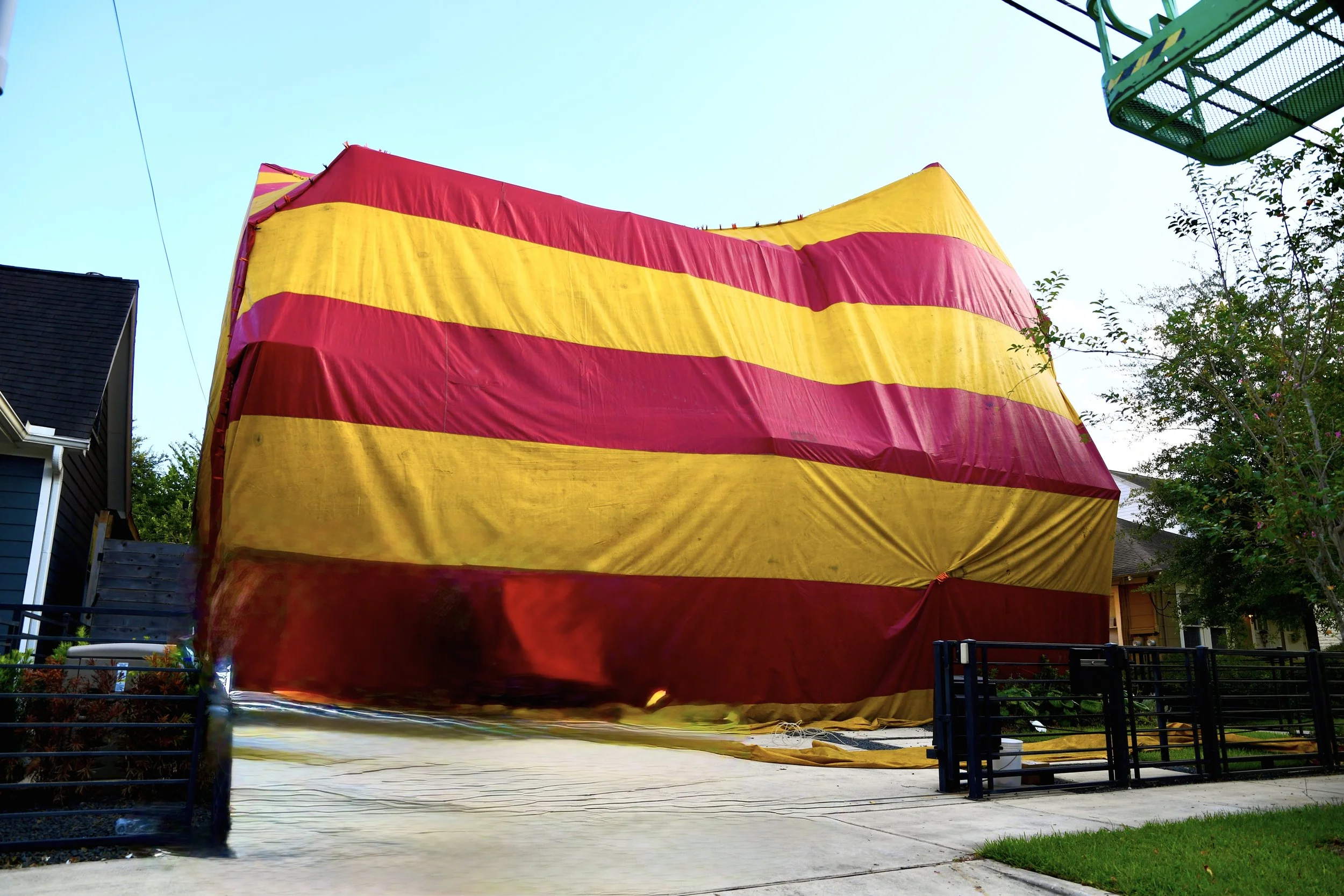
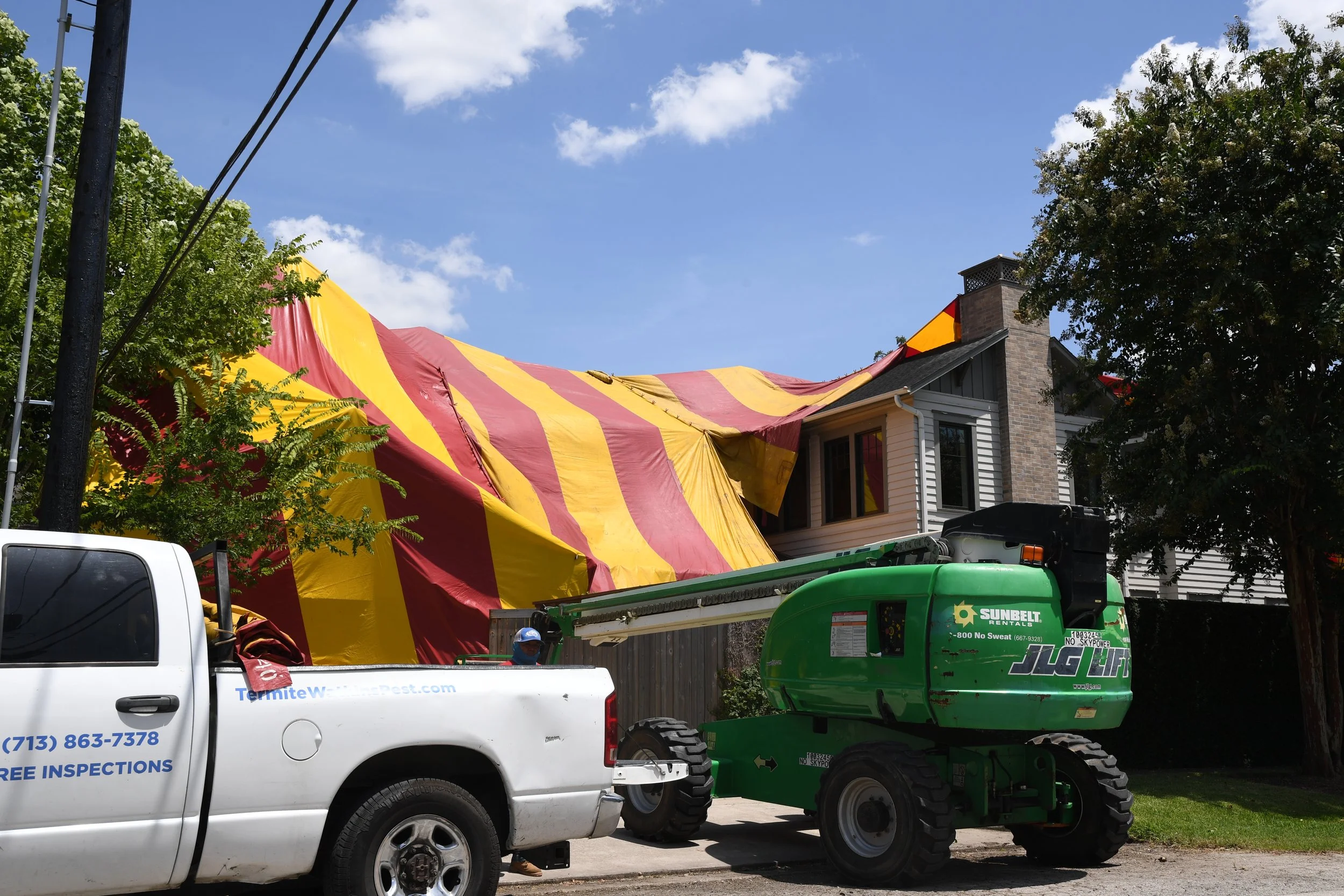
A fumigation tent covers a Victorian-era home near Travis Elementary in the Houston Heights. The structure was sealed for structural treatment — one of two Heights homes documented by HHI within a two-week period. | Photo by Jim Towers / Houston Heights Independent
HOUSTON HEIGHTS — You know the tent when you see it. The red and yellow stripes, big as a circus, swallowing a house whole. On one block it might stop you cold. On two blocks, two weeks apart, it starts to mean something else entirely.
Over the past several weeks, the Houston Heights Independent documented two separate Victorian-era homes in the Heights undergoing structural fumigation for termite infestation — one near Travis Elementary, the other at the corner of E. 7½ Street and Norhill. Two different pest control crews. Two different blocks. Same enemy.
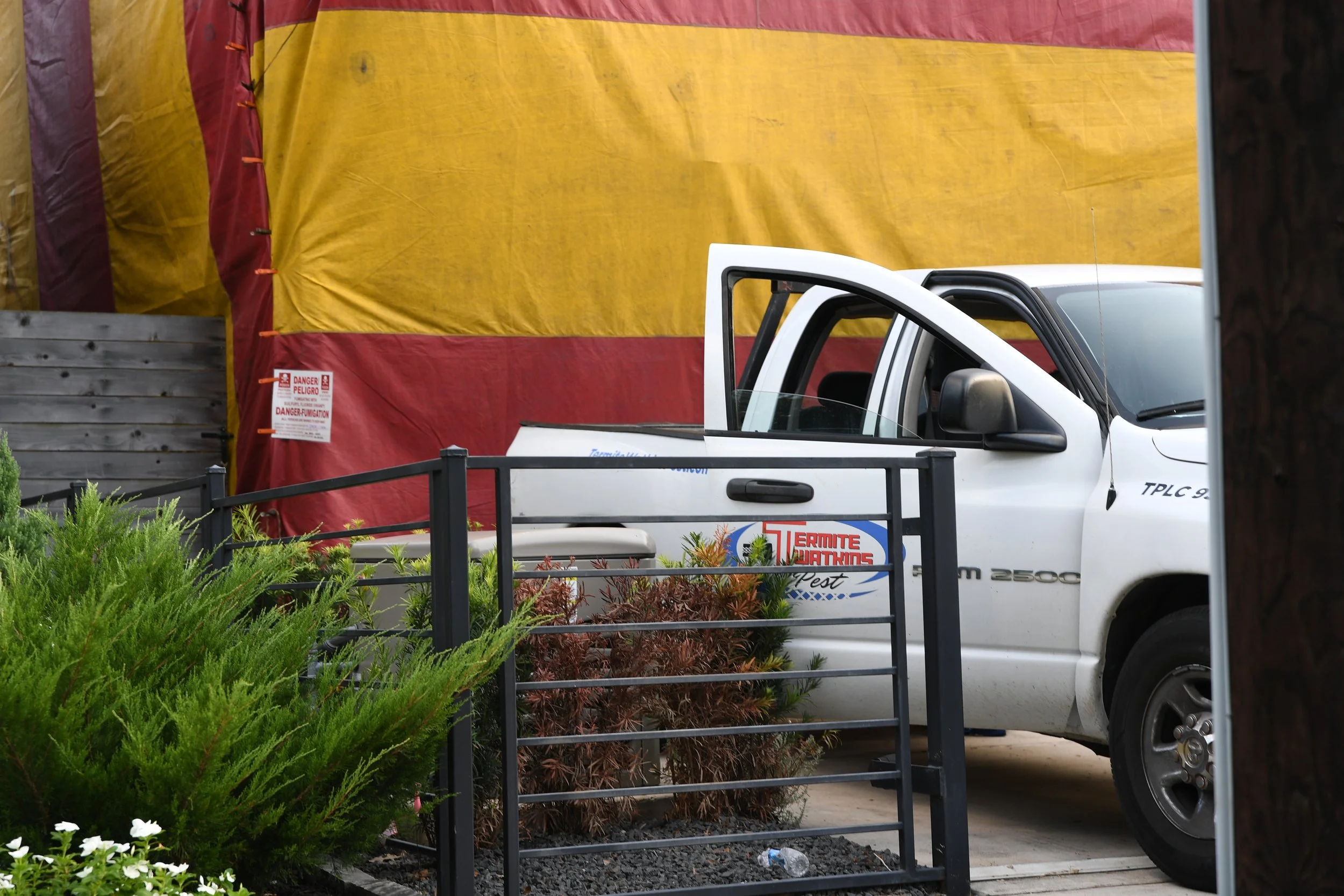
A Termite Watkins Pest vehicle sits outside the Norhill Street location. The DANGER/PELIGRO fumigation placard on the tent is visible at left. | Photo by Jim Towers / Houston Heights Independent
There is more than one enemy. And if you own an older home in the Heights, this is a story you need to read.
“They're Moving This Way”.
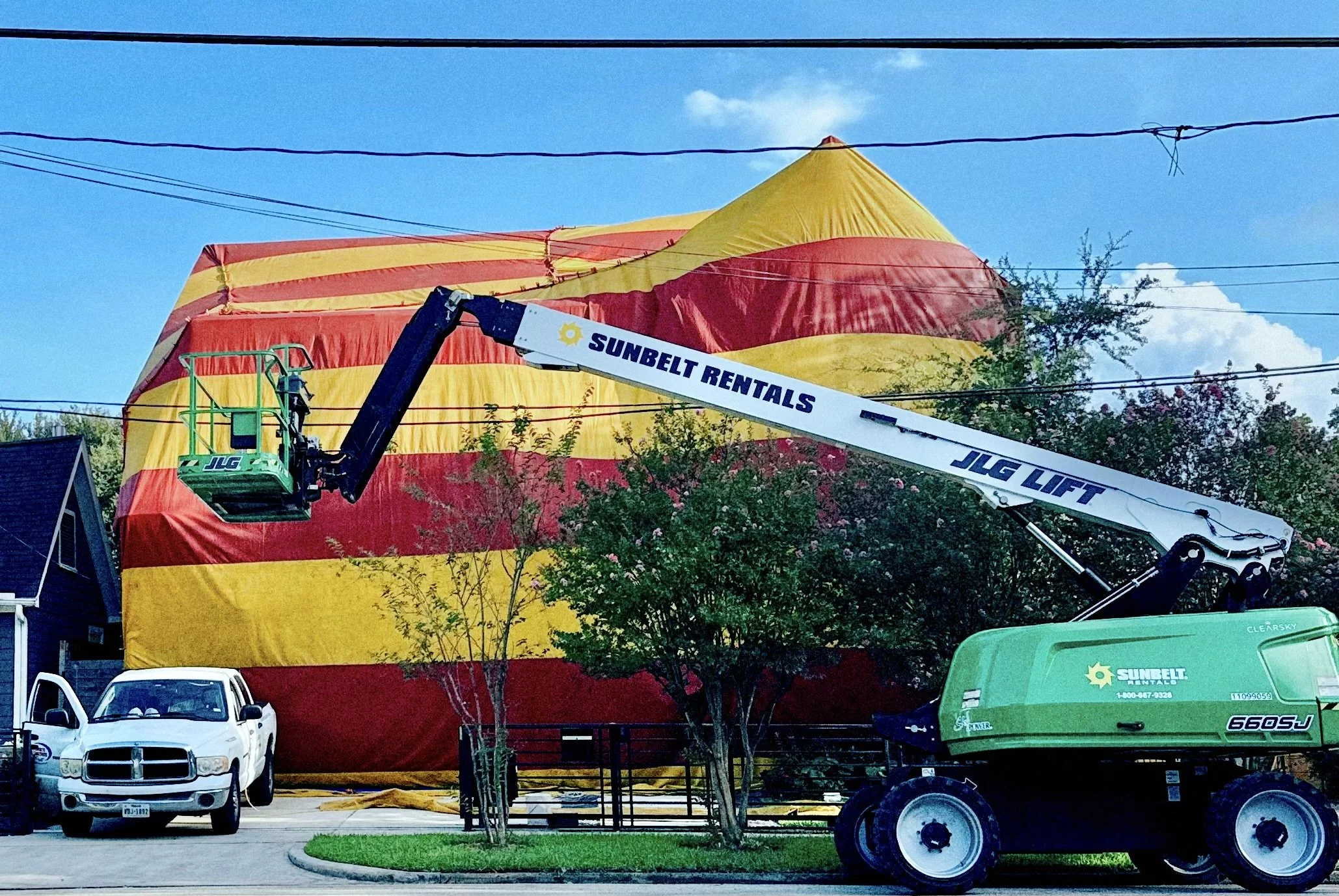
At the Norhill Street location, a crew from Termite Watkins Pest was working a JLG boom lift rented from Sunbelt Rentals to secure the fumigation tent over a two-story structure. A worker on the ground, face wrapped against the summer heat, paused long enough to talk.
He said the Formosan termite has been pushing westward — out of the Gulf Coast corridor, into urban neighborhoods inland. The Heights, with its dense canopy and century-old pier-and-beam homes, is exactly the kind of territory the species moves into. He'd seen more calls in this zip code in the past year.
He wasn't alarming. He was matter-of-fact. That made it worse.
What It Actually Takes
The worker was clear about one thing: fumigation is not a minor inconvenience. It is a full displacement operation.
Before the tent goes up, the family has to strip the house of everything they eat, wear, or put on their bodies. Every item of clothing. Bedding, towels, linens. All medications, vitamins, and personal care products — soap, shampoo, toothpaste. Every piece of food, including anything in the freezer. Every sealed container that touches skin or goes in the mouth. The standard is not convenience; it is chemical exposure risk.
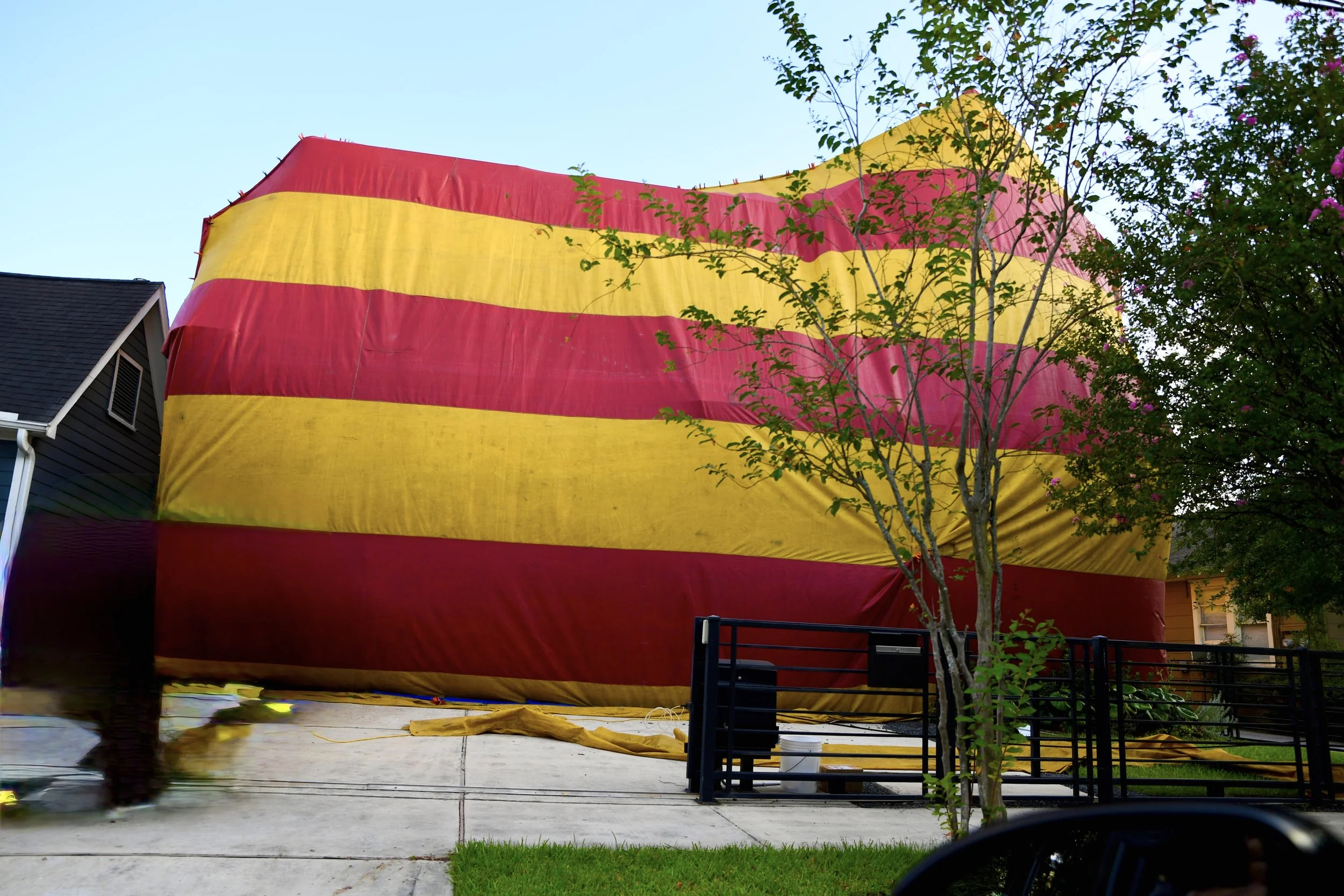
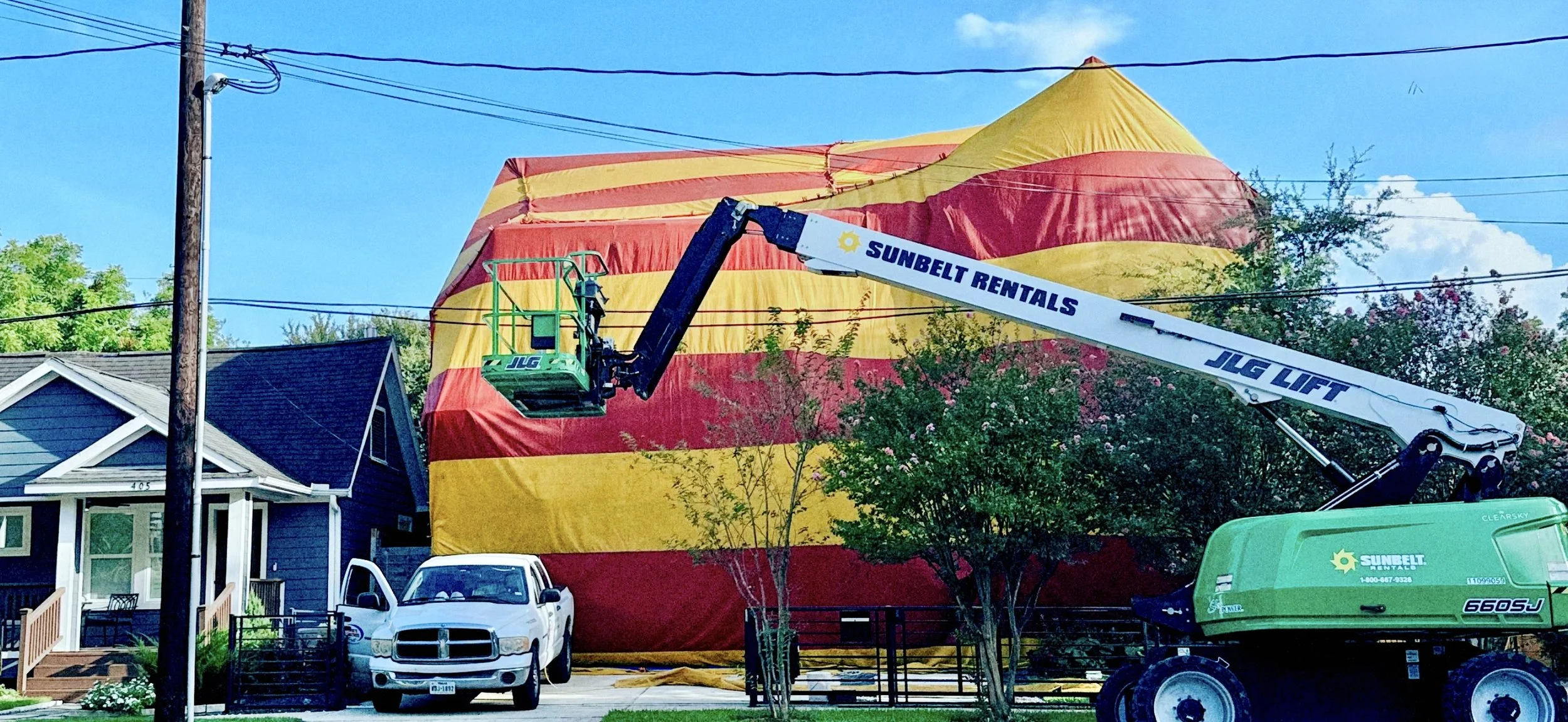
The fumigation tent billows over the roofline at E. 7½ Street and Norhill. The structure, a two-story Victorian-era home, was under tent for up to 48 hours. | Photo by Jim Towers / Houston Heights Independent
The tent stays up for 20 to 48 hours depending on the structure and the infestation level. When it comes down, the family cannot return immediately — an additional 24-hour airing period is standard before reentry. When they do return, every surface they intend to touch has to be cleaned. The house has to be ventilated. The process of coming home is its own operation.
And then there is the cost. Structural fumigation for a Heights-sized Victorian can run $4,500 or more — and that is before a single piece of damaged wood has been repaired. The fumigation kills the colony. It does not undo what the colony did. Structural remediation is a separate contract, a separate crew, a separate bill.
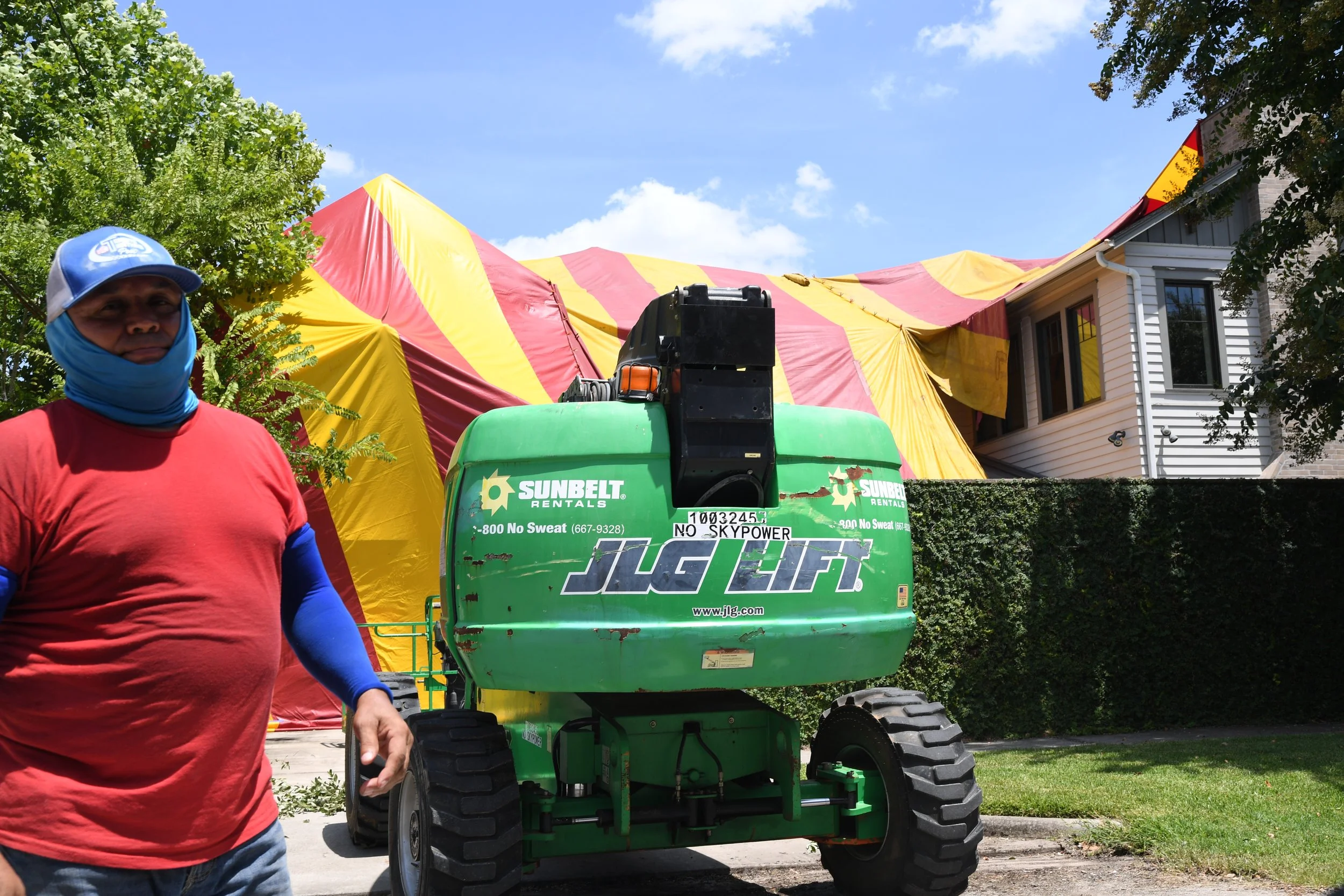
A Termite Watkins Pest worker stands beside a JLG boom lift rented from Sunbelt Rentals, used to secure the fumigation tent over the two-story Norhill Street structure. | Photo by Jim Towers / Houston Heights Independent
The family under that tent has already lost weeks of their life and thousands of dollars. And they are not done.
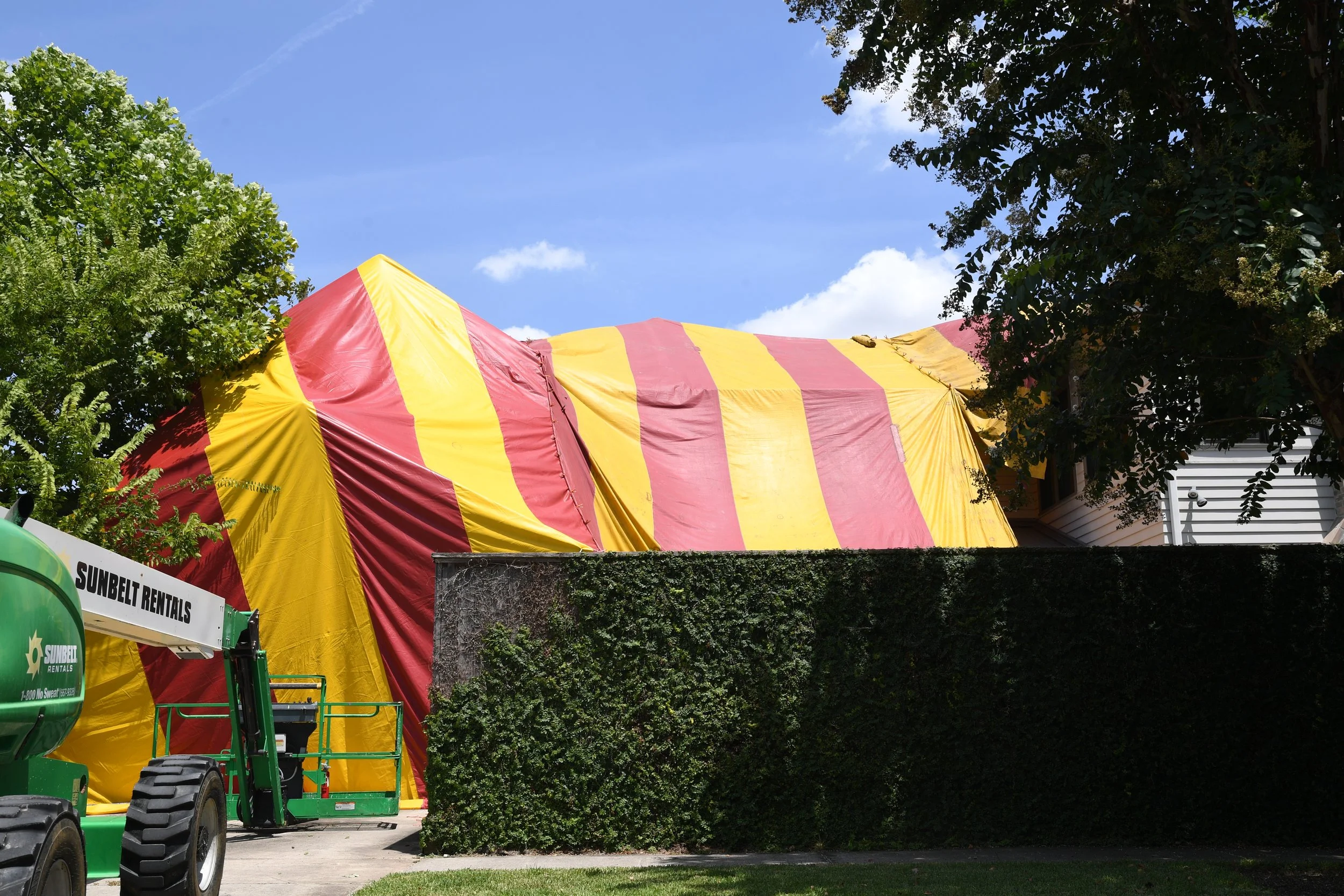
Equipment from Sunbelt Rentals at the Norhill Street fumigation site. Structural fumigation for a Heights-sized Victorian can run $4,500 or more — before structural repair costs begin. | Photo by Jim Towers / Houston Heights Independent
Three Species, One Neighborhood
The Heights does not have a termite problem. It has termite problems — plural.
Drywood termites are the most commonly cited threat to Heights homes specifically. Local pest control operators consistently identify the neighborhood as a high-density area for drywood activity, driven by the abundance of historic wood structures — original framing, old-growth siding, exposed millwork, vintage trim. Drywood termites live inside the wood itself, leaving no ground contact, which makes them harder to detect and easier to overlook until the damage is significant.
Native subterranean termites operate from the soil and are endemic to the region. They have been a baseline threat to Houston-area structures for as long as there have been structures in Houston.
And then there is Coptotermes formosanus — the Formosan subterranean termite. The invasive. The one the worker was talking about. Established throughout the greater Houston area and Gulf Coast region over decades, the Formosan is what happens when a native threat gets a far more aggressive replacement.
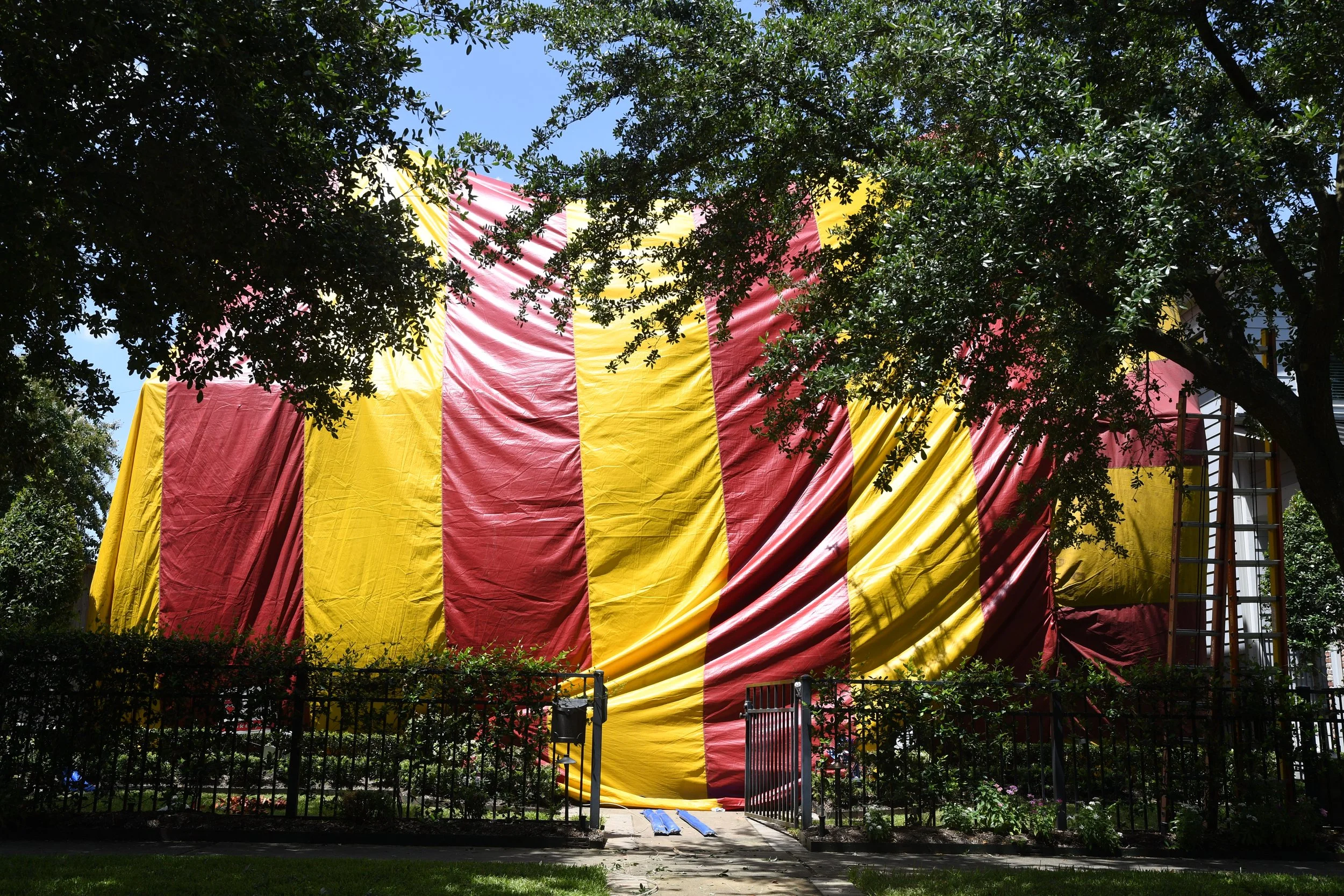
The fumigation tent rises above the Heights tree canopy at the Norhill Street location. The Heights sits under one of the densest urban canopies in Houston — a canopy the Formosan termite also threatens. | Photo by Jim Towers / Houston Heights Independent
Ground Zero Was Here
Most people think of New Orleans when they think of Formosan termites. But Houston was first.
The first confirmed U.S. infestation was documented in 1956 at the Houston Ship Channel in Pasadena. Wooden shoring timbers shipped from the Far East after World War II carried the insects in. From Houston, the species moved east into Louisiana in 1966 and has since colonized at least 30 Texas counties and every major metropolitan area in the state.
The spread vectors are the same ones the worker described: infested timber recycled from docks and railways, mulch and sod moved from infested areas. The Formosan doesn't wait to be invited.
Why the Heights Is Particularly Vulnerable
The Heights was built fast in the early 20th century, largely on pier-and-beam foundations. That means wood sills, crawlspaces, exposed structural timbers, historic millwork — exactly what all three termite species are engineered to exploit, each in its own way.
A Formosan colony can exceed one million insects and will simultaneously maintain a subterranean nest near the structure and an aerial nest inside it. The damage is not linear. It is everywhere at once.
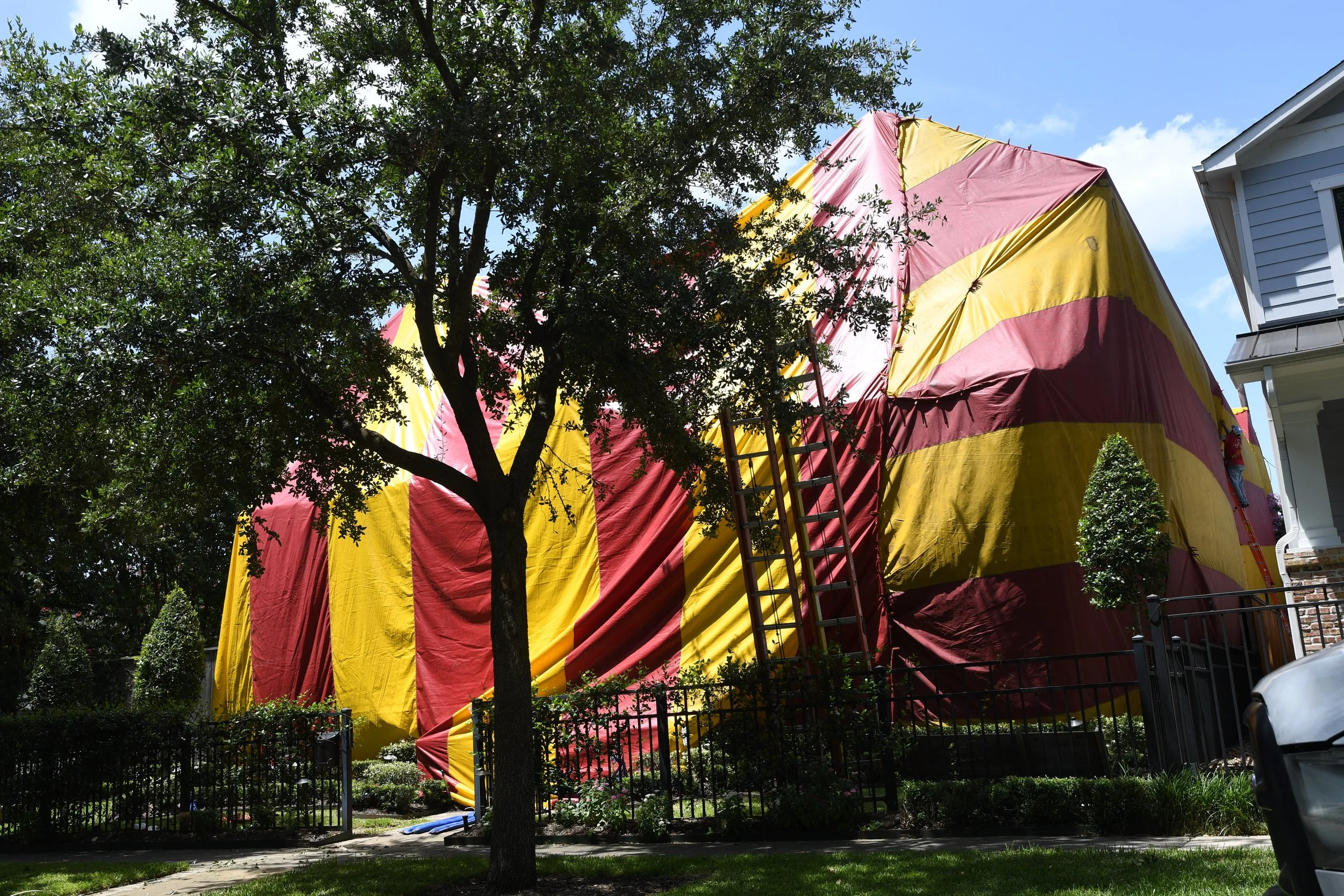
Crew members pull down the fumigation tent at the Travis Elementary-area location. The removal process requires additional ventilation time before residents can return. | Photo by Jim Towers / Houston Heights Independent
The threat is not limited to structures. The Formosan termite also attacks living trees. The U.S. Forest Service has valued Houston's urban forest at $16.3 billion — accounting for stormwater management, air quality, energy savings, and property values. The Heights sits under one of the densest canopies in the city. A Formosan infestation doesn't just threaten a homeowner's investment. It threatens the neighborhood's lungs.
What to Watch For
Pest control professionals identify three primary warning signs common to all termite species active in the Heights:
Swarmers and discarded wings. Piles of translucent wings near windowsills, doors, or exterior light fixtures signal a swarm event. Formosan and native subterranean termites swarm most heavily around Mother's Day and into summer, typically at night following rain. If you see a dense cloud of winged insects near a porch light on a warm evening in May or June, don't assume they're moths.
Mud tubes. Linear mud-like tunnels running along exterior foundations or concrete walls indicate subterranean or Formosan access — the highways a colony uses to move between soil and structure.
Hollow or damaged wood. Wood that sounds hollow when tapped, or bubbling and cracked paint on interior trim and baseboard, can indicate active drywood or subterranean damage inside the wall — often well underway before it becomes visible.
The Mother's Day Termite
The Formosan swarms at night, drawn to light, typically following a few days of rain. Swarm season peaks around Mother's Day — which is why pest control workers sometimes call it the Mother's Day termite. Houston Public Media reported in May 2025 that Formosan swarms were expected to peak in the Houston area around Mother's Day weekend. The pattern is consistent year over year.
Practical note from the field: turn off your porch light during swarm season. The insects are attracted to it. A swarm finding your roofline in the dark is a swarm looking for a place to found a new colony.
What Two Houses Tell Us
One tented house is an incident. Two tented houses, two separate blocks, two separate crews, two separate weeks — that's a pattern.
The Houston Heights Independent is not in the business of creating alarm. We are in the business of reporting what we see. What we saw, documented across multiple visits with cameras on the public right-of-way, is that termite pressure in this neighborhood is active and visible right now.
Texas A&M entomologists and the USDA Agricultural Research Service classify the Formosan subterranean termite as one of the most aggressive and economically destructive insect species in the country. Add drywood termites on top of that baseline, in a neighborhood built from old-growth wood, and the Heights carries a concentrated structural risk that most residents have no reason to think about — until the tent goes up next door.
What You Can Do Right Now
If you own a pier-and-beam home in the Heights — particularly a pre-1950 structure — pest control professionals recommend the following:
• Have your home inspected annually by a licensed pest control operator. Formosan and drywood damage often begins inside walls and is invisible until severe.
• Eliminate wood-to-soil contact around your foundation. Firewood, railroad ties, and decorative timber stored against the structure are a direct invitation to subterranean species.
• Check your trees. Formosan colonies establish aerial nests inside living trees. If a mature oak on your property is declining without obvious cause, a licensed arborist should inspect for internal infestation.
• Turn off porch lights during swarm season — May through early June, particularly after rain.
• Report suspected infestations to the Texas A&M AgriLife Extension Service or the Harris County Cooperative Extension. Documentation helps researchers track the spread.
The tent comes down in a few days. The neighborhood it left behind is still here. So is the threat.
— 30 —
ATTENTION ASSIGNMENT DESKS & MEDIA PRODUCERS:
All text, video, and original photography covering this story are the exclusive property of the Houston Heights Independent. Broadcast, digital replication, or social scraping of these assets without an active license is strictly prohibited. To license clean, high-density, unwatermarked frames for TV broadcast or regional news print, contact our newsroom immediately, at houstonheightsindependent@gmail.com. or 210-288-3034. Standard licensing fees apply.
© 2026 Houston Heights Independent. All rights reserved. Registered under Jim Towers, MJA.JD. No part of this publication, including text, layout, and original photography, may be reproduced, distributed, broadcast, or transmitted in any form or by any means without prior written permission from the Editor-in-Chief. For media licensing inquiries or syndication requests, contact at houstonheightsindependent@gmail.com. or 210-288-3034. Standard licensing fees apply.
Houston Heights Independent | houstonheightsindependent.com
Jim Towers, MJA. JD. | Editor-in-Chief
