
Forty Yards
A Former Suspect Returns to the Texas Killing Fields
By Jim Towers, M.J.A., J.D. Houston Heights Independent
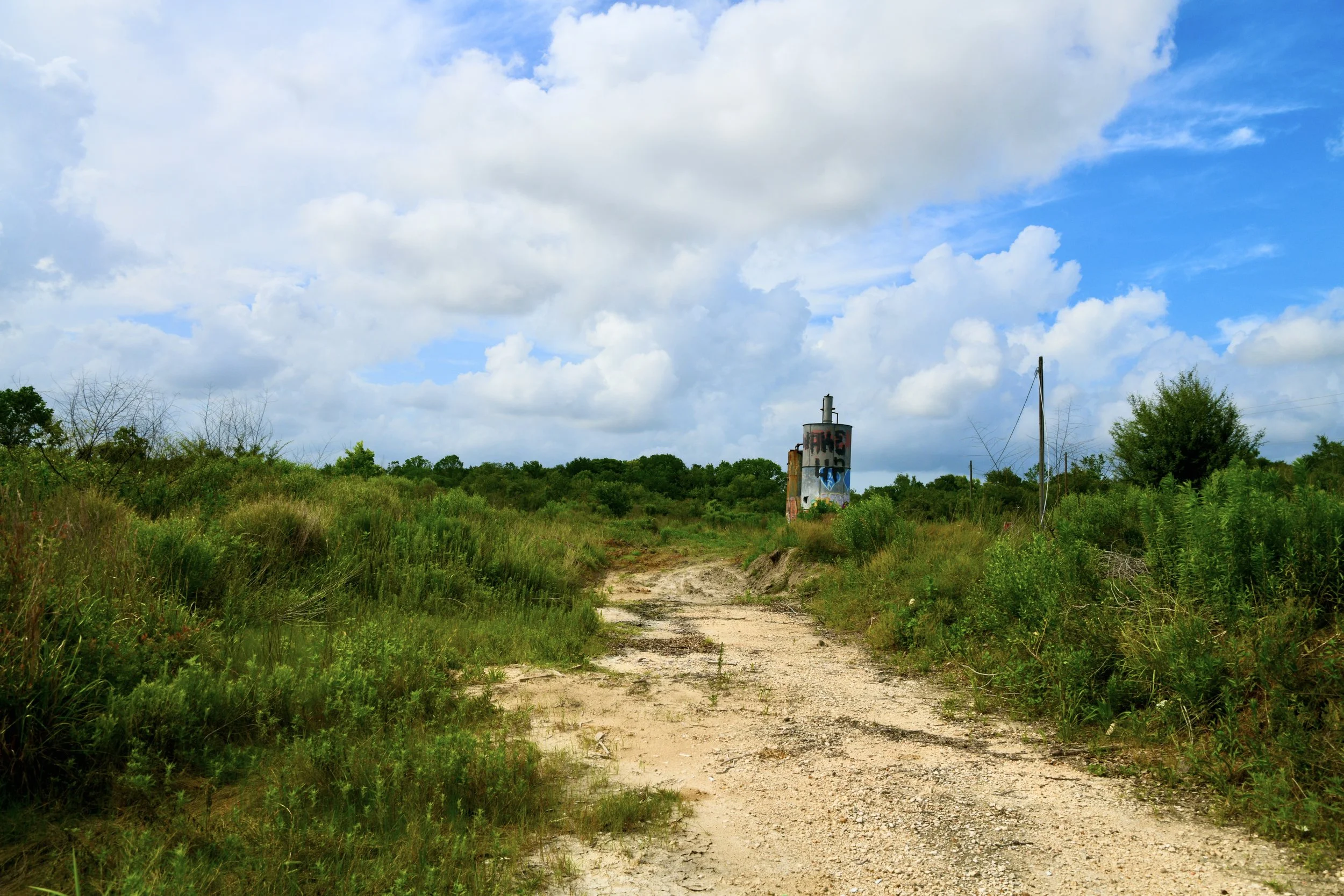
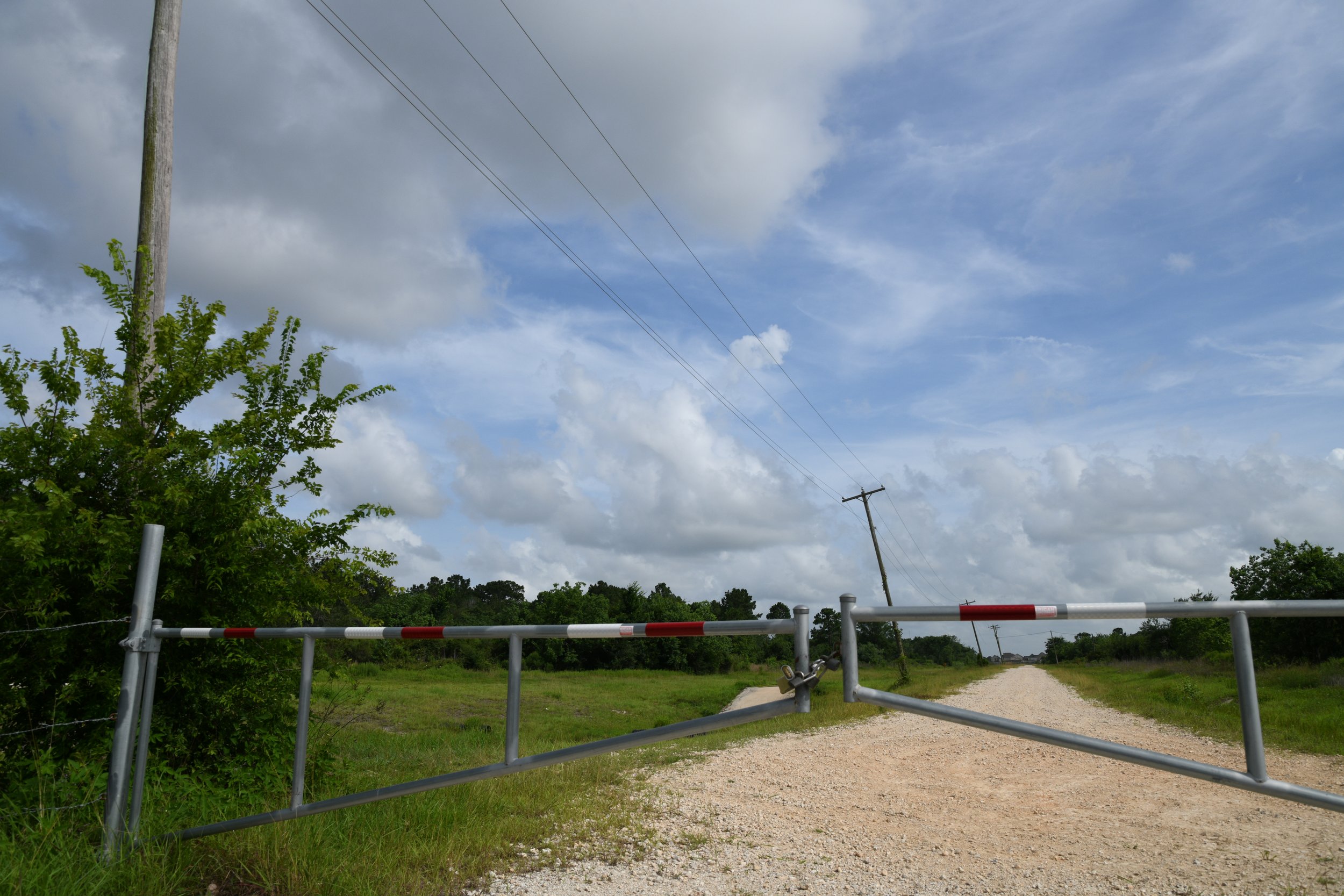
The mourning doves don't know. Neither do the cicadas, running their slow machinery in the heat, or the Mexican doves, or the crickets holding their own underneath. A light breeze moves through what's left of the Calder oilfield, carrying that specific humidity of a swamp that got paved over but never stopped being a swamp. Somewhere behind the brush, a pump jack still works — two strokes, a squeak, two barrels a day, the smell of crude hanging in the air like it always has. A quarter mile away, across the locked gate and the gravel road and the scrub that swallowed everything, you can hear I-45. The world kept moving. The band played on.
Nobody heard them scream either.
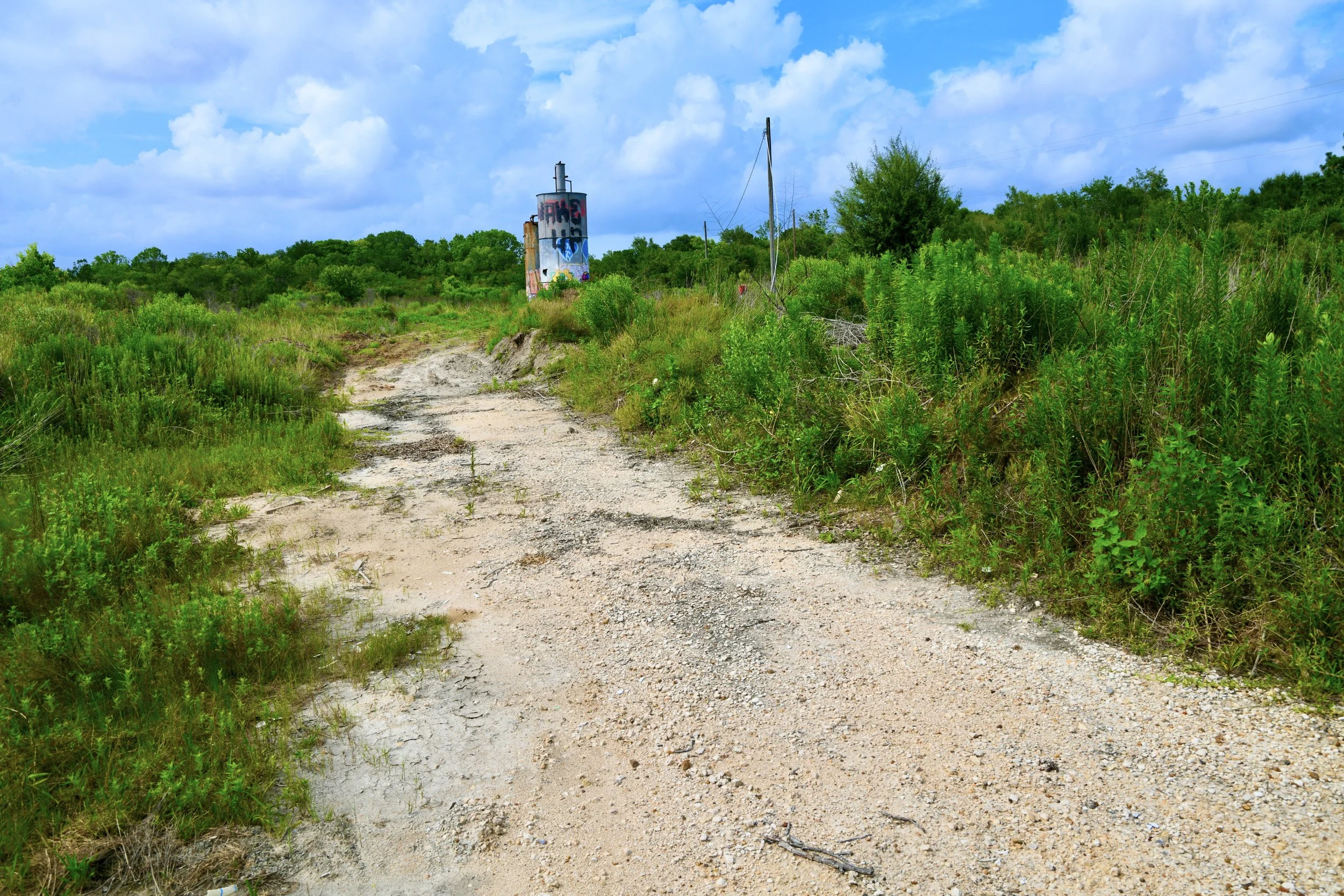
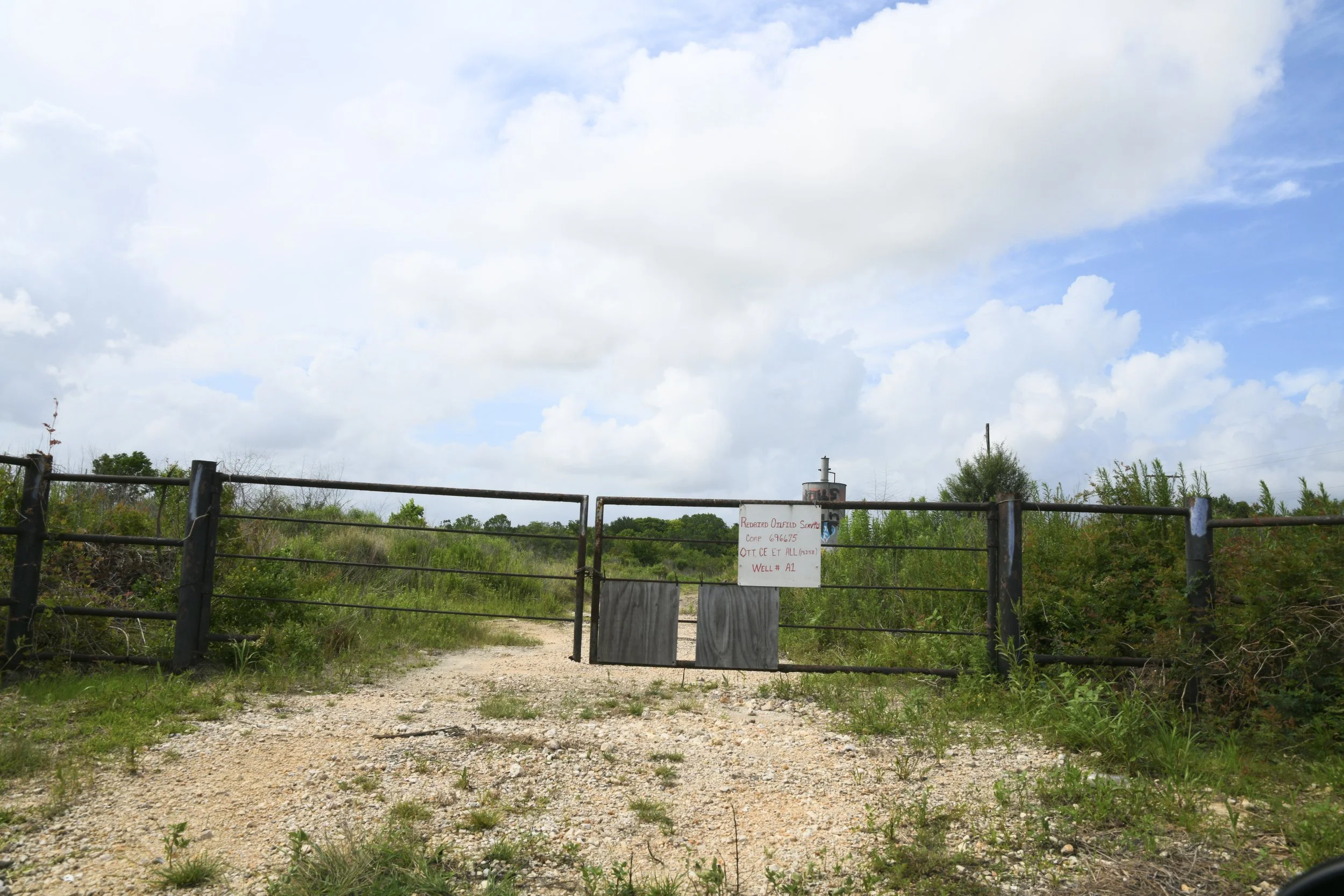
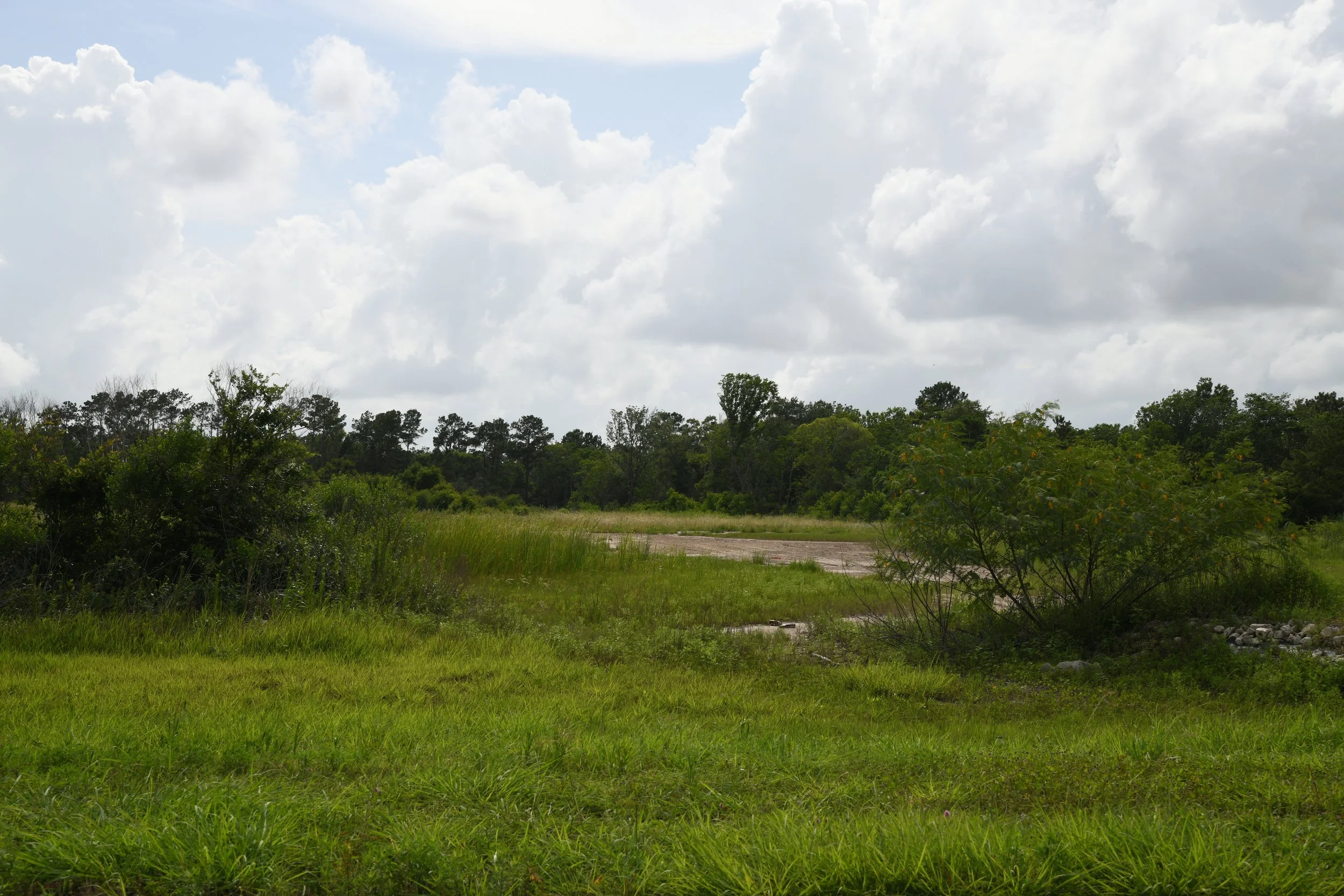
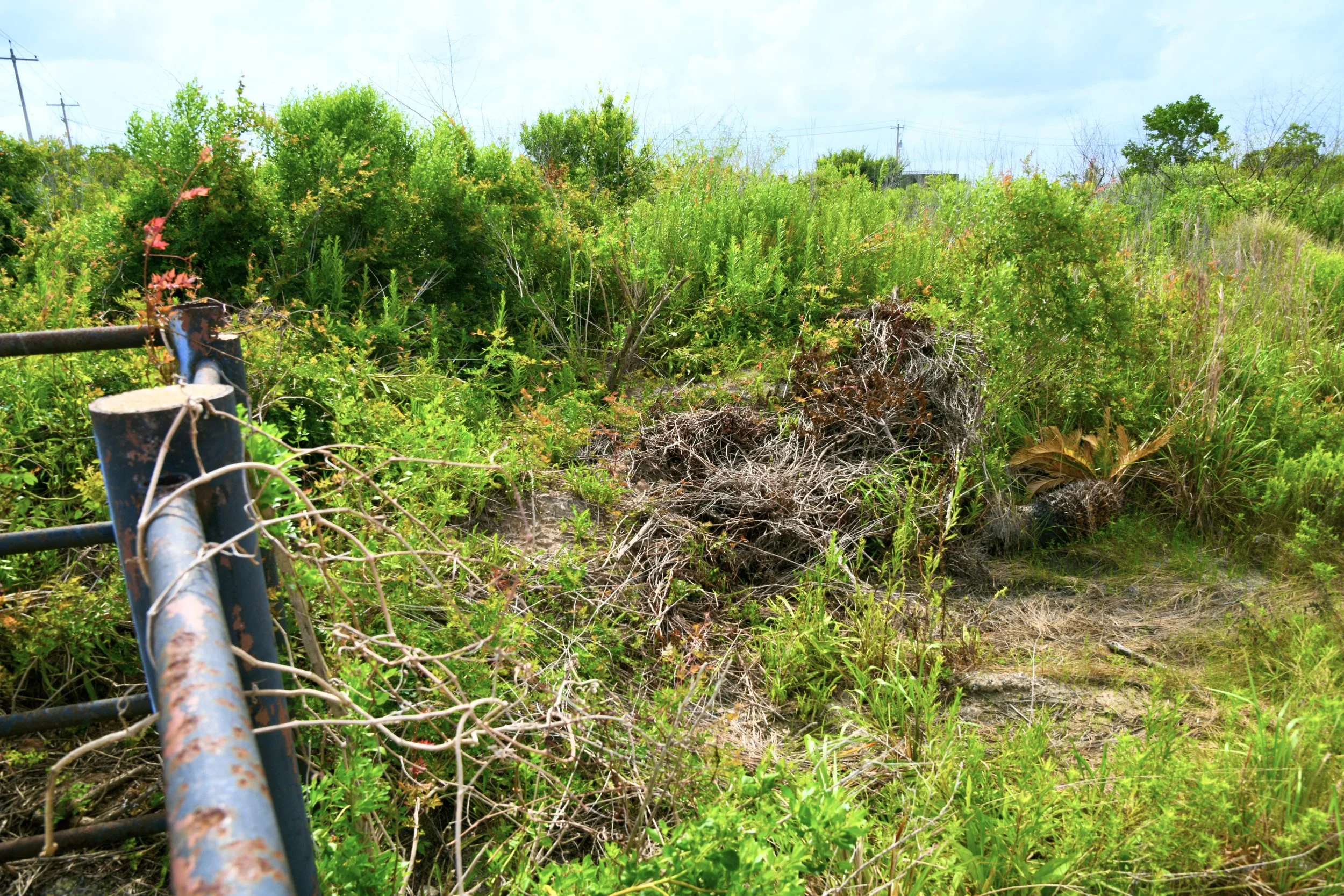
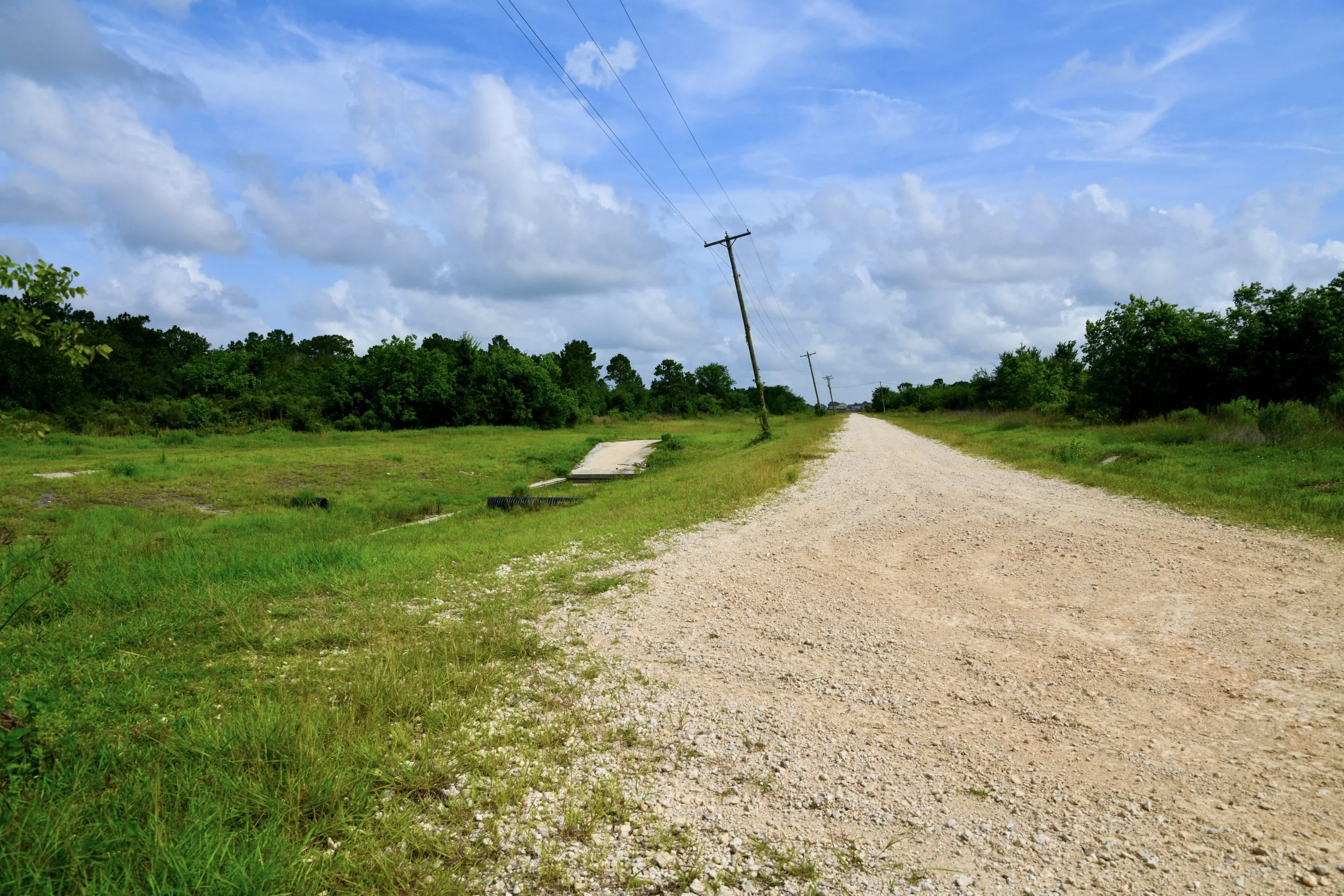
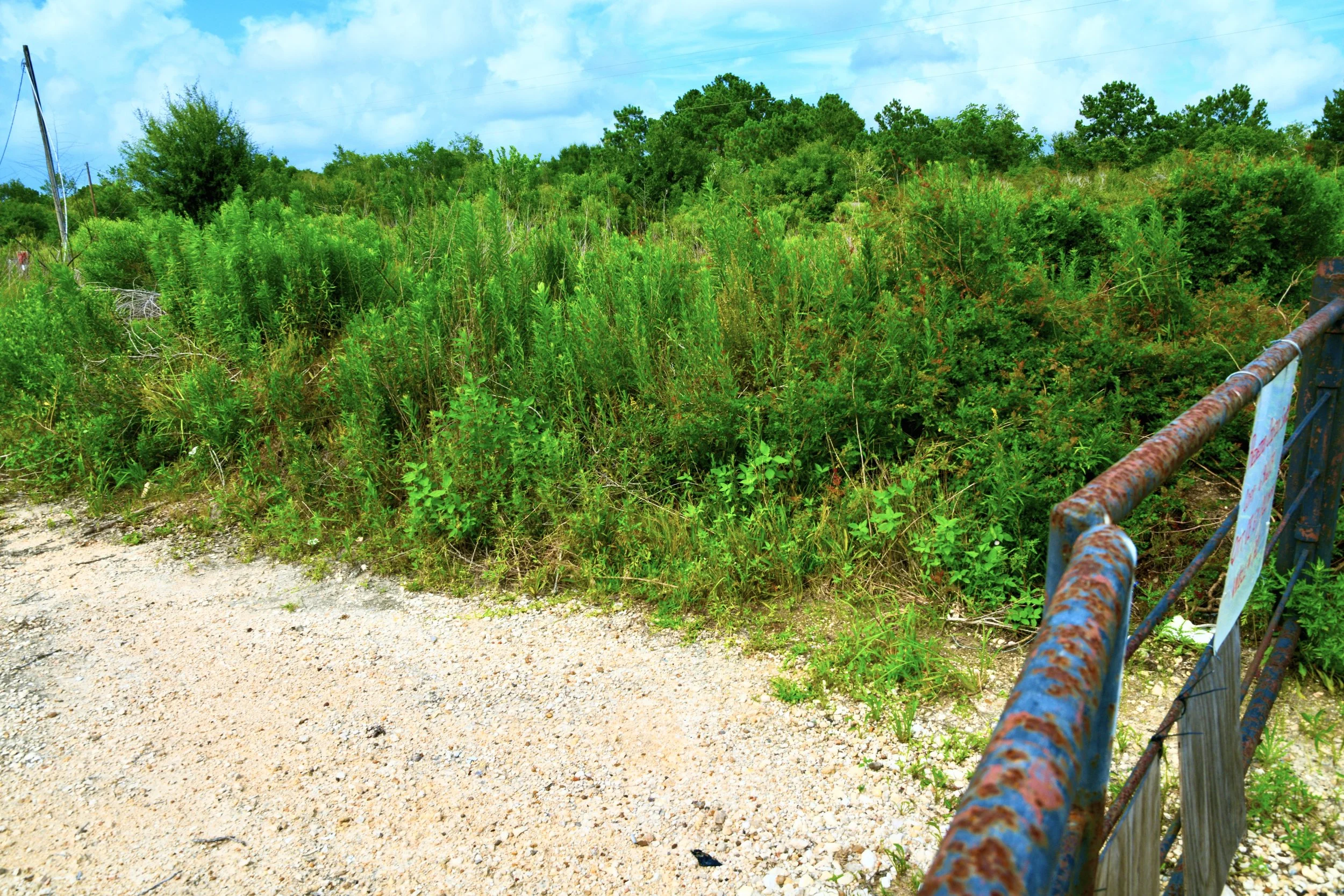
These photos don't show how truly desolate this place is or used to be.
I am standing in the last surviving fragment of what law enforcement — and eventually the rest of the country — came to call the Texas Killing Fields. Behind me, visible through a gap in the brush, is an abandoned oil tank tagged with graffiti, the last industrial remnant of the Calder field where the bodies of young women began appearing in 1984. Ahead of me, the gravel road stretches toward a locked gate, beyond which the suburbs of League City have swallowed almost everything else. Cabela's is out there. Restaurants. Subdivisions where families barbecue on Saturday afternoons unaware of what the ground beneath them remembers.
I have a camera around my neck. I am sixty-something years old, a retired Master Peace Officer with thirty-four years on the job, a licensed Texas PI, a criminal justice professor, a civic journalist. I have worked homicide cases. I have put men in prison. I have testified as an expert witness in capital cases.
I am also, or was, a suspect.
I. The Composite
It was the mid-1990s. I was twenty-four, maybe twenty-five years old, working as a sheriff's deputy for the Walker County Sheriff's Department while finishing my criminal justice degree at Sam Houston State University in Huntsville. I was young, Hispanic, five-seven, around two hundred twenty pounds, dark hair. I drove — for a period of about a month while my truck was in for transmission work — a red Isuzu Amigo with a black cloth top, borrowed from my mother.
The FBI and the Texas Rangers Task Force requested an interview.
They always say they need your help. When the FBI or the Rangers say they need your help, you know you're in trouble. I told my mother, who is an attorney. She came with me. I refused to fill out the questionnaire they'd sent in advance — I wasn't signing anything or answering anything without counsel present. When we sat down in that room, I played it the only way I knew how: stone-faced, mouth shut, call their bluff.
I know you got nothing on me. Because I did not do it!
Inside I was terrified.
Then they started laying it out. A young woman, a college student, last seen at an ice house near League City at 7 PM. She was described as having last been seen with a Hispanic male, approximately twenty-four to twenty-six years of age, five-seven, around two hundred twenty pounds, dark hair. Driving a red Amigo with a black cloth top.
I looked at that composite and understood immediately why I was in the room.
But they weren't finished. The victim was a college student in Houston. So was I. She attended Sam Houston State University. So did I. She was a criminal justice major. So was I. She had applied to the Walker County Sheriff's Department for a part-time jailer position while she went to school. I worked for the Walker County Sheriff's Department. She lived during the week in an apartment complex in Huntsville called the Lakeview, behind the HEB on the main road into town.
I lived in the Lakeview Apartments. Behind that same HEB.
My back patio door to her front patio door: forty yards.
I sat in that room, playing the role on the outside — you got nothing, copper, not pinning this on me — and on the inside I was reading Stephen King. Not literally. But there's a short story, Strawberry Spring, about a professor who discovers during a string of campus murders that he himself is the killer — blacking out, leaving no memory, returning to normal life as though nothing happened. I sat in that FBI office and genuinely asked myself: Am I doing this? Am I blacking out? How would I know?
That is what a competent investigation in the hands of competent investigators can do to an innocent man. I know this because I spent thirty-four years doing it to other people.
What cleared me was a storm.
The night she disappeared, I was on duty with the Walker County Sheriff's Department. Heavy storms had hammered the corridor from Huntsville down through Conroe to Houston, and we were backing up DPS on major accidents and commercial vehicle incidents all up and down I-45 — the same highway, the same corridor, the same stretch of ground. I worked the midwatch and got stuck until nearly five in the morning, running calls all night. The FBI and the Rangers confirmed it not just with the shift logs but with hours of dispatch recordings — my voice, all night long, on tape, working accidents in the storm while somewhere out there, on that same highway, the real killer was doing what they had briefly suspected me of.
One tape. That is what stood between me and the fate of the horseman.
II. The Horseman
There was a man who lived near the Calder field. He ran a horse-riding business on land adjacent to the area where the bodies were being found. When the searches began — when families and volunteers and eventually Texas EquuSearch combed that ground looking for the missing — he came out to help. He brought his horses. He rode with the searchers. He wanted to do what decent people do when something terrible happens near them.
The community destroyed him.
The accusations came from neighbors, from the Heidi Search Center, from people driven to the edge of reason by grief and fear and the desperate need for an answer. They hounded him. Called him. Threatened him. He couldn't go to his church. His business collapsed. Eventually he had to leave — fled to the Hill Country — and they followed him there. Kept calling. Kept accusing. Investigators searched his property, dug holes, found nothing. Because it wasn't him.
I think about that man every time someone asks me what it was like to sit in that FBI room.
In Texas, in those years, in a case involving the deaths of young women along a desolate oil road, the community's appetite for a suspect was stronger than its appetite for the truth. All you needed was proximity. Proximity and the wrong profile. The horseman was white, local, helpful, and they still came for him. I was Hispanic, twenty-four, driving a red vehicle, living forty yards from a victim, enrolled in the same program at the same school, working for the same department she'd applied to.
The only thing that saved me was my voice on a tape running accident calls in a storm.
III. Misdemeanor Murder
Thirty years later, standing in what's left of the Calder field, I think about a phrase we used in law enforcement. We called them misdemeanor murders. Ghetto-side. The killings nobody organizes a task force for, nobody holds a press conference about, nobody loses sleep over in the mayor's office.
These girls were poor. They were called — and I am using the term because it was used, because sanitizing it would be its own kind of dishonesty — poor white trash. They worked the ice houses. They danced at the bars. They got picked up. They worked the trailer parks and the truck yards along the feeder roads off I-45. They were not wealthy. They were not connected. They were not daughters of anyone whose phone calls got returned.
The head of the Heidi Search Center said it plainly: They may have lived their lives a certain way, but that doesn't mean they needed to be raped and murdered. They deserved to be found. They were human beings.
He was right. And he had to say it out loud, which tells you everything.
Meanwhile: the FBI. The Texas Rangers. The Harris County Sheriff's Department. The Houston Police Department. The Galveston County Sheriff's Department. The League City Police Department. The Texas Department of Public Safety. All of them. For decades. On a stretch of ground a quarter mile from one of the busiest highways in America, with refinery lights visible across the freeway on a clear night, with the sound of I-45 traffic a constant low roar in the background.
Nobody could hear those girls scream. But NASA is literally down the road. I guarantee you — and I say this as a man who spent his career inside the system I am indicting — if it had been an astronaut's daughter, something would have been done.
Instead they looked at me.
IV. What the Ground Remembers
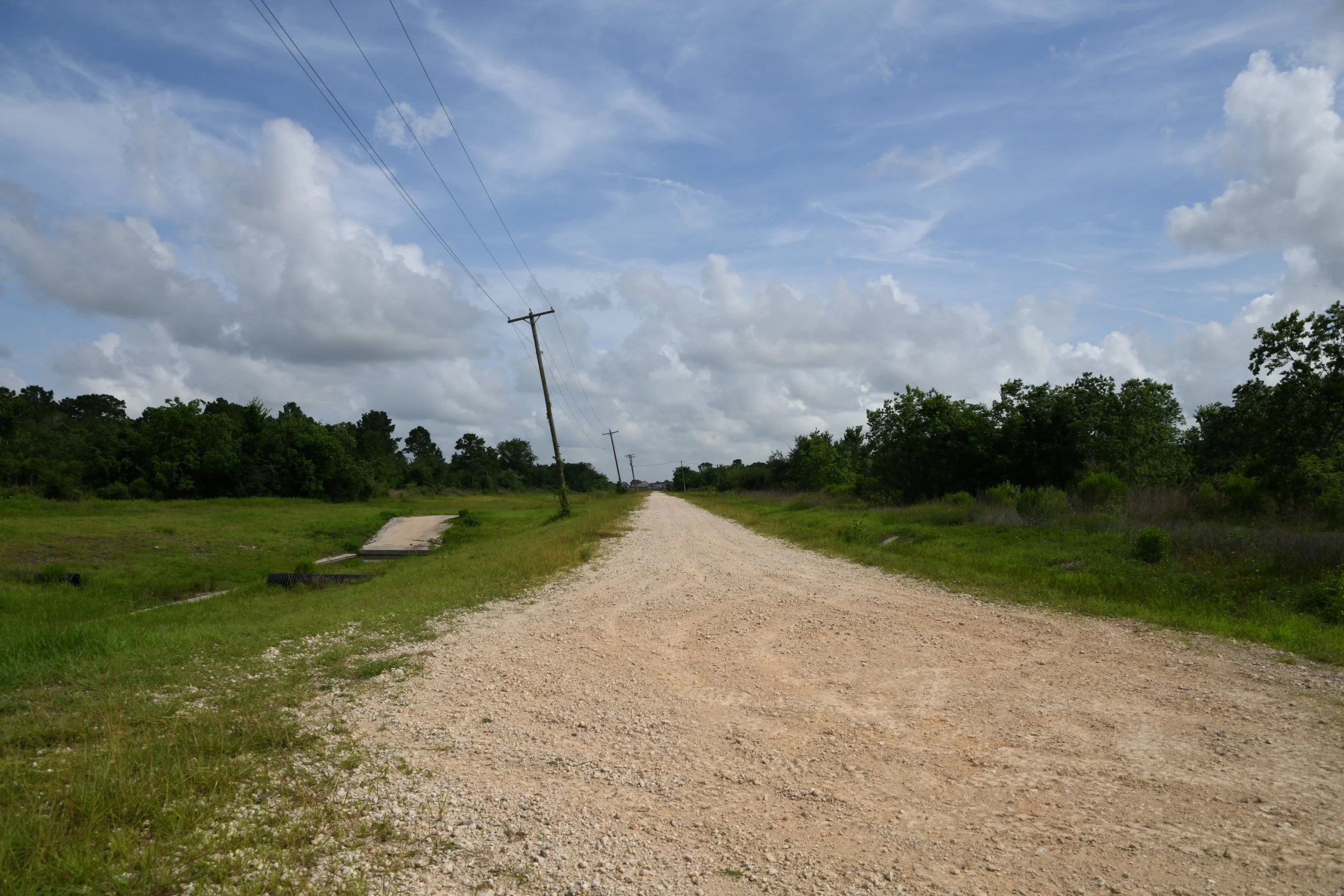
It was like this for Miles back then, now there's a subdivision in the high school at the end of the old calichie oil Road.
James Dolphs Elmore Jr. is sixty-one years old. He was arrested in March 2026 and indicted on charges of manslaughter and evidence tampering in connection with the deaths of Laura Miller and Audrey Cook — two of the women found in the Calder field. Prosecutors allege he helped longtime suspect Clyde Edwin Hedrick conceal the remains, and that he prepared a vial of cocaine that Hedrick administered to Miller, killing her. Hedrick died by suicide in March, days before a grand jury was to return capital murder charges against him. Elmore faced trial beginning this week.
Forty years. That is how long it took.
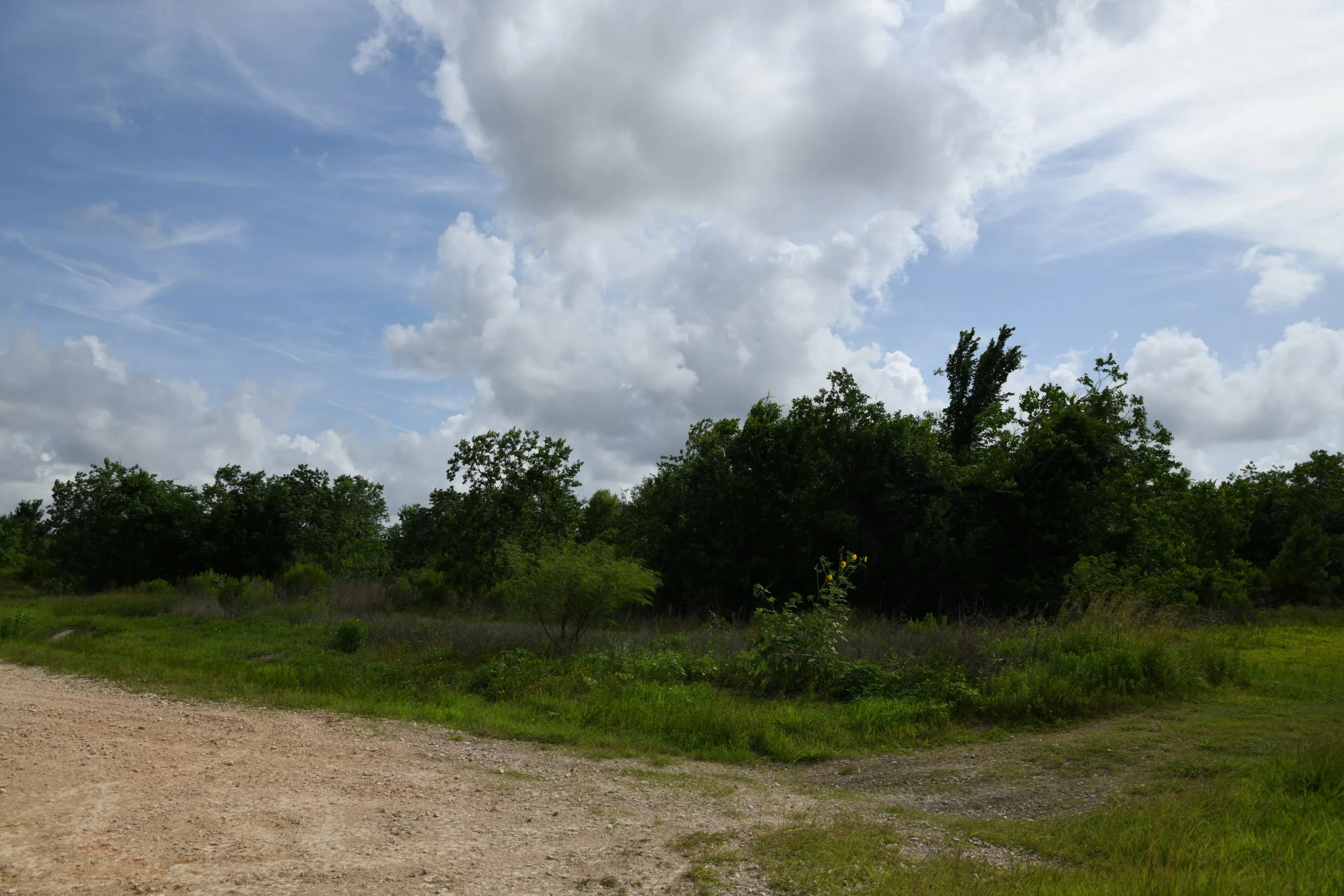
In June 2026 I drove out to League City with my camera. I shot the locked gate. I shot the gravel road running into the brush, the leaning utility poles, the abandoned oil tank with its graffiti tags — kids come out here now, apparently, for reasons that have nothing to do with what happened here. I shot the open field where search teams were working, the survey stakes in the ground marking land that someone is already planning to develop. I shot the scrub that hides the places where they found the bodies.
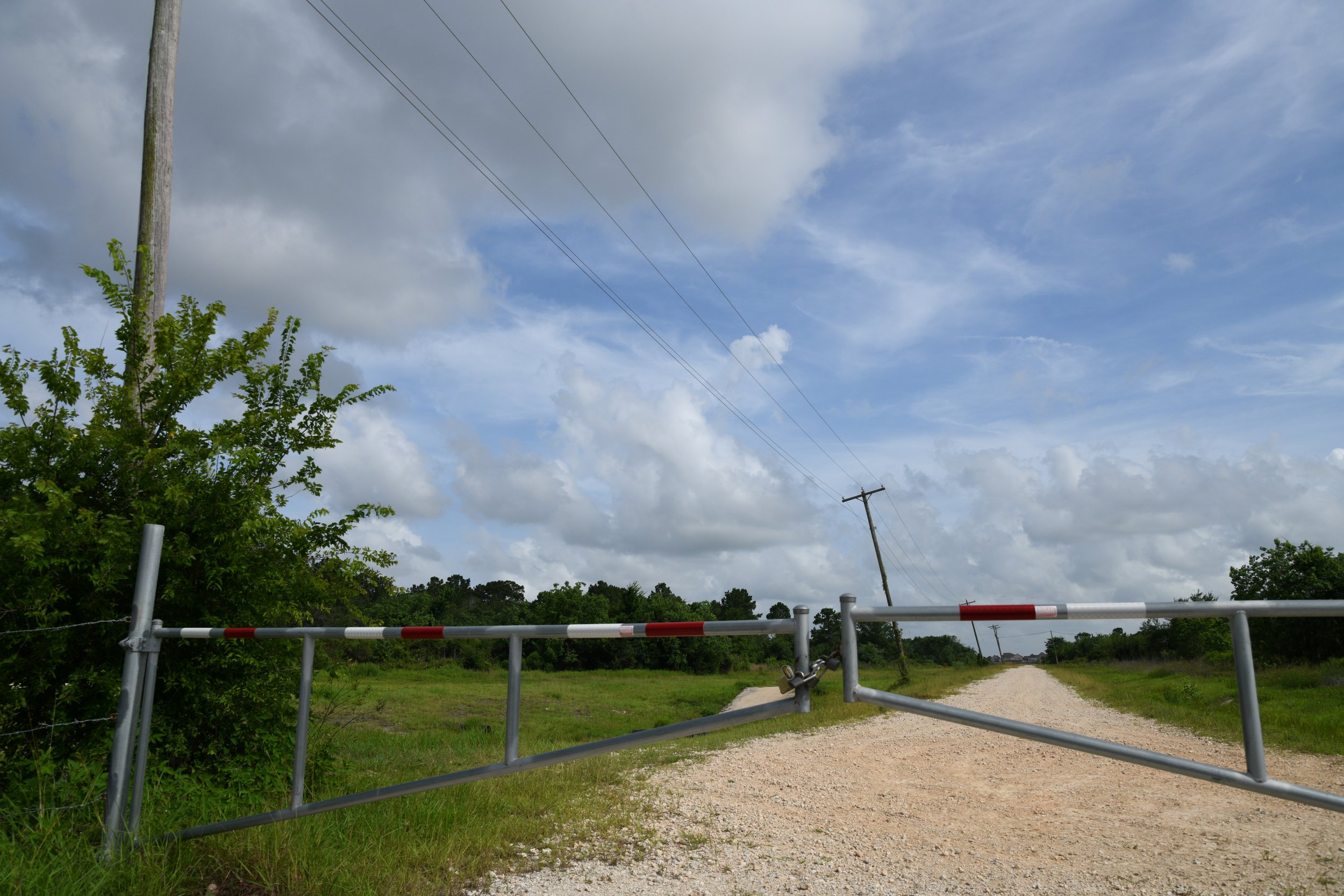
What I could not photograph was the silence between the cicadas. Or what it felt like to stand in that heat and understand, in a way I have never quite been able to put into words until now, that I had been forty yards away from all of this once. That a storm saved me. That a tape recorder running in a dispatcher's booth on the night shift saved me.
Most of the Calder field is gone now. Cabela's sits on part of it. Restaurants. Subdivisions where people raise their children and mow their lawns on Sunday mornings and have no idea what was decided here about whose life is worth a task force and whose is worth a misdemeanor and whose is worth nothing at all until a man who helped hide the bodies decides forty years later to tell someone where to dig.
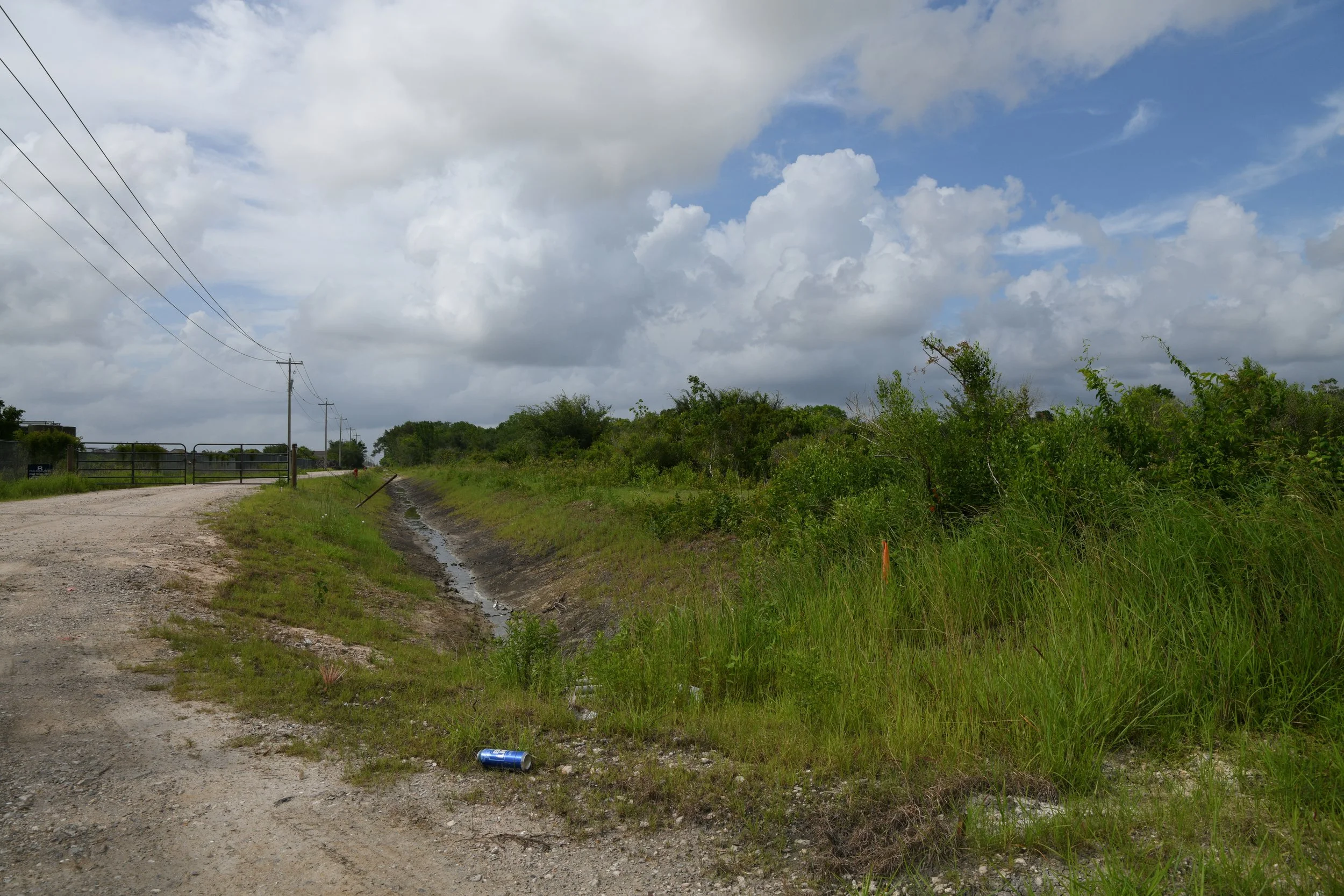
The pump jack still works. Two barrels a day. The cicadas go on and on.
The band played on.
UPDATE — September 2, 2026
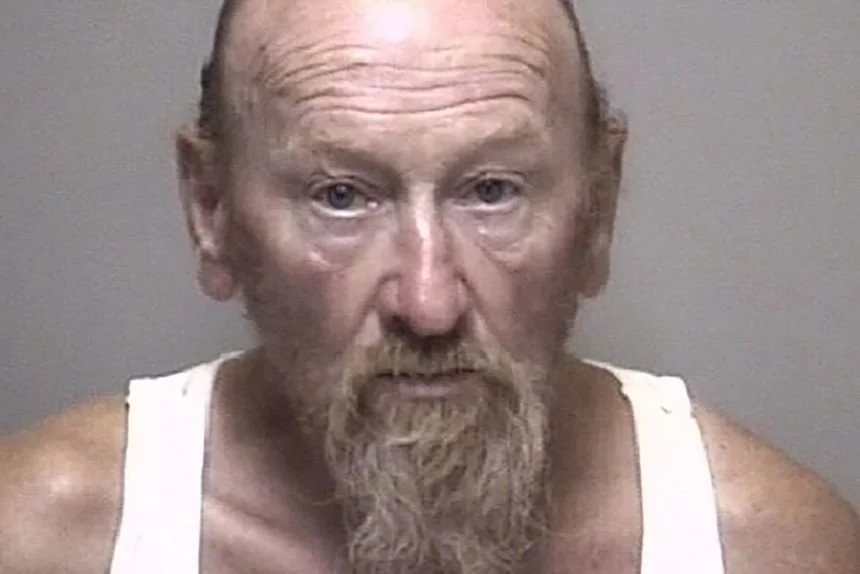
James Dolphs Elmore Jr. guilty
Today, a Galveston County jury found James Dolphs Elmore Jr. guilty of manslaughter in the death of Laura Miller, along with a deadly weapon finding, closing out a trial that began this week. He faces up to twenty years. At his age, that is effectively a death sentence. He will die in prison. Tim Miller, Laura's father, who has spent forty two years searching for answers, spoke outside the courtroom after the verdict. For him, and for the families of the women left in that field off Calder Road, this is the first conviction in a case that has waited four decades.
Justice delayed is justice denied. But at least we got justice for some of these girls. Not all the victims have been recovered, and not all of them were even reported missing in the first place. Some of them are still out there.
For me, the verdict closes something else. This case was never abstract. I was investigated. I was looked at, sat across a table from the FBI and the Texas Rangers as a twenty four year old deputy who fit a little too well. I wanted nothing more than to be on the other side of that table, to work it, to be trusted with it. I couldn't. It wasn't my jurisdiction, and beyond that, staying away was the job. Injecting yourself into an investigation you have no business being part of is exactly what these men do. So I stood back, and I stayed helpless, and I carried that for a long time.
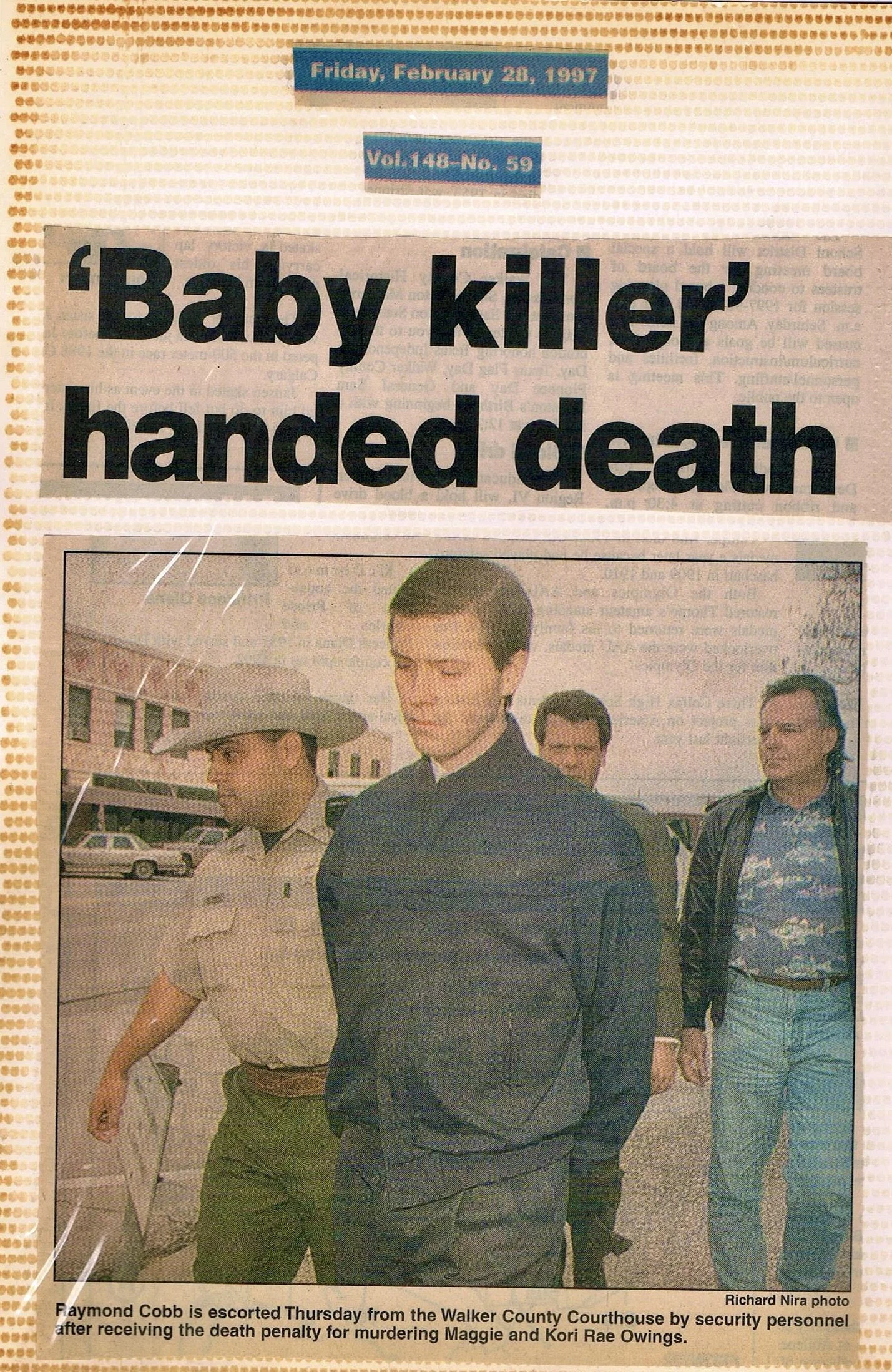
Deputy Torres escorting convicted capital murderer to death row.
Today's verdict doesn't undo any of that. But it closes a significant chapter, not just in this case, but in my life, as a law enforcement officer and as a homicide man. Forty years late is still late. But it’s not too late. It never is.
For all of them. For all of us. For the victims and their families, for the innocent people who were accused and that accusation destroyed their lives., and for all the cops who never quite. ( Read the book, the cop who wouldn’t quite. ). Jim Towers. HHI.
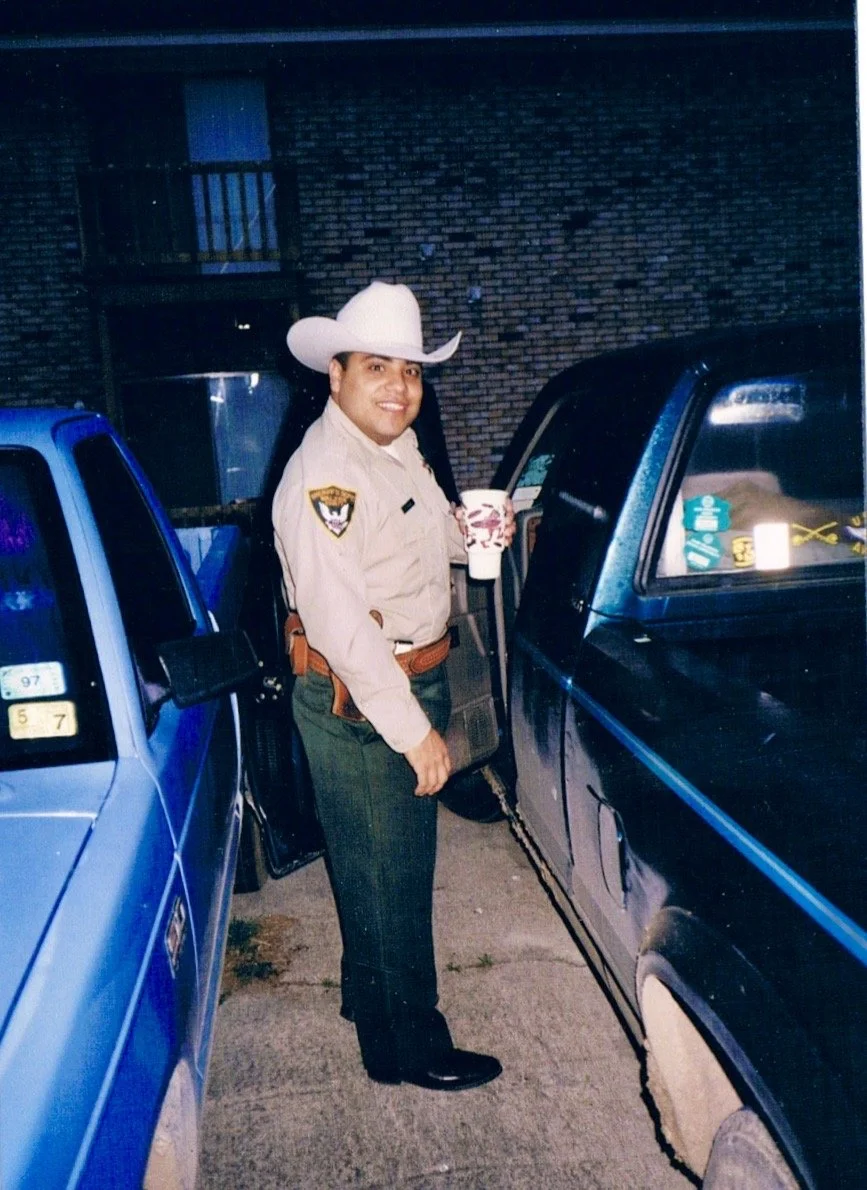
Jim Towers, AA, BS , M.J.A., J.D., is the founder and Editor-in-Chief of the Houston Heights Independent and a retired Master Peace Officer with thirty-four years of law enforcement experience. He is a former Chief of Police at three separate law-enforcement agencies, was the Director of three regional Texas Police Academies, a former federal agent, and Federal law enforcement instructor through Cheltenham Maryland and GLENCO Georgia. He is a licensed Texas private investigator, and graduate of the St. Louis University school of medicines medical legal death investigator and master medical legal death investigator school. He is a certified expert witness, and a university professor of criminal justice. for 15 years . He has written several books in his field and is a graduate of the Schrie Institute in several of their programs. He lives in Houston with his loving wife, and his dog Murray.
ATTENTION ASSIGNMENT DESKS & MEDIA PRODUCERS:
All text, video, and original photography covering this story are the exclusive property of the Houston Heights Independent. Broadcast, digital replication, or social scraping of these assets without an active license is strictly prohibited. To license clean, high-density, unwatermarked frames for TV broadcast or regional news print, contact our newsroom immediately, at houstonheightsindependent@gmail.com.
Standard licensing fees apply.
© 2026 Houston Heights Independent. All rights reserved. Registered under Jim Towers,MJA.JD. No part of this publication, including text, layout, and original photography, may be reproduced, distributed, broadcast, or transmitted in any form or by any means without prior written permission from the Editor-in-Chief. For media licensing inquiries or syndication requests, contact at houstonheightsindependent@gmail.com.
