
Thiên Hậu / Tin Hau Temple. Two Visits to the Temple of the Heavenly Empress
Two Visits to the Temple of the Heavenly Empress. By Jim Towers, M.J.A., J.D. | Houston Heights Independent
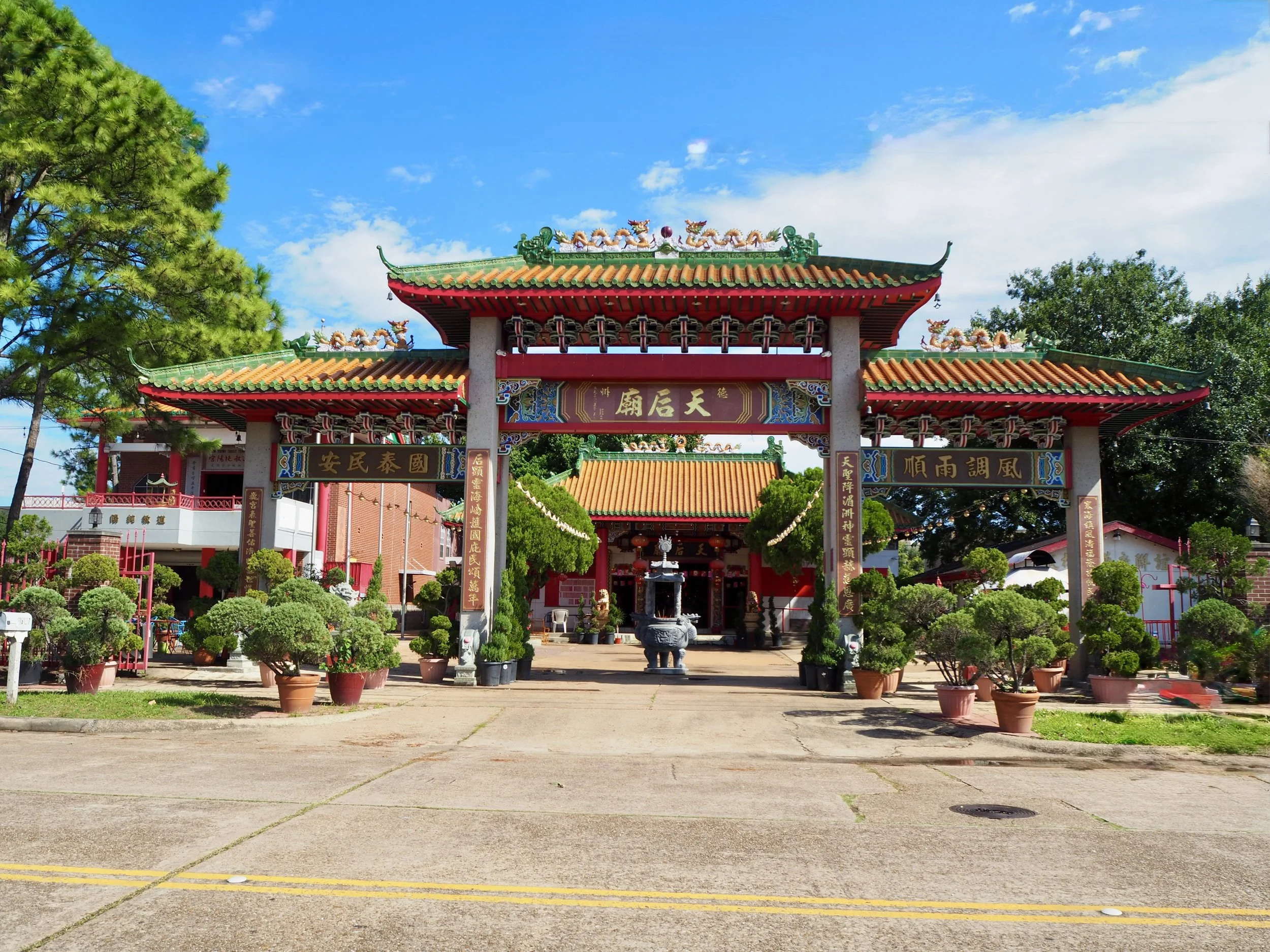
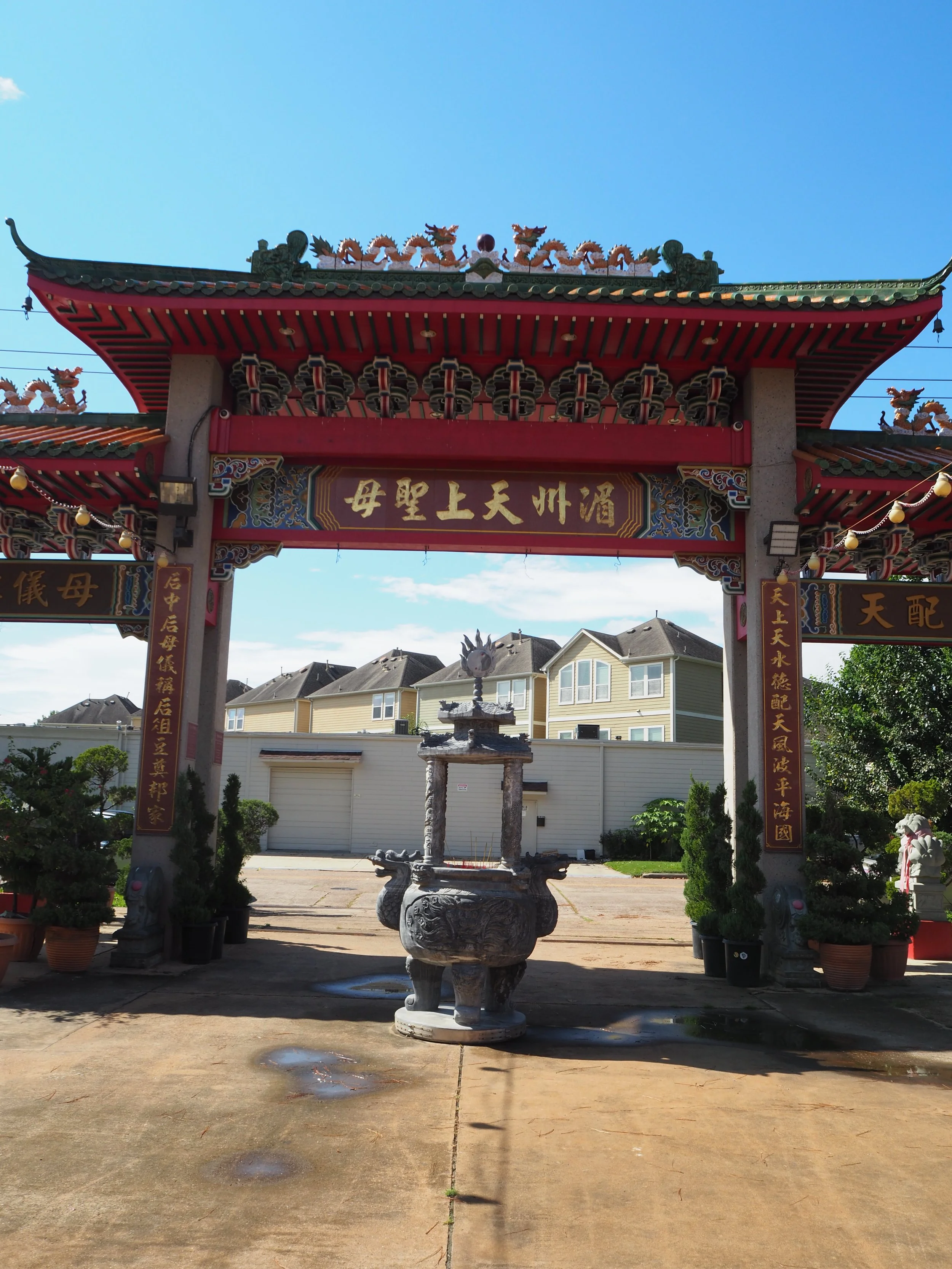
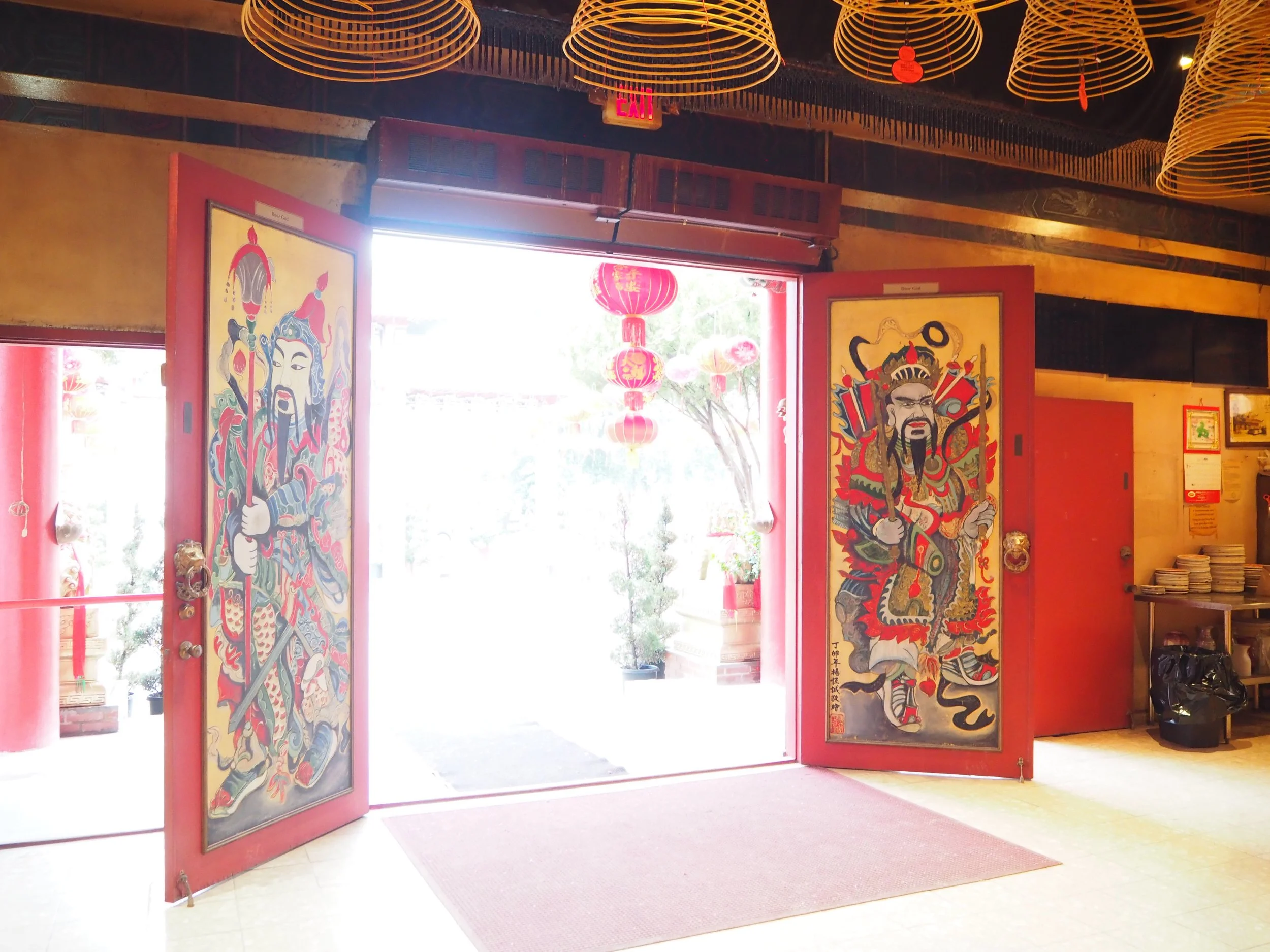
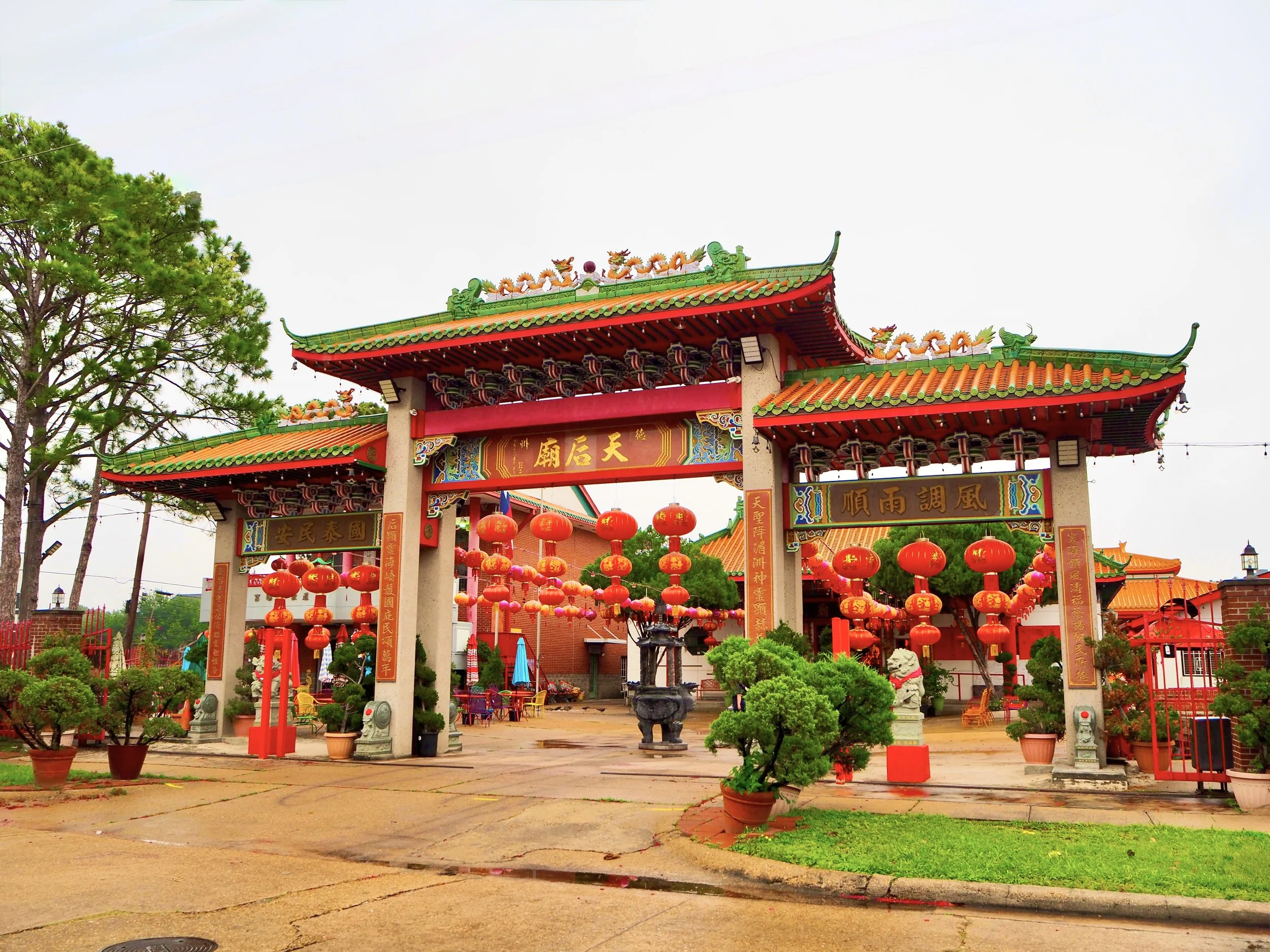
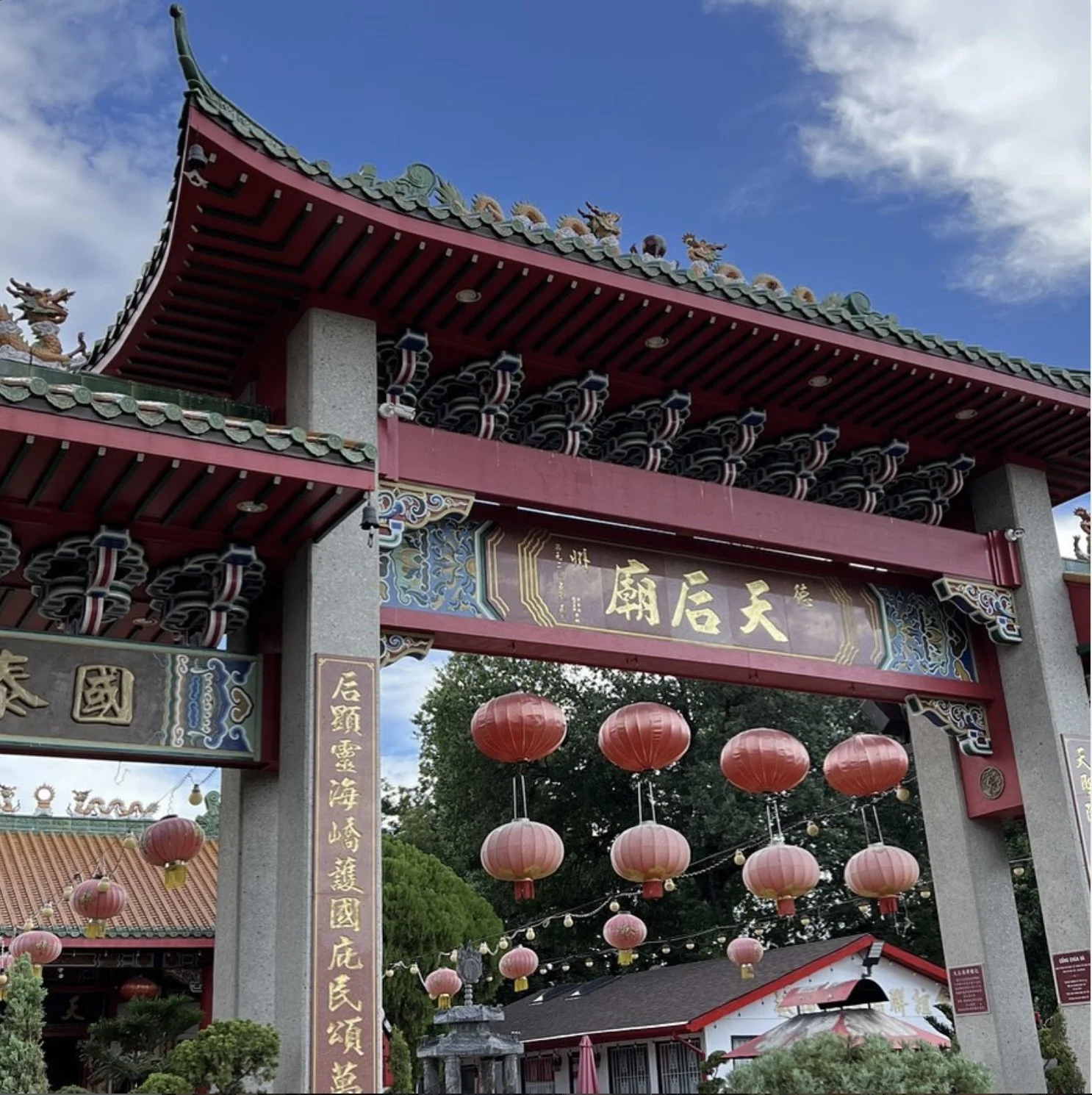
The gate reads 天后廟 — Tin Hau Miao, Temple of the Heavenly Empress. Above the inner banner, in gold on red: 天上聖母, Tianshang Shengmu, Mother-Empress of Heaven. Outside Houston and outside China, most people know her by a shorter name: Mazu, goddess of the sea, protector of sailors and fishermen, patron to anyone who has ever had someone they love out on the water.
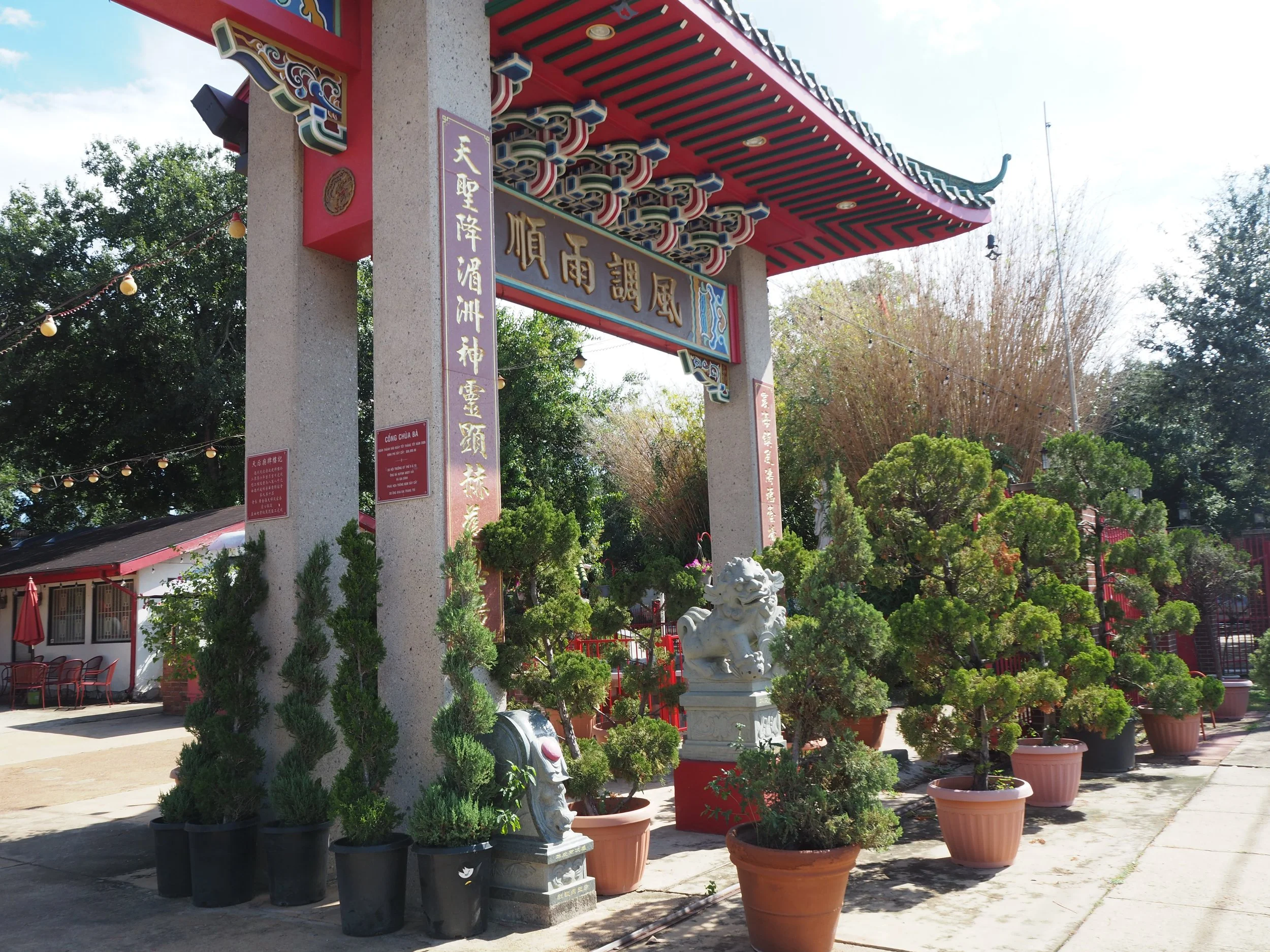
I've been to this temple twice now, in two different kinds of weather, and I'm not sure which version of it is truer.
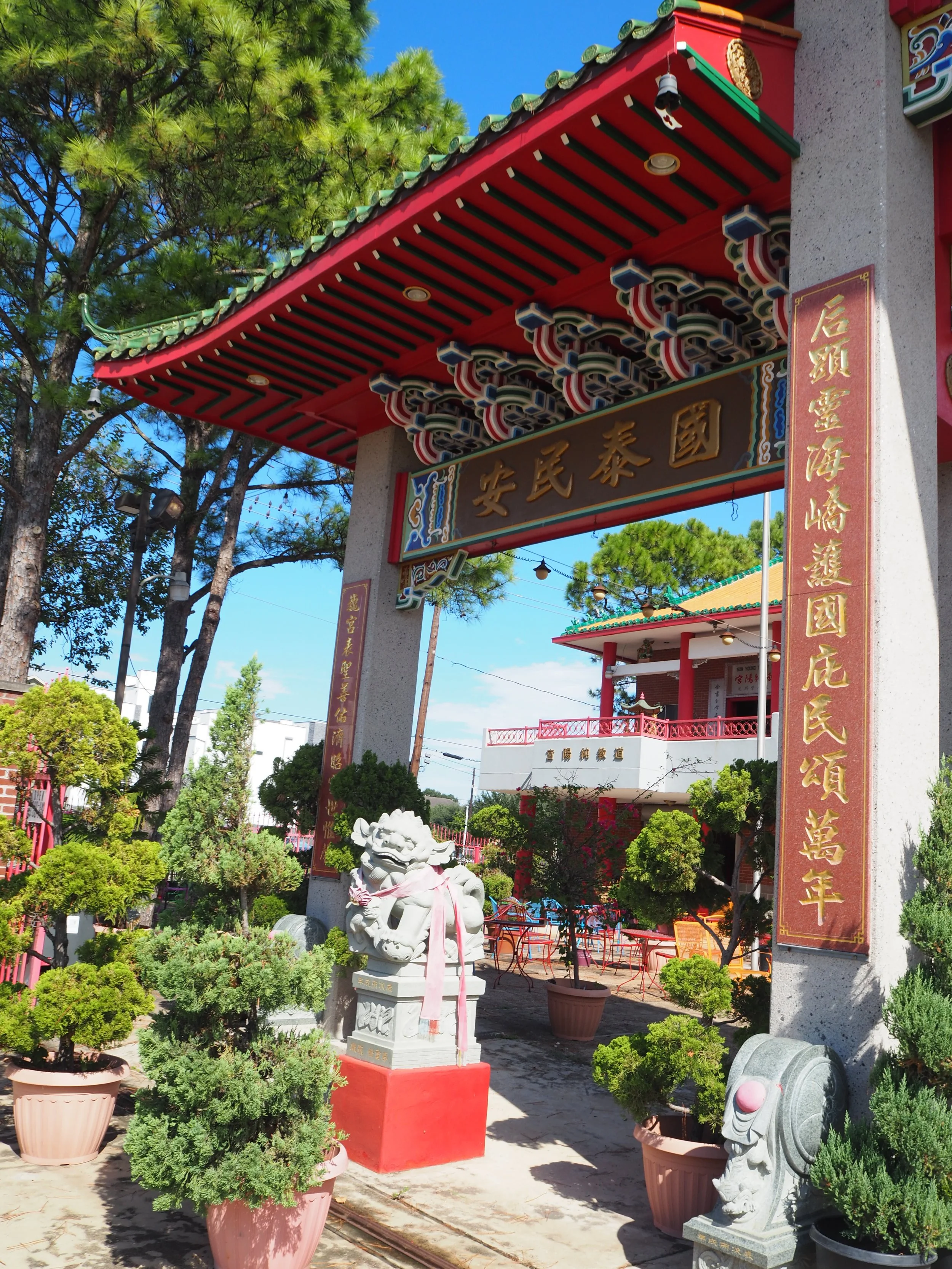
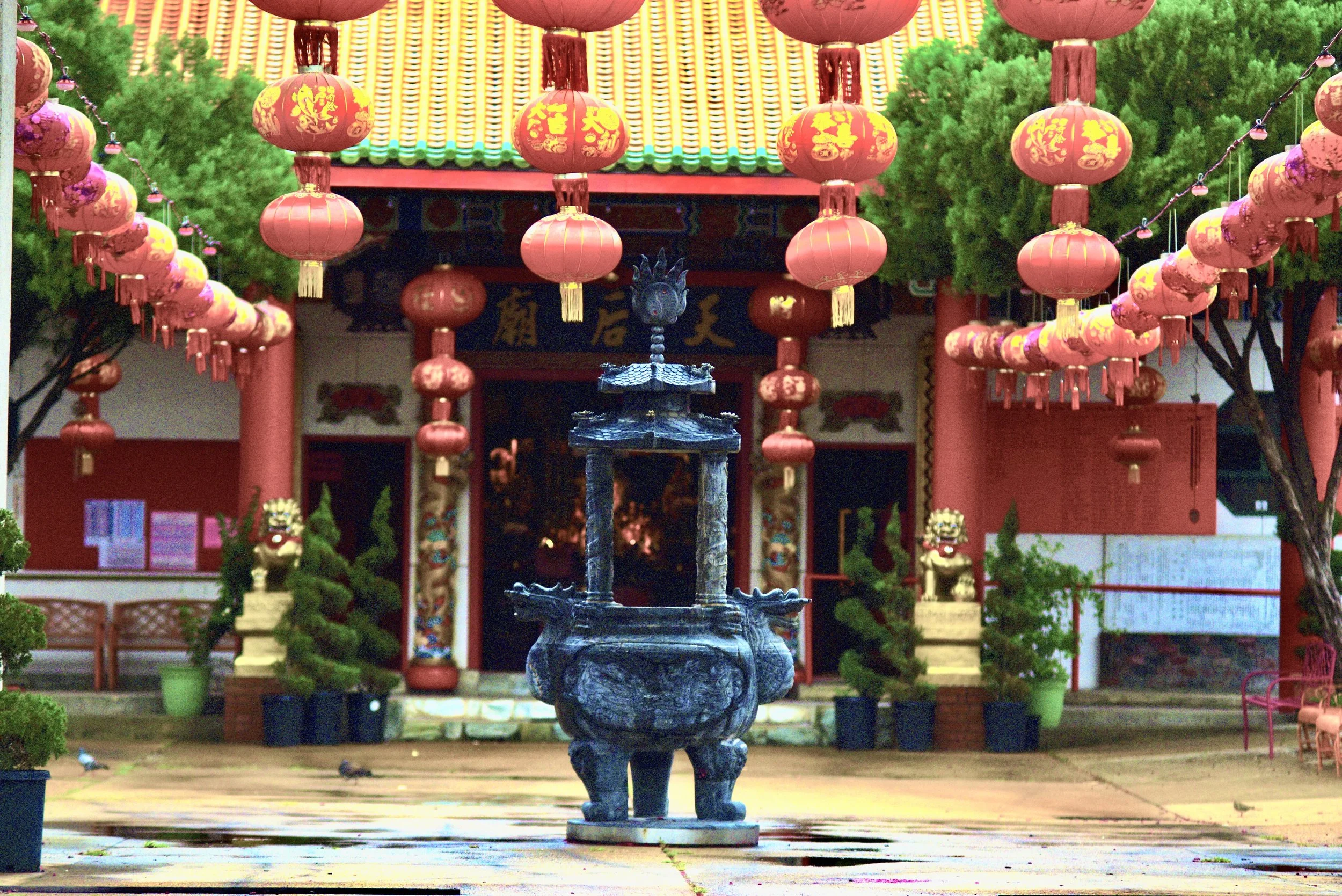
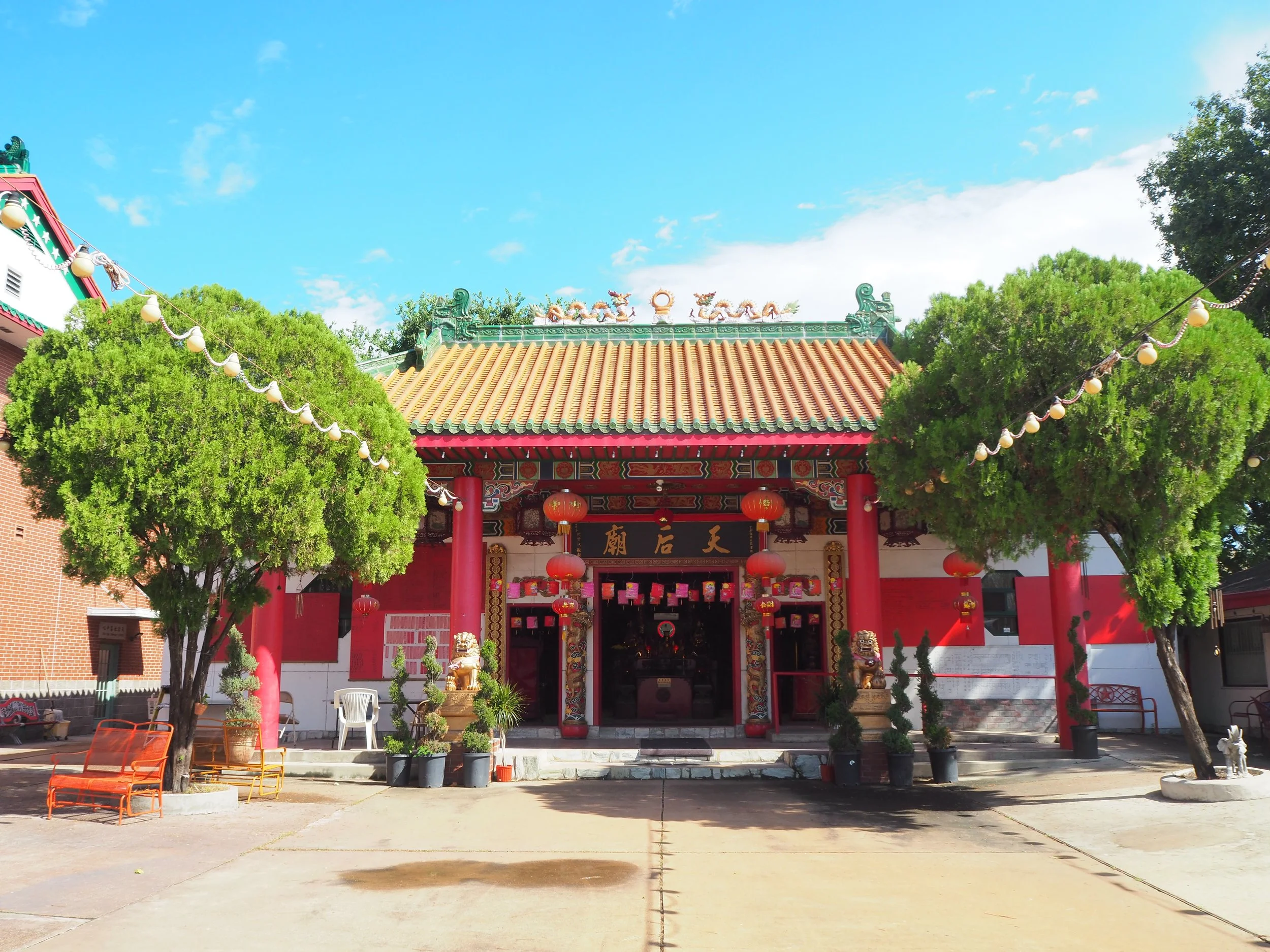
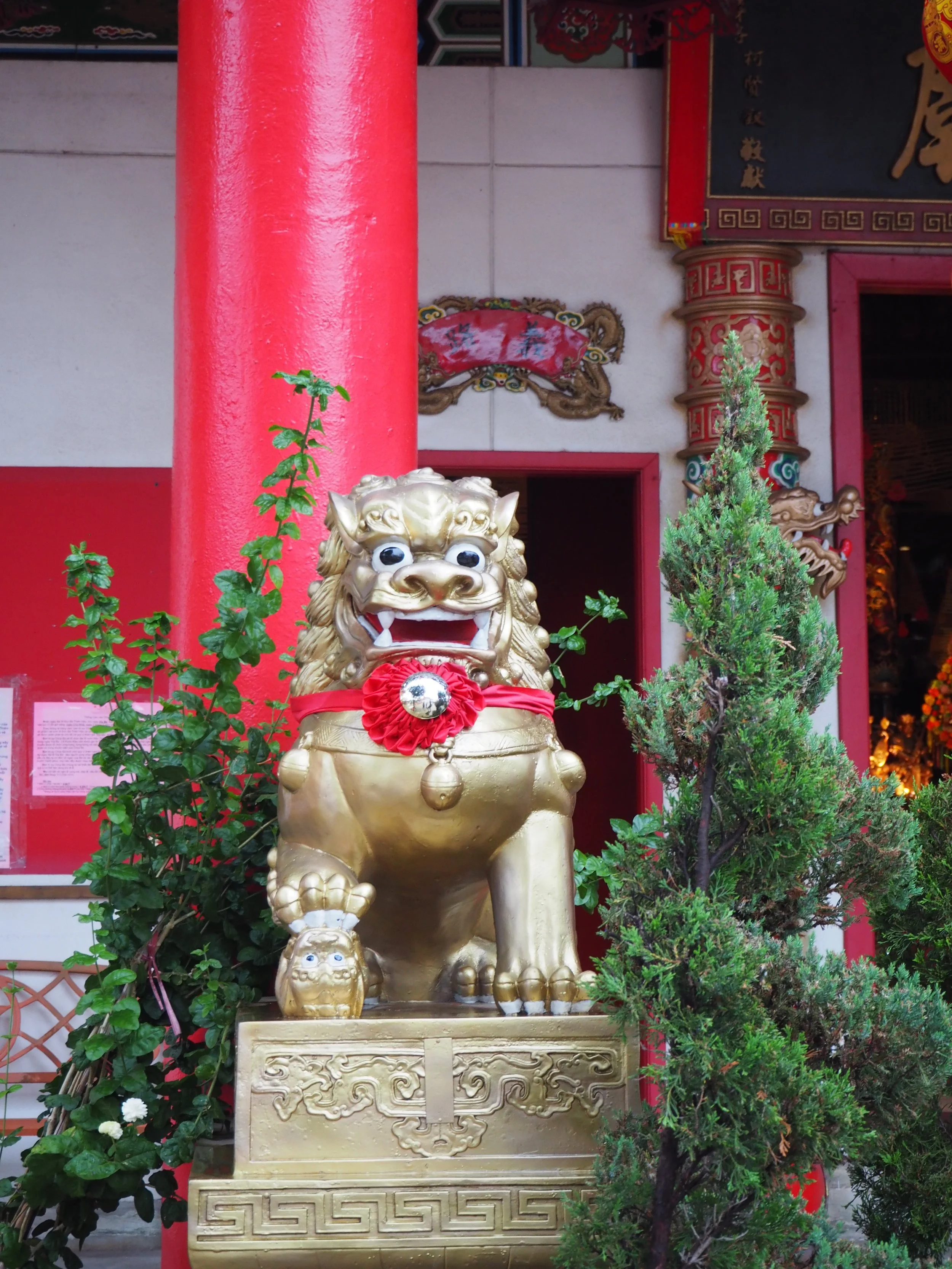
The first time, the sky was hard blue and the courtyard was strung end to end with red-and-gold lanterns — the kind that come out for festival season, printed with characters for prosperity and good fortune. Stone lions stood guard at the gate, one with a pink ribbon tied loose around its neck like someone's afterthought of decoration. Bonsai pines in clay pots lined the walkway in ranks. A woman in a pink shirt moved through the compound the way you move through a place you've been before — she lit a fan of incense sticks at the courtyard cauldron, raised them overhead in both hands toward the Jade Emperor's altar, knelt on a red step-stool, and bowed. Later she walked to the back of the property, past the koi pond and the stand of bamboo gone gold at the tips, to a white statue of Guan Âm behind a low red fence, and did it again — hands together, head bowed, incense already lit and standing in a bucket of sand.
The second time, it was raining, gray and steady, the kind of Houston rain that doesn't announce itself so much as arrive. The lanterns were still up — apparently they stay up longer than one festival — but the courtyard was empty except for a pigeon working the wet pavement near the incense cauldron. No one was praying. The temple looked less like a place mid-ceremony and more like what it actually is underneath the color: a working building, brick and stucco, with a mail slot and a USPS truck idling at the curb behind the gate, because even a temple to the goddess of the sea gets mail delivered on a schedule.
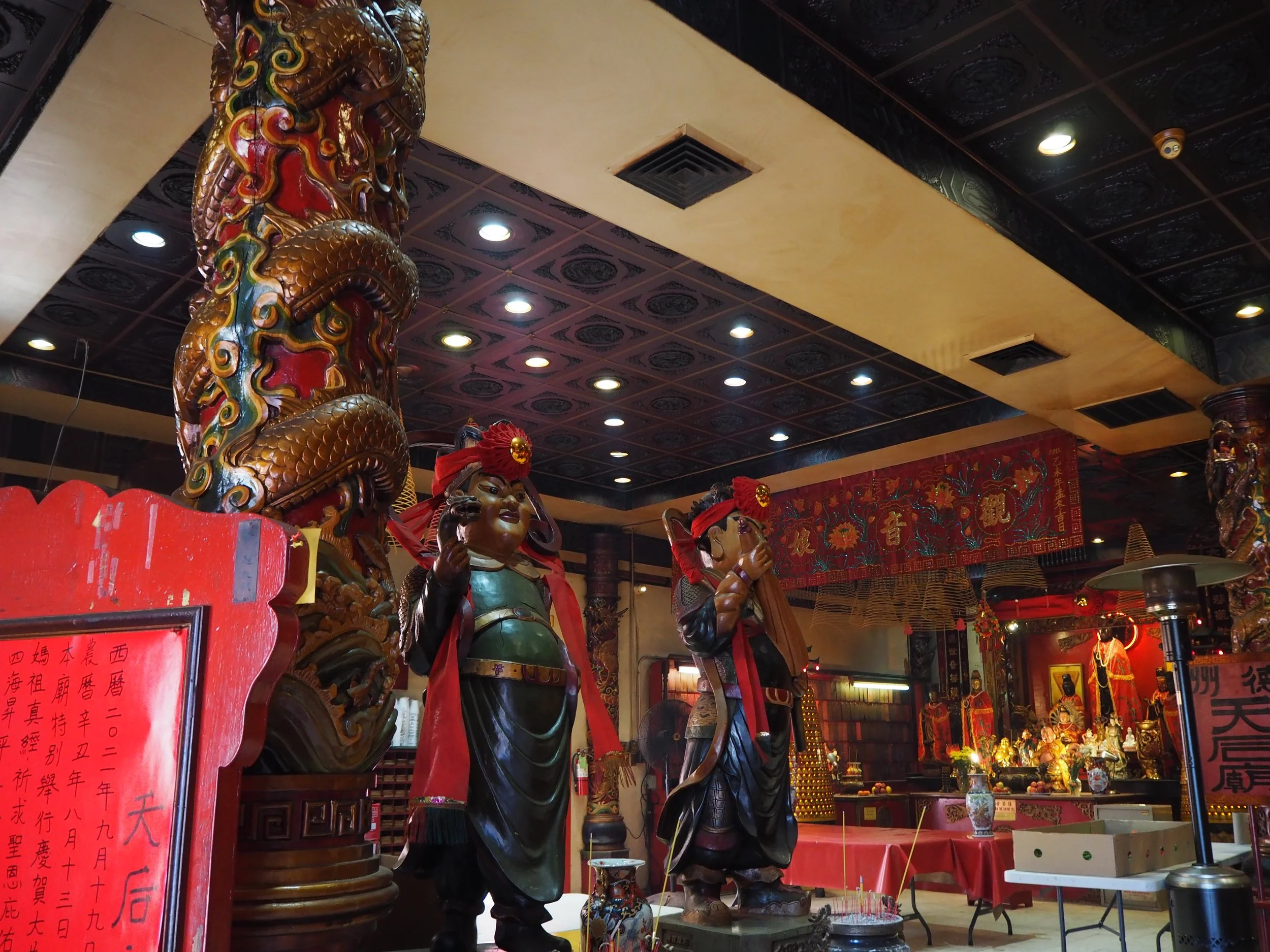
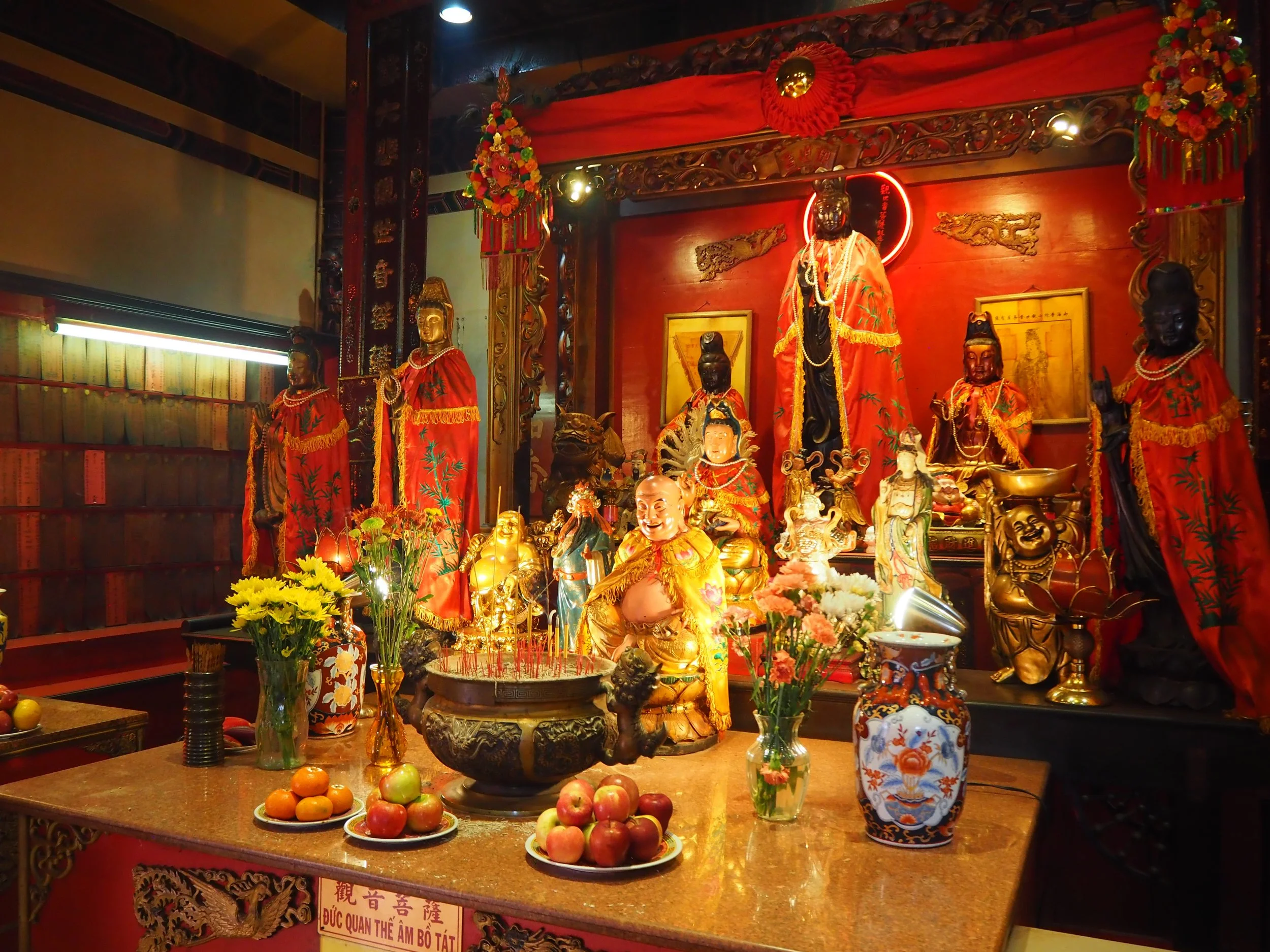
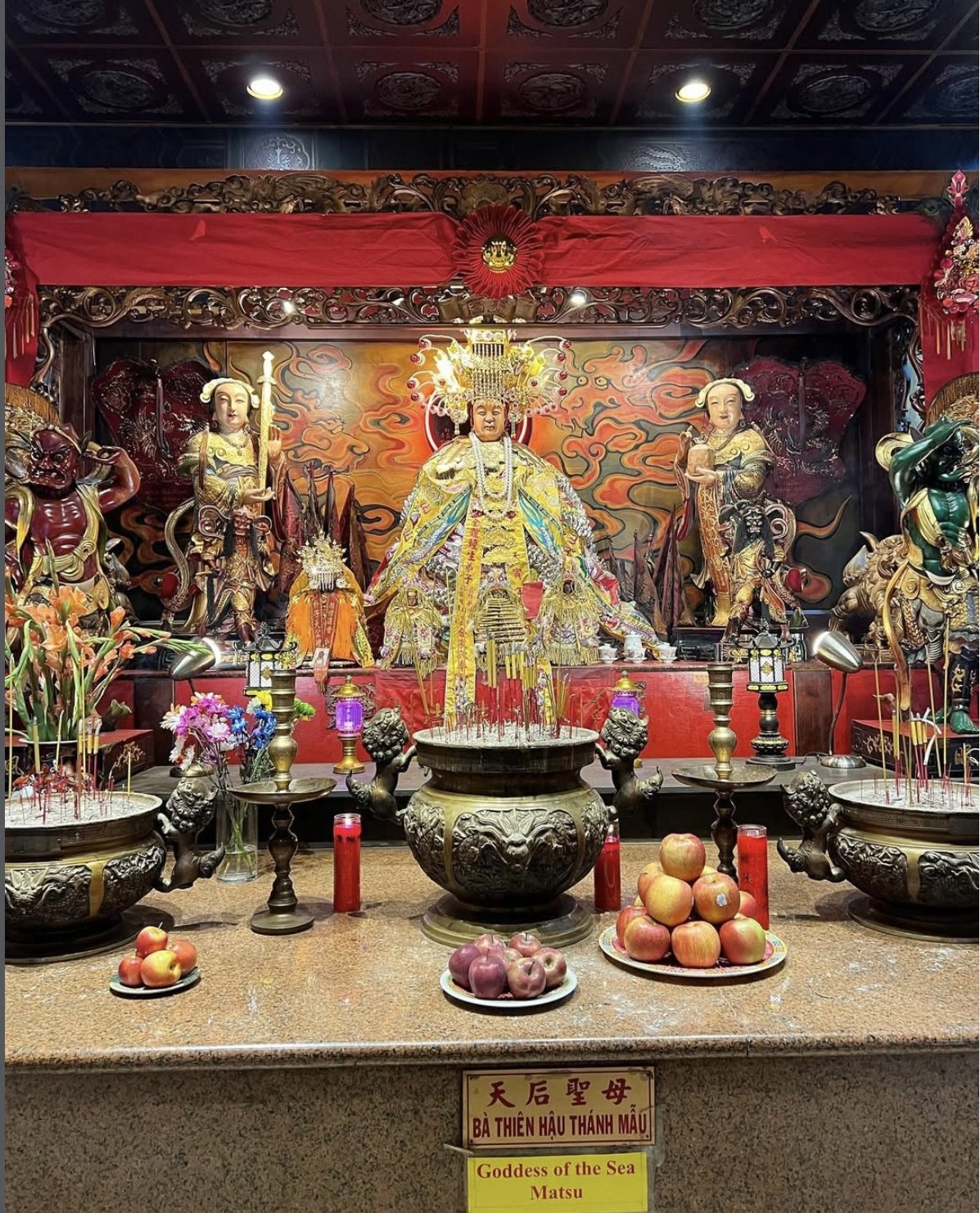
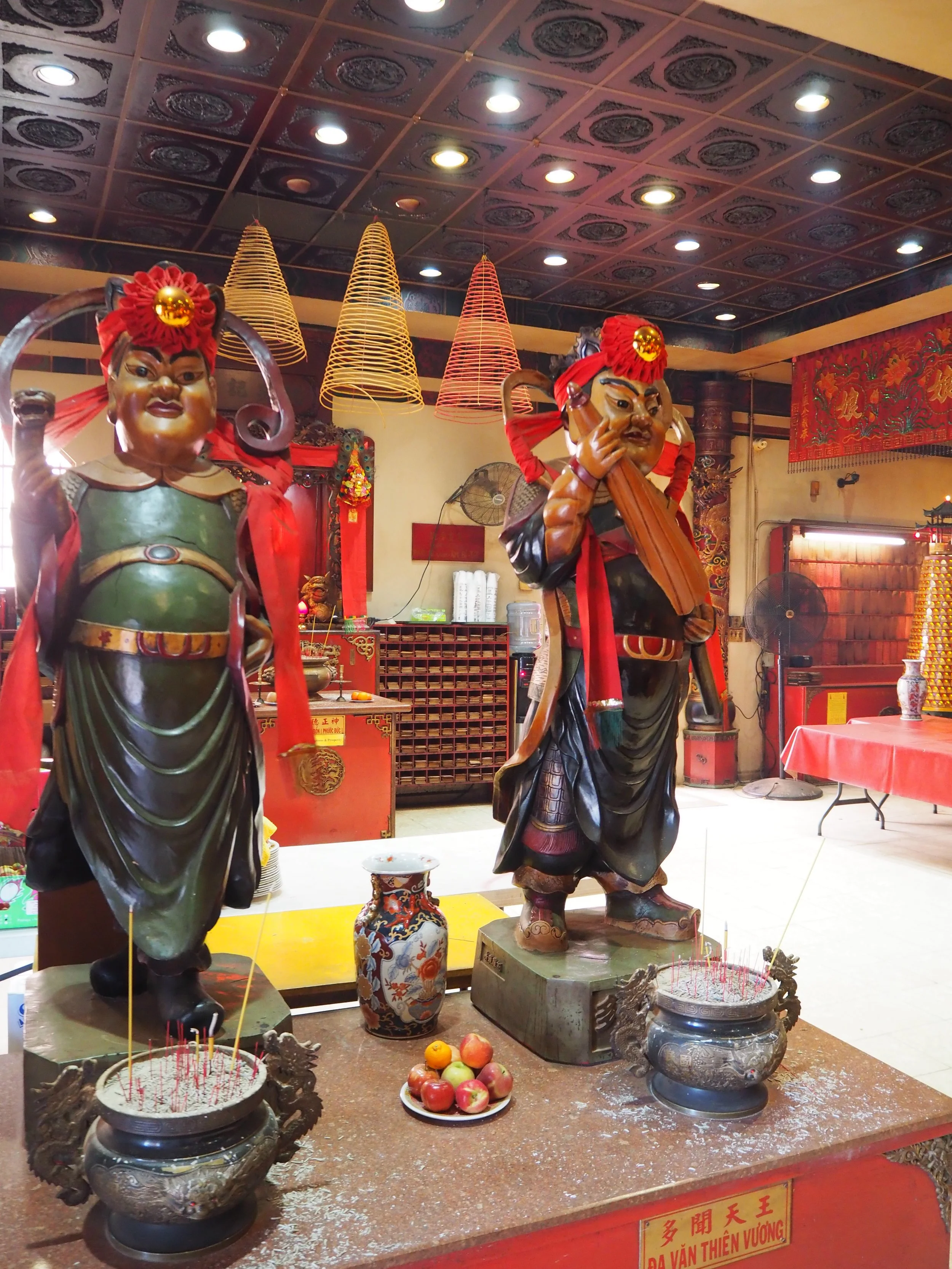
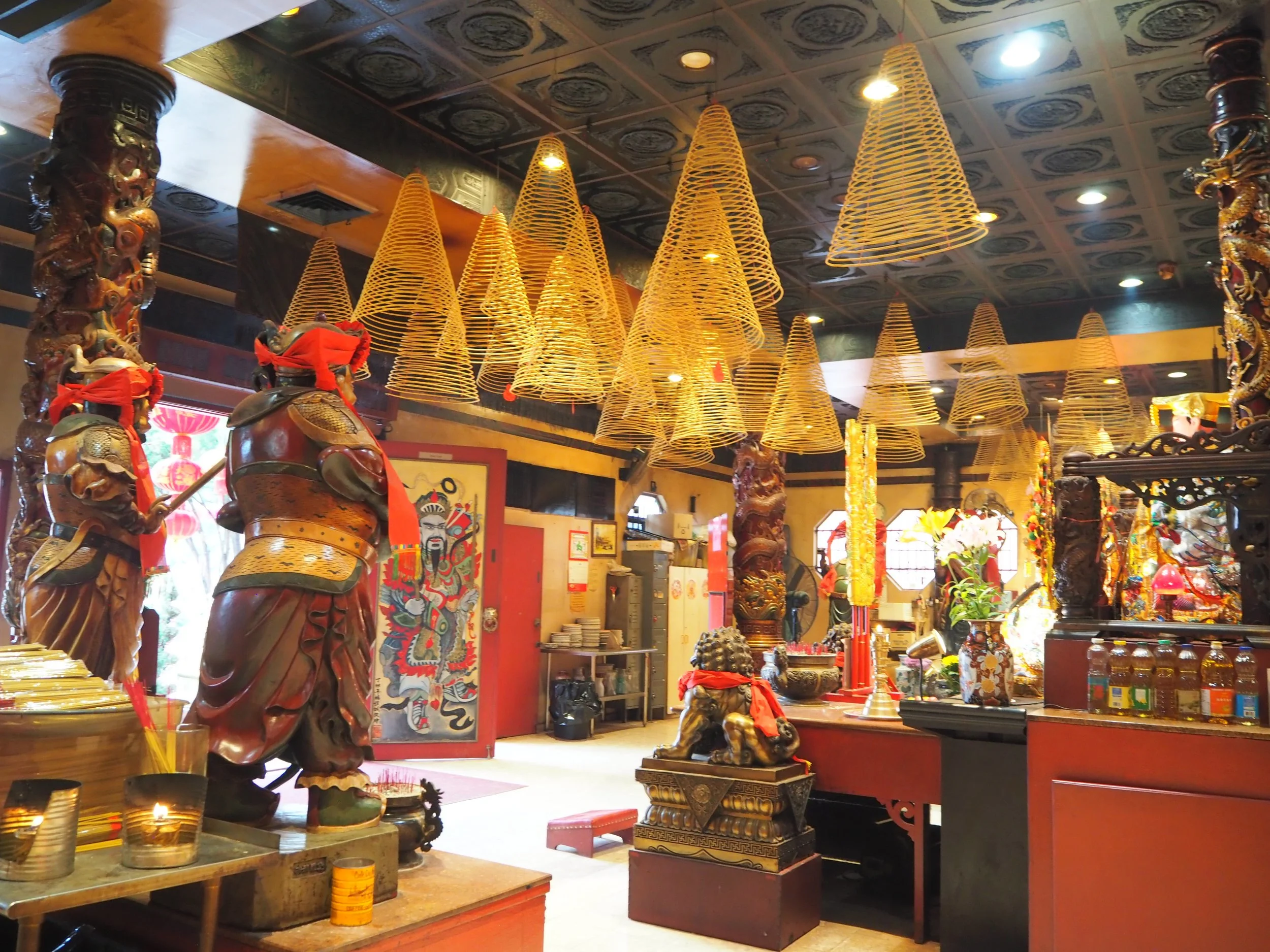
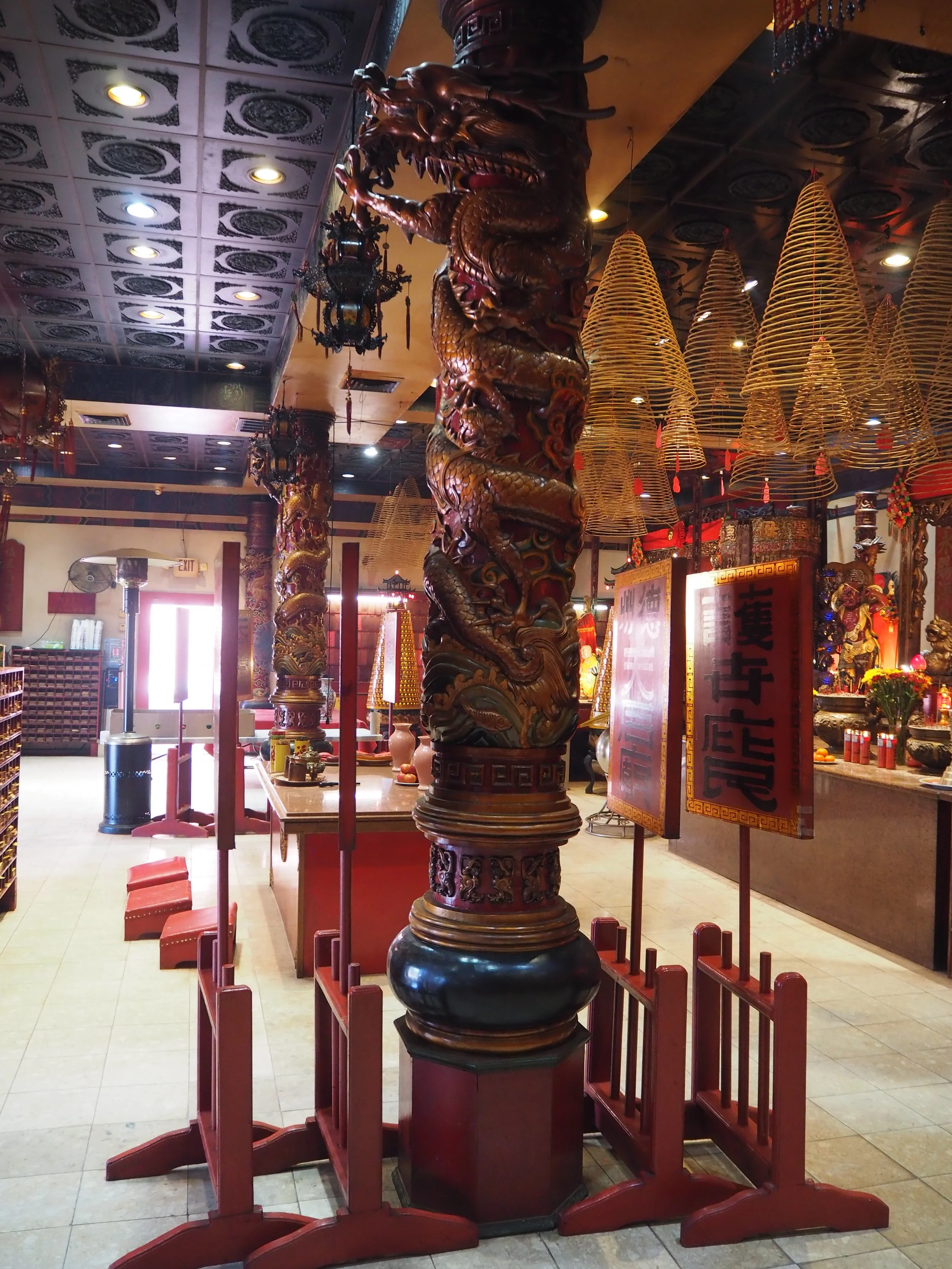
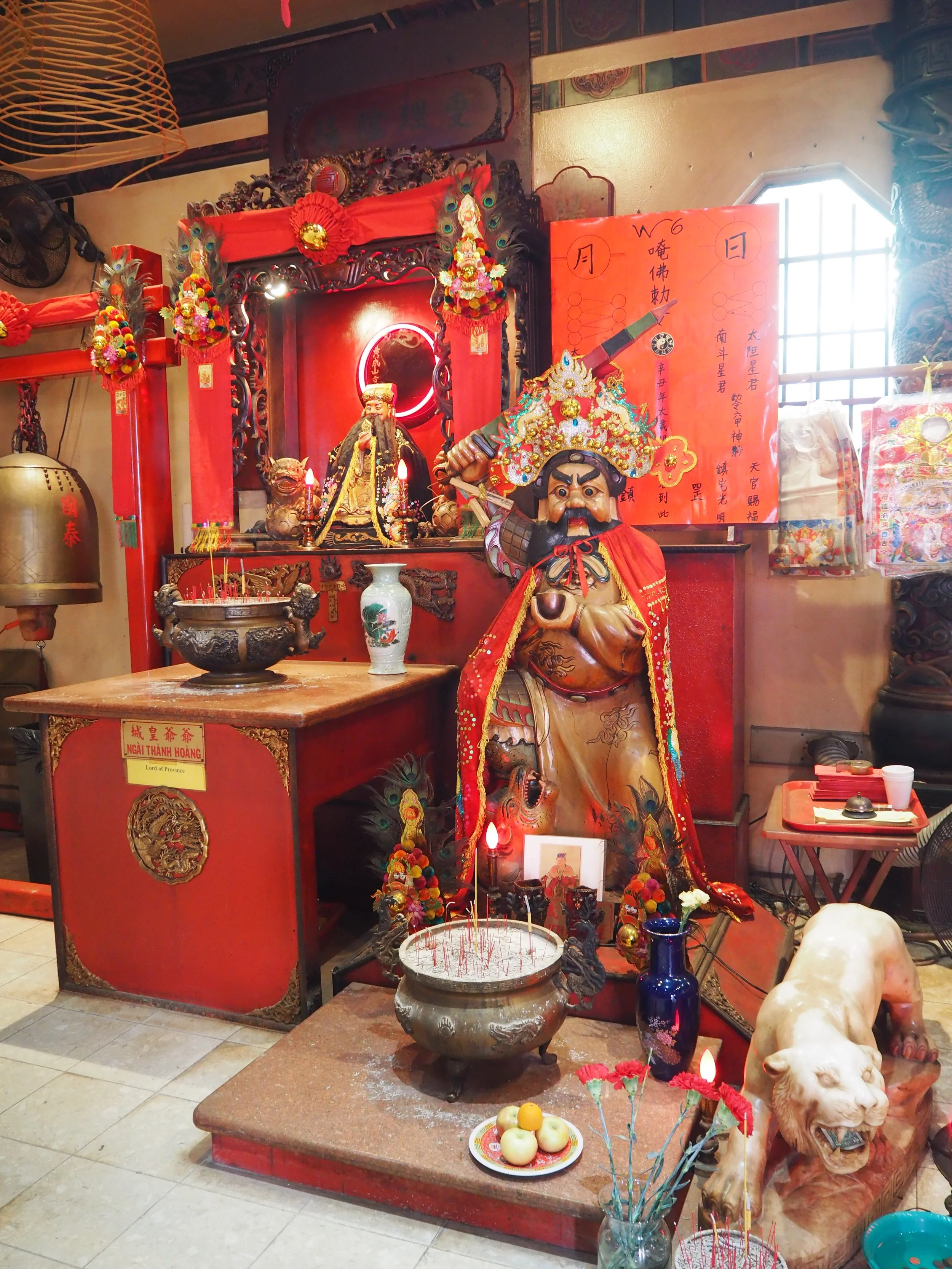
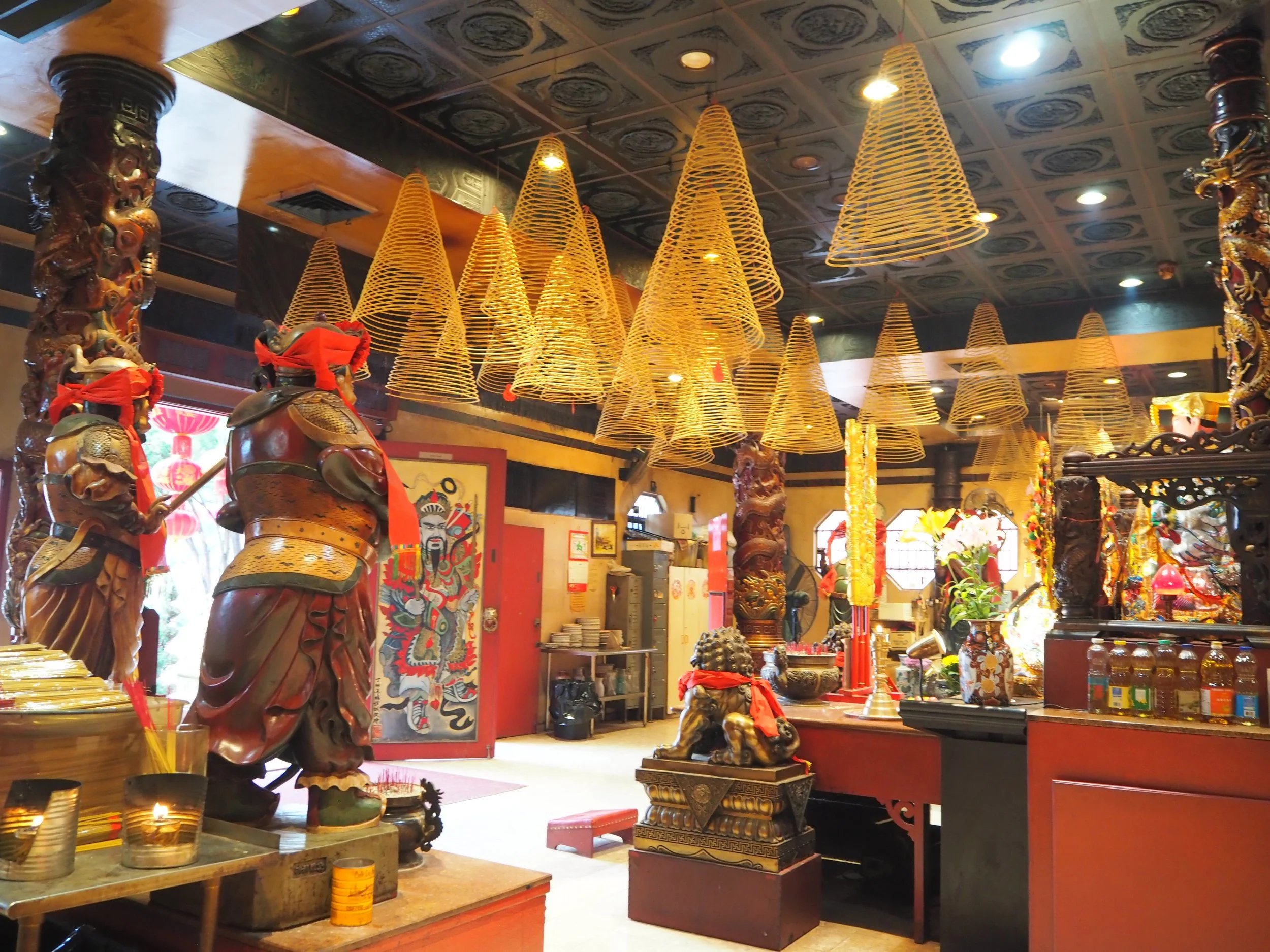
Inside, on both visits, the accumulation is the thing that gets you. This isn't a museum with one object per pedestal and a placard. It's dense the way a family altar is dense — decades of offerings stacked on top of each other. Cone-shaped incense coils, some a foot across, hang from the ceiling in tiers, burning slow enough that a single coil can smolder for weeks. A wooden junk model with red sails reading 一帆風順 — "smooth sailing" — sits on a side table, a votive gift, probably from a business asking Mazu for safe passage in a more figurative sense than she was originally worshipped for. There's a mounted warrior and horse in dark lacquered wood, red sashes tied at the bridle, incense burning at his feet. There's Quan Thánh — Guan Gong, the deified general — in green robes behind his own altar, a donation safe standing sentry beside him like he needs the backup. There's Ngài Thành Hoàng, the City God, and Ông Bổn, the God of Happiness and Prosperity, each with a red-draped shrine of their own.
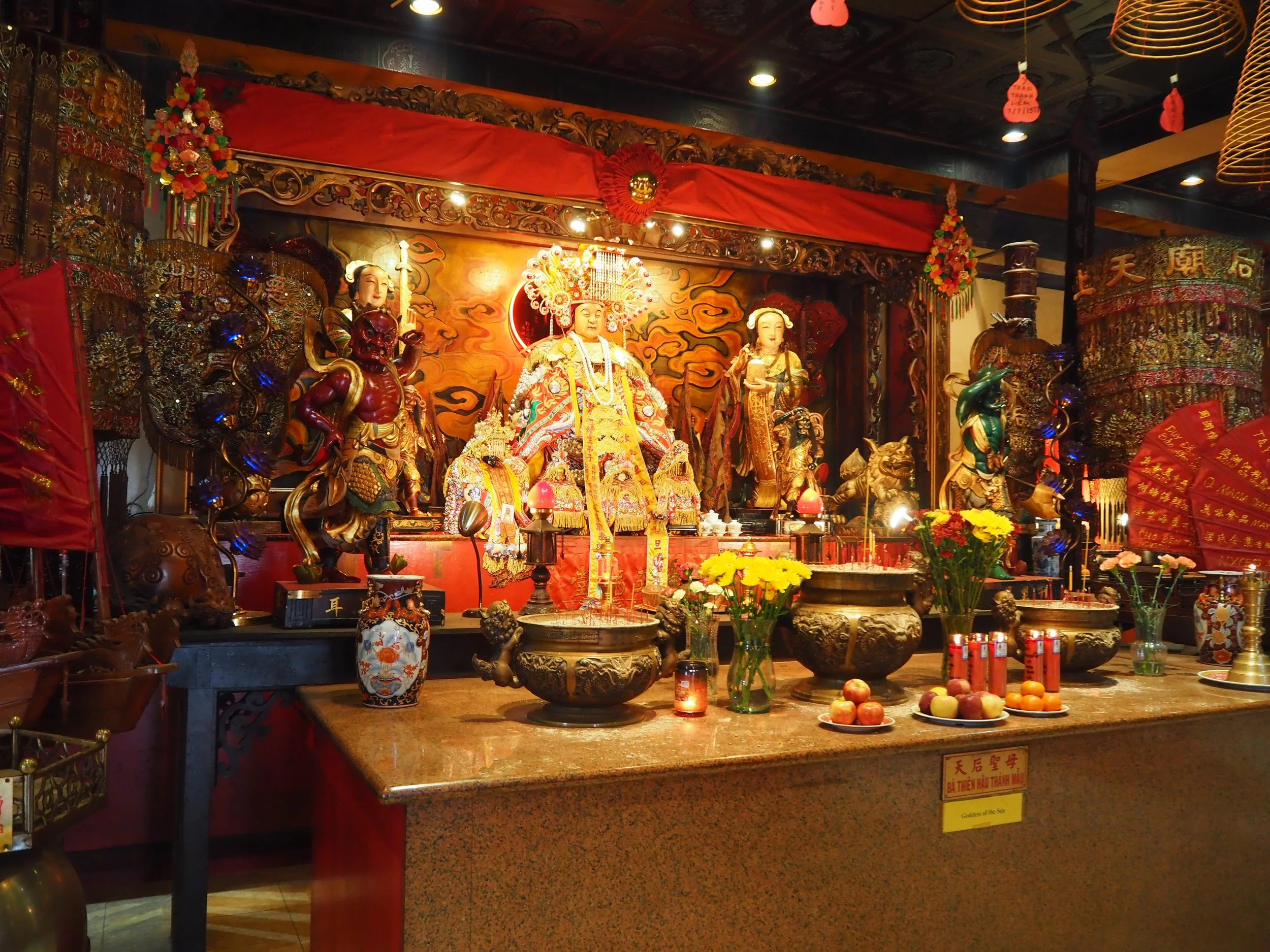
And there's Mazu herself, at the center of it, gold-robed, ringed in a neon halo that hums the way only a neon halo in a hundred-year-old religious tradition can hum — old iconography wired for current.
I don't have the full history of this congregation yet — who built it, when the gate went up, whether it's Chinese, Vietnamese, or the layered both that the Vietnamese-language donation boxes and the 天后廟 characters together suggest. That's still reporting to do. What I have so far is two afternoons, six months and a change of weather apart, of watching a temple be exactly what a temple is supposed to be: full when someone needs it full, quiet when no one does, and indifferent, in the best sense, to which one you catch it in.
Photos: Jim Towers/HHI. Part of HHI's ongoing documentation of Houston's smaller sacred spaces. Reporting on the temple's founding and congregation history to follow.
ATTENTION ASSIGNMENT DESKS & MEDIA PRODUCERS:
All text, video, and original photography covering this story are the exclusive property of the Houston Heights Independent. Broadcast, digital replication, or social scraping of these assets without an active license is strictly prohibited. To license clean, high-density, unwatermarked frames for TV broadcast or regional news print, contact our newsroom immediately, at houstonheightsindependent@gmail.com. or 210-288-3034. Standard licensing fees apply.
© 2026 Houston Heights Independent. All rights reserved. Registered under Jim Towers MJA.JD. No part of this publication, including text, layout, and original photography, may be reproduced, distributed, broadcast, or transmitted in any form or by any means without prior written permission from the Editor-in-Chief. For media licensing inquiries or syndication requests, contact at houstonheightsindependent@gmail.com. or 210-288-3034. Standard licensing fees apply.
HOUSTON HEIGHTS INDEPENDENT
Houston Heights Independent covered this story on the ground. HHI is a civic journalism publication operating on the Murrow standard.
