
The Bandstand Still Standing
A Neighborhood, a Gazebo, and Two Hundred Years of Brass By Jim Towers, M.J.A., J.D.
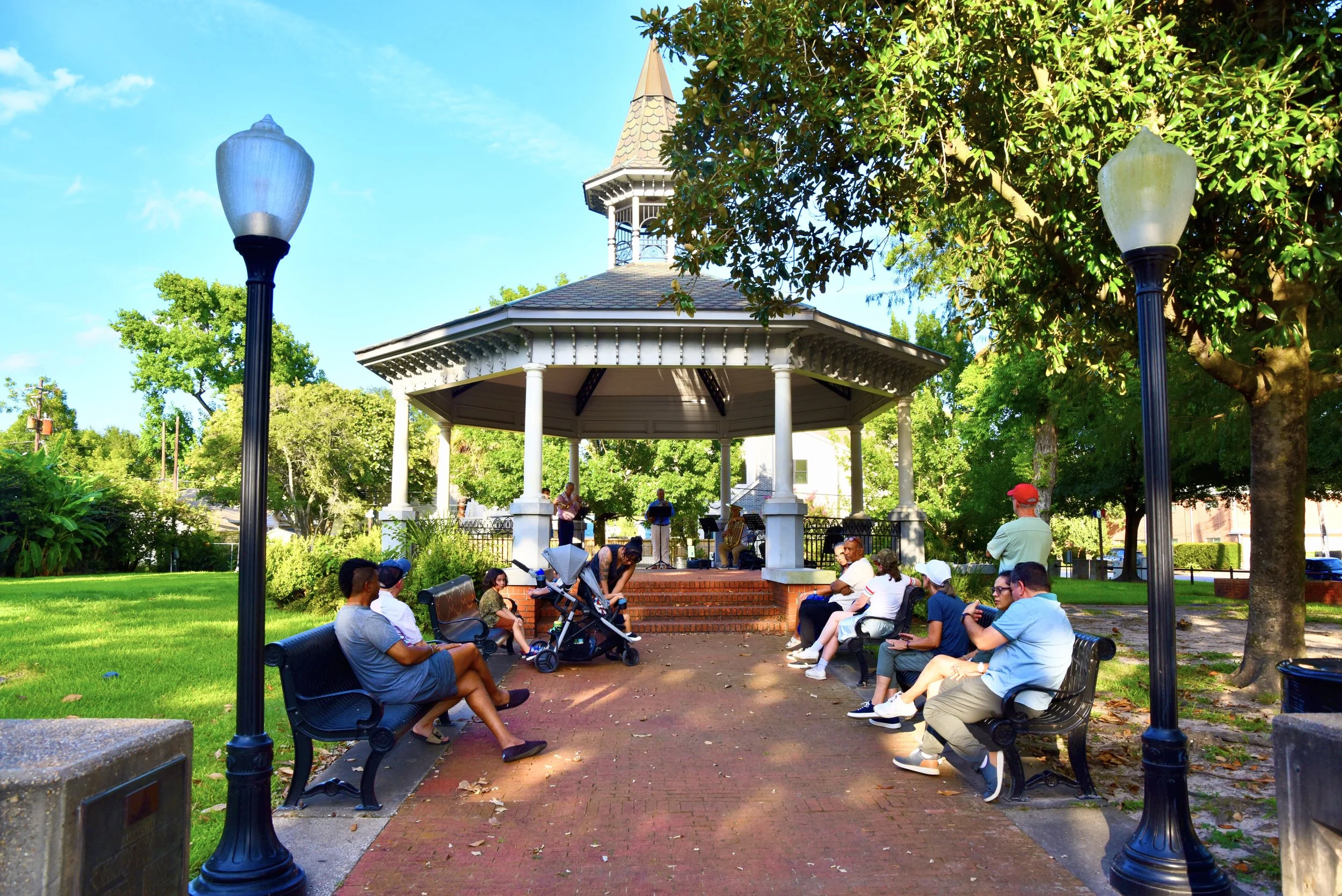
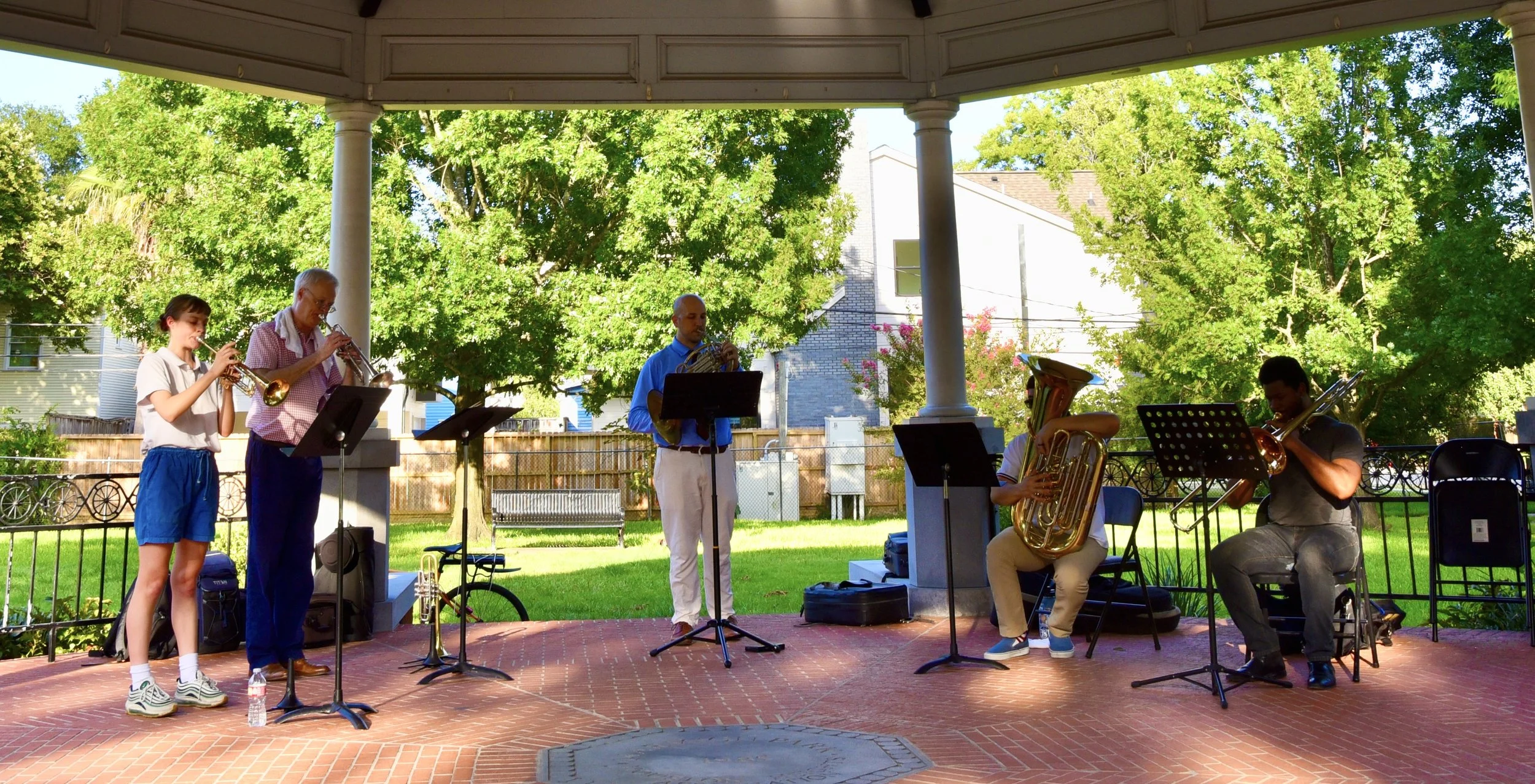
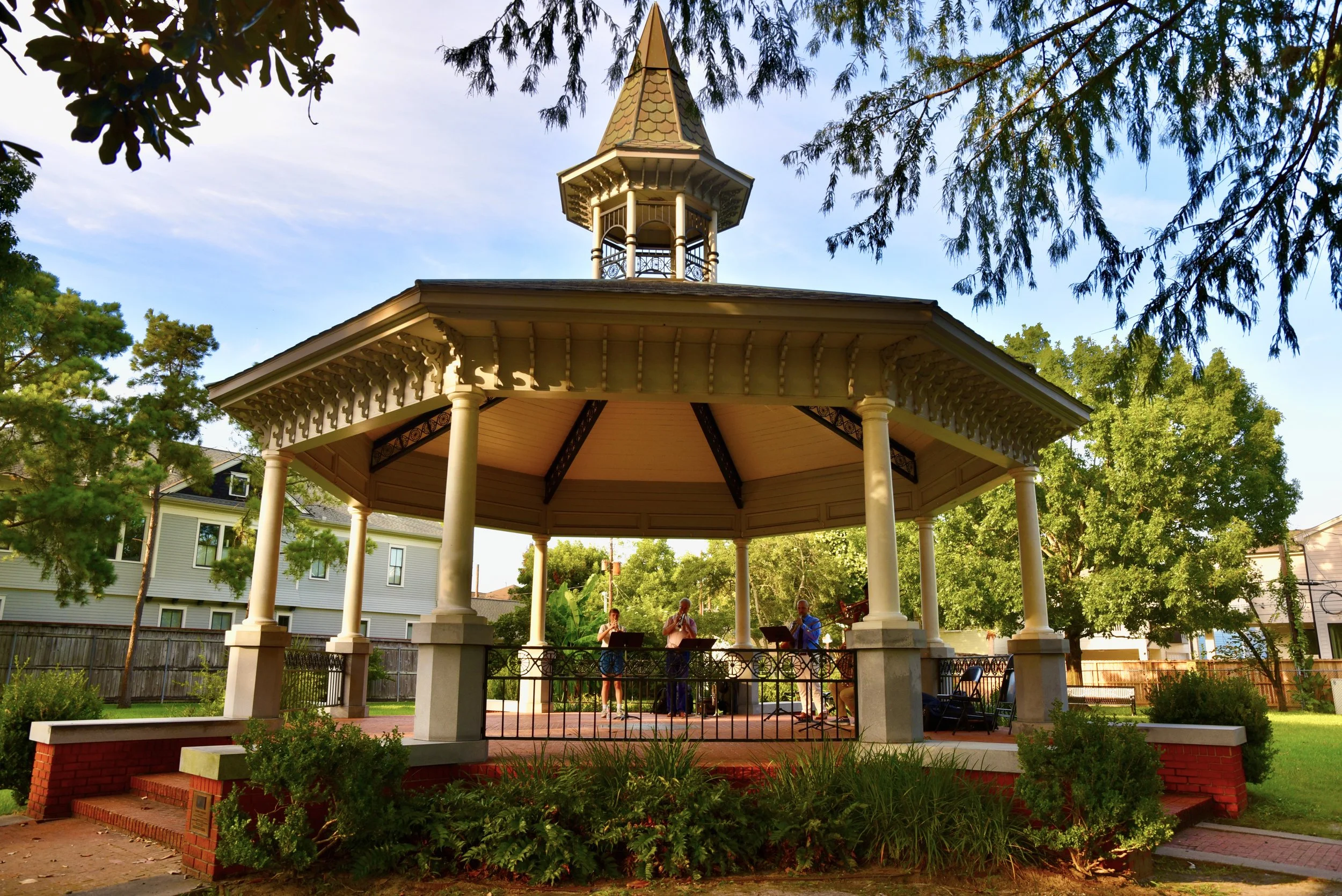
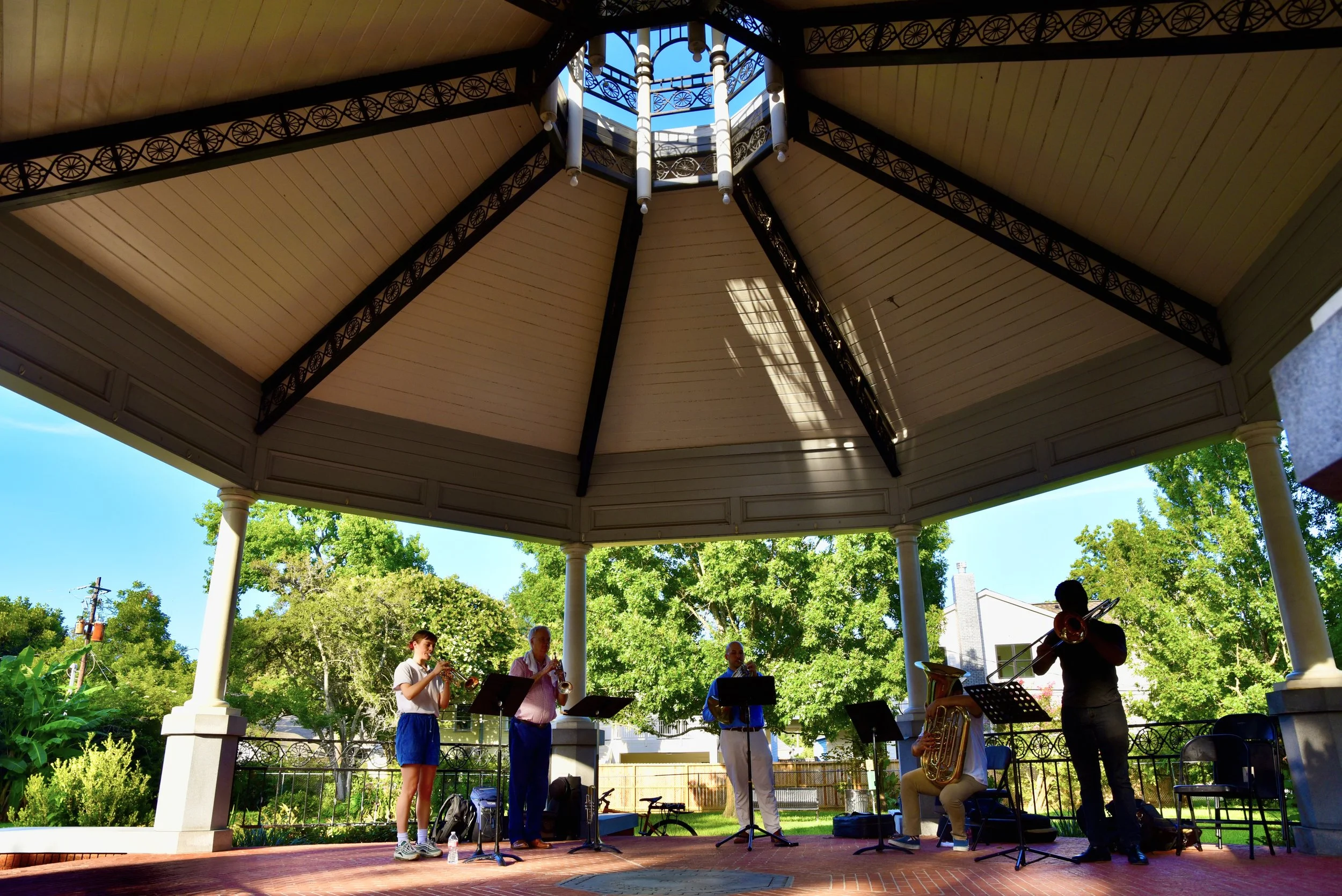
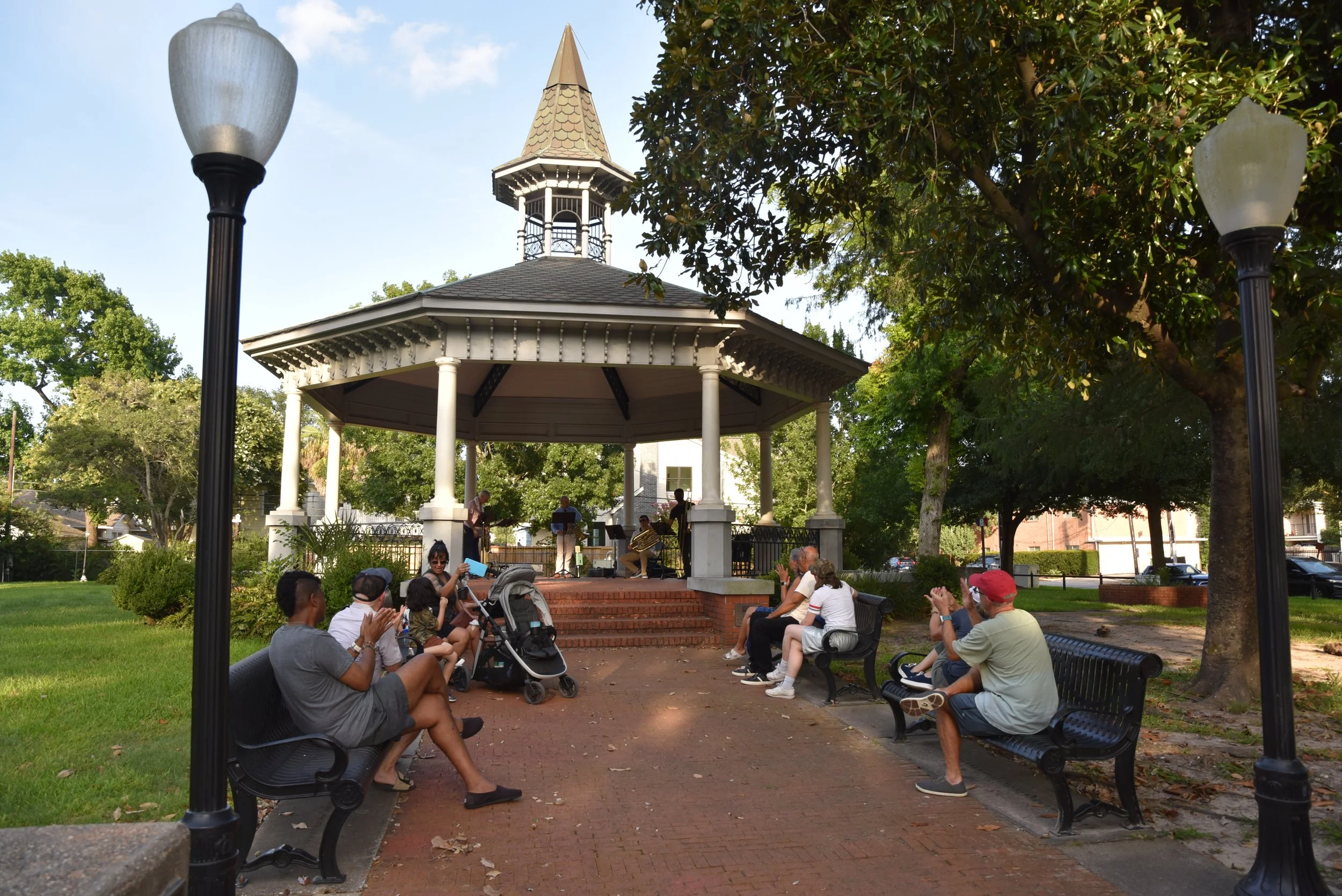
On the Fourth of July, riding through the Heights, I came across a small crowd gathered at Marmion Park. A handful of families had staked out the benches under the magnolias — a stroller parked in the aisle, kids running the edges of the brick walk, a few folks in lawn chairs pulled up close. Up on the steps of the old Victorian gazebo, five musicians were working through a set of brass standards: two trumpets, a french horn, a tuba, a trombone. Sheet music on portable stands. No stage lights, no amplification. Just the instruments, the late-afternoon sun cutting sideways through the trees, and a neighborhood that had shown up to listen.
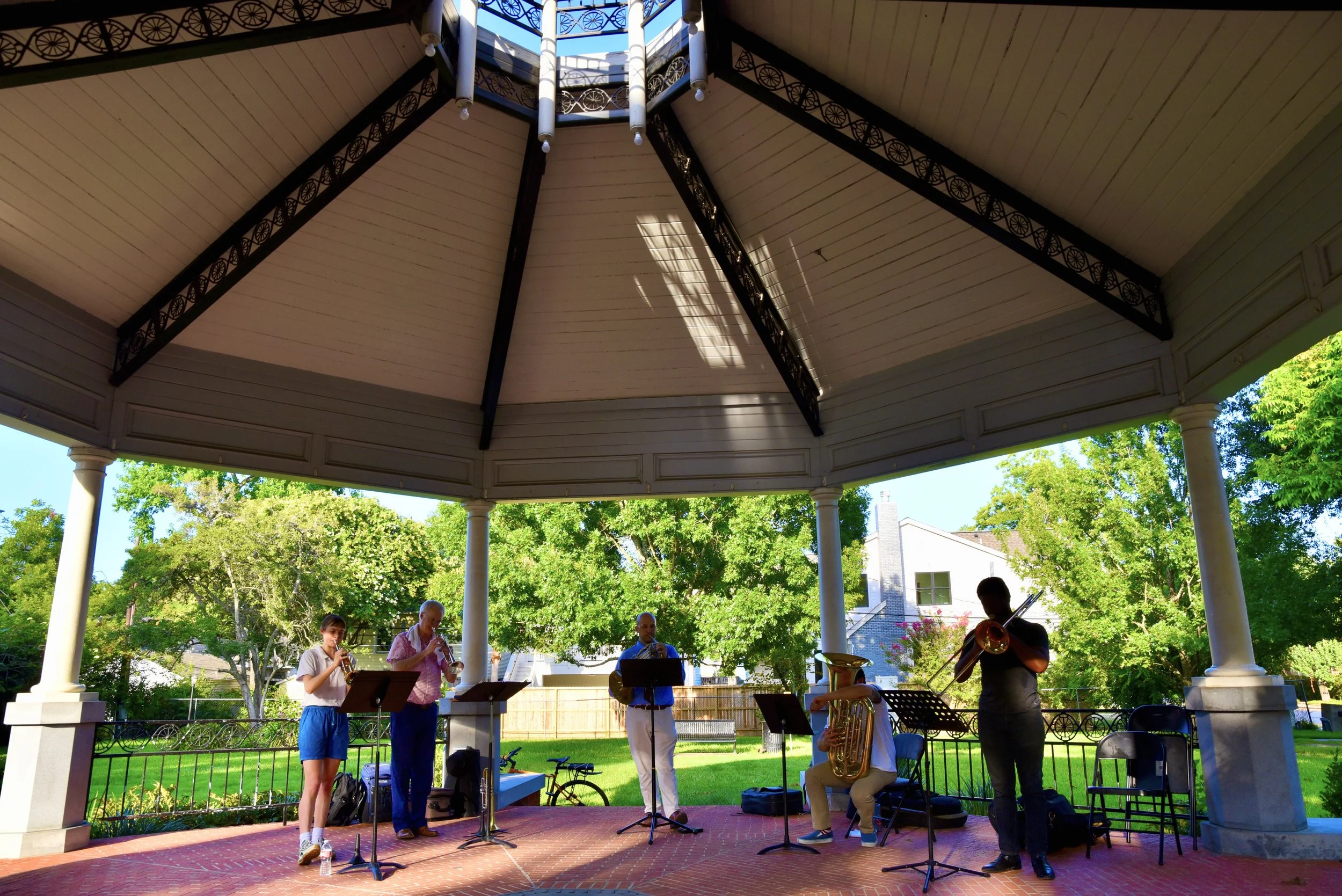
It looked, at first glance, like something improvised — a nice thing a few musicians decided to do on a holiday afternoon. It isn't. It's one of the oldest civic customs in the country, and Marmion Park's gazebo, built in that ornate Victorian style with its scroll-cut eaves and its little belvedere cupola on top, is doing exactly the job that kind of structure has done in American towns for nearly two hundred years.
Where the tradition comes from
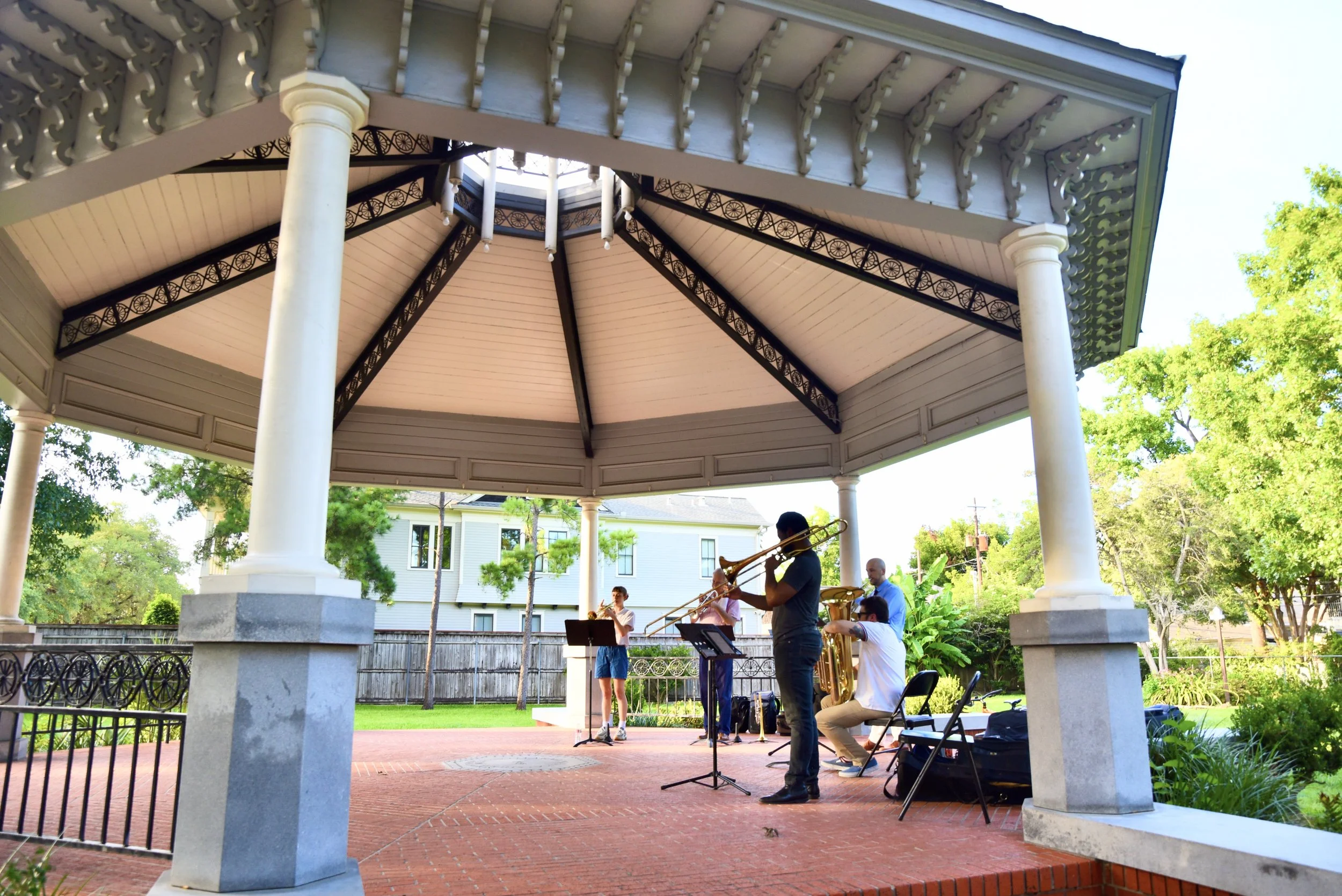
The American brass band movement took off in the 1840s and 1850s, and it exploded from there. Both amateur and professional bands became a major part of civic life in towns across the country, and by the late 19th century, historians estimate there were as many as 10,000 community bands performing regularly in American towns. Towns built bandstands and gazebos specifically to house them — often ornate, "Victorian gingerbread" structures, sometimes simpler wooden ones with the bark still on the timber — and almost always placed at the center of a small public park, where the music could carry without competing against the noise of a busy street.
Independence Day became the tradition's signature occasion almost from the start. From the earliest years of the republic, the Fourth was marked by bells, drums, fifes, and brass carried through town squares and public gatherings — sound that connected the holiday to military service and to a still-new national identity. Bandstands got dressed in patriotic bunting for the occasion, and the town band became as much a fixture of the Fourth as the fireworks.
The composer Charles Ives, who grew up watching this play out in small-town Connecticut, built an entire orchestral piece around the sound of it — the experience of hearing the town band play in the gazebo in one ear, a marching band approaching in the other, firecrackers going off, nobody quite in step. It's chaotic in the way a real Fourth of July is chaotic. Marmion Park, in miniature, had its own version of that same layered scene: a family with a stroller settling in on one bench, two men deep in conversation on another, a cluster of neighbors clapping along, and in the middle of it, that unhurried brass sound drifting out from under the roof.
A tradition that never actually left
What's notable is that this custom didn't fade into history — it just got smaller and quieter than it once was. Towns from coastal Maine to small-town Kansas to central Florida still run essentially the same ritual today. In Bar Harbor, the town band still performs weekly through the summer in the gazebo on the Village Green, and kids still run laps around the bandstand the way they have for generations. In Lawrence, Kansas, the bandstand locals call the "South Park gazebo" has hosted a town band's Fourth of July concert going back to a band first organized in 1878. In Safety Harbor, Florida, an American Legion drum and bugle corps plays the Star-Spangled Banner from the town gazebo every Fourth. The National Archives and sites like the Herbert Hoover National Historic Site still stage brass concerts on their village greens as part of the same unbroken line.
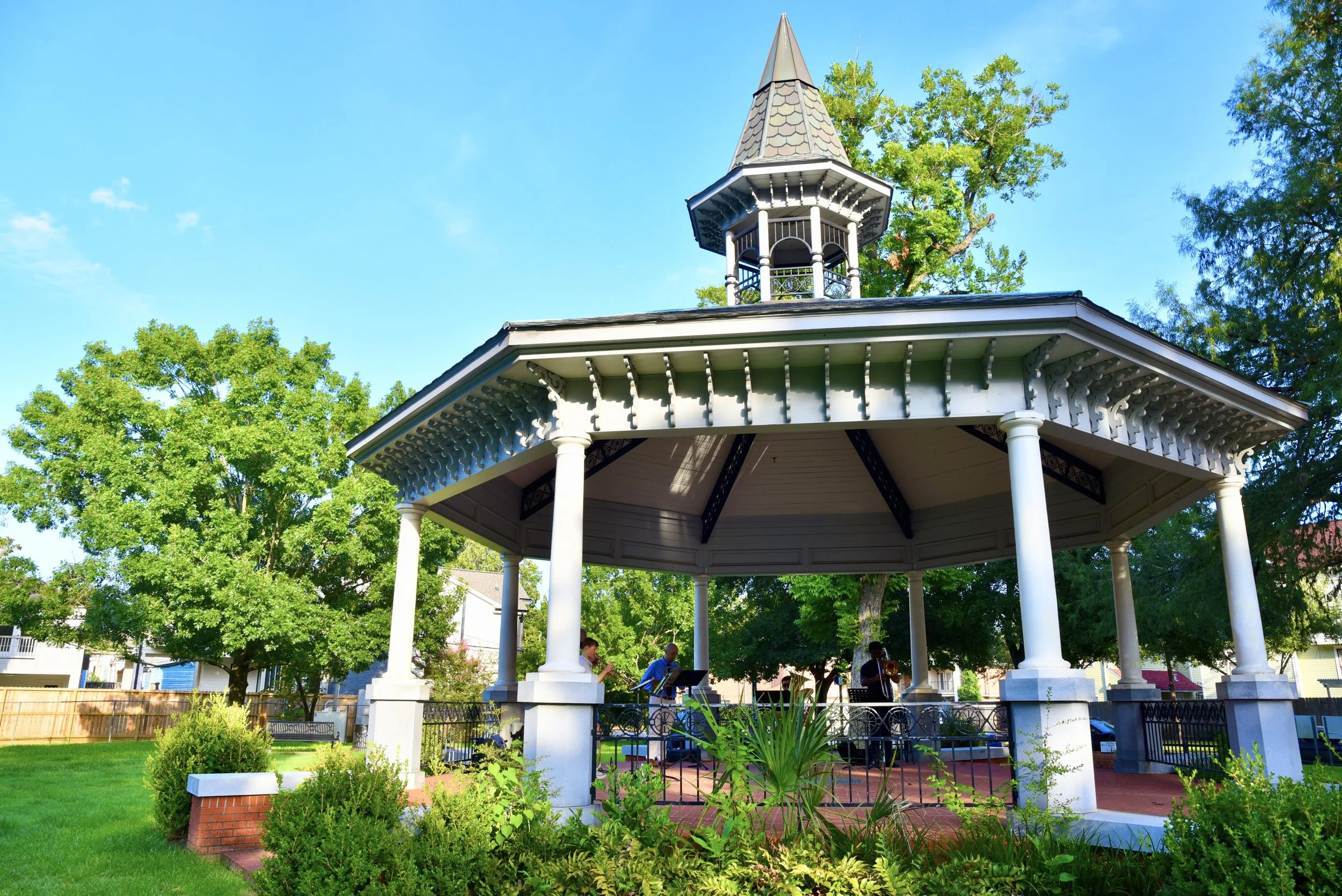
The Heights doesn't have a weekly town band the way some of those places do — this wasn't a standing concert series, just five musicians and a small, appreciative crowd on a holiday afternoon. But the shape of it is identical to what's been happening in American parks since before the Civil War: a gazebo built for exactly this purpose, a neighborhood willing to stop and listen, brass carrying across a green space on a summer evening.
Stand in Marmion Park long enough on a Fourth of July, and you're not watching something new. You're watching the oldest part of the holiday still working the way it always has.
Photos: Jim Towers / Houston Heights Independent
ATTENTION ASSIGNMENT DESKS & MEDIA PRODUCERS:
All text, video, and original photography covering this story are the exclusive property of the Houston Heights Independent. Broadcast, digital replication, or social scraping of these assets without an active license is strictly prohibited. To license clean, high-density, unwatermarked frames for TV broadcast or regional news print, contact our newsroom immediately, at houstonheightsindependent@gmail.com. or 210-288-3034. Standard licensing fees apply.
© 2026 Houston Heights Independent. All rights reserved. Registered under Jim Towers MJA.JD. No part of this publication, including text, layout, and original photography, may be reproduced, distributed, broadcast, or transmitted in any form or by any means without prior written permission from the Editor-in-Chief. For media licensing inquiries or syndication requests, contact at houstonheightsindependent@gmail.com. or 210-288-3034. Standard licensing fees apply.
HOUSTON HEIGHTS INDEPENDENT
Houston Heights Independent covered this story on the ground. HHI is a civic journalism publication operating on the Murrow standard.
