
"The White Dragon in the Heights: A Blade Runner’s Table Comes to Life"
By Jim Towers, M.J.A., J.D. photojournalist. HHI.
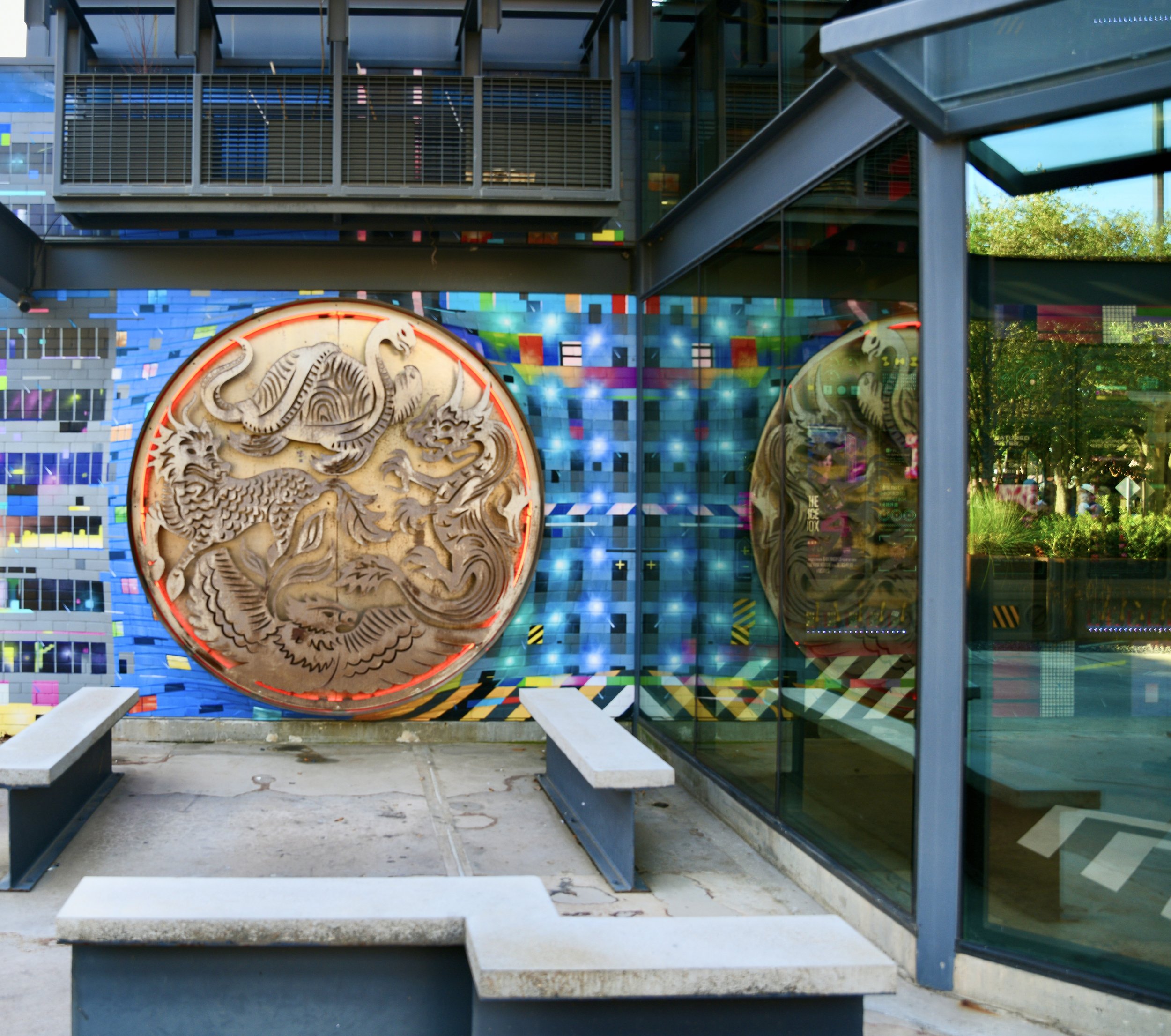
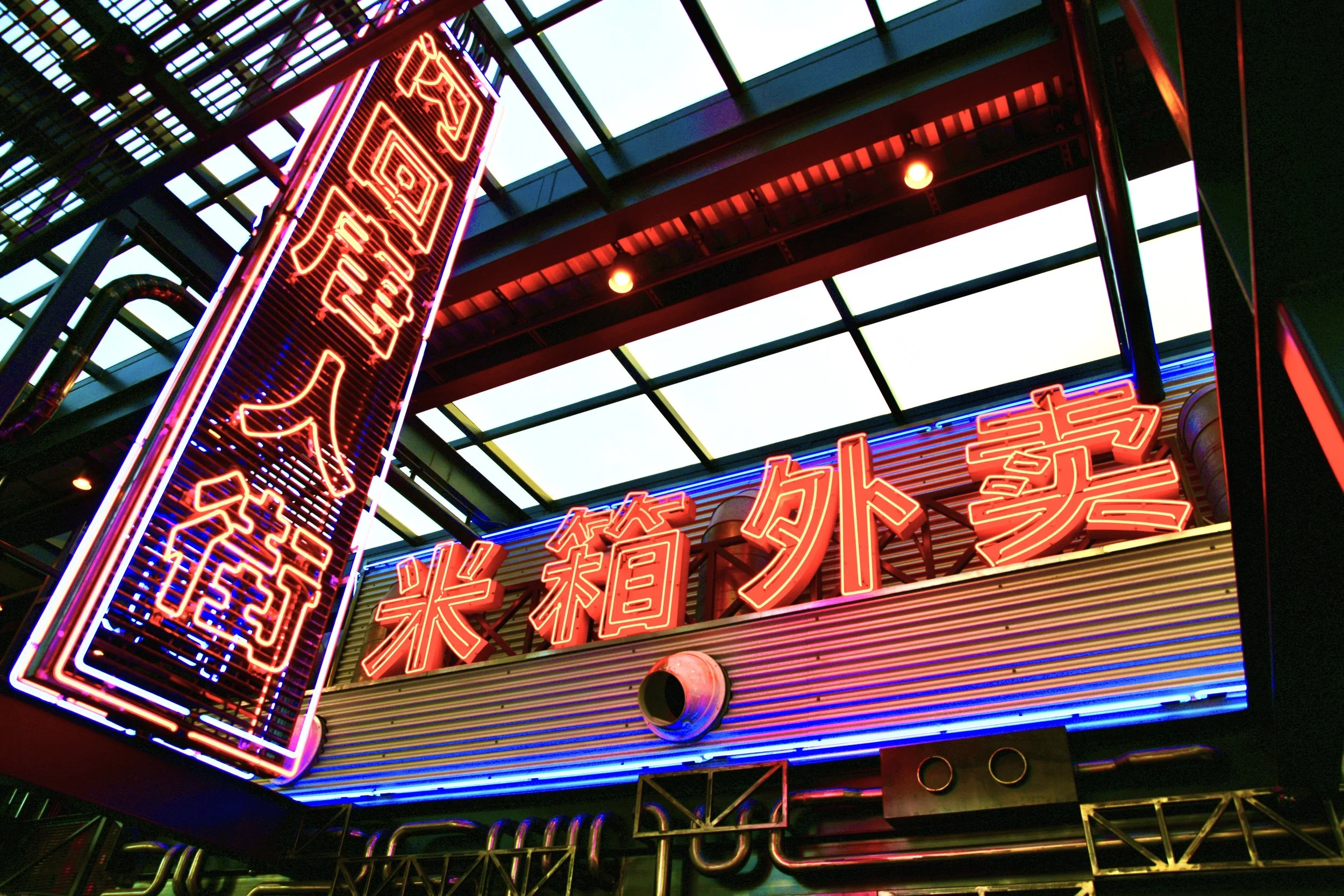
Entrance to the rice box.
In 1982, filmmaker Ridley Scott released Blade Runner, adapted from a novel by Philip K. Dick. Years earlier, while researching his own novel The Man in the High Castle in the closed stacks at UC Berkeley, Dick had come across a cache of documents — among them the diary of an WW II Nazi SS officer. Dick later said the document convinced him that a person capable of writing it could not be fully human — that such a person must, in some way, be an android. That idea became the seed of his 1968 novel Do Androids Dream of Electric Sheep?, which Scott adapted into the movie Blade Runner fourteen years later, launching a new strain of futuristic noir that has never let go of the culture since.
The film's following has only grown with each generation, and its questions feel more urgent now than when it was written. Robots are being built. Massive data storage facilities are rising across the country. Autonomous vehicles, AI systems, and self-service kiosks are no longer speculative fiction — they're infrastructure. (See our story on the kiosks reshaping the region, "The Silent Grid.")
But here in the Heights, that same anxiety has a lighter, stranger counterpart: a restaurant at 300 West 20th St., at Rutland, in The Houston Heights, Houston, Texas 77009. It's called The Rice Box.
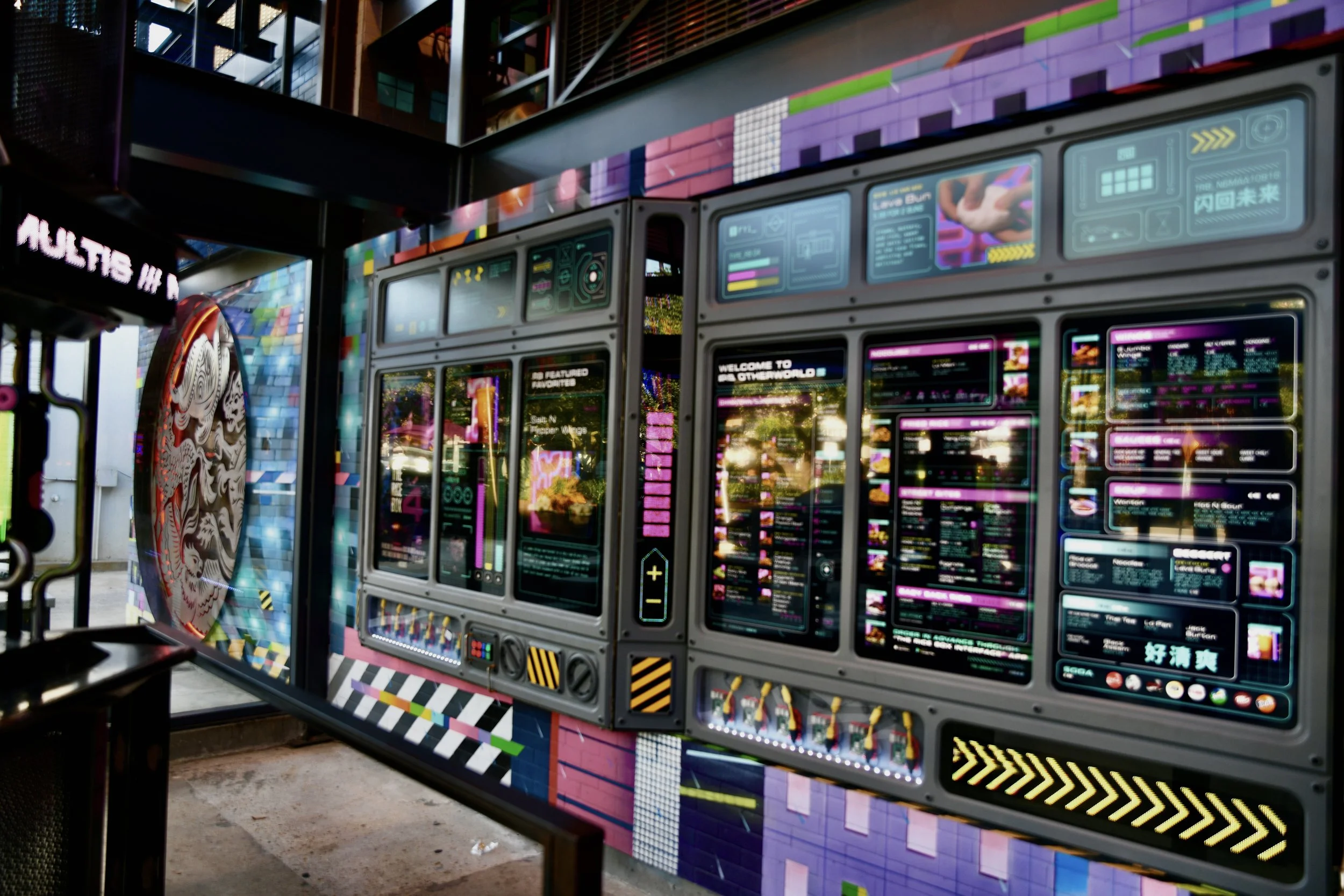
Main menu where to order on the main line.
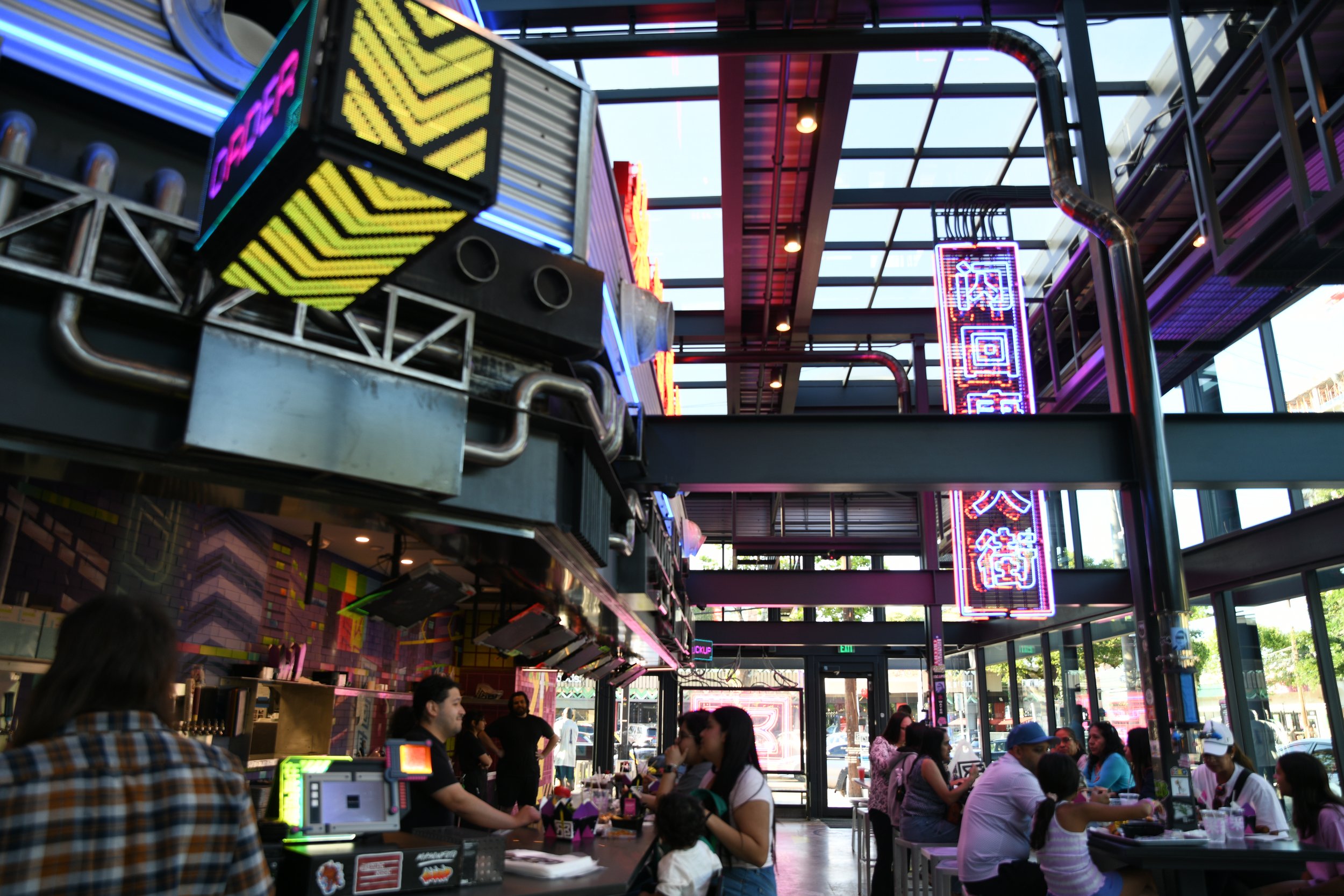
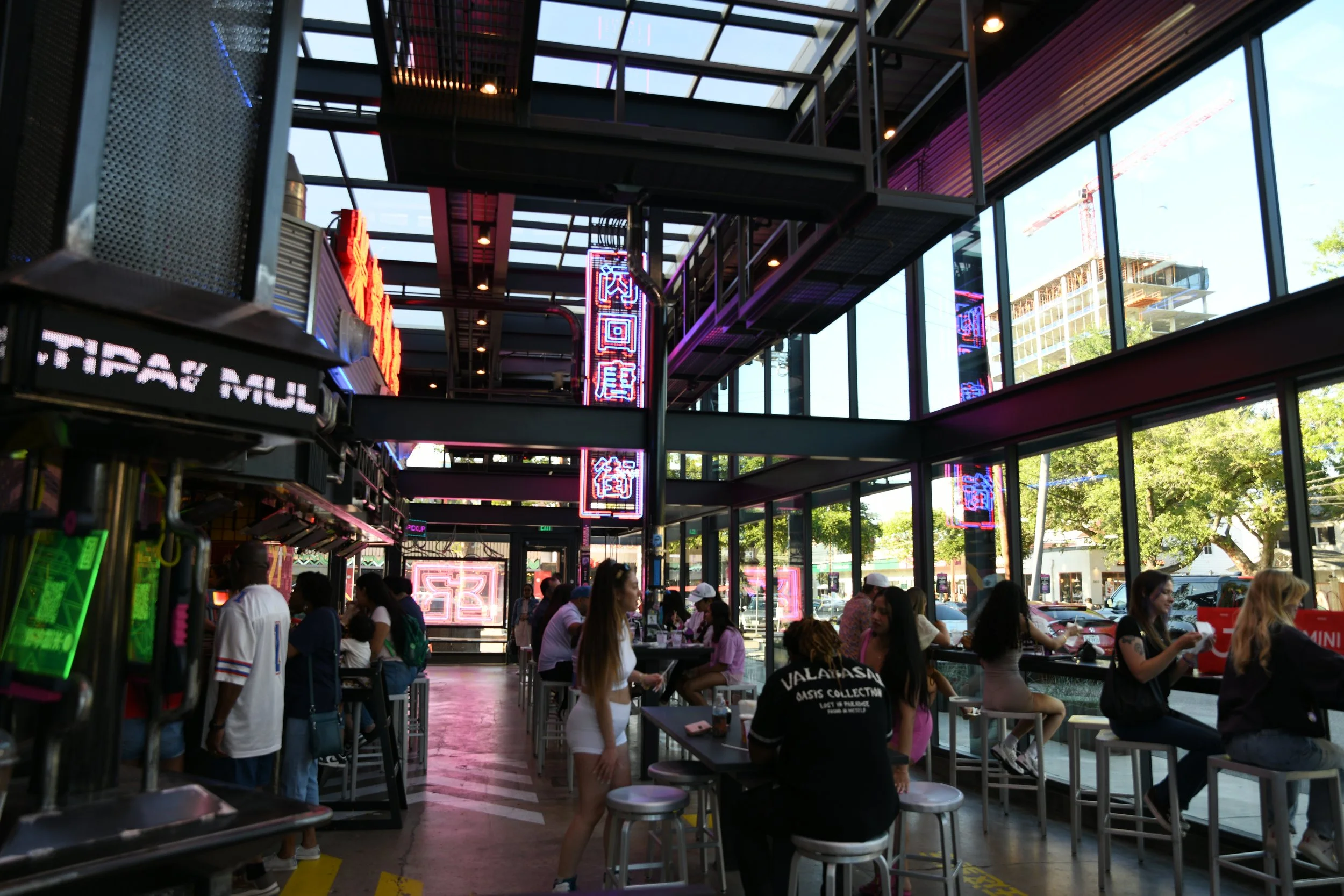
Walk in off the street and the first thing that hits you isn't the food — it's the light. Red and blue neon climbs three stories through an open steel atrium, Chinese characters glowing against a dusk sky through the glass roof. It's deliberate, and it's specific: according to the manager, the entire design language traces back to a single scene — Rick Deckard hunched over a bowl of noodles at a rain-slicked street stall in the opening minutes of Blade Runner. That image, over forty years old now, is the DNA of everything here.
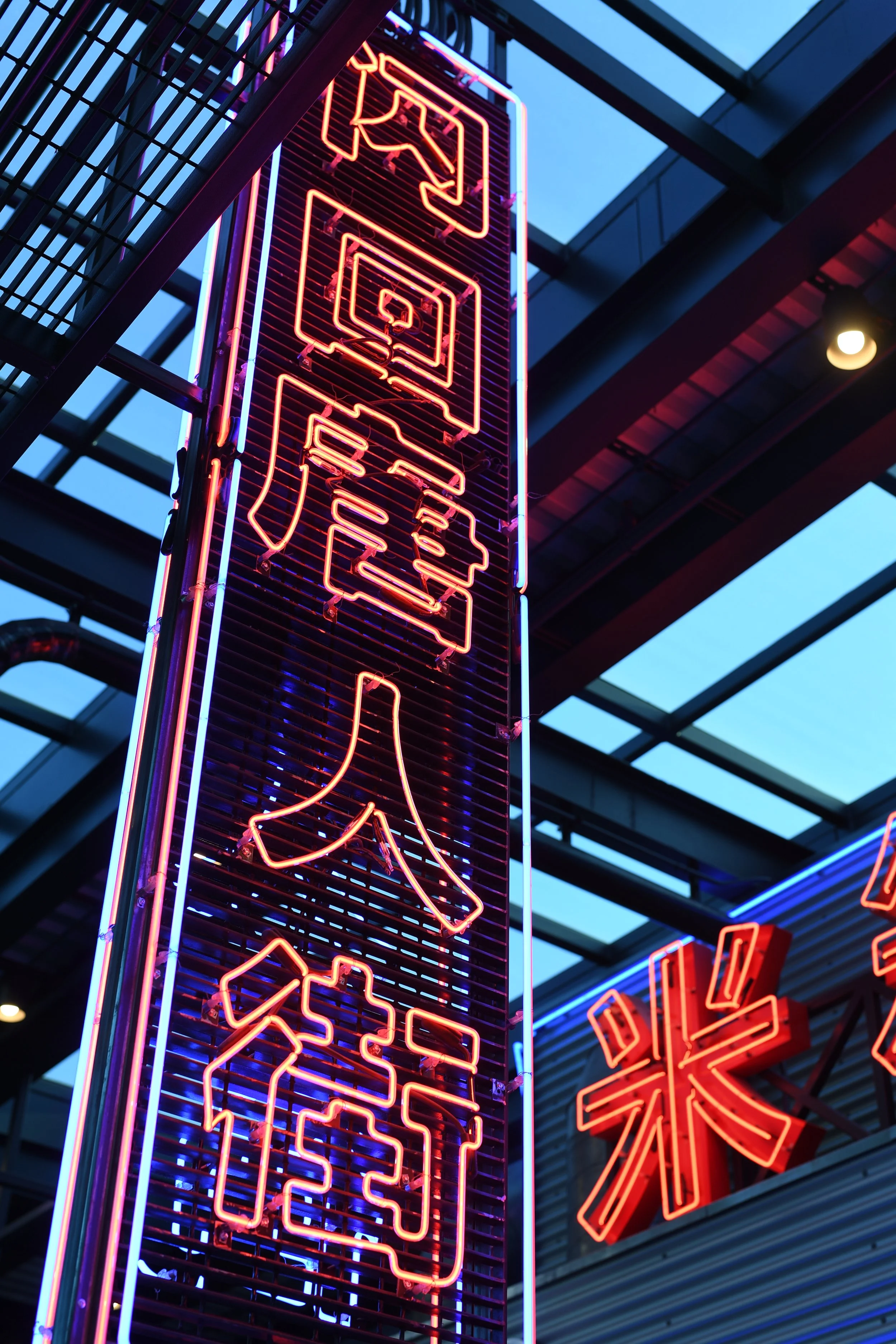
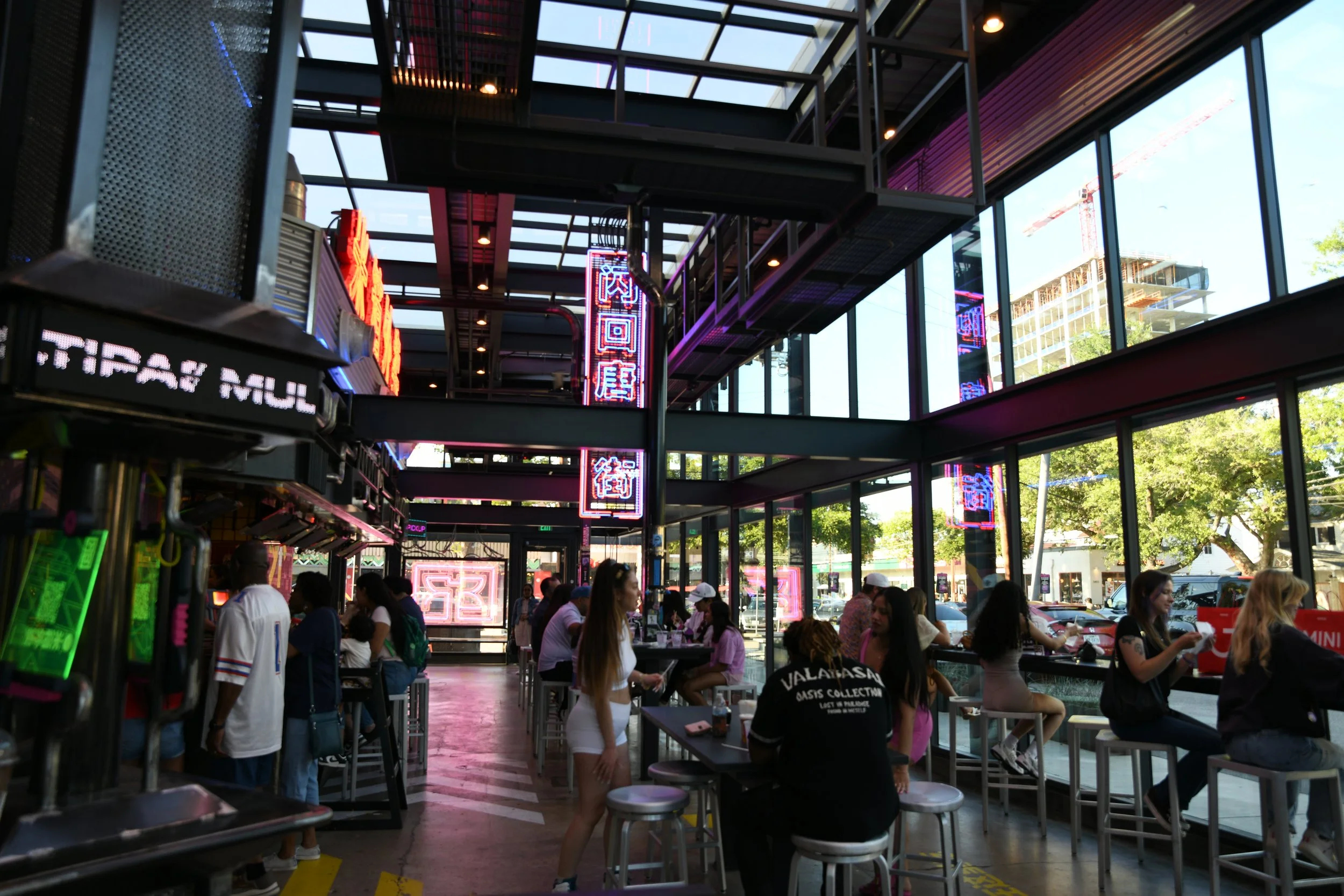
“HEY Lo, Phoage!” “He say you Blade Runner Mr. Decker”. “You got the wrong guy pal”.
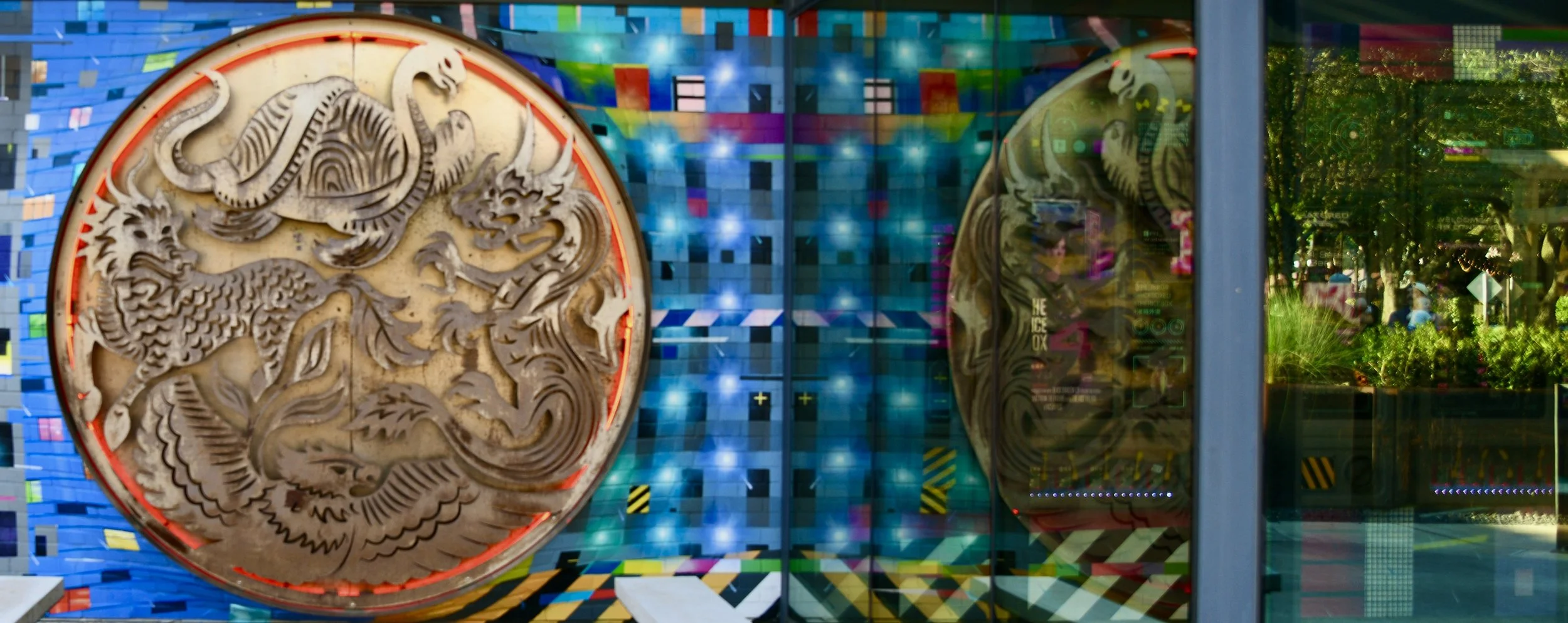
It shows in the details. Screens throughout the space loop Blade Runner and anime footage on a continuous rotation — the influence isn't a one-time set dressing choice, it's ambient and ongoing. The wall-mounted "vending unit" — gunmetal panels, hazard-yellow chevrons, a menu running on what looks like a spaceship dashboard — nods to the film's own crowded, screen-lit street stalls, updated with a "Welcome to RB Otherworld" interface and a lava bun promo instead of noodles and soy. A carved stone medallion of dragon, phoenix, tiger and turtle sits framed against a glitch-art mural nearby, doubled in the glass of the building next to it — a quiet echo of the neon dragon sign that hangs over the White Dragon Noodle Bar in the film itself. That layered, reflective quality is very much the neo-noir signature of the Blade Runner films, extended here through an anime lens as much as the original movie's.
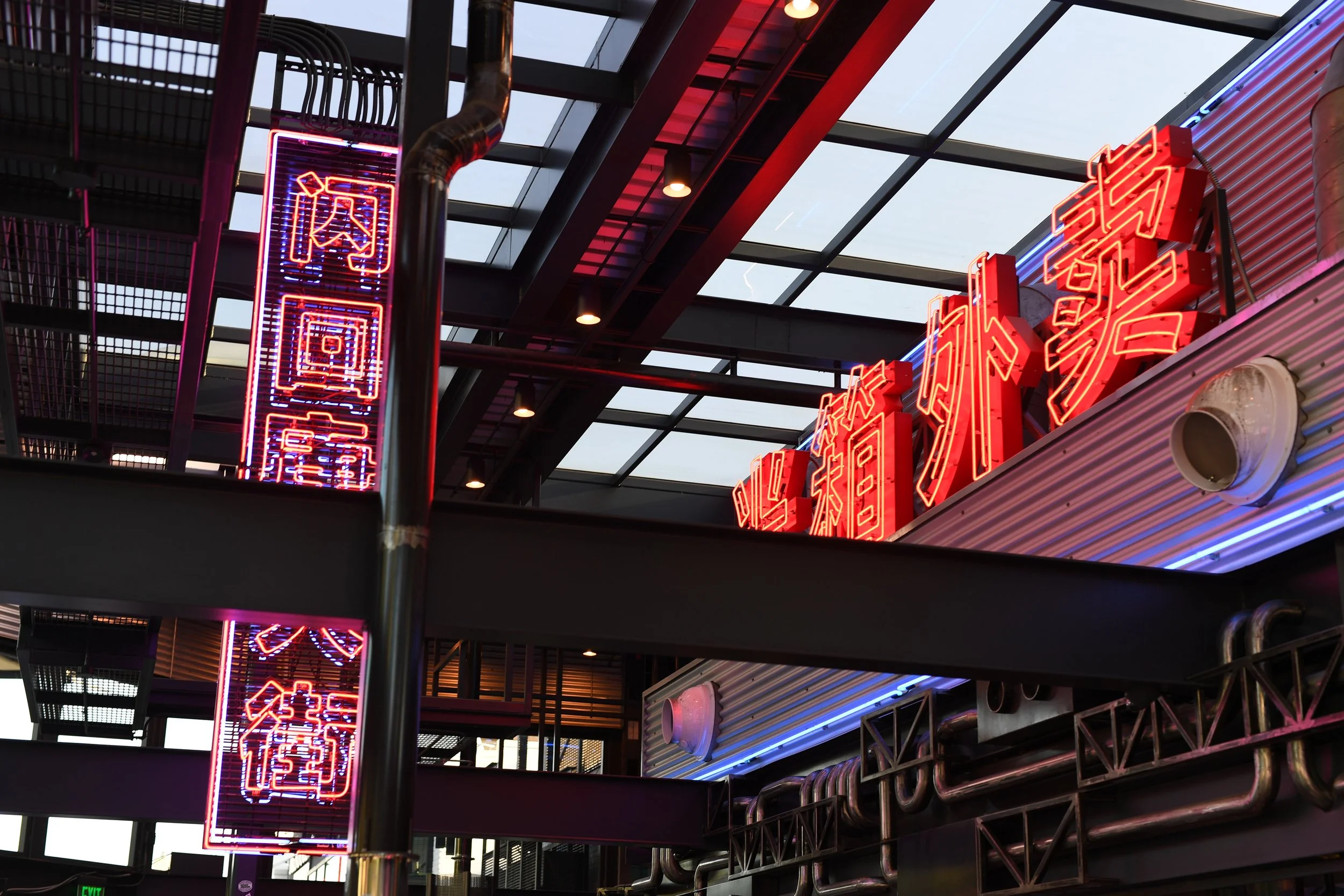
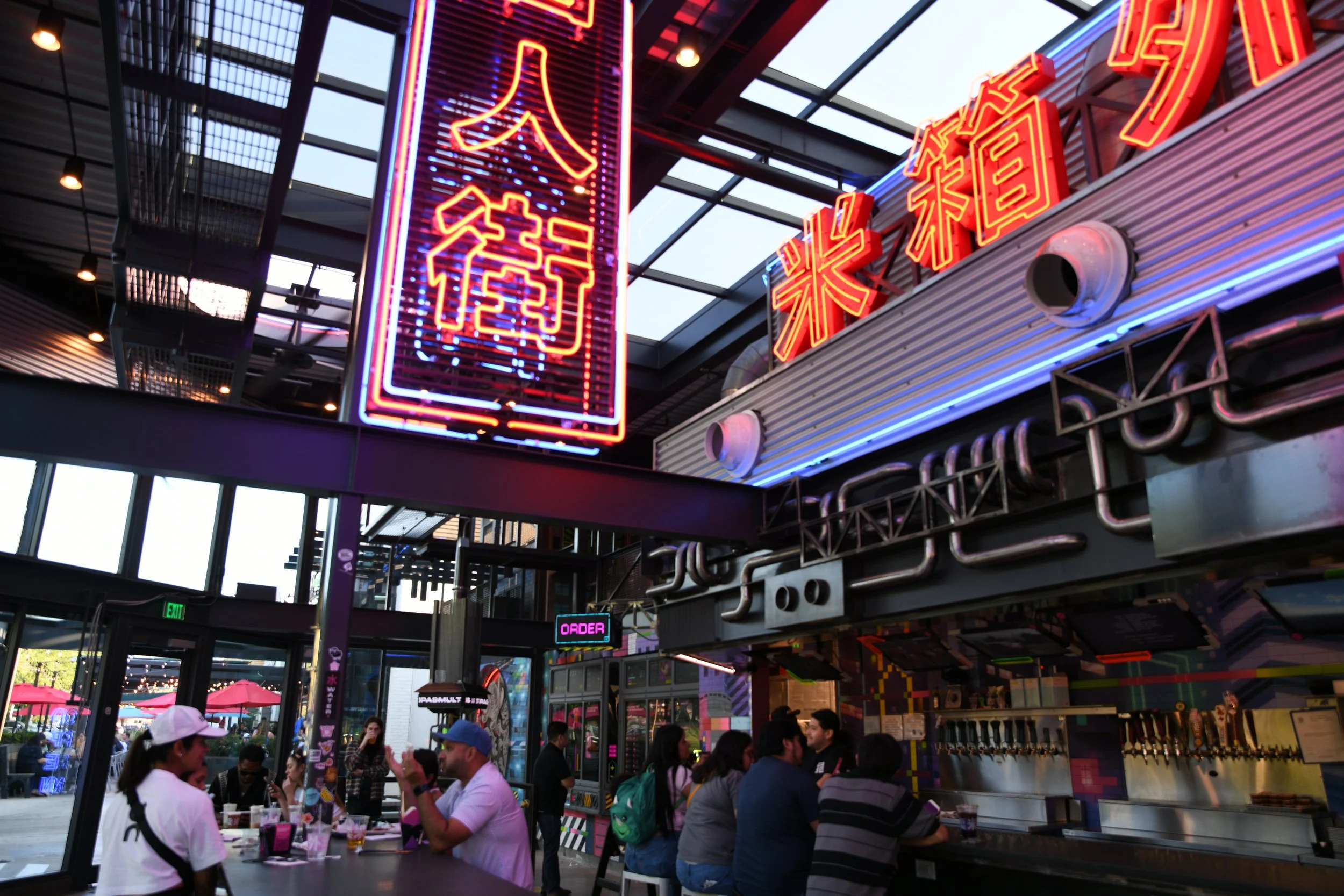
People enjoying lunch at the rice box.
And then there's the detail that separates a themed restaurant from an actual tribute: the secret menu. In that opening scene — set at the White Dragon Noodle Bar, a stall modeled on a traditional Japanese yatai, its counter lit by the towering neon dragon sign that gives it its name — Deckard haggles with the man behind it, credited only as the Sushi Master, over how many pieces he wants. "Four," he says. "Give me four." The vendor keeps cutting him down — "Two is fine" — until Deckard finally relents: "and noodles." Fan lore has long held that what he was actually trying to order was nu-sooch — a fictional, synthetic stand-in for sushi, built from soy and lichen in the film's imagined future. It's a throwaway exchange, thirty seconds of dialogue — but at The Rice Box, it's a password. Walk up to the manager, say "four, four," and the kitchen will send out its own version of that off-menu order — nothing printed, nothing posted, passed along the way real off-menu items get passed along anywhere: because you know to ask.
None of it would matter if the food didn't hold up on its own. It does. The kitchen is turning out genuinely authentic Chinese and Chinese-American cooking — not a novelty menu built to match the aesthetic, but real cooking that happens to be served inside a set piece.
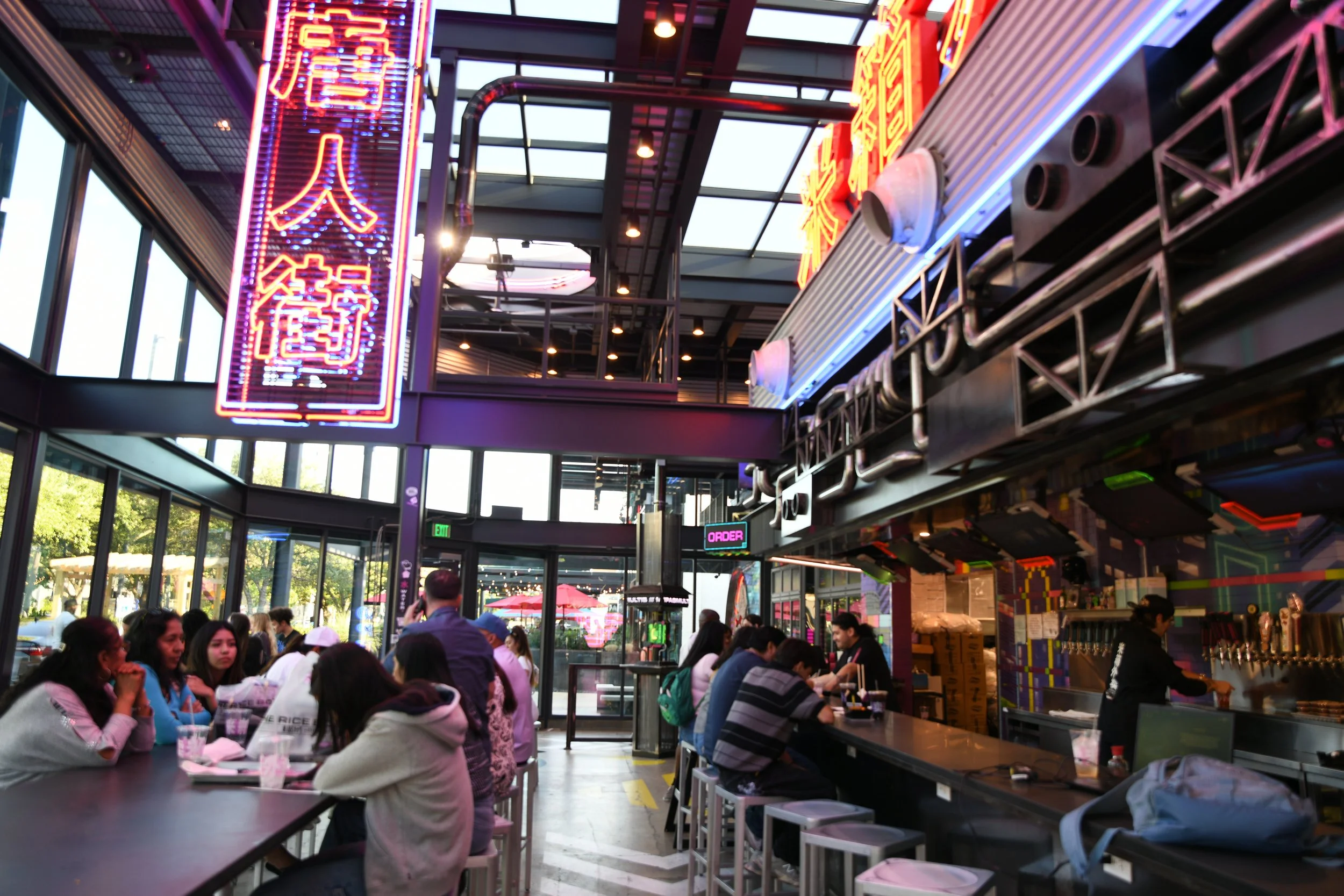
A note on the photographs accompanying this story: The Rice Box operates multiple locations across the Houston area, and the images used here were captured across more than one of them. They are presented as a representative look at the concept as a whole, not as documentation of the Heights location exclusively.
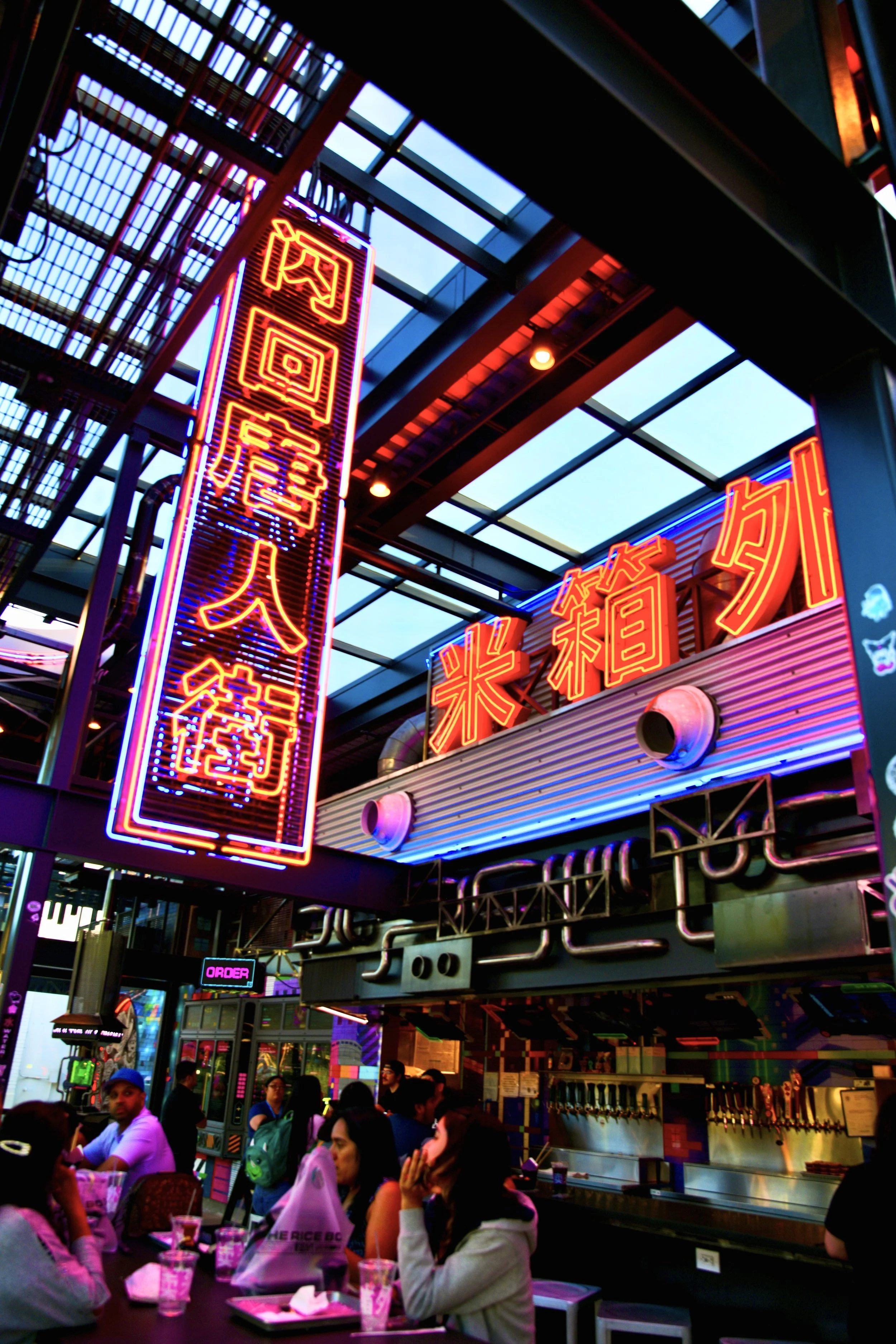
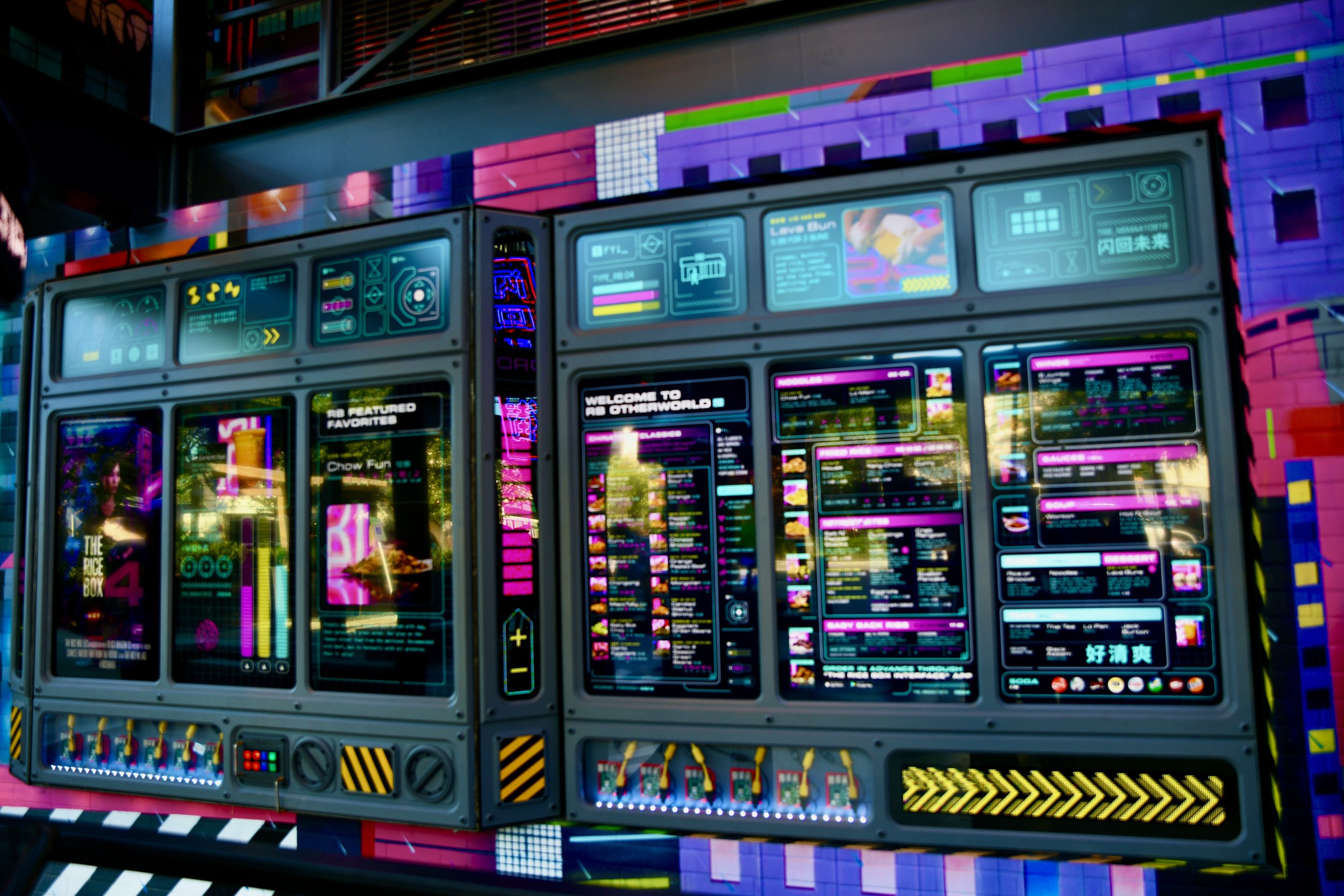
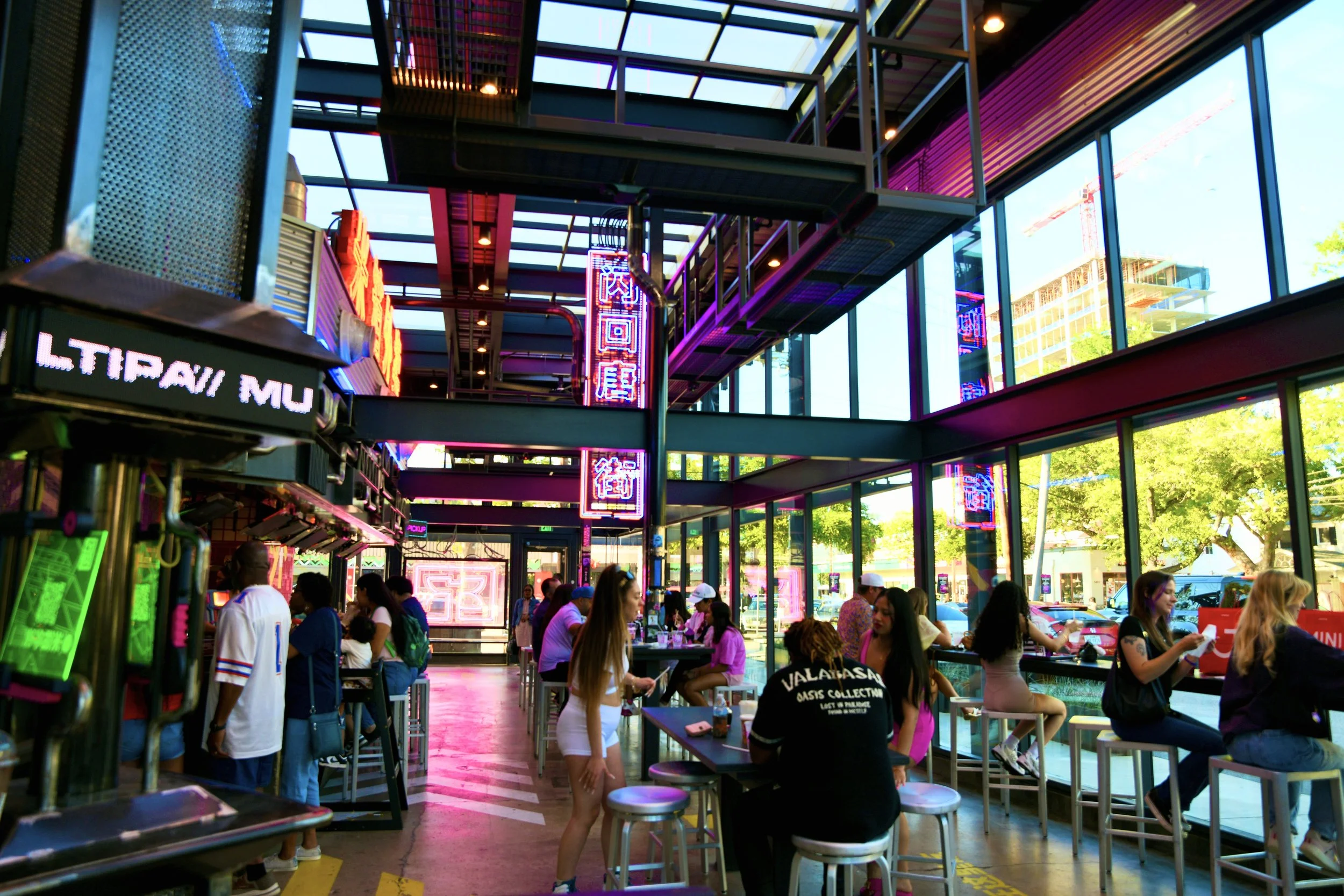
Underneath the homage, it's a working food hall doing real business: taps along one wall, order screens glowing pink, a packed crowd moving between counters on a weekend afternoon. The tribute works precisely because it doesn't feel like a theme park — it feels like the film's atmosphere folded quietly into a real Houston street corner, right down to the joke only the regulars are in on.
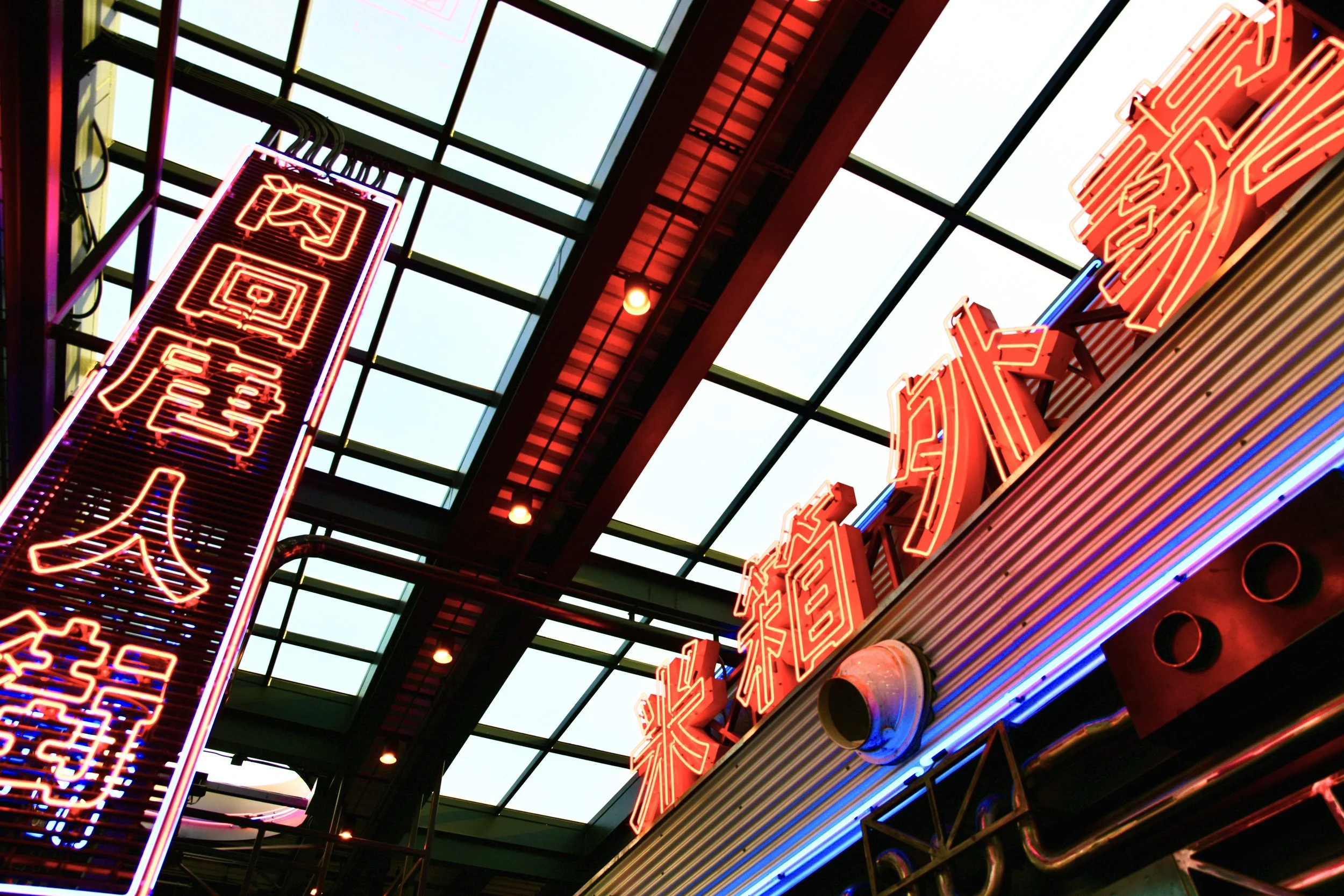
What makes this worth the deeper dive: it's a rare case of a commercial build-out treating a piece of film history — and its broader anime lineage — as source material rather than aesthetic wallpaper. Worth going back to actually order "four, four" yourself and photograph what shows up.
Typical lunch crowd at the rice box.
Photos: Jim Towers / Houston Heights Independent
ATTENTION ASSIGNMENT DESKS & MEDIA PRODUCERS:
All text, video, and original photography covering this story are the exclusive property of the Houston Heights Independent. Broadcast, digital replication, or social scraping of these assets without an active license is strictly prohibited. To license clean, high-density, unwatermarked frames for TV broadcast or regional news print, contact our newsroom immediately, at houstonheightsindependent@gmail.com. or 210-288-3034. Standard licensing fees apply.
© 2026 Houston Heights Independent. All rights reserved. Registered under Jim Towers MJA.JD. No part of this publication, including text, layout, and original photography, may be reproduced, distributed, broadcast, or transmitted in any form or by any means without prior written permission from the Editor-in-Chief. For media licensing inquiries or syndication requests, contact at houstonheightsindependent@gmail.com. or 210-288-3034. Standard licensing fees apply.
HOUSTON HEIGHTS INDEPENDENT
Houston Heights Independent covered this story on the ground. HHI is a civic journalism publication operating on the Murrow standard.
