
THE GOLD SIGNATURE
The neighborhood didn't want it. Metro built it anyway. When it failed, Metro refused to give it back. The public paid $1.4 million to buy land it had already paid for once.
By Jim Towers, M.J.A., JD.
Houston Heights Independent | August 2026
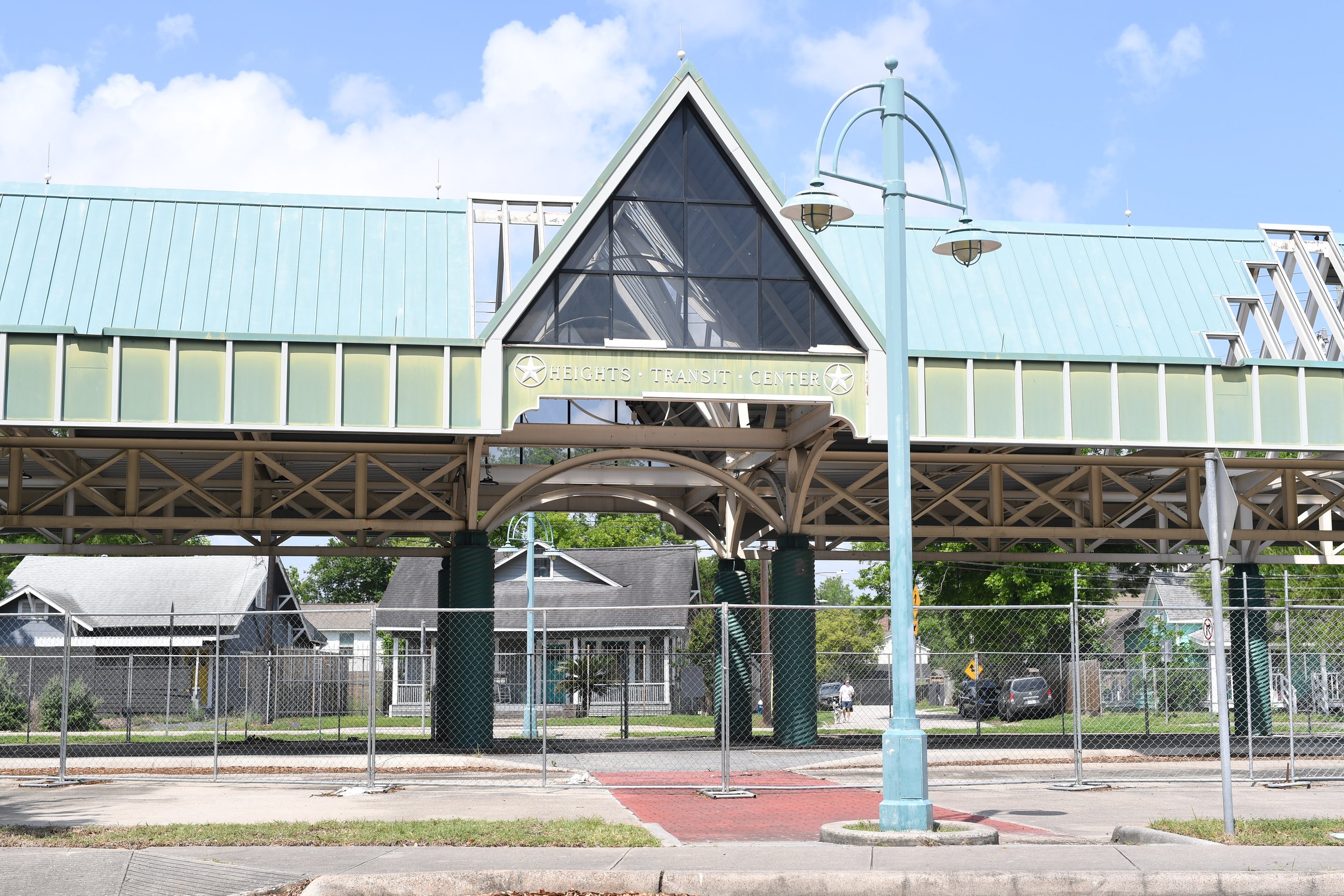
I was there the night the architect signed his name.
It was after hours. I was on patrol. A man had accessed the property on North Main — the new Heights Transit Center, not yet open to the public — and I stopped him. He was the architect. He had brought his family to see what he had built.
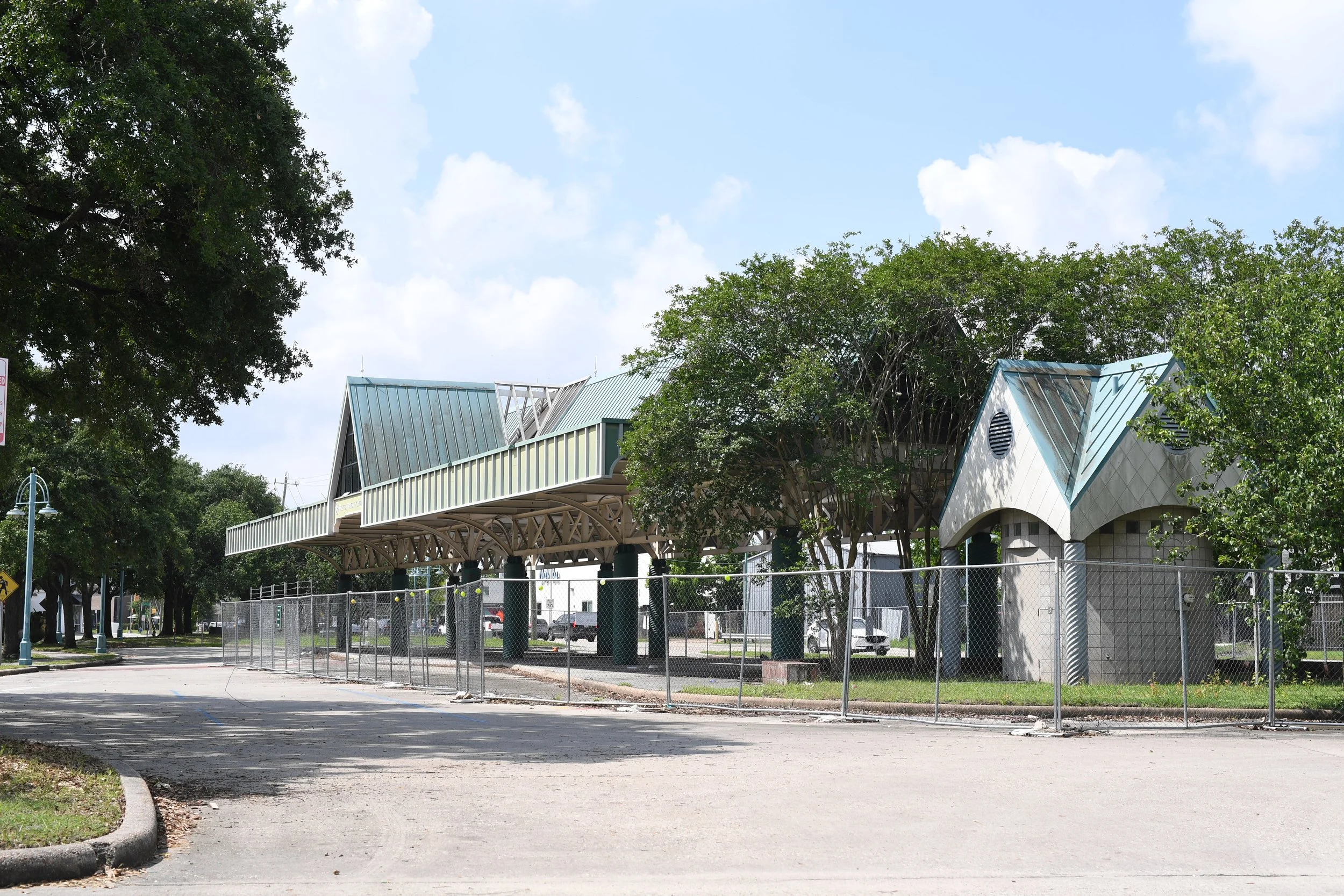
I unlocked the building and walked them through it.
Before he left, he took a gold paint pen from his pocket and signed his name on the back of one of the storage structures. A quiet thing. The kind of mark a man makes when he knows he has built something worth leaving his name on, and he wants to leave it somewhere only he will know to look.
I thought about that signature for years. I never forgot it was there.
I went back to photograph it before the demolition crews reached that wall. I was almost too late. The signature was barely legible — gold fading into concrete dust, the wall already coming down around it. I made the frame anyway.
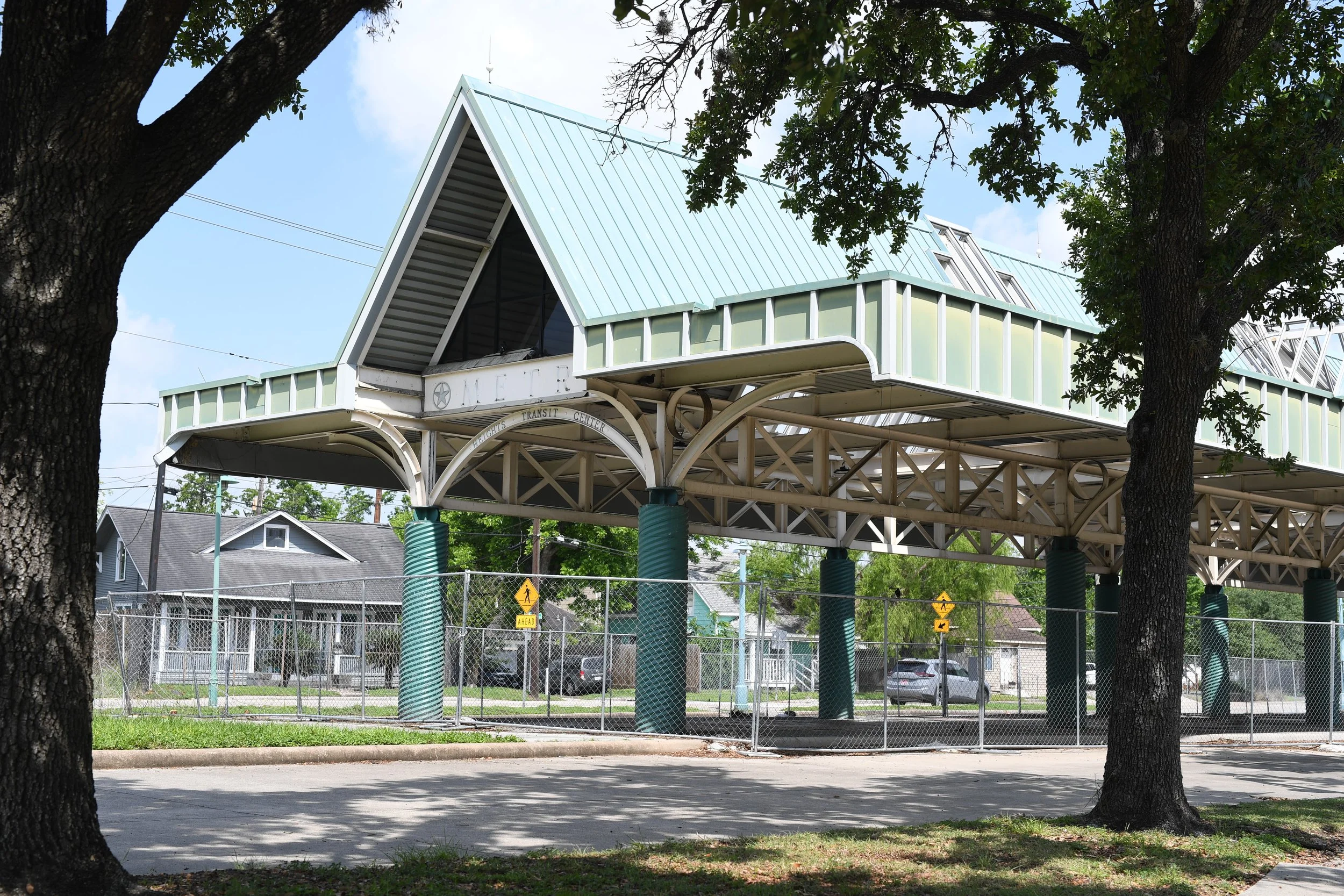
That is the Heights Transit Center story in one image. A man signs his name in gold. The city erases it.
WHAT WAS BUILT — OVER THE NEIGHBORHOOD'S OBJECTIONS
When Metro selected the site at 6000 North Main Street for a new transit hub, the surrounding neighborhood objected. Residents raised concerns about traffic, exhaust, noise, and the placement of a commercial transit facility in a residential pocket of the Heights. Their objections are on record.
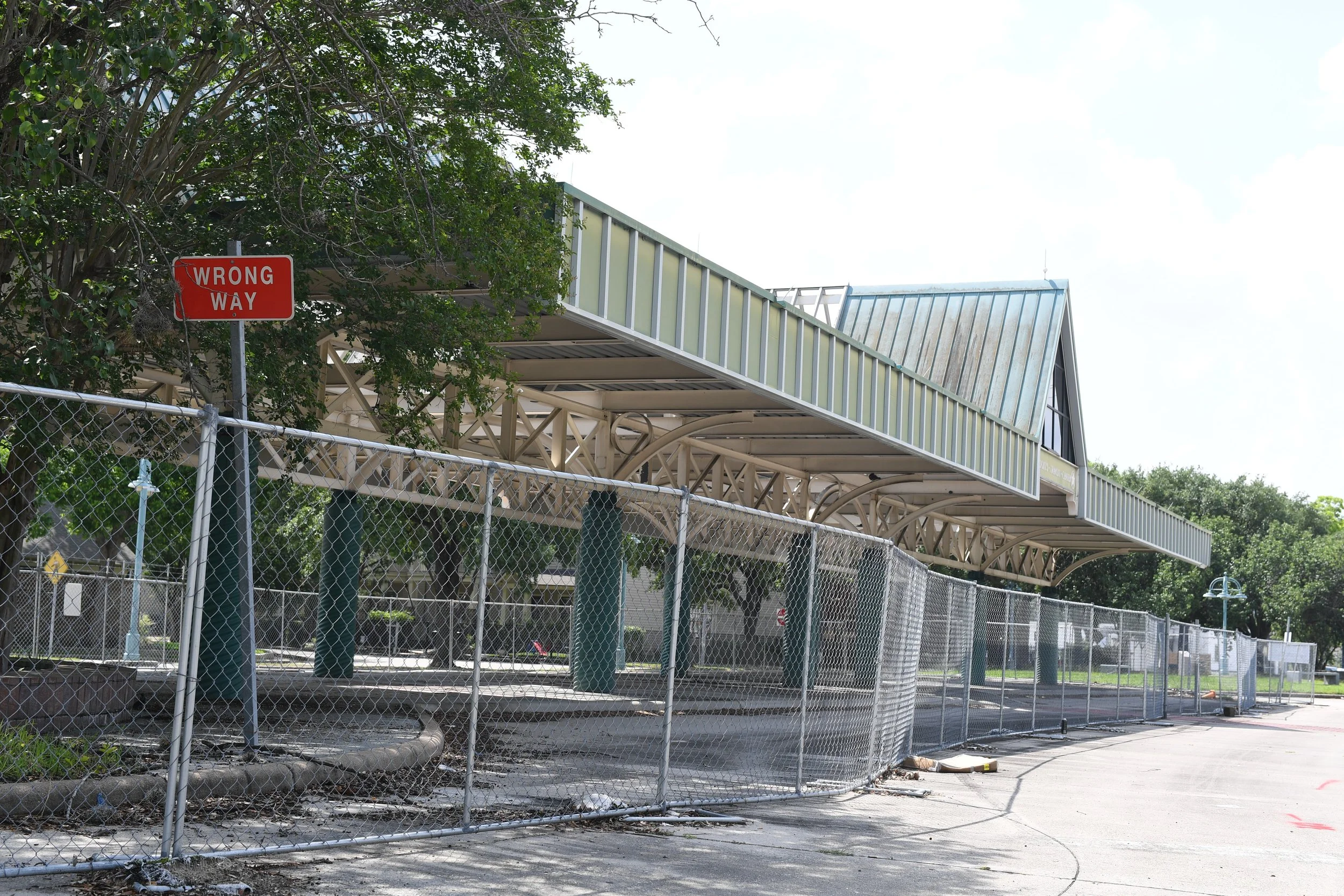
Metro built it anyway.
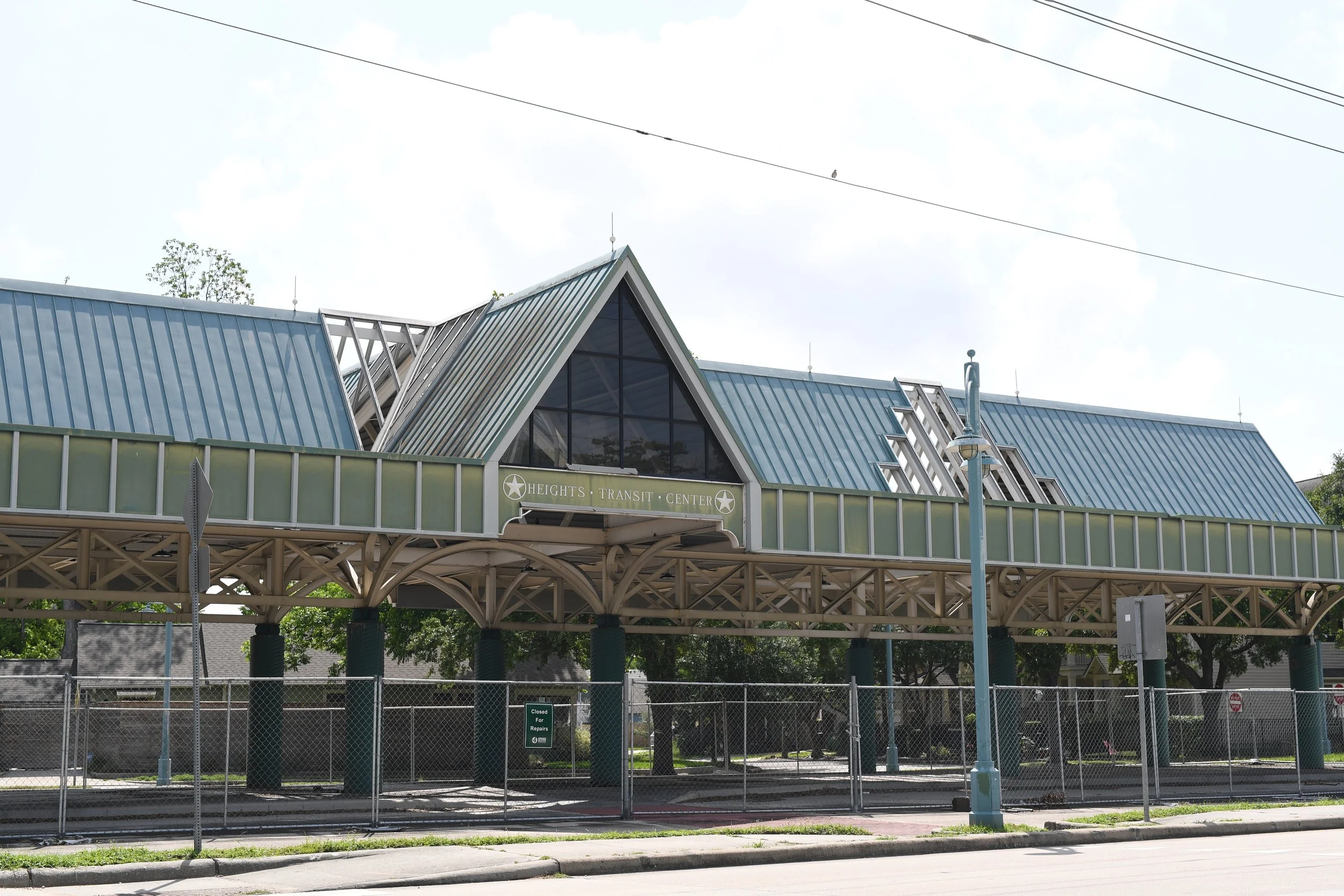
The Heights Transit Center won an architectural award. It was designed by a man who cared enough about what he built to bring his family to see it after hours and sign his name on it in gold. It was built with public money on 0.88 acres of public land in a neighborhood that had not asked for it and did not want it.
Then it opened — and the riders did not come.
Metro refused.
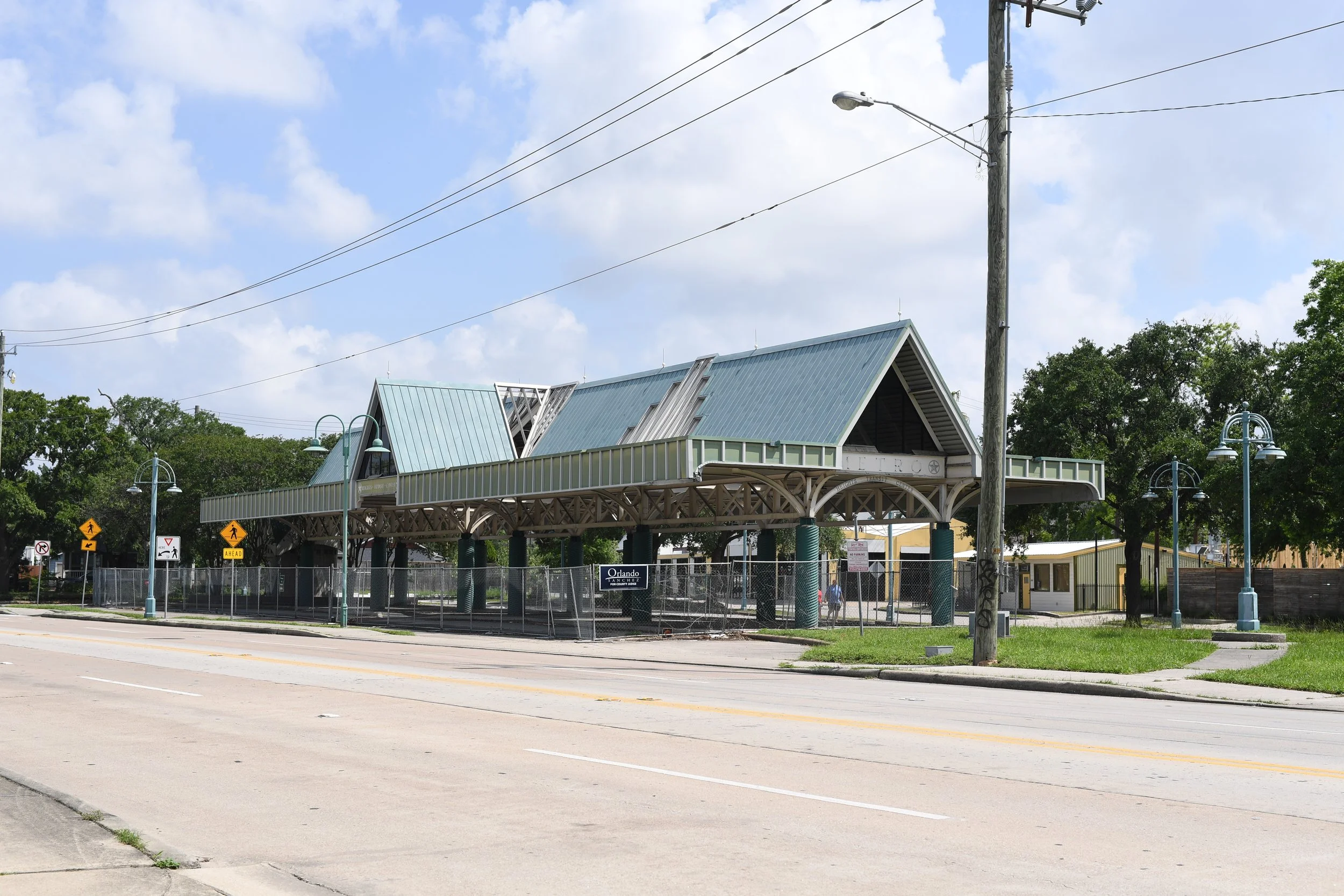
In 1993, riding 2-Adam-20 in the two district, I got flagged down in front of this building. A homeless man was attacking people at the transit center with a steak knife, broad daylight. I went after him on foot into the neighborhood, around a townhouse, over a fence. I got him down against the chain link with one cuff on when I heard someone coming up fast behind me.
I came up with my sidearm.
It was a construction worker from down the street. He had his hands up. I'm your backup, I'm your backup.
I holstered. We finished the arrest.
I have been coming back to this corner for thirty years. I was here before the building went up. I was here the night the architect signed his name. I was here when the demolition crews came. That is not a credential. That is a record.
THE PUBLIC PAID TWICE
In April 2018, the City of Houston purchased the 0.88-acre site from Metro for $1.4 million using the Open Space Fund.
The public had already paid to build a transit center it did not want on that land. Now it paid $1.4 million more to get the land back. Metro — a public agency funded by public money — charged the city for property the public had built and the neighborhood had objected to from the beginning.
The demolition crews arrived. The building came down.
THE FRAME I COULDN'T LET GO
I was there at the beginning. I walked the architect through his own building on a quiet night when nobody else was around. I watched him sign his name where he thought no one would ever look.
I was there at the end. I documented the demolition — before, during, and after. I went back for the signature frame because I knew it was there and I knew it was disappearing and I knew nobody else would think to look for it.
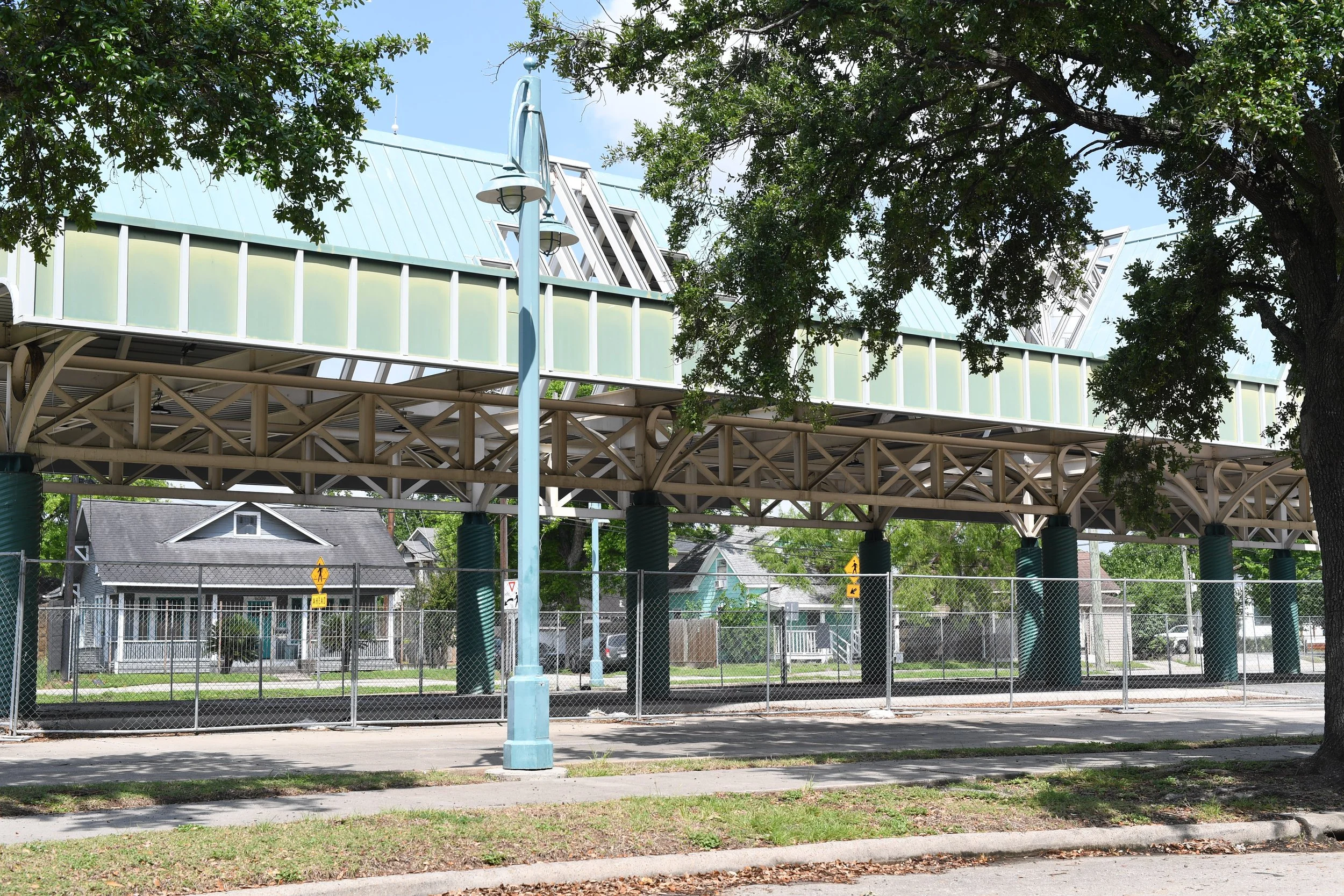
That is what this publication exists to do. Not to cover the Heights from the outside. To document it from the inside — across years, across decades, with the institutional memory that no television station and no outside publication can manufacture.
The architect's signature is gone now. The building is gone. The "Closed For Repairs" sign is gone. What remains is the question Metro never answered: why does a public agency get to build an unwanted facility on a neighborhood's doorstep, abandon it, refuse to return it, and then sell it back to the public for $1.4 million?
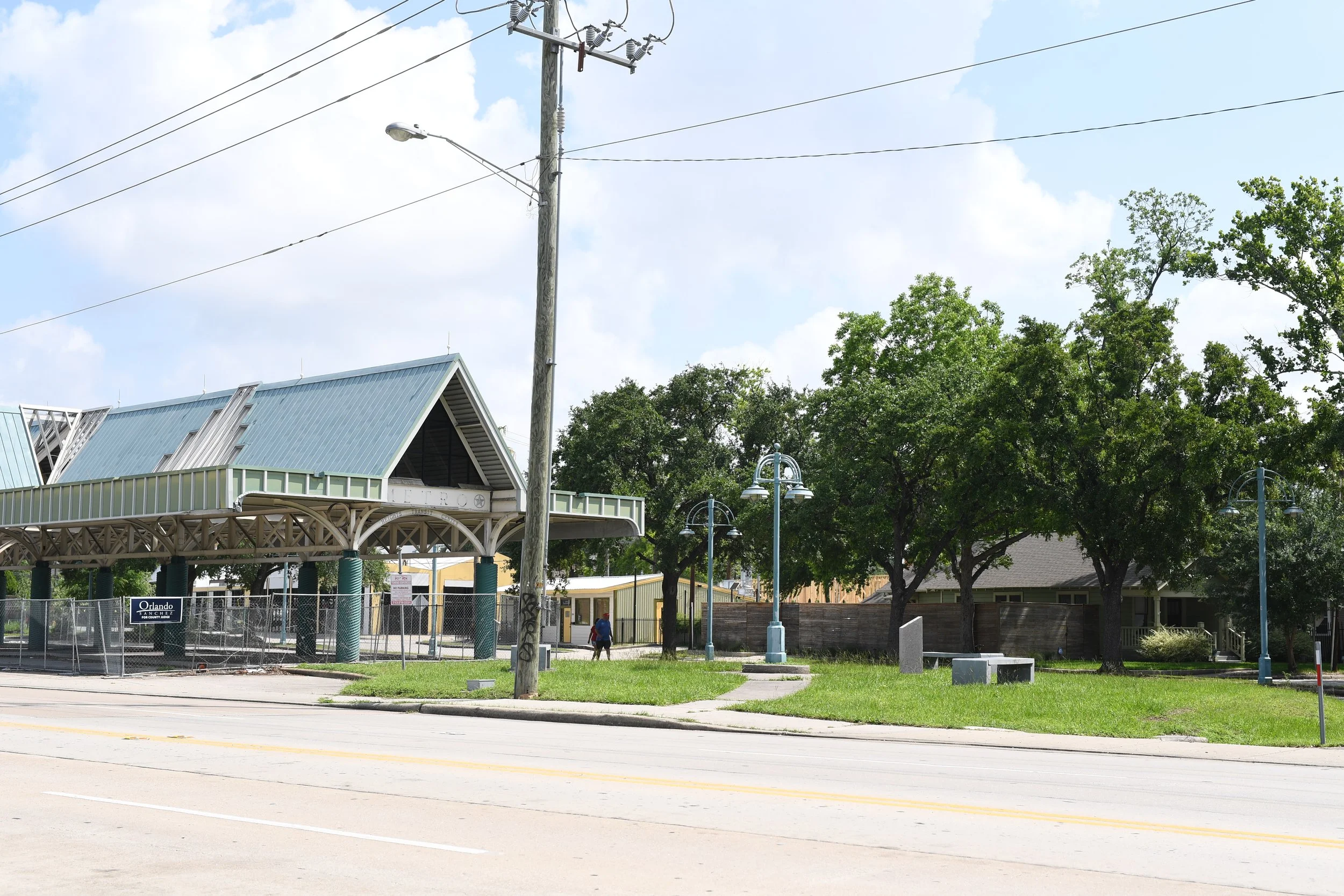
Someone should have asked that.
THE FAILURE
In 2015, Metro overhauled its bus network systemwide. The routes serving the Heights Transit Center were cut due to low ridership. The facility was rendered effectively obsolete.
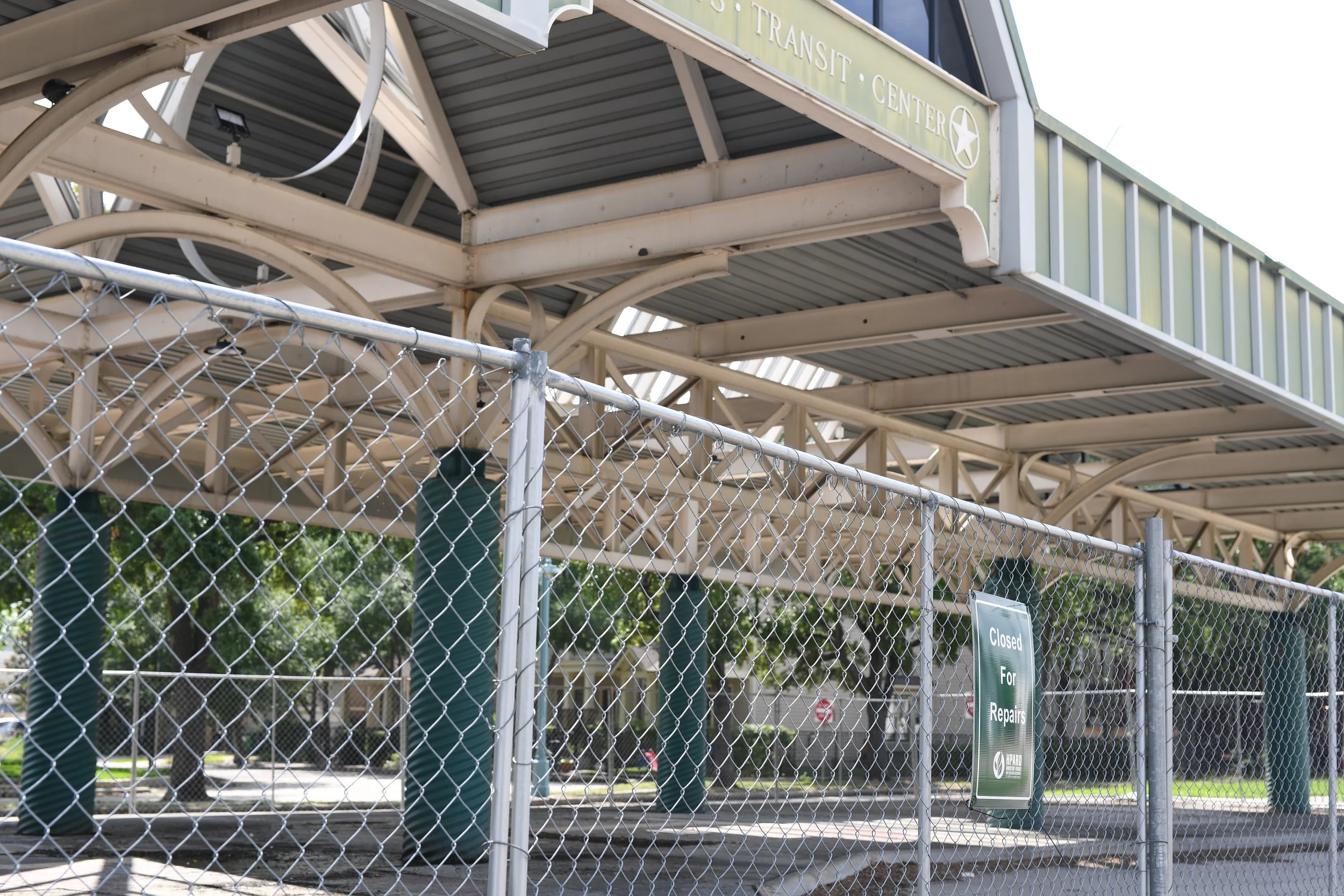
Metro fenced it off. A "Closed For Repairs" sign went up on 0.88 acres of prime Heights real estate. It would stay up for roughly a decade.
The Heights Association formally requested that Metro donate the land back to the community — convert it to a neighborhood park, return it to the people who had never wanted a transit center there in the first place. It was a reasonable request. The land was sitting idle. The neighborhood had a use for it.
It will now become a park, for the people in the Heights to use as perhaps it always should've been.
ATTENTION ASSIGNMENT DESKS & MEDIA PRODUCERS:
All text, video, and original photography covering this story are the exclusive property of the Houston Heights Independent. Broadcast, digital replication, or social scraping of these assets without an active license is strictly prohibited. To license clean, high-density, unwatermarked frames for TV broadcast or regional news print, contact our newsroom immediately, at houstonheightsindependent@gmail.com. or 210-288-3034. Standard licensing fees apply.
© 2026 Houston Heights Independent. All rights reserved. Registered under Jim Towers,MJA.JD. No part of this publication, including text, layout, and original photography, may be reproduced, distributed, broadcast, or transmitted in any form or by any means without prior written permission from the Editor-in-Chief. For media licensing inquiries or syndication requests, contact at houstonheightsindependent@gmail.com. or 210-288-3034. Standard licensing fees apply.
Houston Heights Independent is a civic journalism publication operating on the Murrow standard.
Houston Heights Independent covered this story on the ground. HHI is a civic journalism publication operating on the Murrow standard.
