
THE FIRE BEHIND THE BONFIRE
Beaumont, Texas — October 2021
By Jim Towers, M.J.A., J.D.
More than 400 people stood shoulder to shoulder on the field at Lamar University, alumni and students gathered for the annual homecoming bonfire at Spindletop-Gladys City Boomtown Museum. Every face in that crowd was turned the same direction, toward the flames rising in front of the statue, toward the tradition that brings people back to this campus year after year.
I was standing at the back, away from the crowd, facing the same fire from a different angle. And from where I stood, I saw something nobody else in that field could see.
The controlled burn had gotten away from itself. Flames were reaching past the perimeter of the bonfire, catching in the dry grass at the edge of the field. It moved fast — grass fires do — and within minutes it had crossed the open ground and caught an abandoned structure standing near the tree line. Smoke started climbing off a building that had no business burning that night.
Nobody around me had turned to look. Four hundred people were watching the bonfire they came to see. I was the only one watching the fire nobody came to see.
I called it in.
Why they let me stay
When Beaumont Fire Department units arrived, I was already on scene, and I did something most bystanders don't get to do: I walked the responding crews to the exact location of the secondary fire. The structure was set back from the main field, out of the direct sightline from the crowd, and knowing precisely where to send them saved time they didn't have to spend searching. I have video of that — walking the perimeter with the first-arriving unit, pointing them toward the smoke.
What happened next is the part that still surprises people when I tell it: I didn't just point and step back. I stayed with the crews through the suppression operation, camera in hand, working the fire alongside them at the edge of where they were working.
That doesn't happen by accident, and it doesn't happen because a firefighter on scene decided to be generous with a bystander carrying a camera. It happened because I told them who I was, and because who I am checked out in real time.
I identified myself to the incident crew as a certified wildland firefighter through BLM training, a certified rescue technician with high-angle rope rescue qualifications, an active reserve police officer, and a certified paramedic and first responder — in addition to being the one who had called in the fire and walked them to it. In the language firefighters and rescue personnel use with each other, I wasn't a spectator with a camera. I was one of them, standing on a fireline I had reported, with the training to be there and not be a liability.
That's the reason I was able to stay inside the operational perimeter while the crews knocked the fire down, rather than being held back at a safety line with everyone else who didn't have a reason to be there. The photographs in this piece exist because of that — because the access wasn't asked for, it was earned in the moments before the cameras came up, by credentials that happened to matter on a night nobody expected to need them.
What the frames show
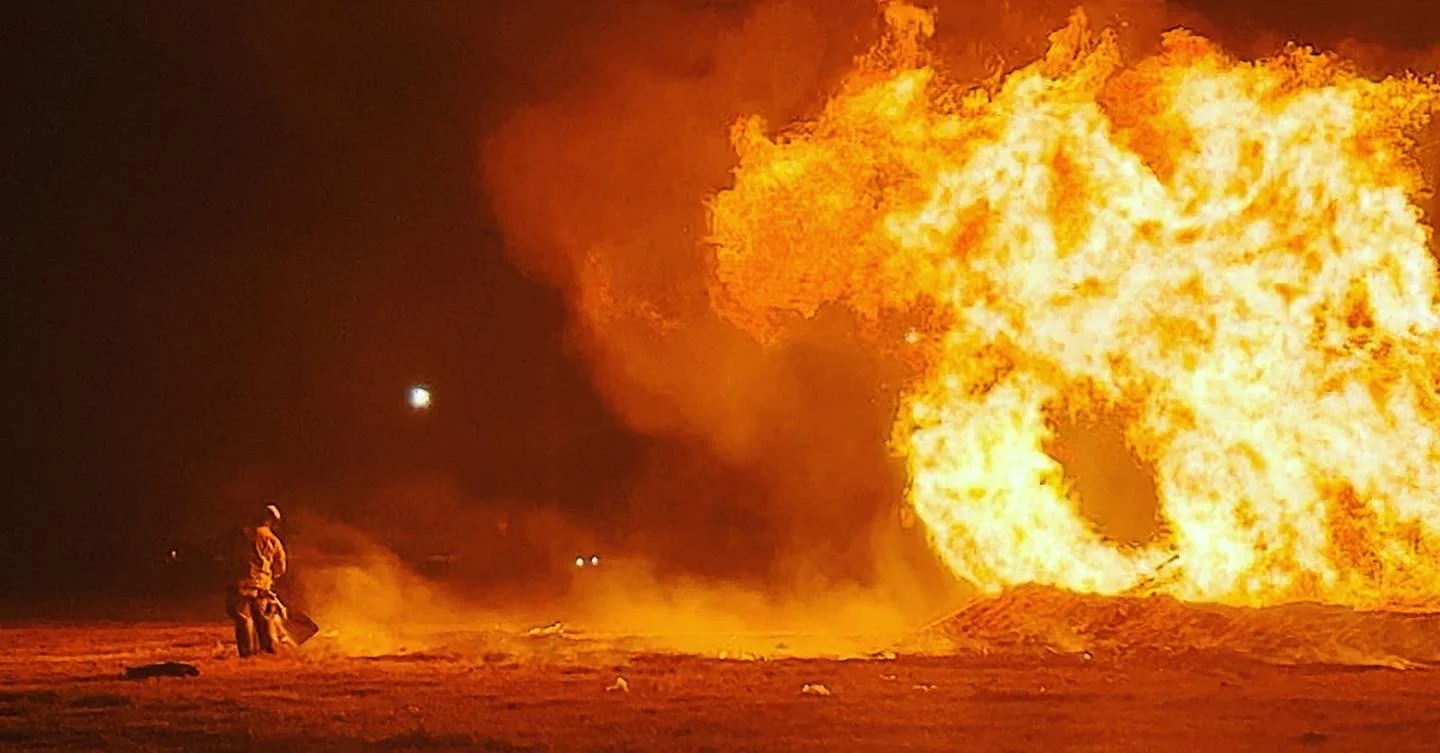
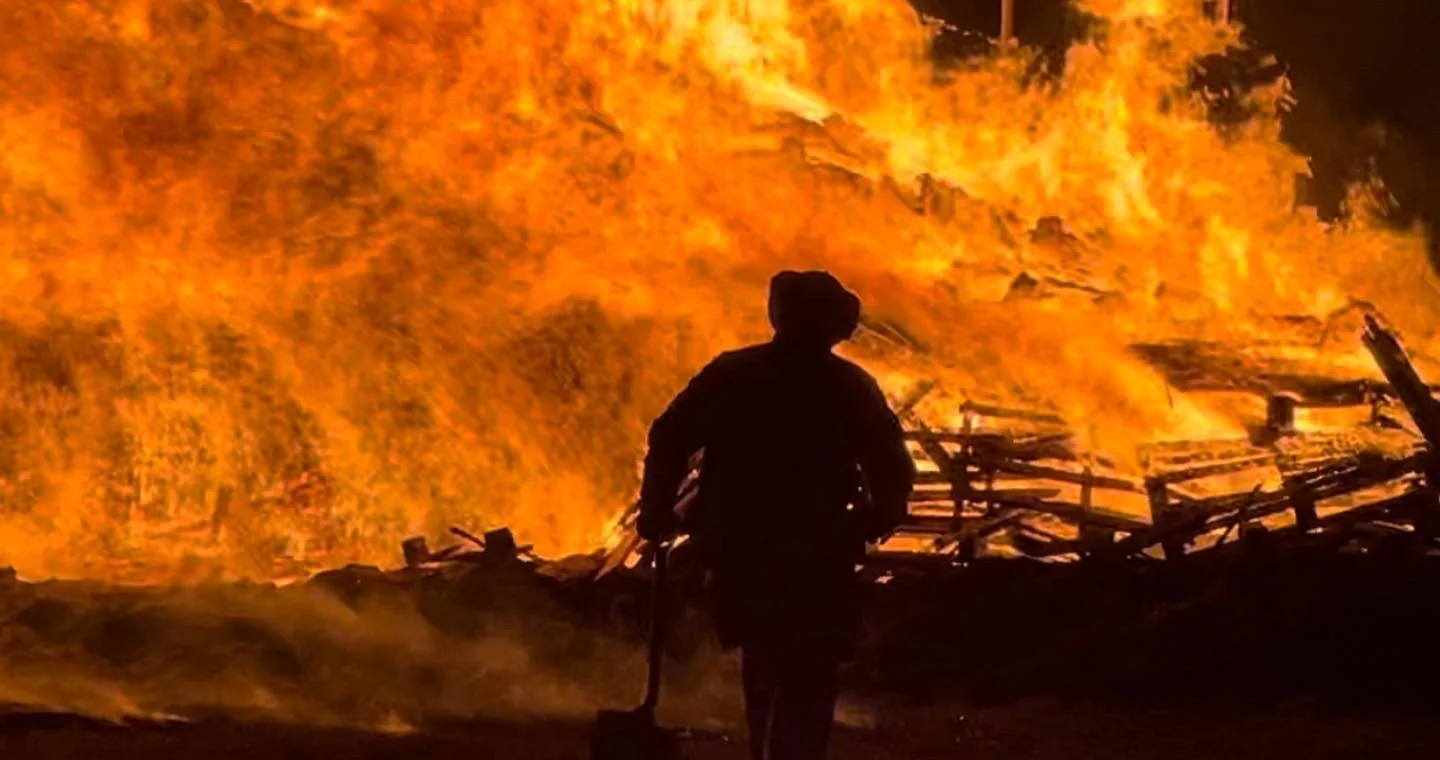
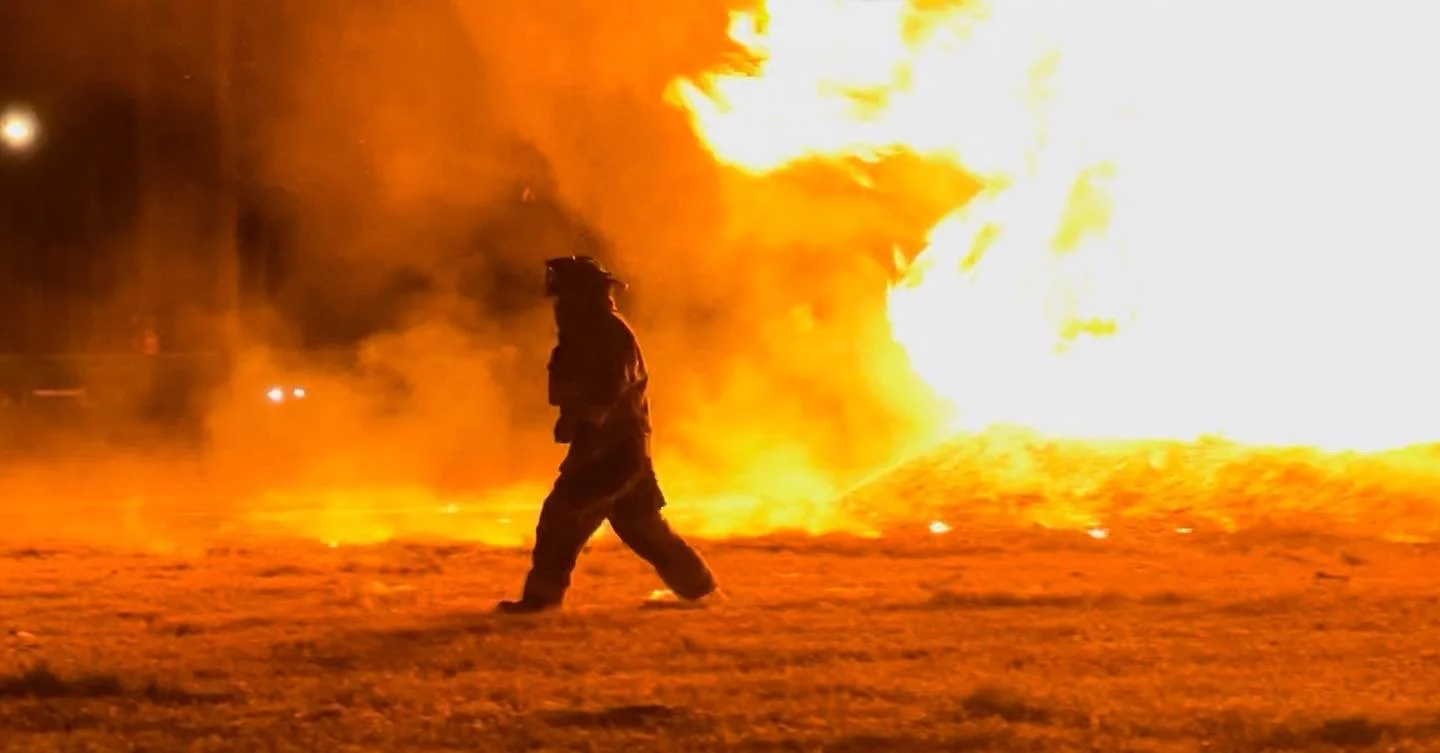
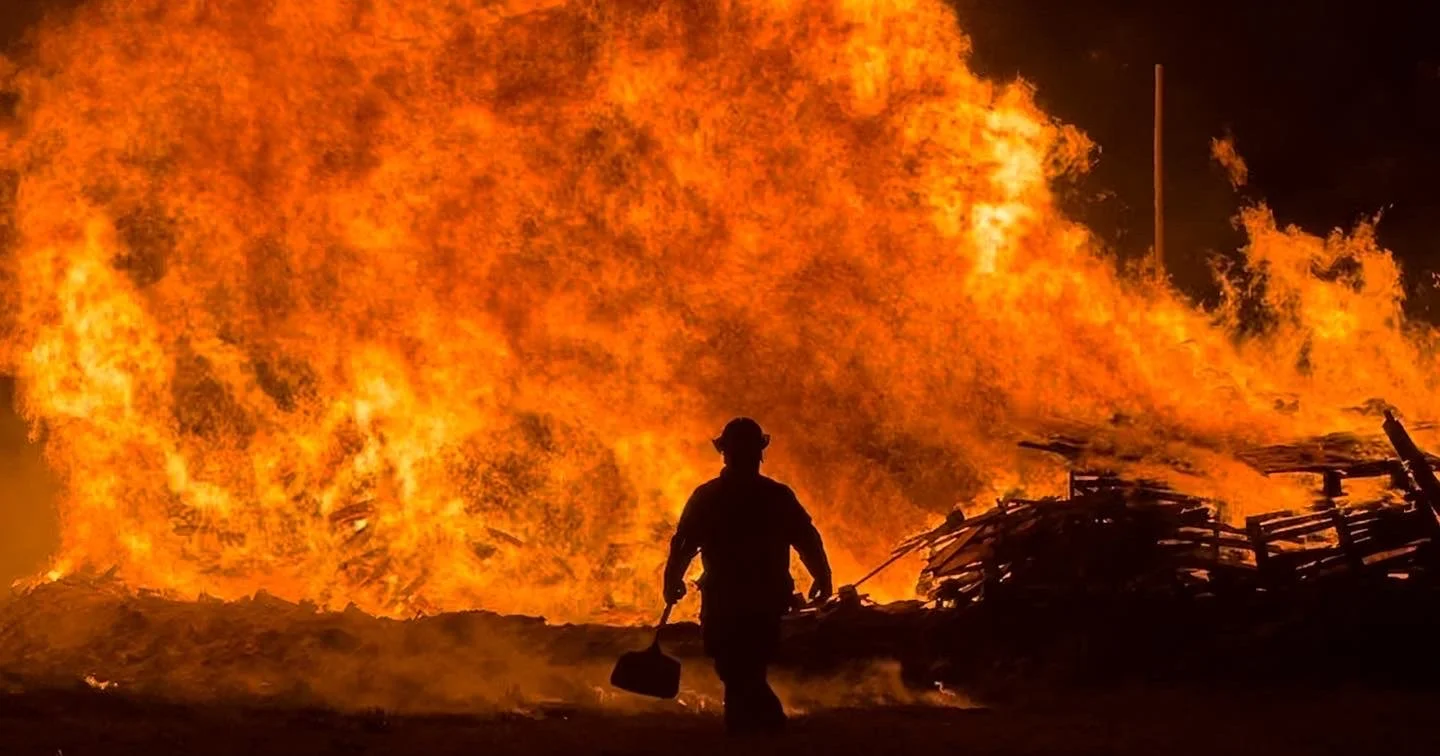
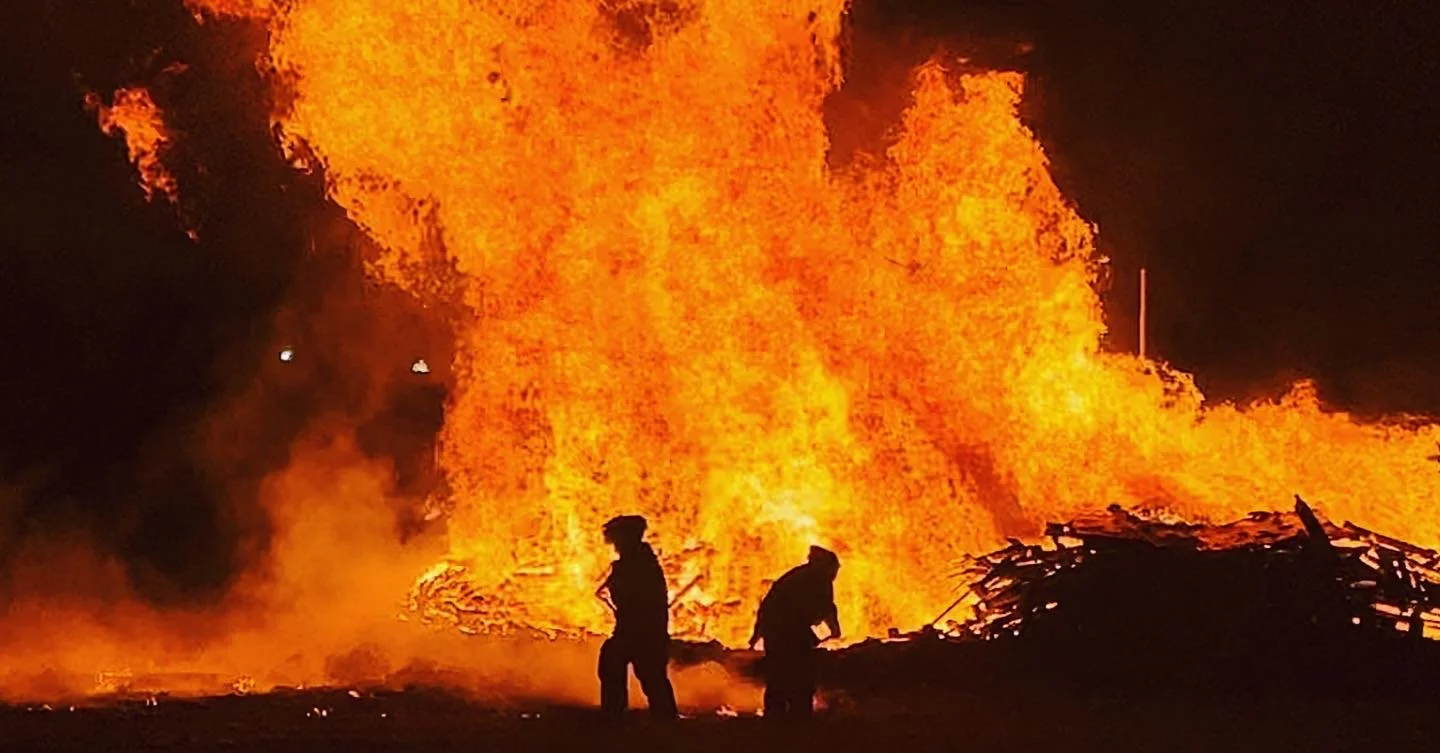
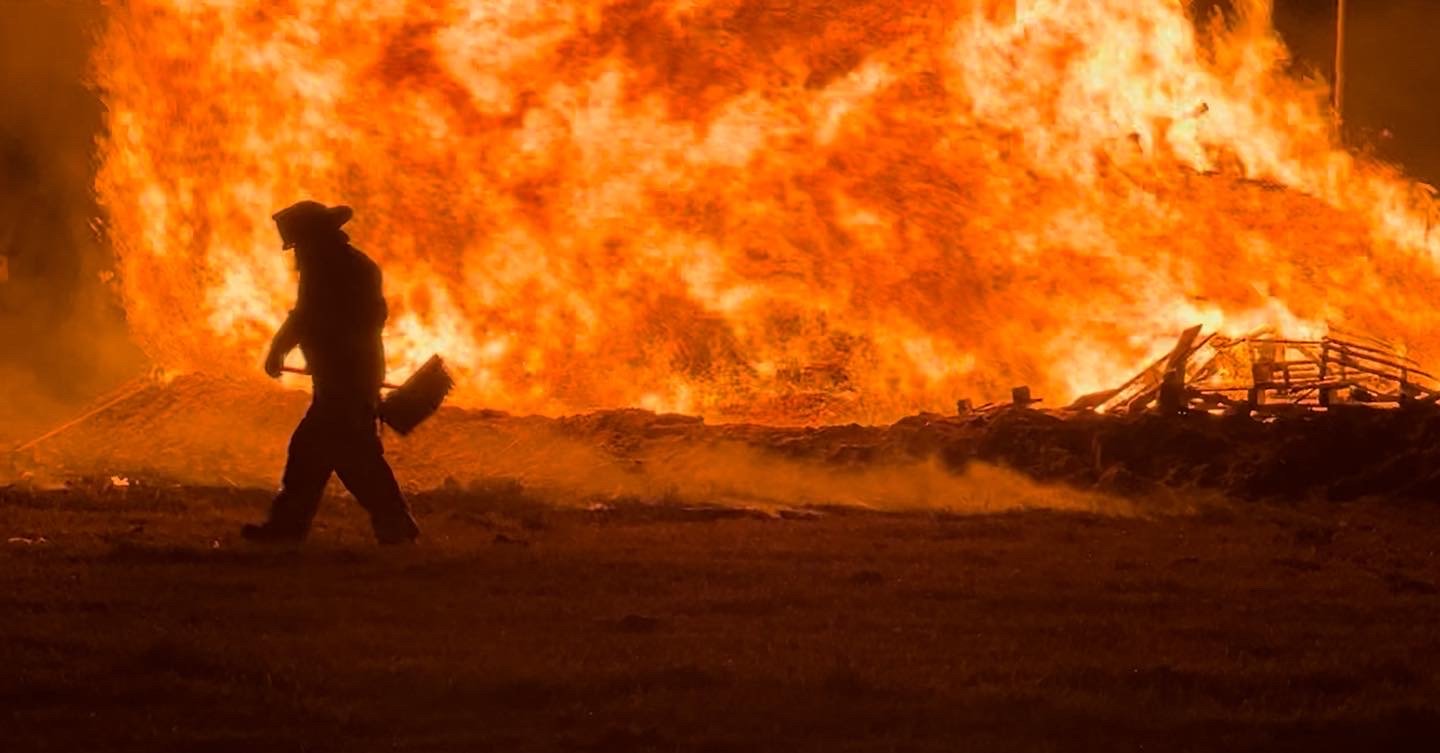
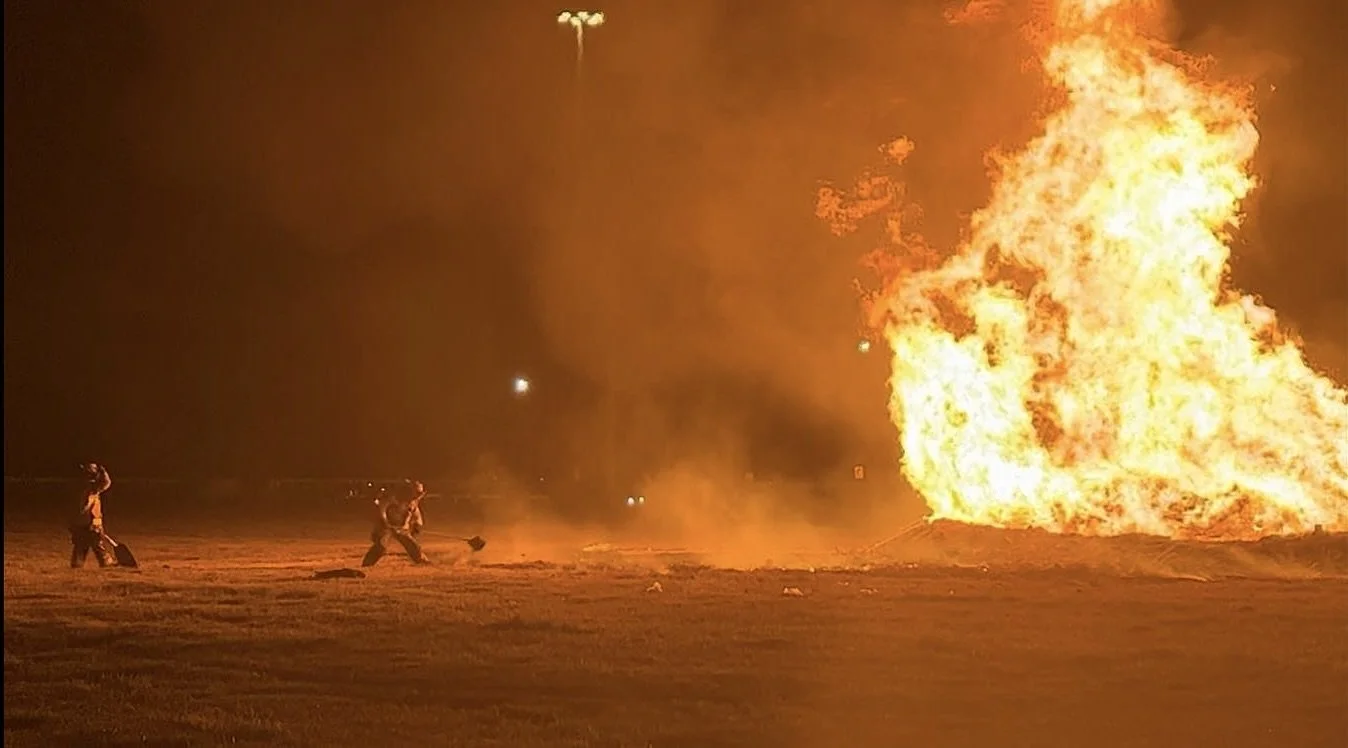
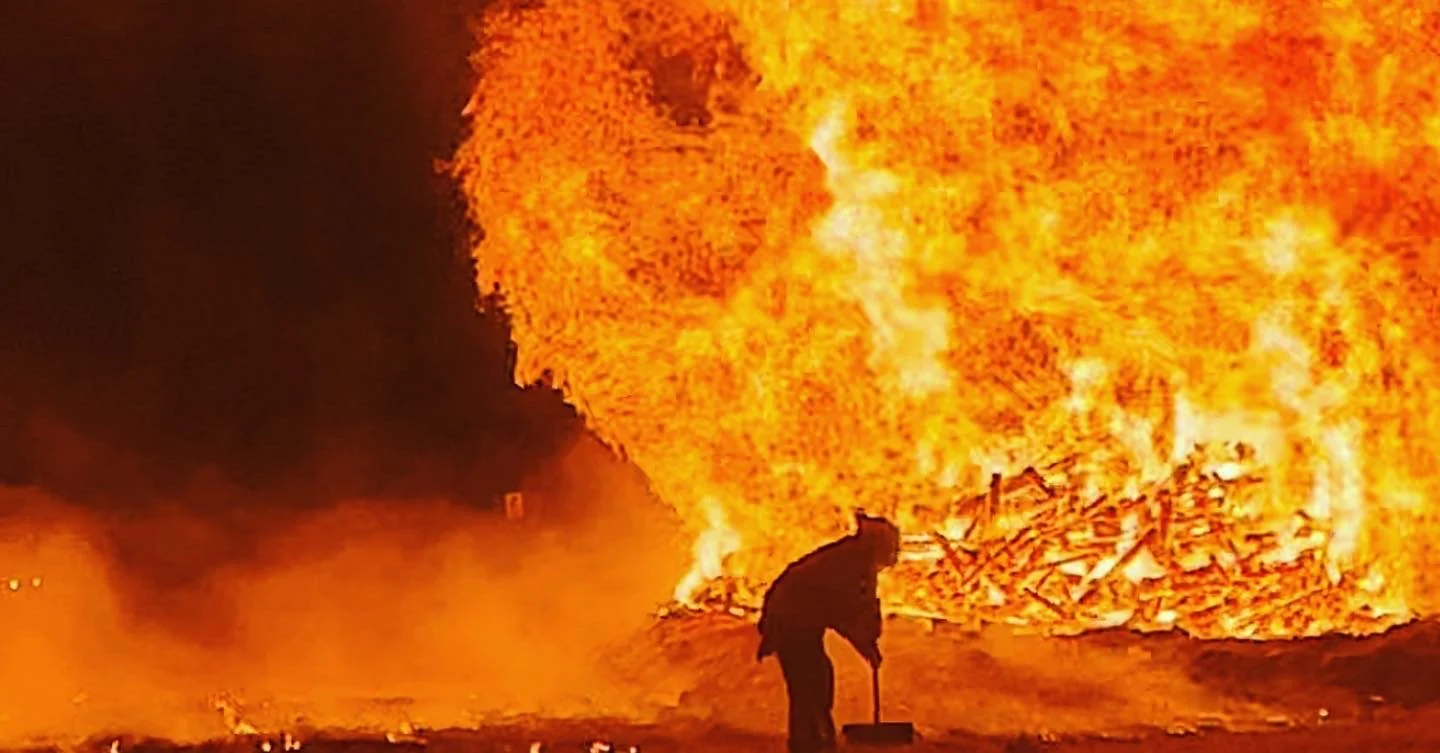
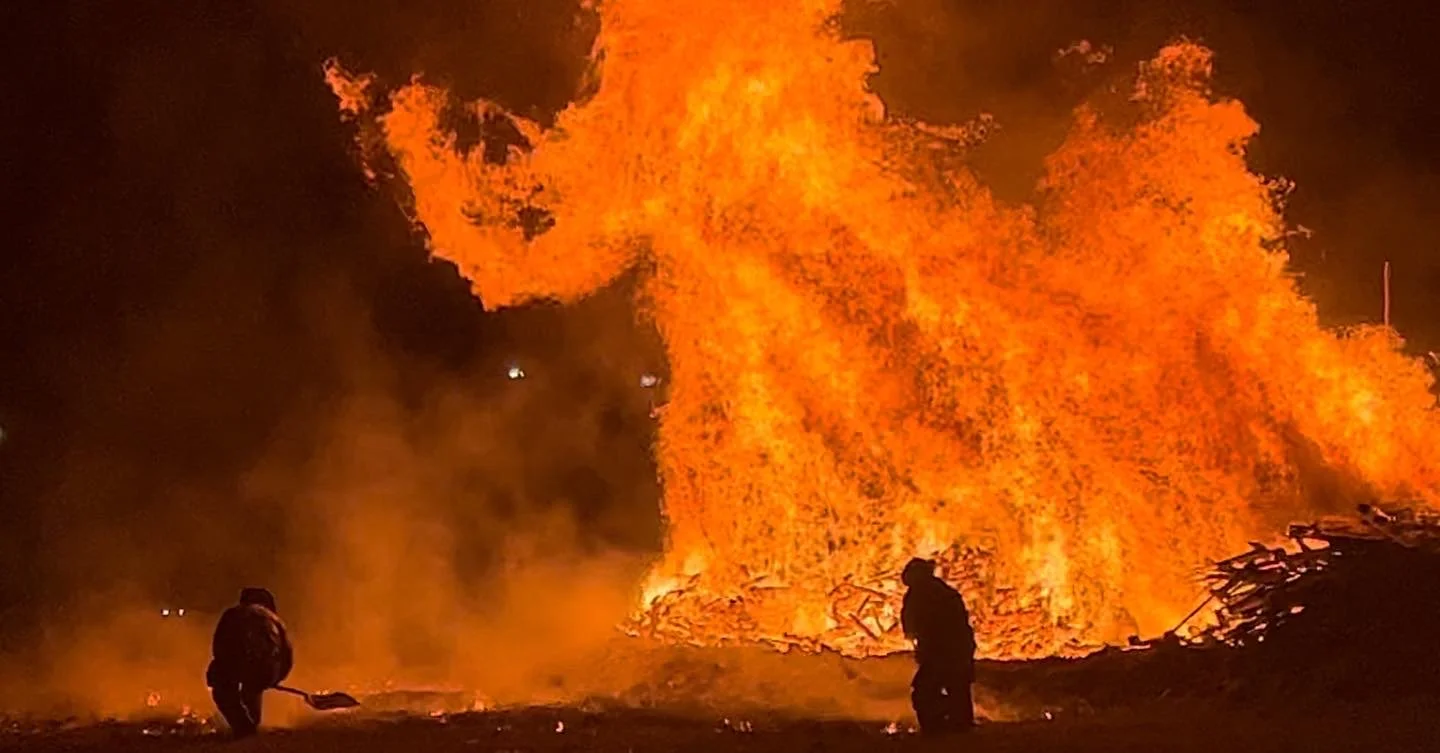
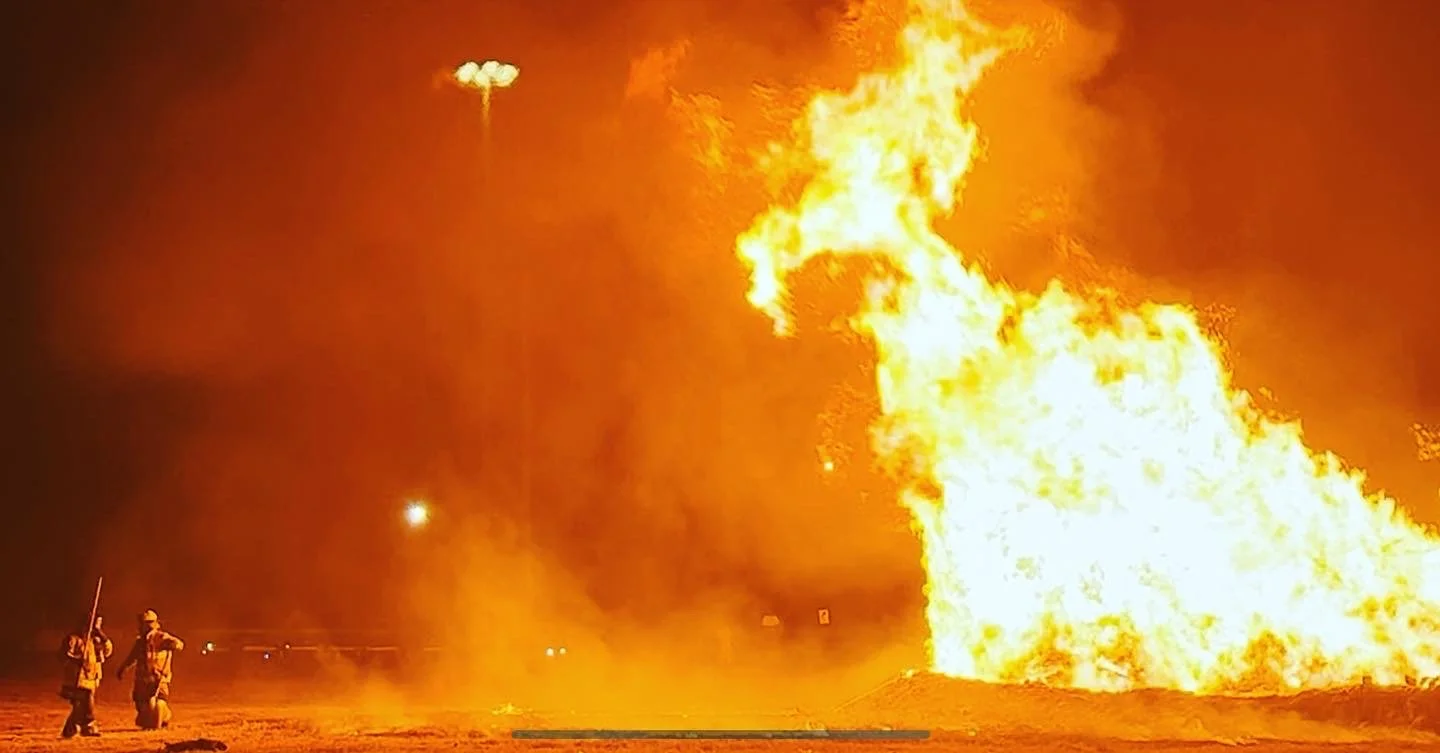
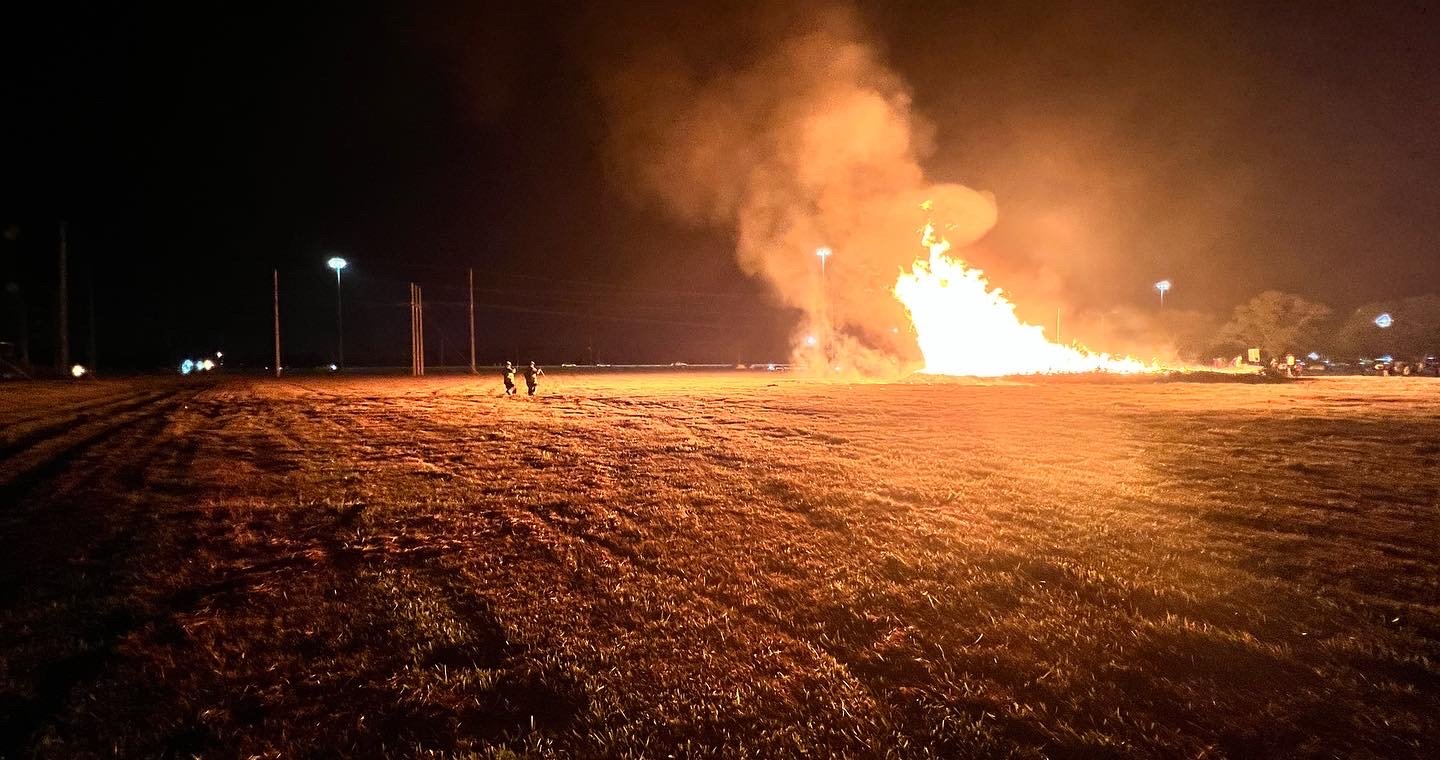
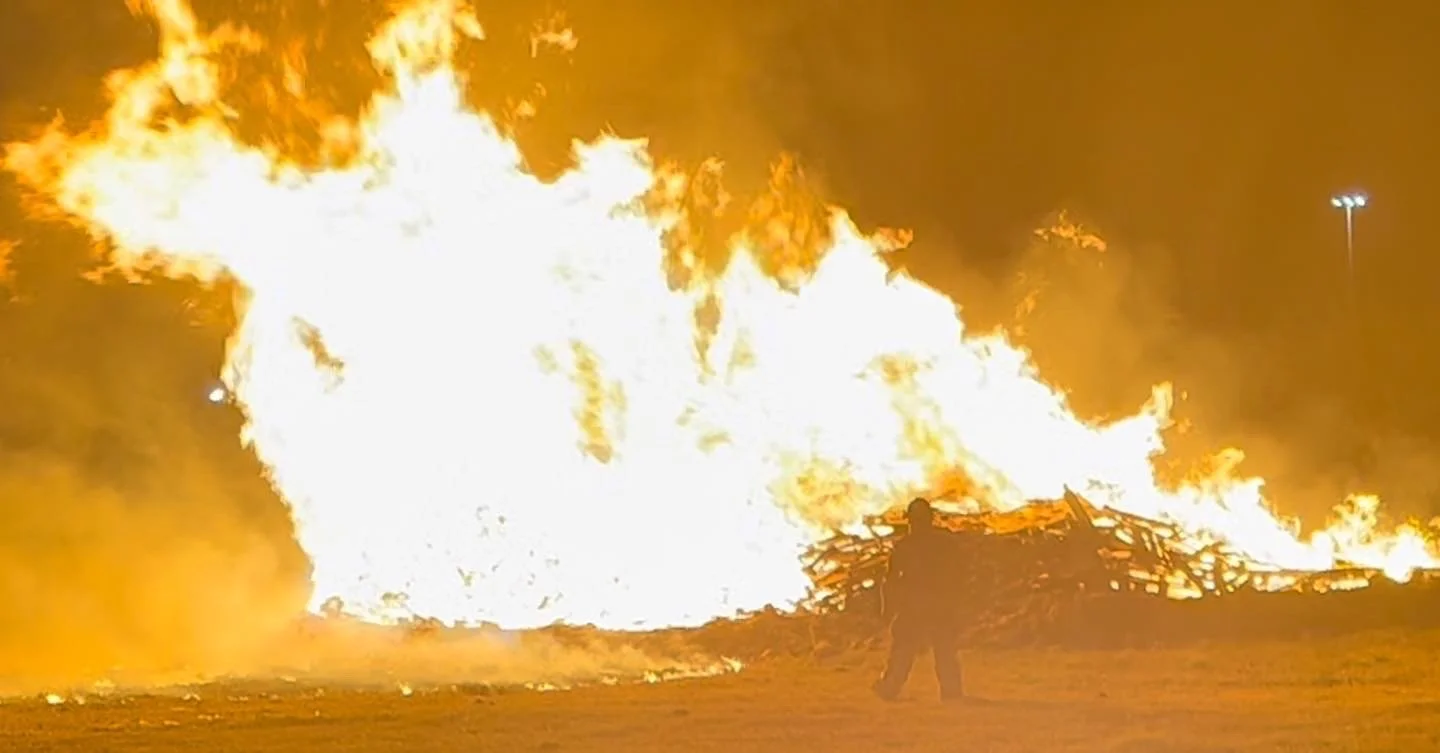
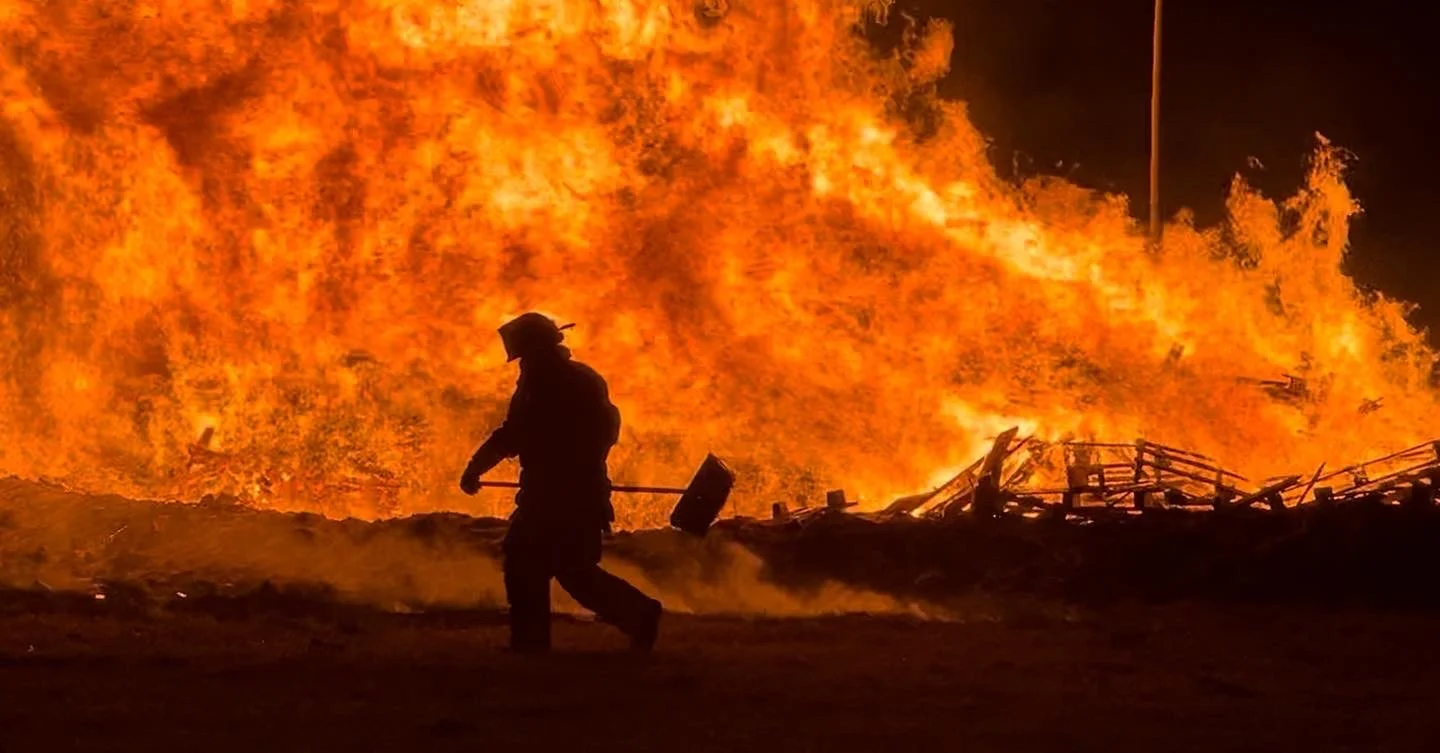
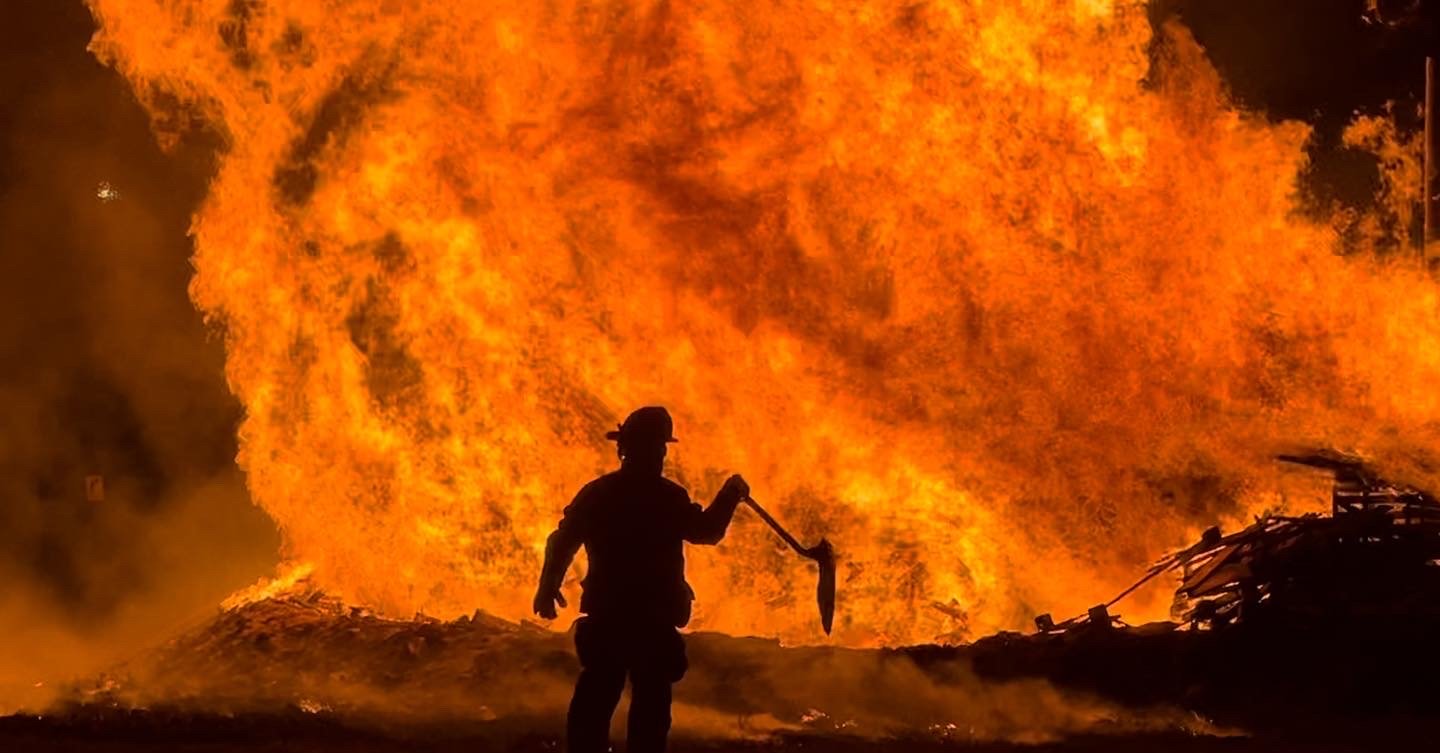
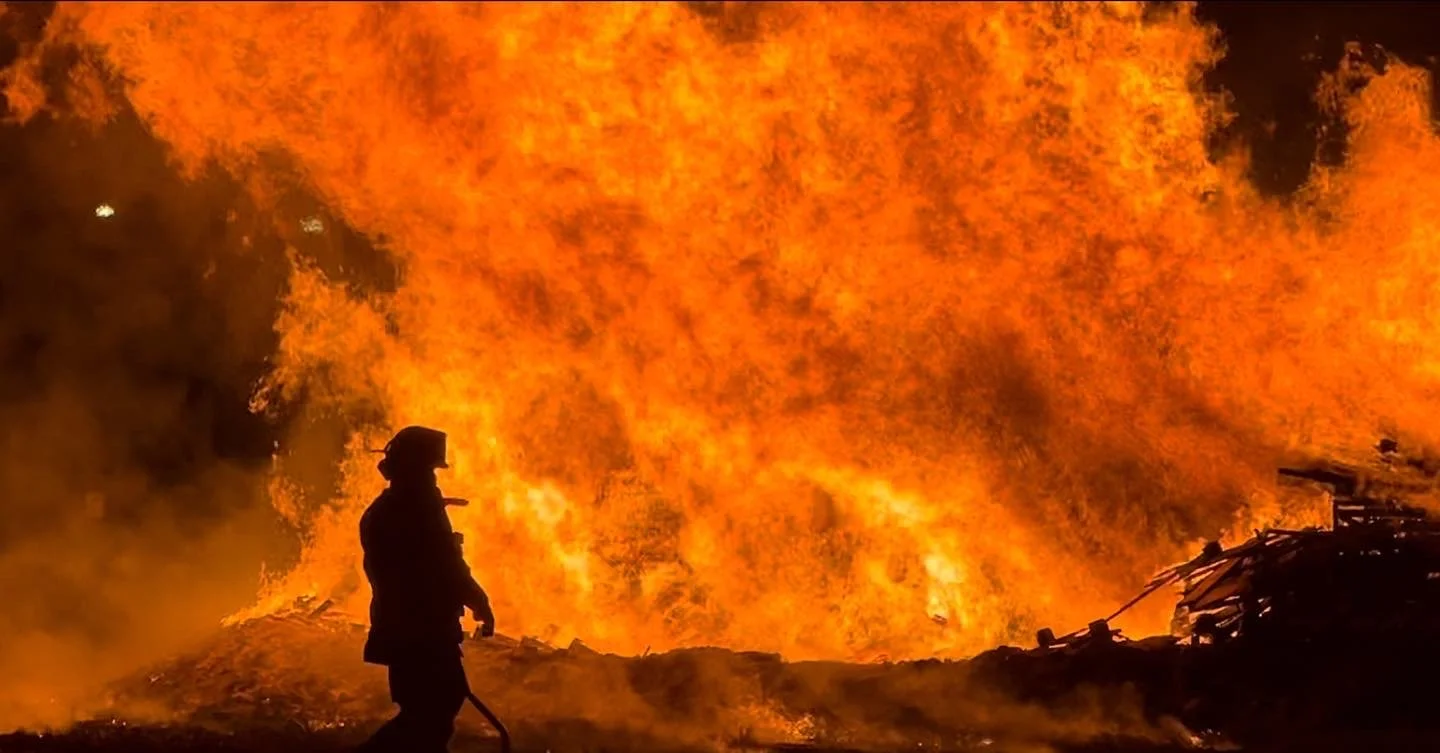
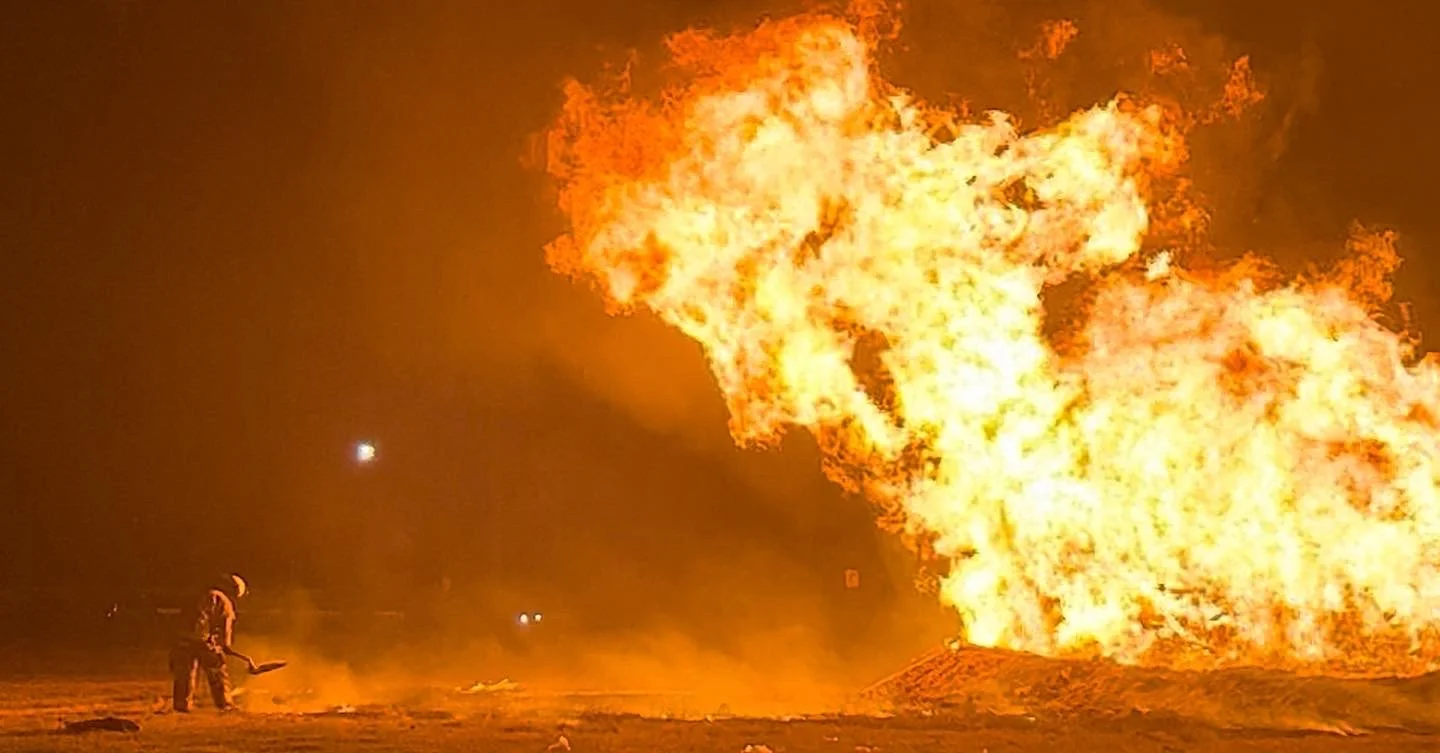
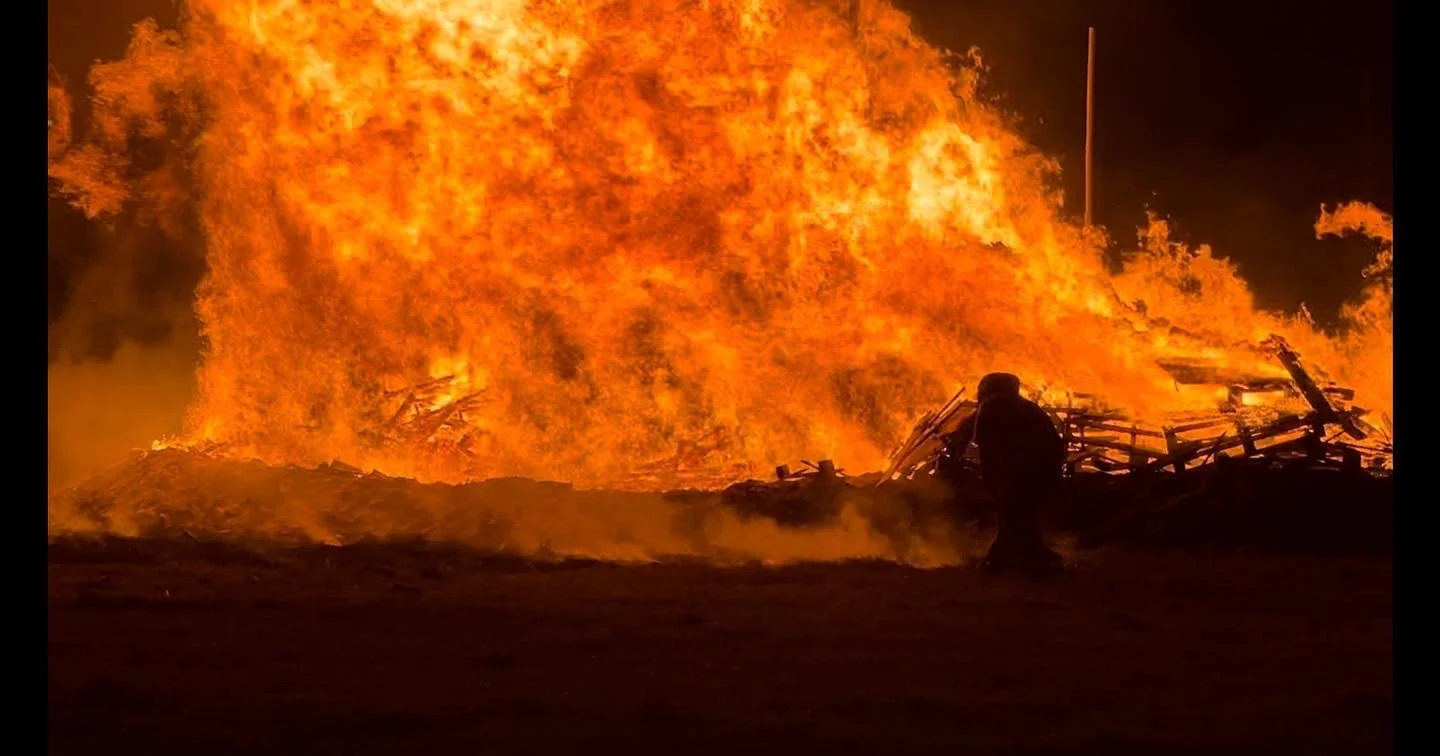
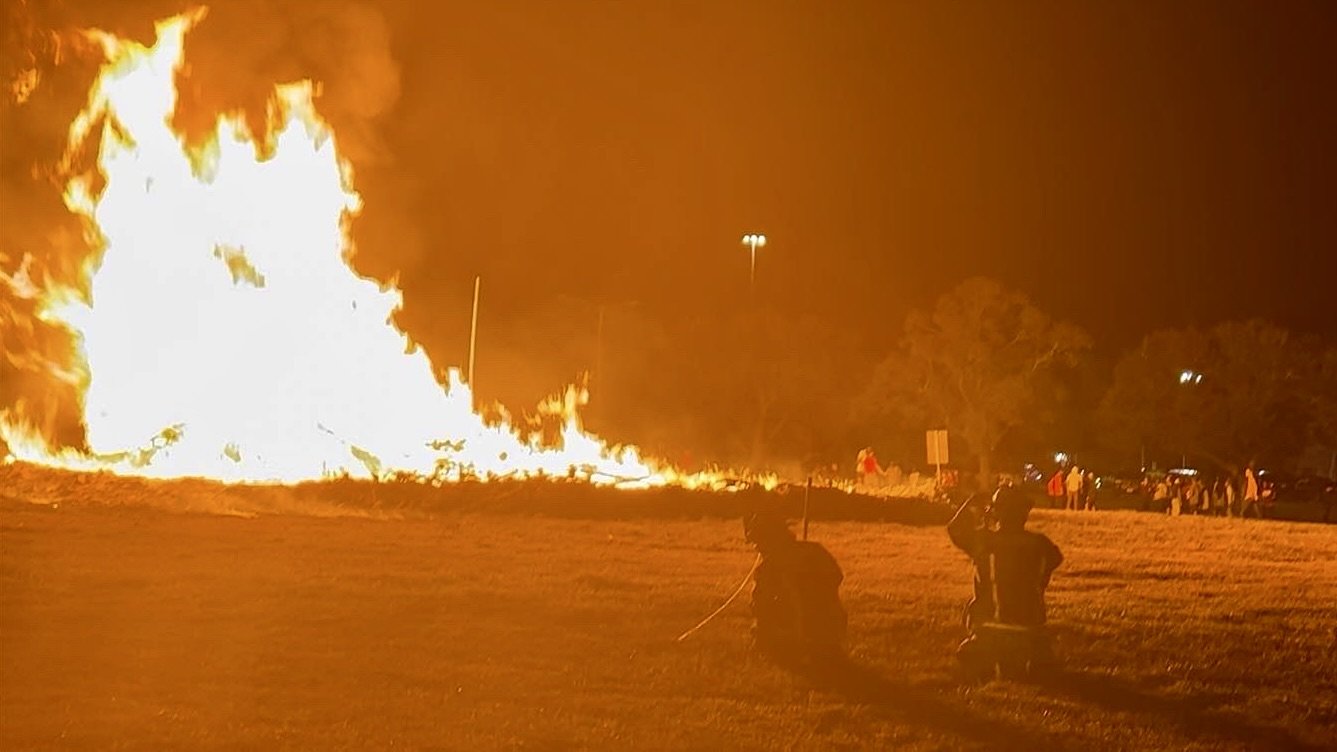
The images from that night trace the full arc of the response: firefighters moving in with tools in hand, the structure fully involved with flame filling entire frames, crews working low against the heat, and the slow work of knocking it down structure by structure until the danger to the surrounding field — and to the four hundred people still gathered at the bonfire less than a hundred yards away — was gone.
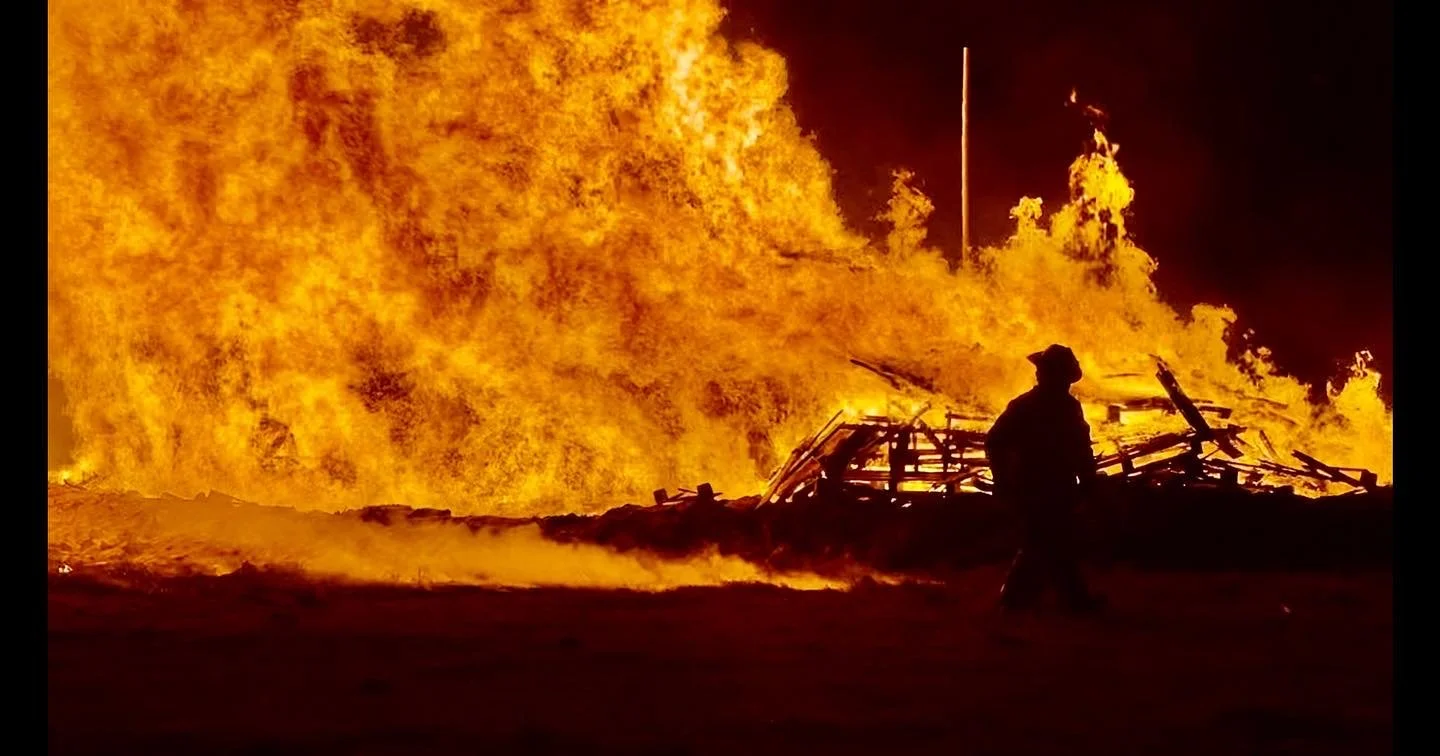
The equipment changed as the work changed. Some frames show a firefighter walking in with a shovel, tool held low, moving along the fireline the way you'd expect. Others show a different firefighter working a pulaski instead — arm extended, the axe head swinging out to the side rather than resting at rest — a different tool for a different phase of the same fight, and a different physical register entirely: less a walk than a strike.
This wasn't a one-man operation, and the photographs make that clear. Several frames catch two firefighters working the same stretch of fireline together, side by side, one crouched low with a shovel while the other stands over him, then both moving in tandem toward the pile — a crew working as a crew, not a lone figure against the flame the way the earlier frames might suggest on their own.
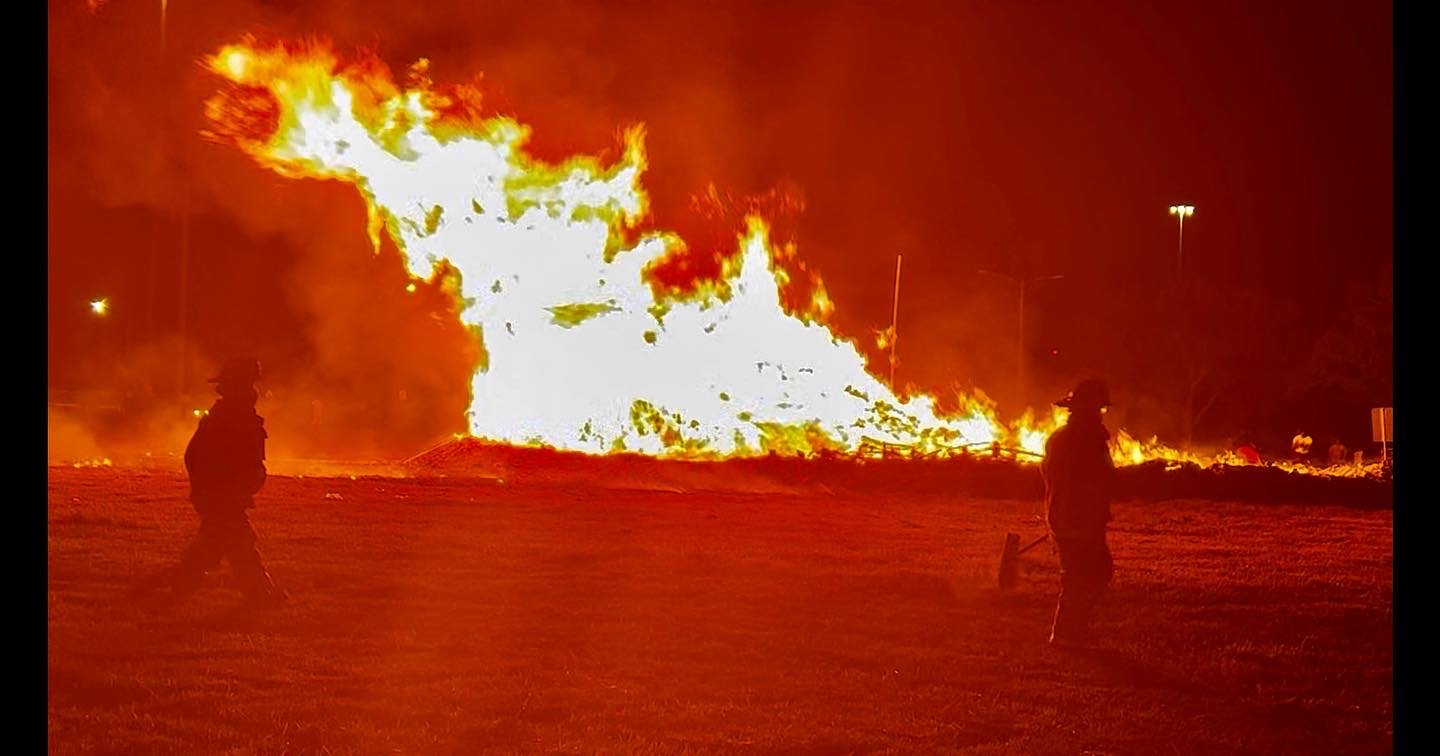
The fire itself didn't burn the same color all night. Most of the frames show it orange and roiling, but at its most intense the flame goes nearly white — no orange fringe at all, just a wall of white heat with a lone firefighter small in the frame, dwarfed by it, working the base from a distance the heat itself was dictating. That shift, from orange to white, is as much a record of how hot the fire got as any of the numbers a fire report would give you.
One frame in particular stands above the rest: a Beaumont firefighter walking directly into the wall of flame, shovel in both hands, smoke pooling at ground level, the fire filling the frame behind him with a dark vignette at the edges that looks almost painted. He isn't retreating from what's in front of him. He's walking into it. That single image carries the weight of the entire night in a way no caption could improve on.
A celebration that almost became something else
Lamar University's homecoming bonfire draws alumni back to Beaumont every fall for a tradition that predates most of the people who attend it. On this particular night, it came within a few hundred feet and a few unwatched minutes of becoming the story instead of the backdrop to one.
It didn't, because someone standing at the edge of the crowd was watching something other than the fire everyone came to see — and because the men and women who answered that call let a stranger with the right credentials stand beside them while they did the work.
— Houston Heights Independent —
ATTENTION ASSIGNMENT DESKS & MEDIA PRODUCERS:
All text, video, and original photography covering this story are the exclusive property of the Houston Heights Independent. Broadcast, digital replication, or social scraping of these assets without an active license is strictly prohibited. To license clean, high-density, unwatermarked frames for TV broadcast or regional news print, contact our newsroom immediately, at houstonheightsindependent@gmail.com.
Standard licensing fees apply.
© 2026 Houston Heights Independent. All rights reserved. Registered under Jim Towers,MJA.JD. No part of this publication, including text, layout, and original photography, may be reproduced, distributed, broadcast, or transmitted in any form or by any means without prior written permission from the Editor-in-Chief. For media licensing inquiries or syndication requests, contact at 210-288-3034 houstonheightsindependent@gmail.com.
