
THE QUIET GRID
I asked a kiosk on Heights Boulevard for directions to the farmers market. When I arrived, the second kiosk was there. I could use that one to map my way back.
By Jim Towers, MJA.JD. Houston Heights Independent | August 2026
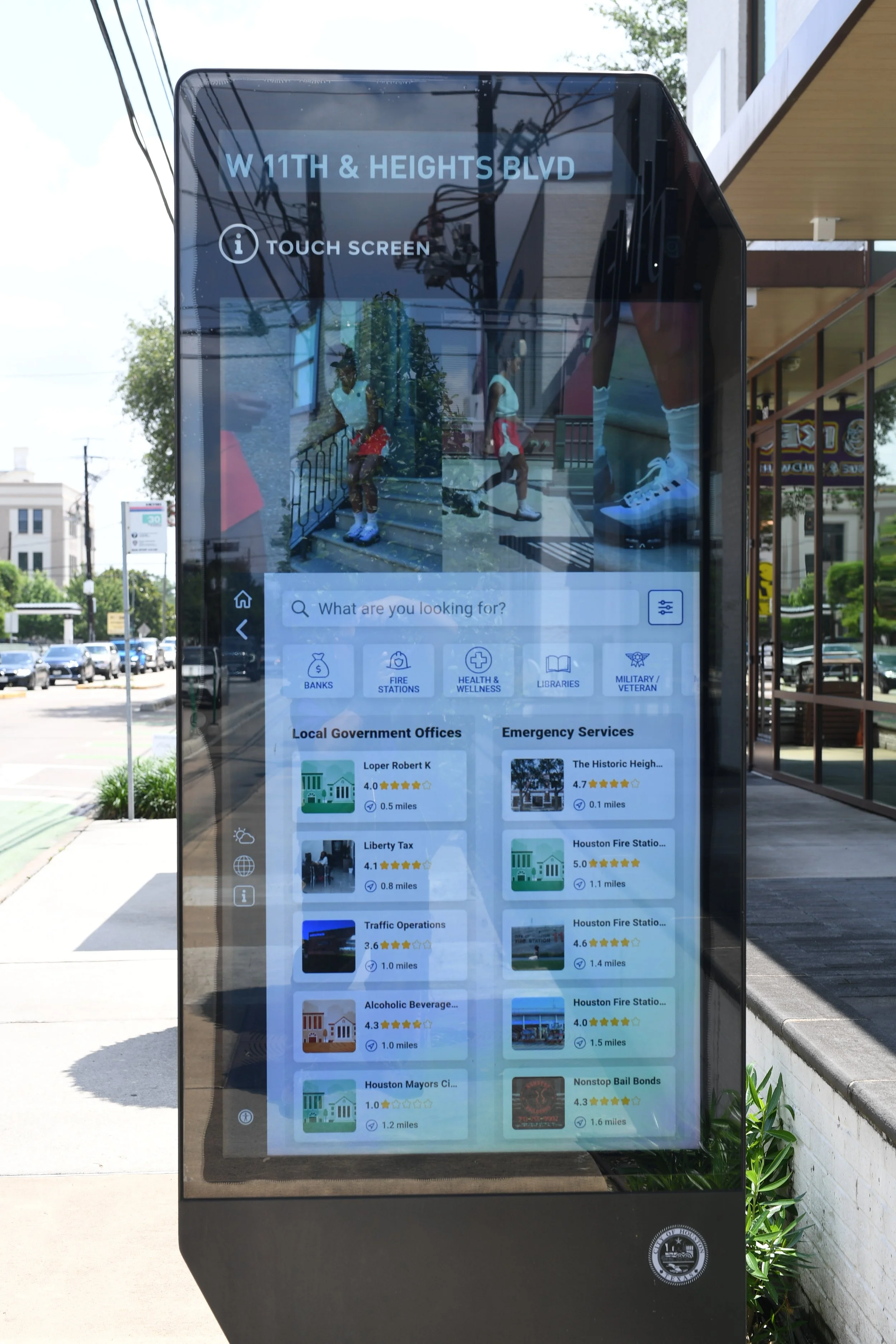
The kiosk home screen presents itself as a city services portal, listing Traffic Operations and Houston Fire alongside local businesses — all managed under private data governance the city does not control.
WHAT THESE KIOSKS ACTUALLY ARE
The IKE Smart City kiosks standing on sidewalks across Houston — including Heights Boulevard — are 8-foot-tall, 65-inch 4K touchscreens connected to a centralized cloud network managed by IKE Smart City. The City of Houston issued a request for proposals in March 2020, selected IKE as vendor in March 2021, and approved the contract through city council in May of that year. Installation has proceeded in phases across Downtown, Midtown, Montrose, the Museum District, and Heights-adjacent corridors.
They are marketed as wayfinding amenities. Free wifi covering a 30-meter radius. Local business guides. Transit information. Emergency 911 integration. Digital art displays. The pitch to the city emphasized walkability and vibrancy. The pitch to the neighborhood emphasized convenience. We had questions about what these machines collect. This reporting found no evidence of license plate readers, facial recognition, or reporting of suspicious activity to police. What we did find is in the policy — and the policy raises questions the neighborhood was never asked.
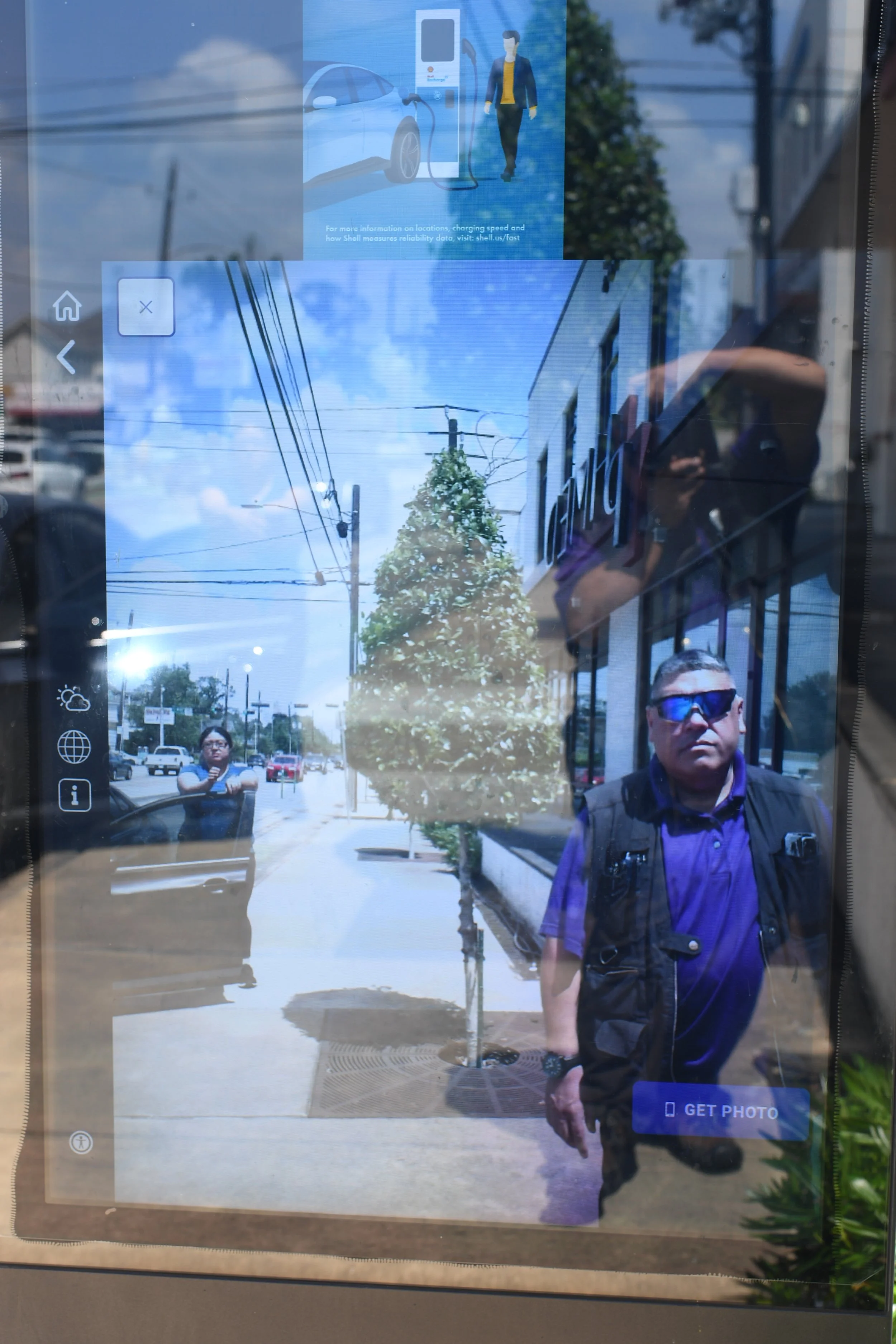
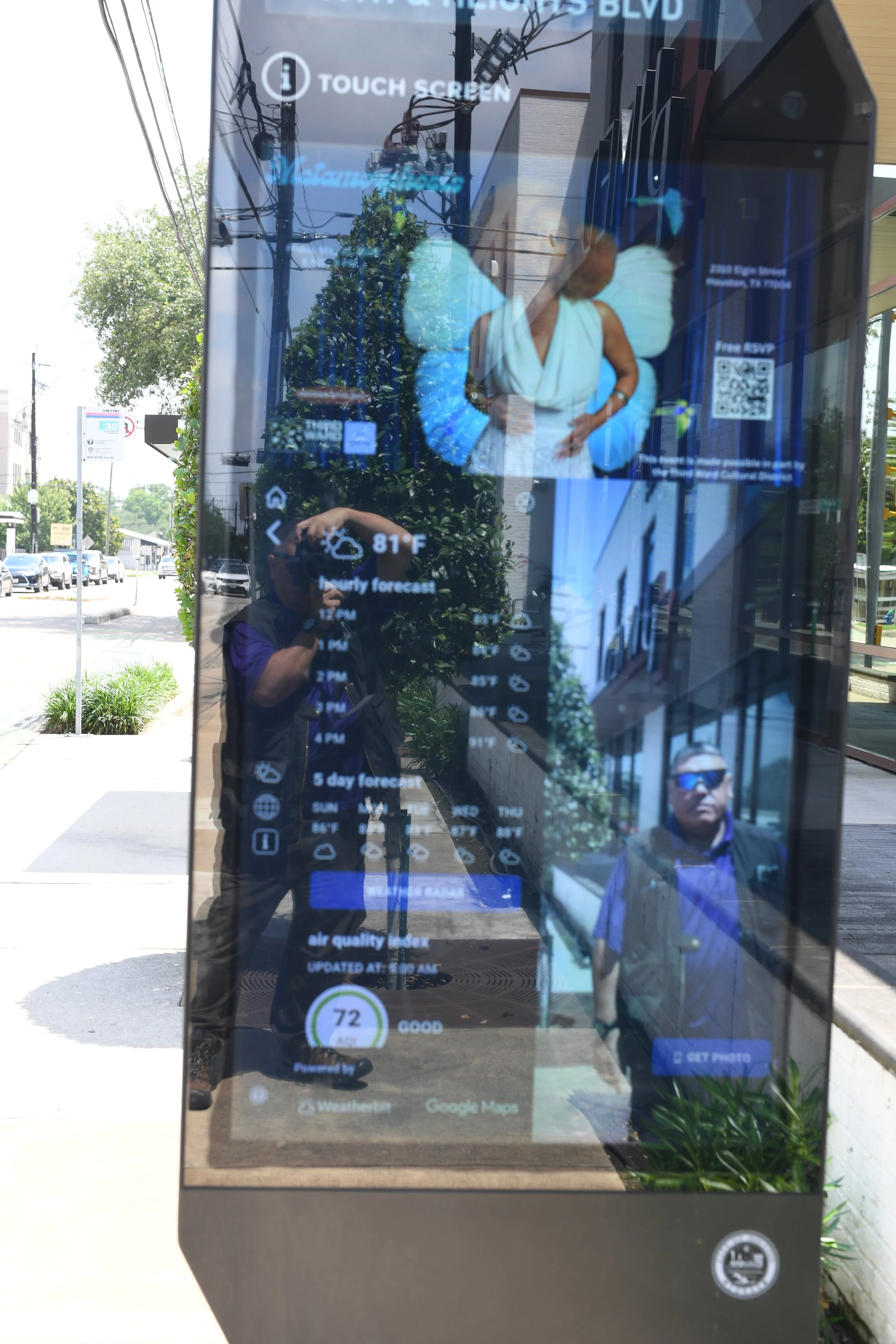
That photograph is the lead image of this investigation. I did not take it. The kiosk did.
The outward-facing cameras on the kiosks record faces and log activity in the surrounding area. According to IKE's own published privacy policy, facial images constitute biometric information — IKE's word, not ours. Images from user interactions, including photo booth sessions, are processed through IKE's cloud servers. The policy states the kiosk stores your image only long enough to perform the requested service, after which IKE says it no longer retains it. However, the policy also states the image may continue to be held by Third-Party Partners — under terms IKE explicitly states it does not control, and whose identities IKE does not disclose.
According to IKE's privacy policy, camera footage is retained for a minimum of 15 days. That window extends when IKE determines retention is necessary to investigate an incident — a standard IKE sets for itself, not one established by a court or a city ordinance.
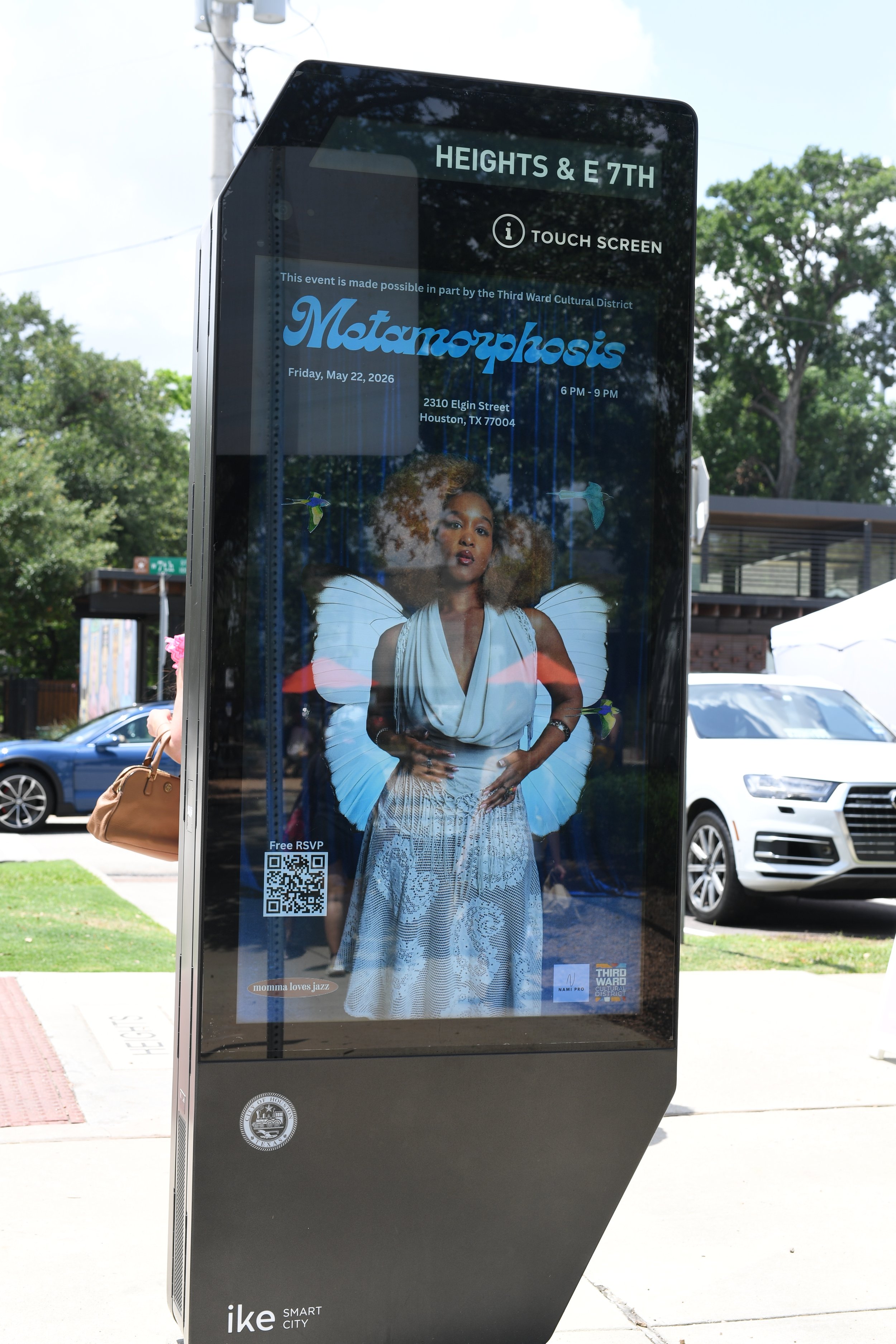
Any smartphone with wifi enabled continuously broadcasts its unique MAC address — a hardware identifier specific to your device. IKE's own policy states that technical information from wifi connections is retained for up to twelve months before deletion. Whether that deletion is audited or verified is not publicly documented.
When you use the touchscreen, your selections are recorded. When you scan a QR code, your device is linked to the kiosk session. When you use the photo feature, your image enters IKE's cloud pipeline — and per IKE's own policy, features operated by Third-Party Partners may retain that data under terms IKE explicitly states it does not control.
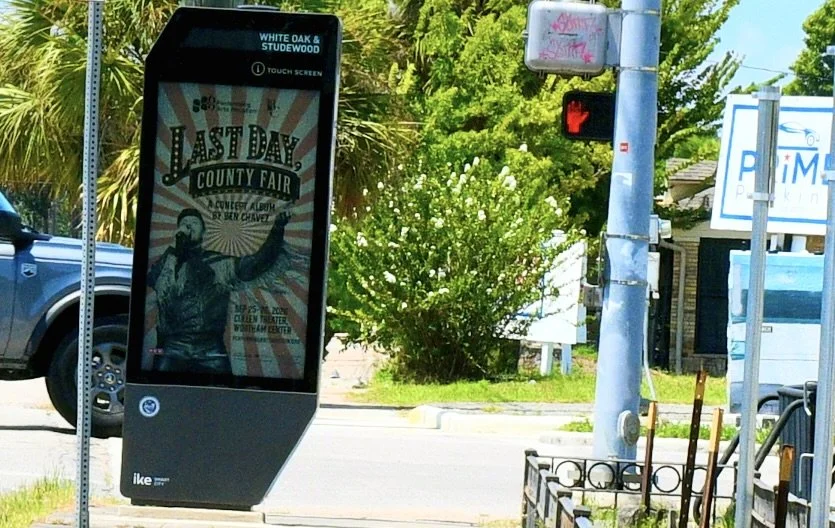
None of this is disclosed at the moment of contact on a Heights Boulevard sidewalk.
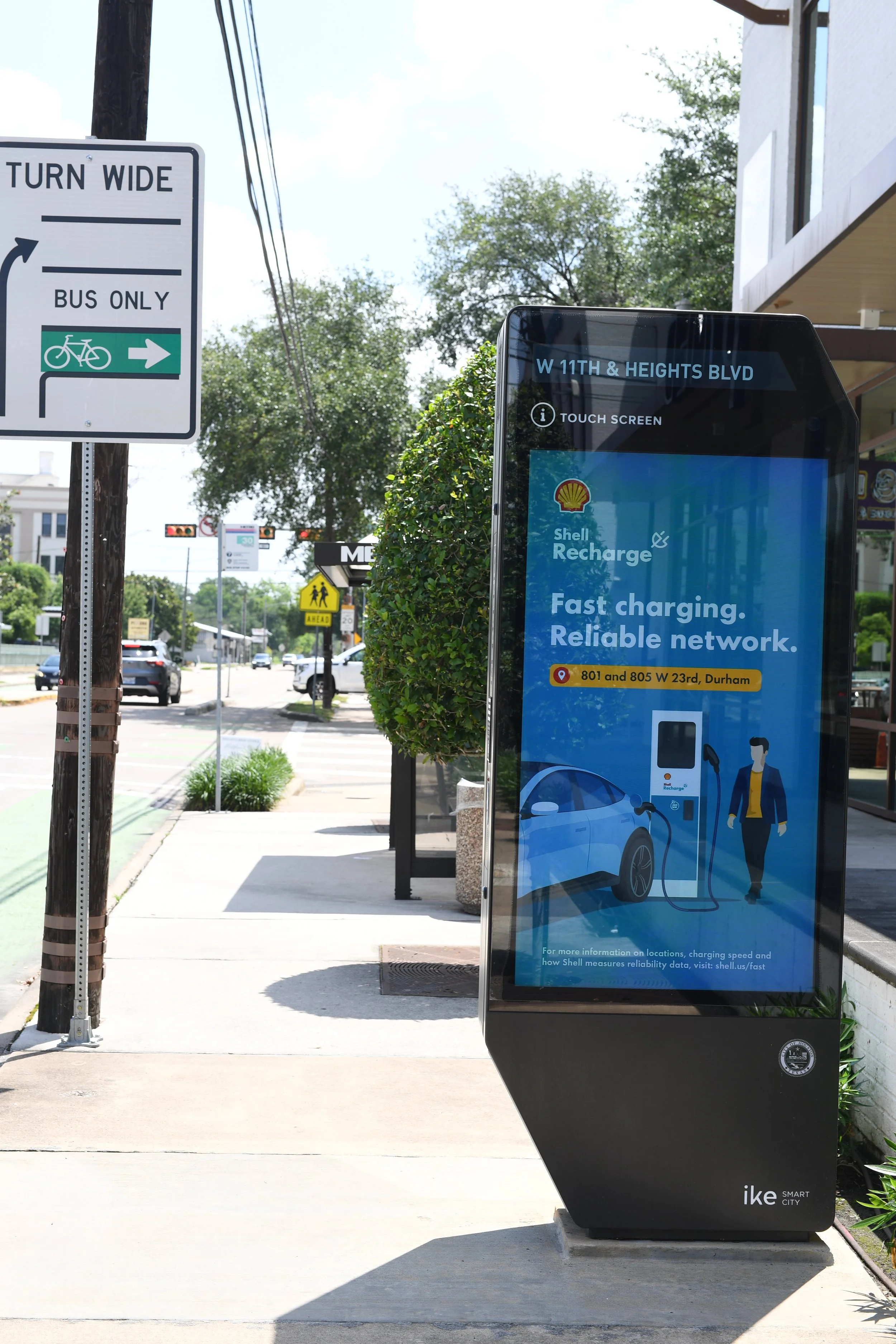
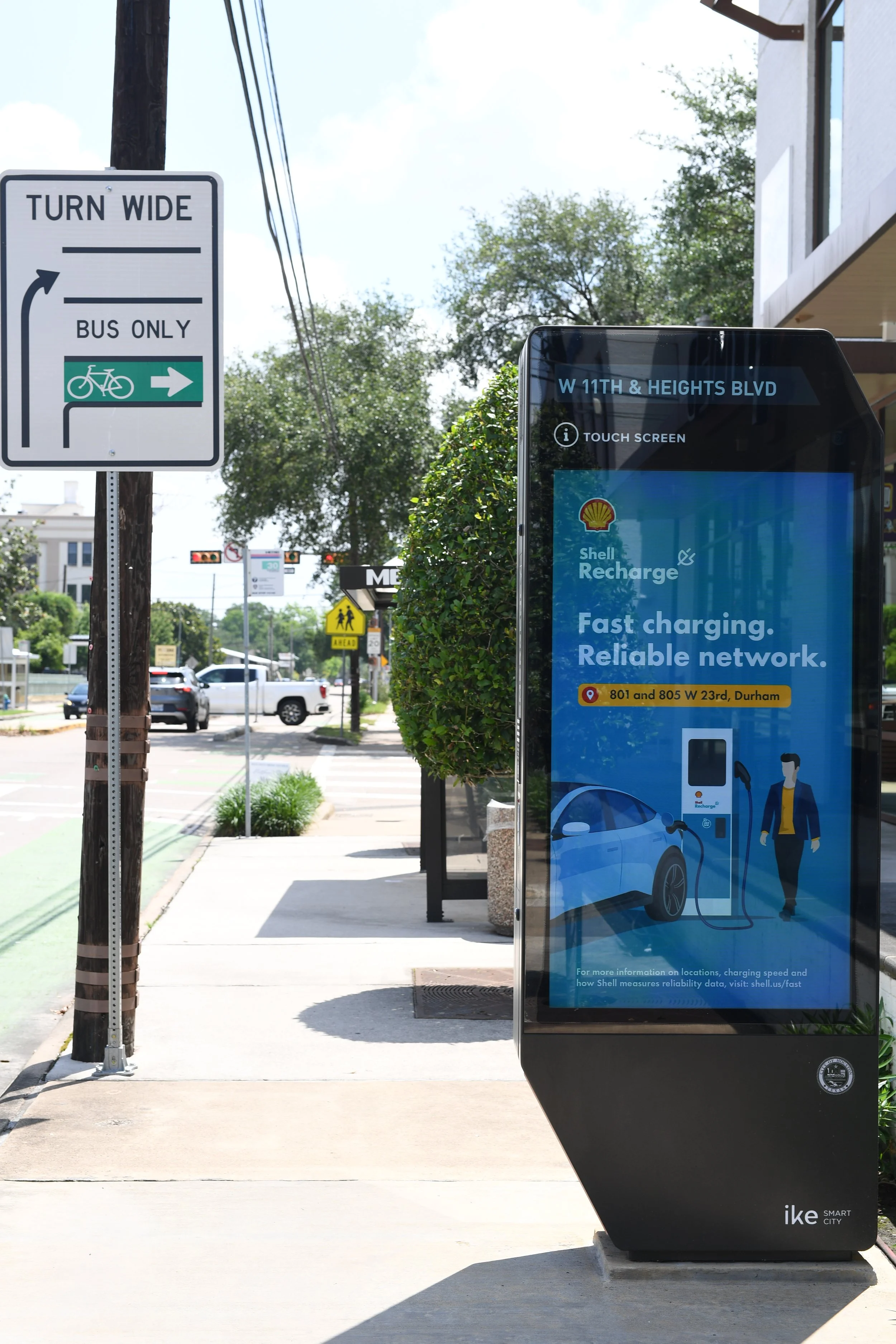
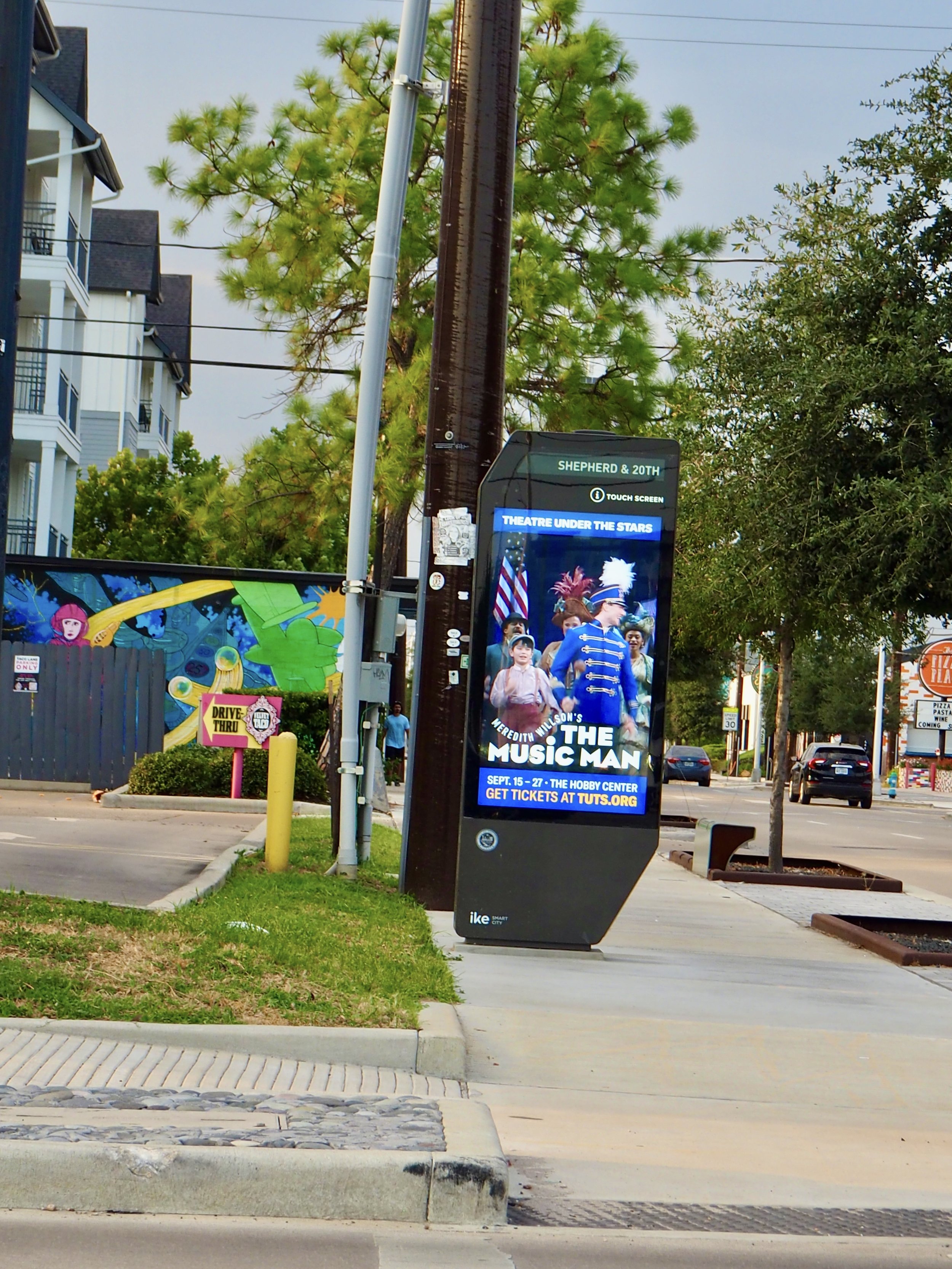
An IKE Smart City kiosk at West 11th and Heights Boulevard displays a Shell Recharge advertisement — one of the revenue streams built into the contract the City of Houston approved in May 2021.
CAN POLICE ACCESS THE DATA?
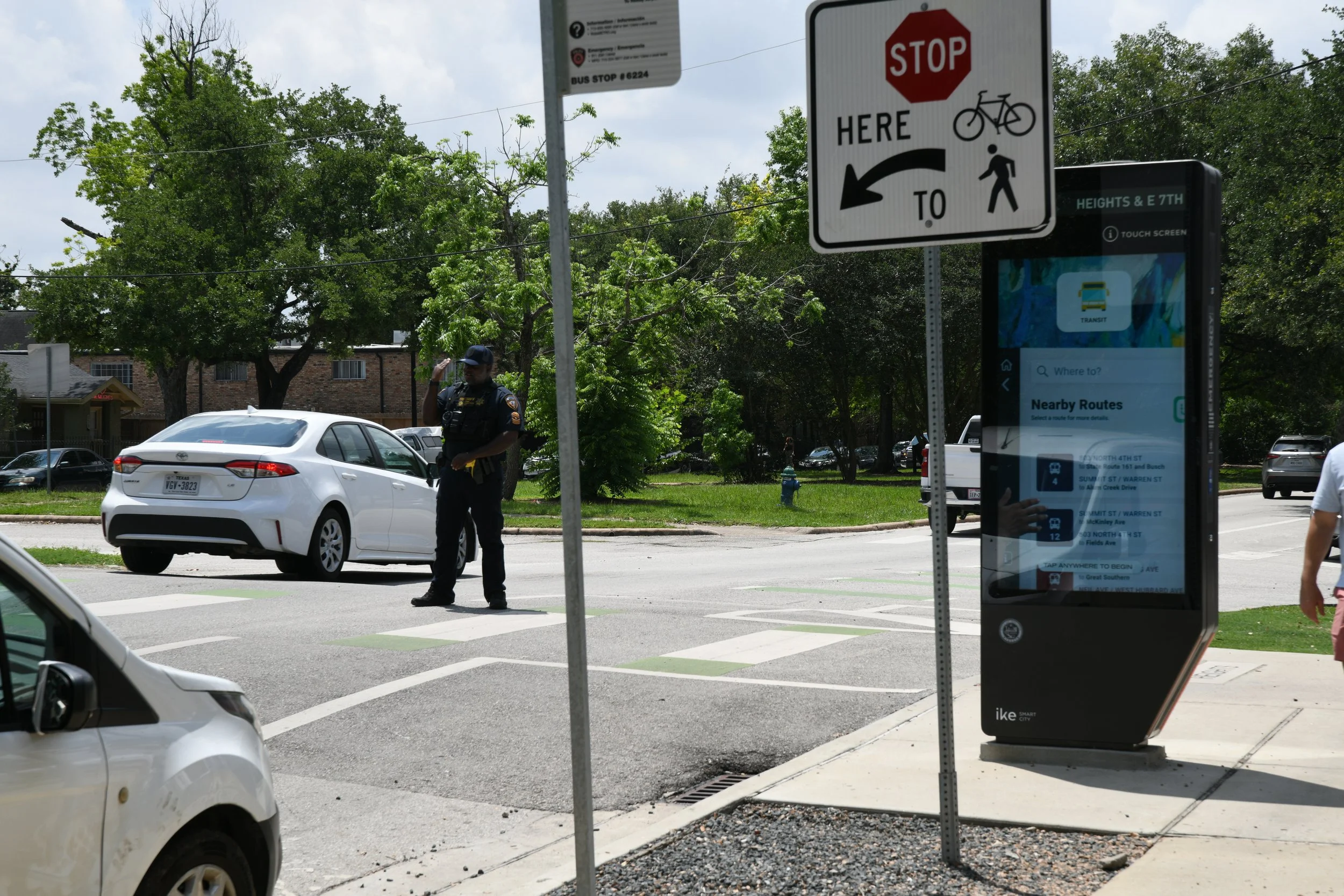
A Harris County Sheriff’a Department Deputy directs traffic at the intersection. Behind him, an IKE kiosk logs the scene. No warrant is required for IKE to share that footage with law enforcement. IKE decides what qualifies.
IKE's privacy policy states the company will disclose data to law enforcement if it believes disclosure is required by law or in the interest of public safety. No warrant is specified as a requirement. No judicial threshold is established. In cities where law enforcement partnerships are enabled, police can request security logs or access real-time camera feeds. IKE decides what qualifies.
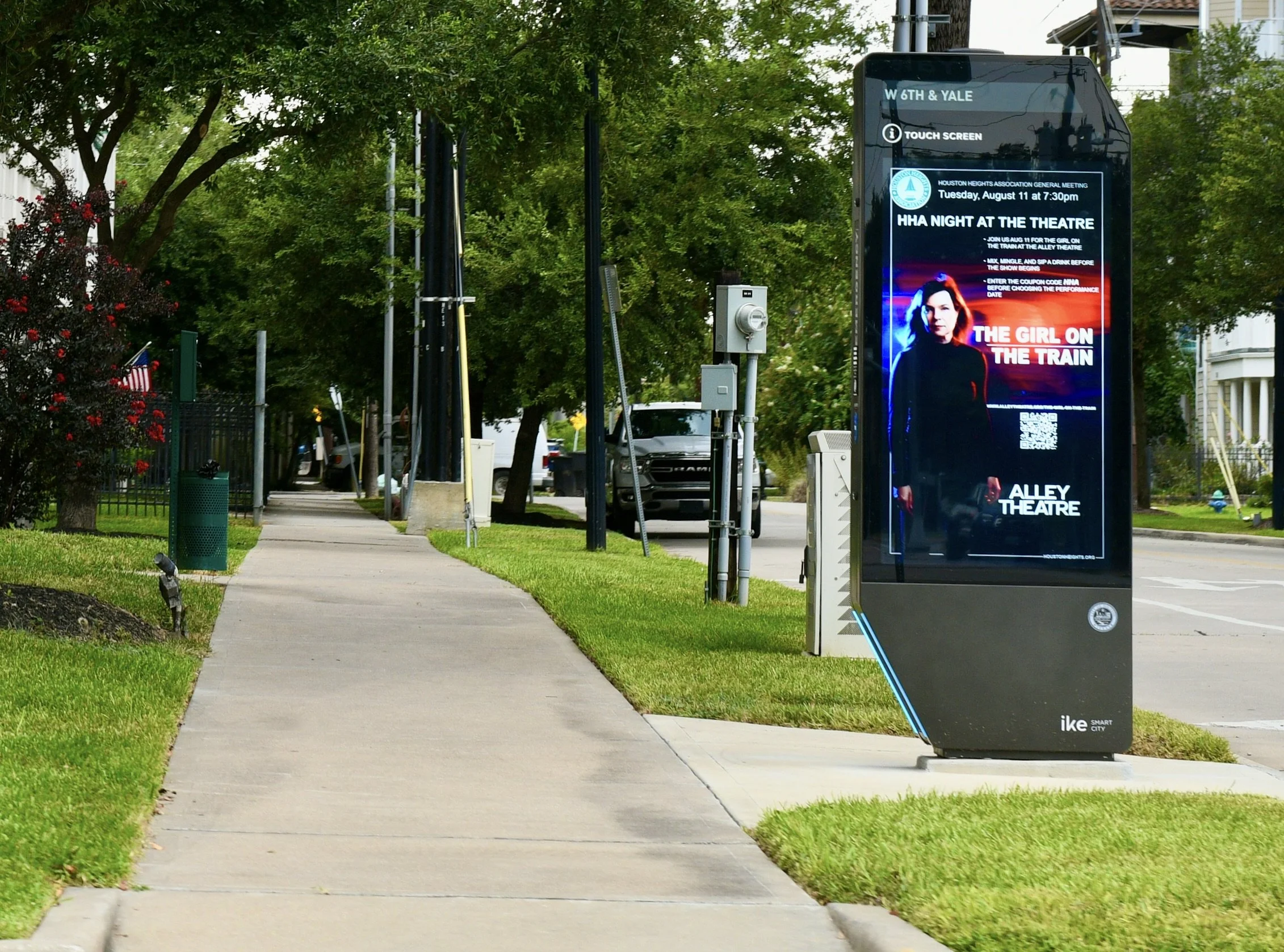
Kiosk at 500 Yale at the intersection of sixth Street. Sidewalk traffic where people walk by. Houston heights independent.
This matters now more than it did in 2021 when these kiosks were installed. Flock Safety license plate cameras — a separate but parallel surveillance network — are blanketing Houston and Harris County and have been documented tracking protesters and activists nationwide. The network now spans more than 120,000 cameras across 49 states, with over 7,000 agencies sharing access. A Pasadena officer recently resigned after accusations of using Flock data to stalk a female officer. Cameras are being vandalized across the city.
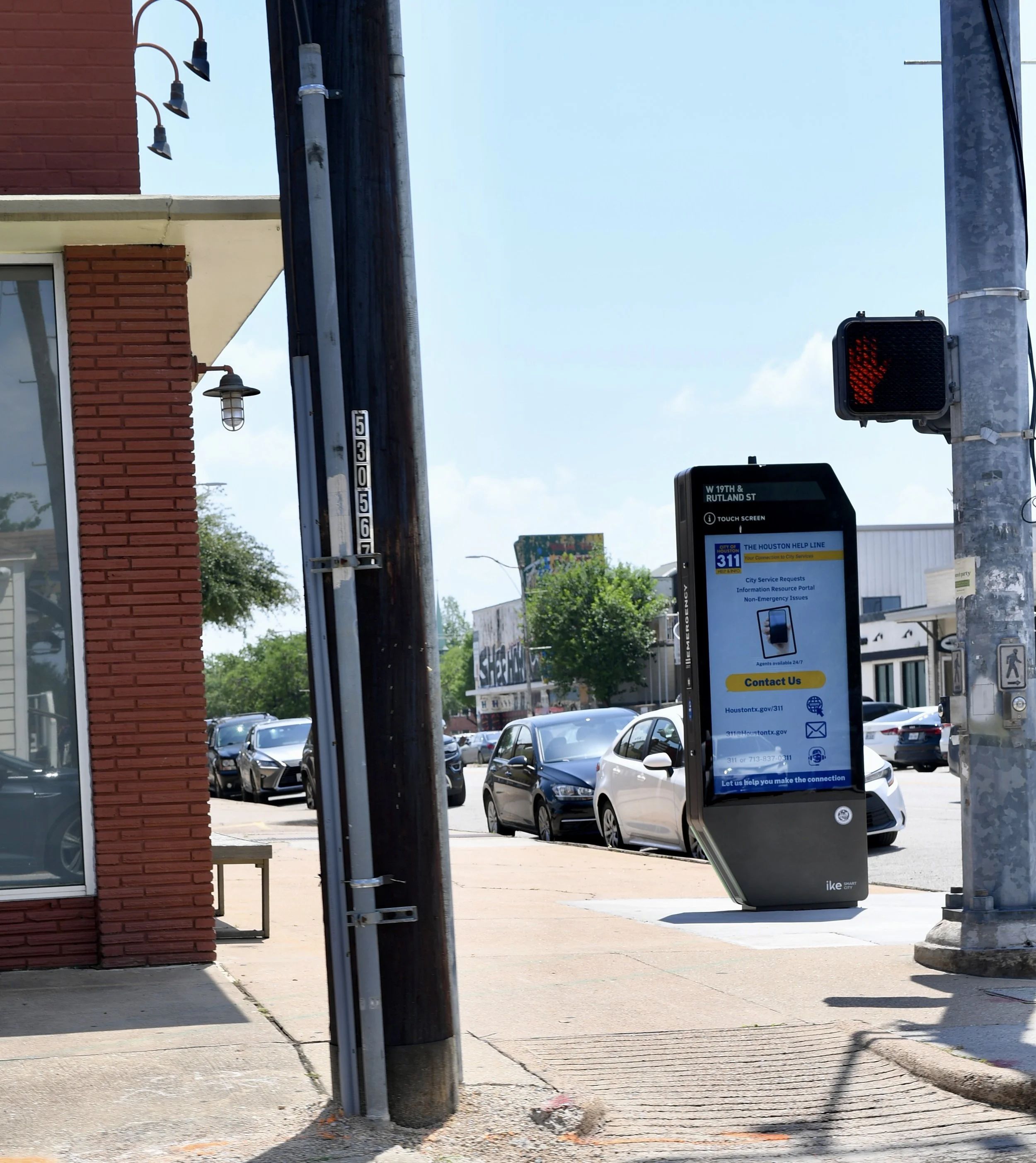
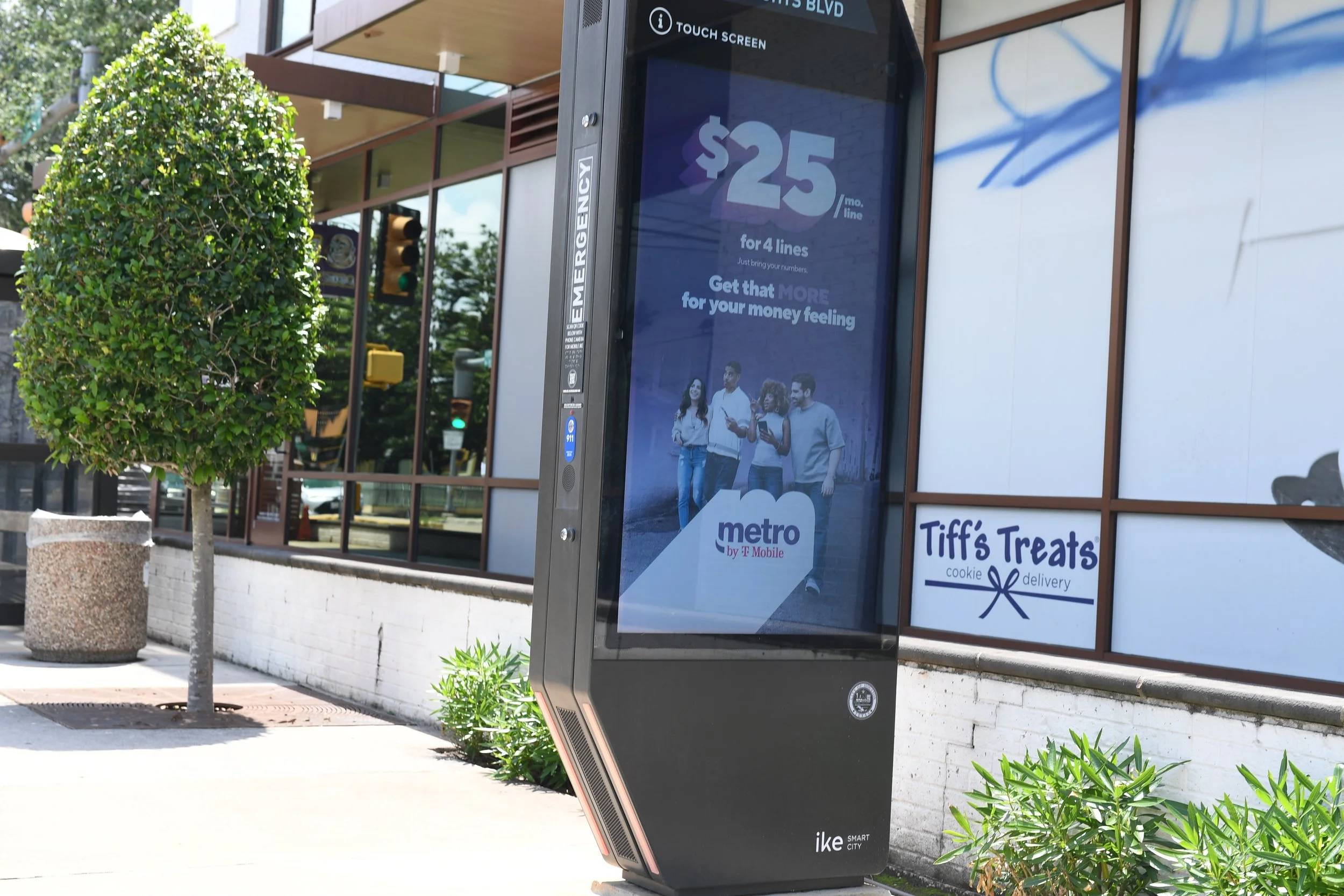
IKE Smart City branding at the base of a Heights Boulevard kiosk. The company's published privacy policy governs what the machine collects. The city's contract does not.
Note carefully: IKE kiosks do not read license plates. Their cameras face pedestrians, not traffic. They are a different system from Flock. But they are part of the same expanding grid — connected infrastructure on public sidewalks collecting data from residents who did not consent to the collection and cannot easily opt out of it.
The question is not whether any individual system is being abused today. The question is what the grid looks like when all the systems are considered together.
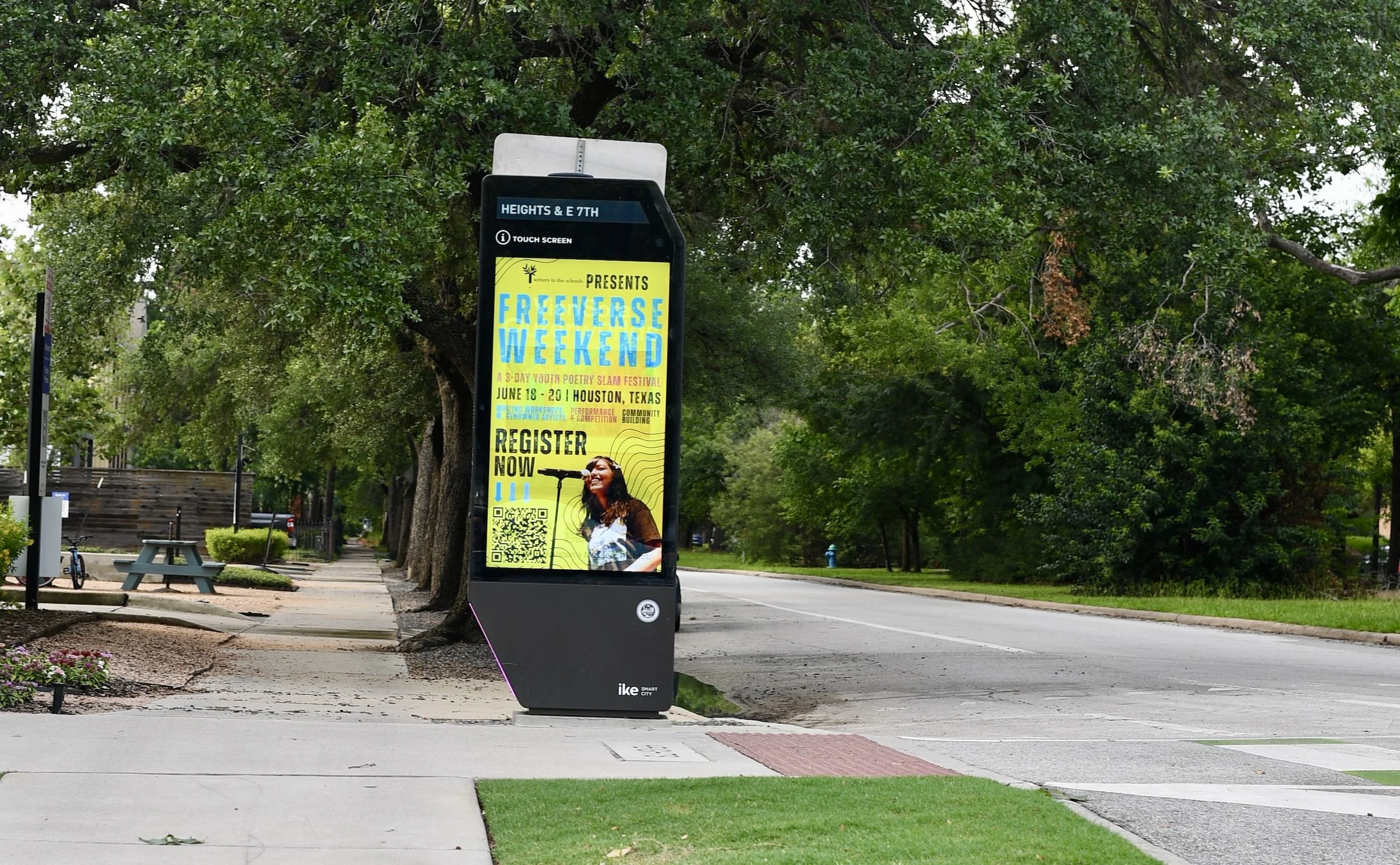
A cultural event advertisement displayed on the Heights and East 7th kiosk. The same machine logs device identifiers from passing smartphones.
CAN THEY BE HACKED?
Any networked computer on a public sidewalk is a potential target. Security researchers have documented multiple attack vectors against public kiosk systems: tap fuzzing to expose underlying operating systems, data entry manipulation to trigger system exceptions, external links that break kiosk mode, and default passwords that compromise entire networks when one device is breached.
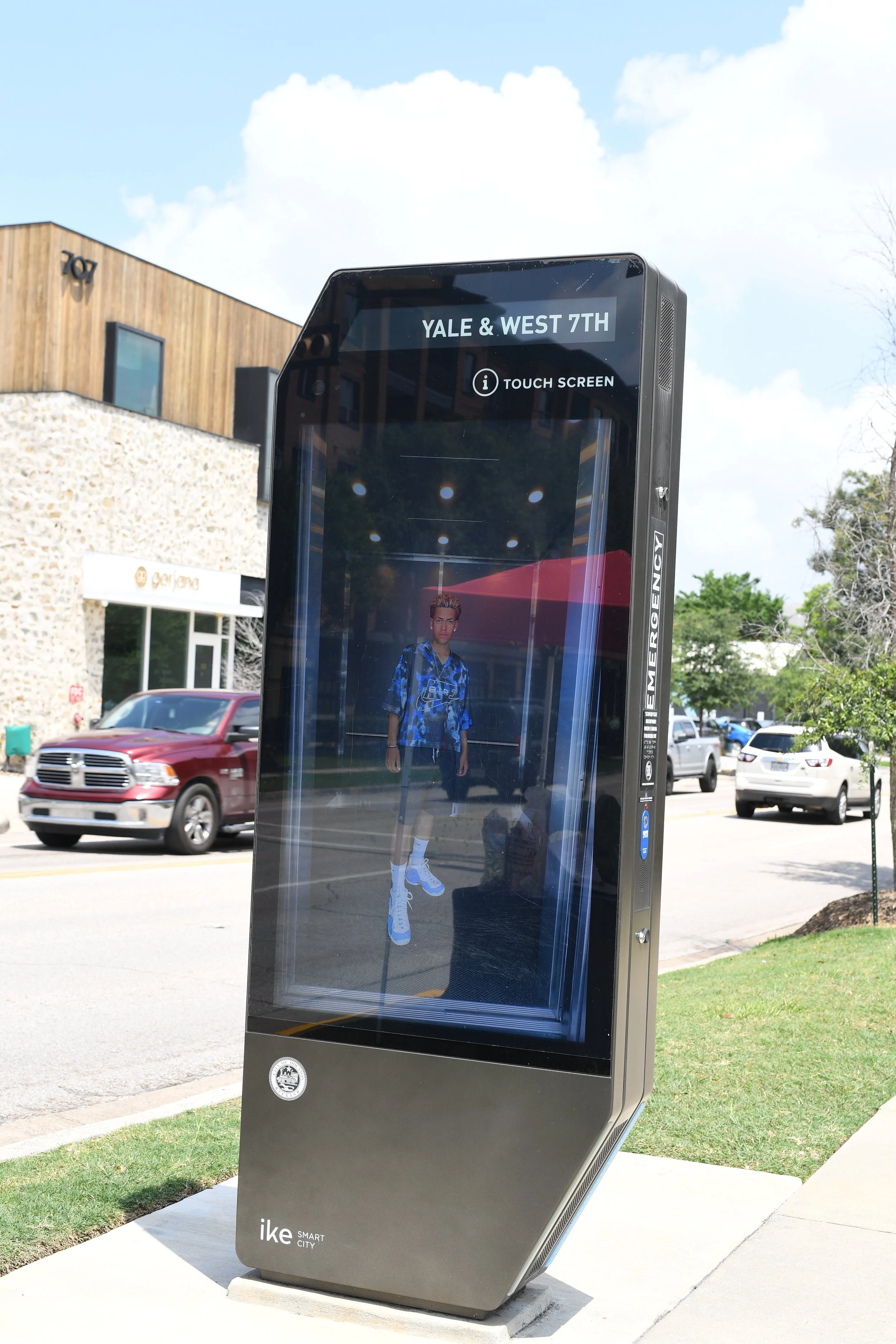
An IKE kiosk at Yale and West 7th Street, one of several installed along the Heights corridor since 2021. The kiosks are marketed as wayfinding amenities.
In April 2025, hackers compromised audio-enabled crosswalk buttons across three California cities by exploiting default passwords in exposed outdoor cabinets, broadcasting fake AI-generated messages from well-known executives in place of pedestrian safety signals. The attack forced cities to disable accessibility features at 12 intersections while they responded.
A kiosk that photographs faces, logs device identifiers, and tracks interactions across a neighborhood network is a more valuable target than a crosswalk button. A bad actor — criminal or state — who gains access gets more.
One of several IKE Smart City kiosks installed across the Heights corridor. Eight feet tall. Connected to a centralized cloud network. Present on your sidewalk since 2021.
WHAT THE HEIGHTS WAS NEVER ASKED
The Heights has been fighting for years over who controls its streets. The Dall bollards removed without notice. The transit center built over neighborhood objection. Now there are 8-foot surveillance kiosks on the sidewalks — photographing passersby, logging device identifiers, connecting to cloud networks — and the neighborhood was consulted on placement and branding, not on data architecture. The kiosk home screen lists Traffic Operations and Houston Fire under Local Government Offices. The city's name is on the directory. The city has no authority over what the machine collects while you use it. Just an observation.
The kiosk user interface at West 11th and Heights Boulevard. What you see is a neighborhood amenity. What runs behind it is a data collection architecture the neighborhood was never asked about.
Those are not the same conversation. One is aesthetic. The other is constitutional.
The kiosks do not appear to be equipped with license plate readers or facial recognition software, and in this day and age it appears that those concerns are well-founded. Cities all over the country including Houston are being filled with cameras and microphone systems operating on public sidewalks without meaningful public consent.
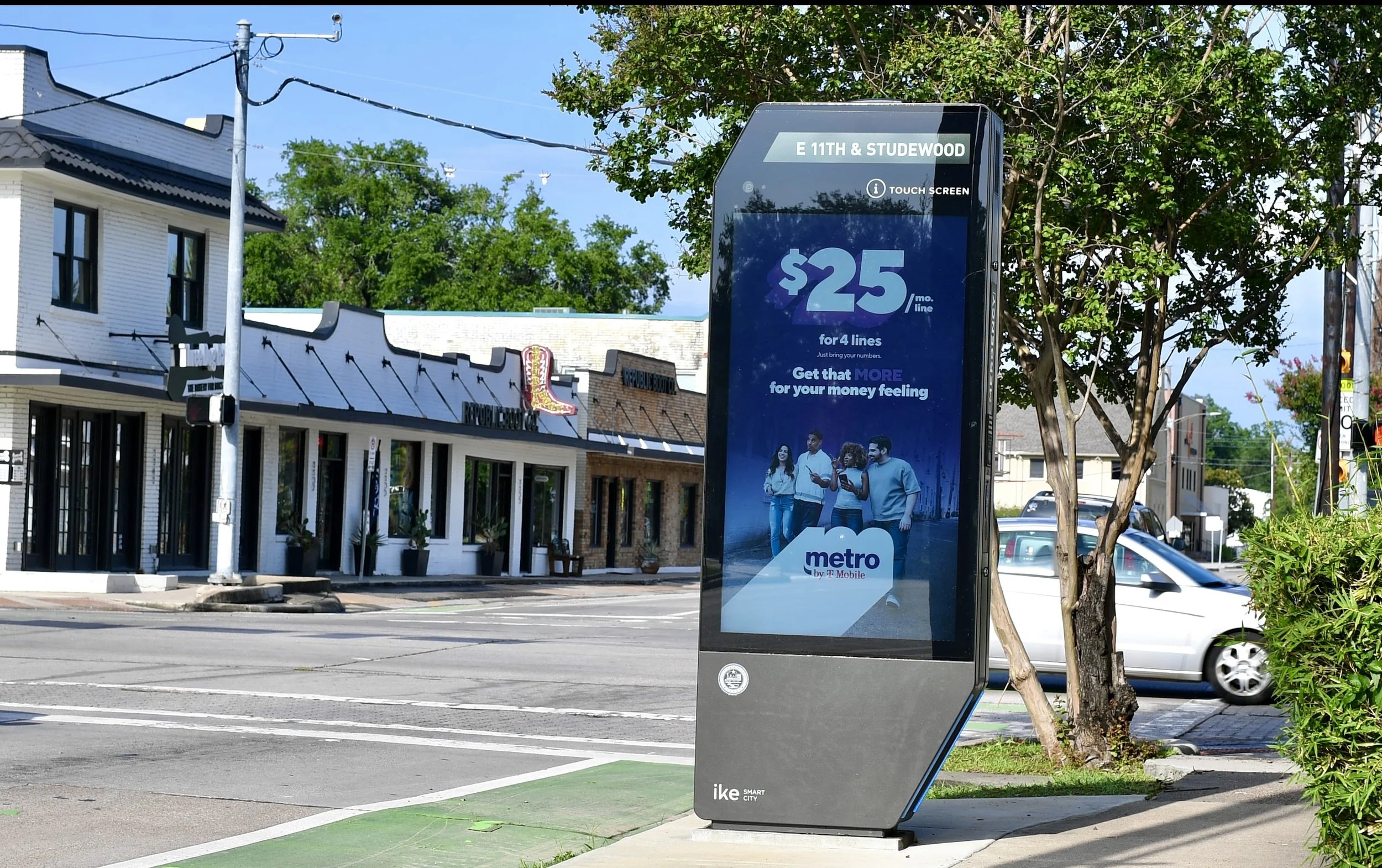
I asked one of the kiosks for directions to the farmers market. I followed its route. When I arrived, I interacted with a second kiosk. That kiosk had no recognition of my interaction with the first one. The system did not document my movement between two points or link the sessions across the network. The kiosk on Yale Street has no digital connection to the one on 11th Street that tracks your physical movement. Public sidewalk kiosks in Houston do not remember who you are, nor do they track you across a network.
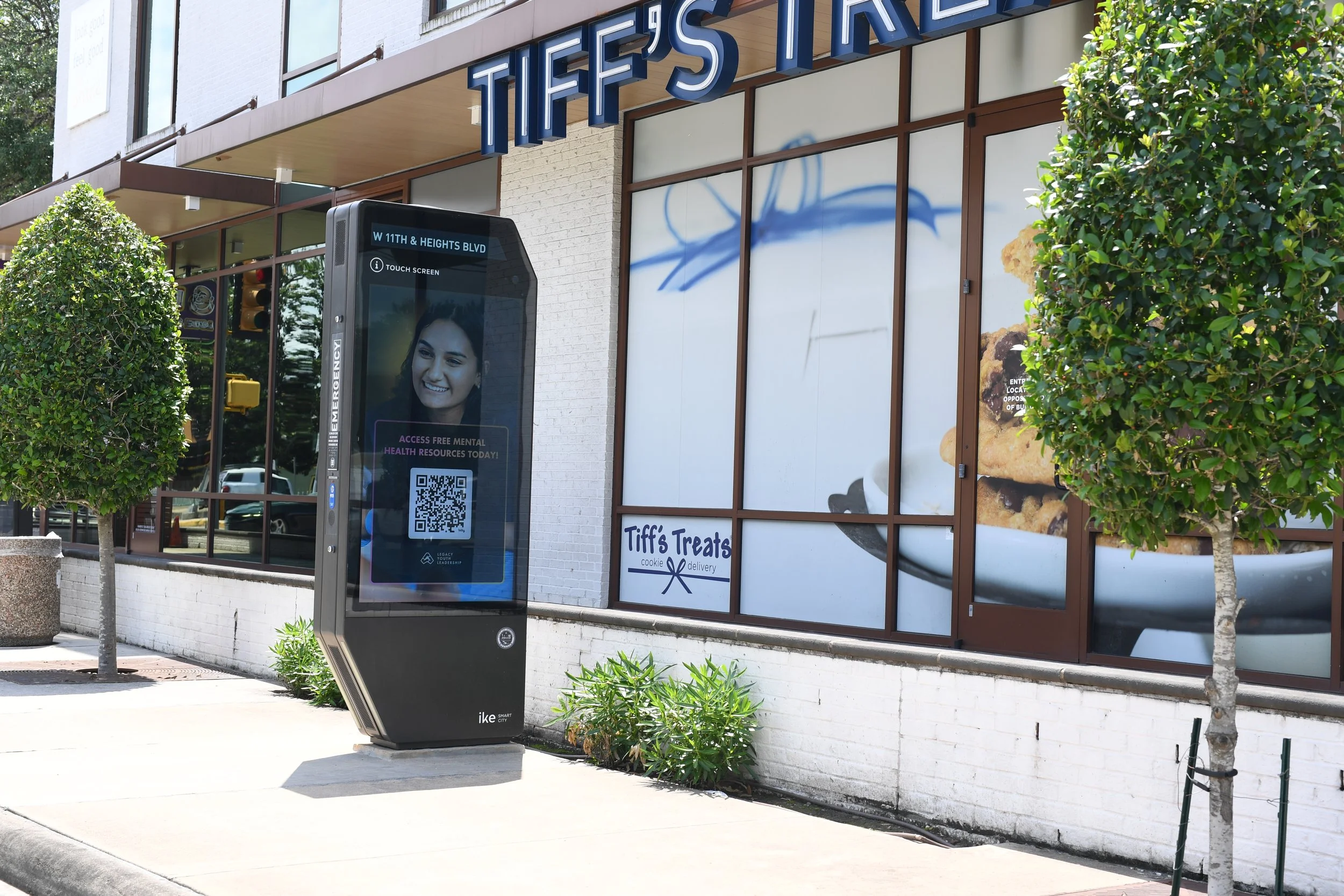
I sent the photograph to my phone via email. I still have it. According to IKE's own published privacy policy, the image may also have been processed by Third-Party Partners whose retention practices IKE states it does not control. Whether any copy was retained elsewhere in the pipeline is one of the questions HHI's public records requests are asking.
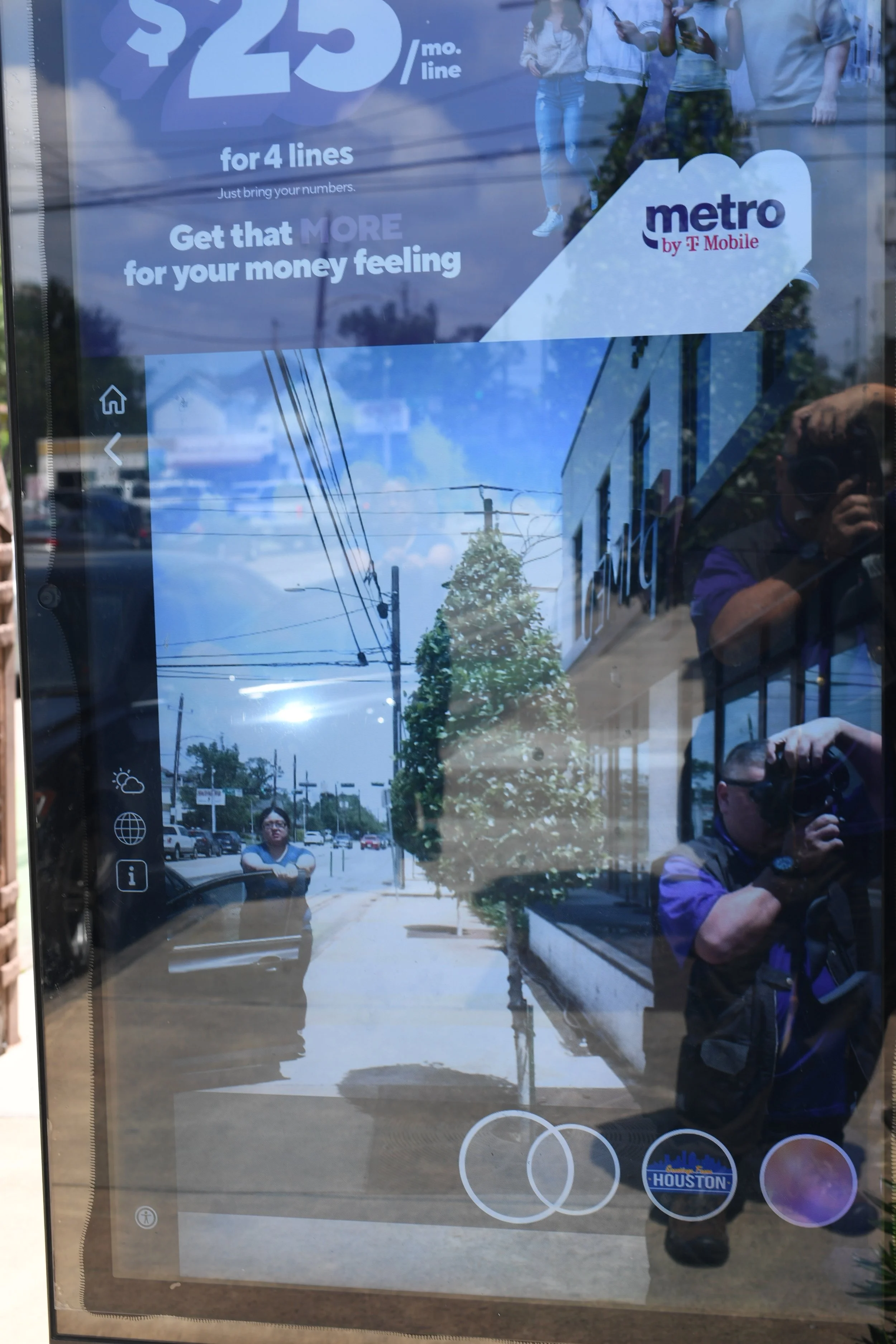
Houston Heights Independent, on Heights Boulevard during the investigation. The kiosk is behind him. It had already taken his picture.
The photograph the kiosk took of me is sitting on my phone right now. That is not a hypothetical. That is the story. HHI will keep reporting it.
Houston Heights Independent covered this story on the ground. HHI is a civic journalism publication operating on the Murrow standard.
ATTENTION ASSIGNMENT DESKS & MEDIA PRODUCERS:
All text, video, and original photography covering this story are the exclusive property of the Houston Heights Independent. Broadcast, digital replication, or social scraping of these assets without an active license is strictly prohibited. To license clean, high-density, unwatermarked frames for TV broadcast or regional news print, contact our newsroom immediately. Standard licensing fees apply.
© 2026 Houston Heights Independent. All rights reserved. Registered under @ Jim Torres, . No part of this publication, including text, layout, and original photography, may be reproduced, distributed, broadcast, or transmitted in any form or by any means without prior written permission from the Editor-in-Chief. For media licensing inquiries or syndication requests, contact us at houstonheightsindependent@gmail.com.
