
They Never Saw the Sun.
The Downtown Aquarium told the public its tigers lived in a Maharaja's Temple. Federal investigators found something else. The protesters outside were right. The tigers are all dead.
By Jim Towers, MJA.JD.
Houston Heights Independent | August 2026
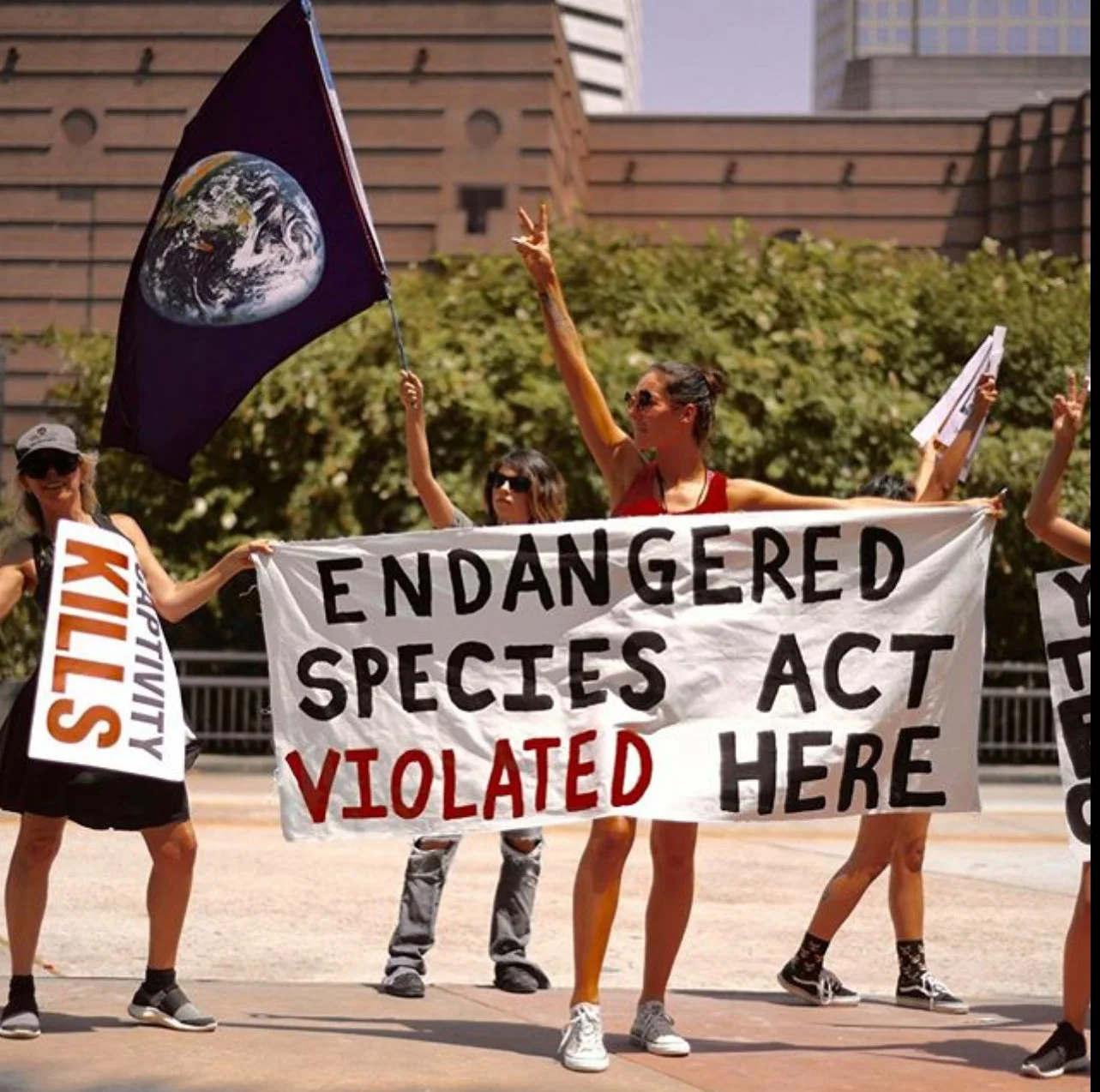
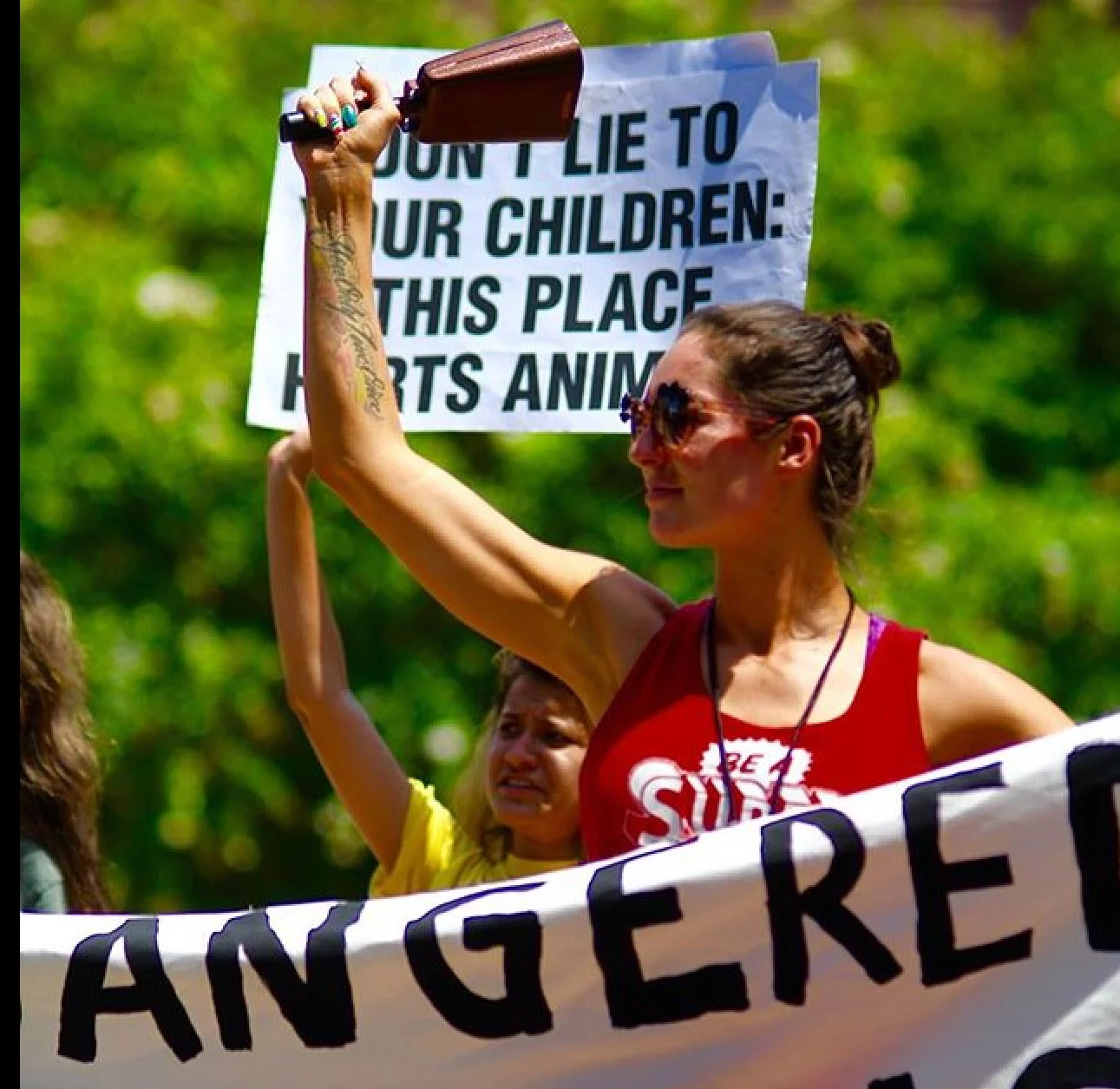
Protesters outside the Downtown Aquarium on Bagby Street, February 11, 2019, carrying a banner reading "Endangered Species Act Violated Here." The Animal Legal Defense Fund had filed suit two years earlier alleging the facility's conditions violated federal law. Photo: Jim Towers / Houston Heights Independent.
Marina died in August 2025. She was twenty-one years old. She had lived at the Downtown Aquarium in Houston since she was one. In the two decades between, she had never once been outside.
She was a white Bengal tiger. Her cage measured ten feet by ten feet.
The other three — Nero, Coral, and Reef — were gone before her. Together they spent the better part of thirteen years in the back of a seafood restaurant's entertainment complex on the edge of downtown Houston, in a concrete enclosure dressed up as an Indian palace, on display six days a week to families who paid for the privilege of watching them pace.
The people who tried to stop it were called extremists.
They were right.
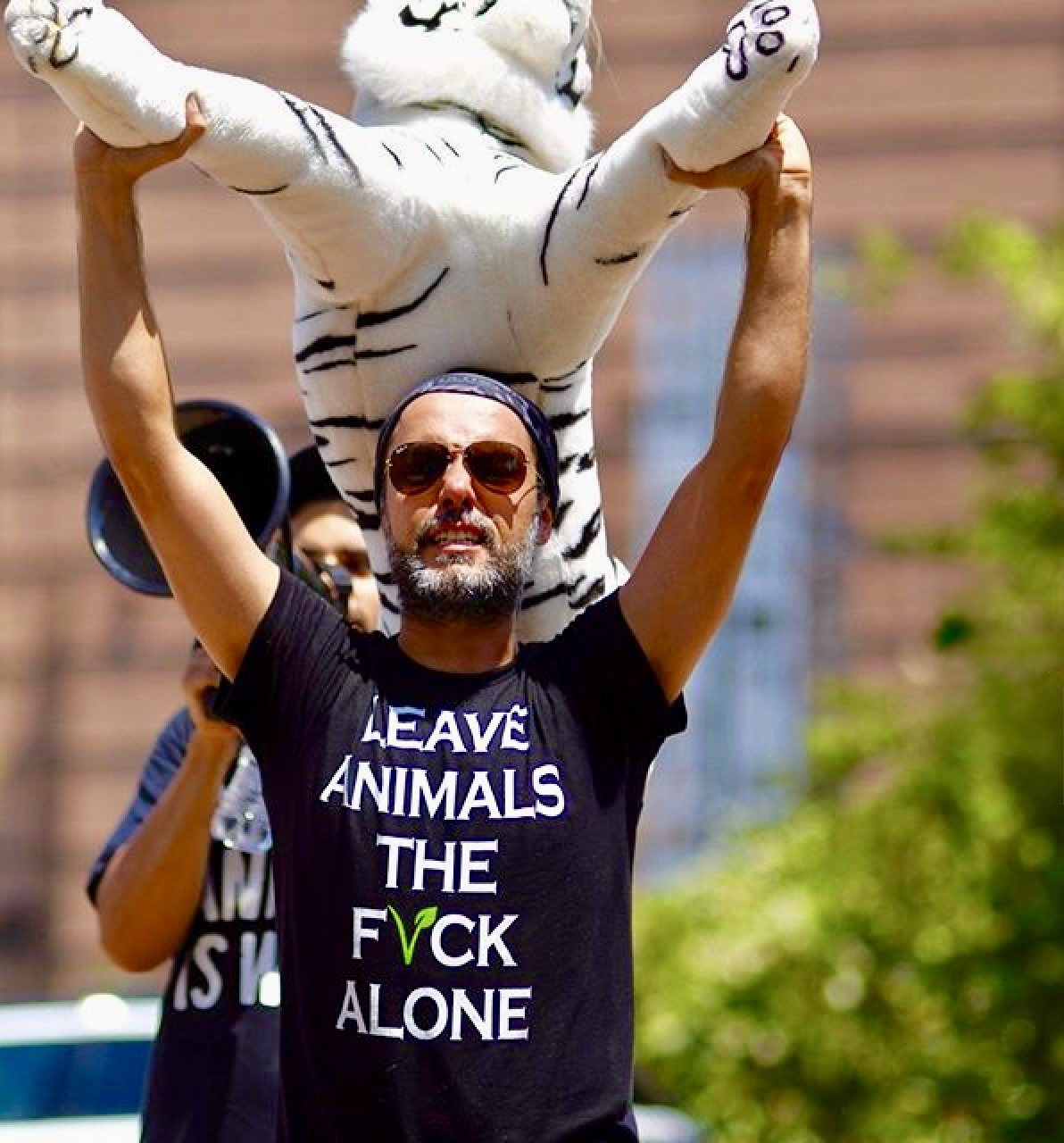
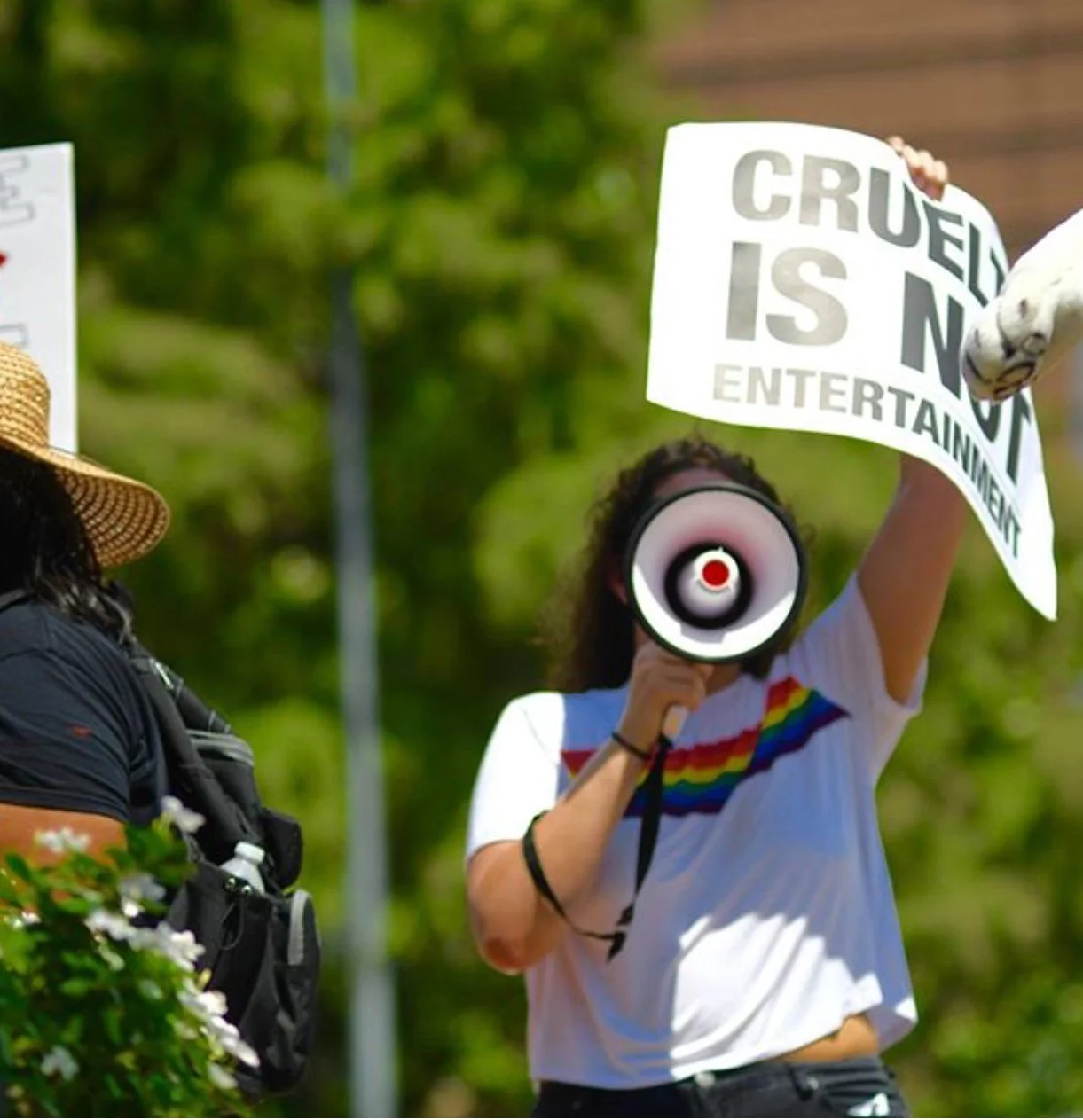
A protester raises a stuffed white tiger outside the Downtown Aquarium, February 11, 2019. Twenty feet away, inside the facility, four white Bengal tigers were cycling through a concrete holding enclosure on a rotation schedule. Photo: Jim Towers / Houston Heights Independent
WHAT THE CAMERAS FOUND
In 2018, a KHOU investigative team obtained access to the holding area behind the Downtown Aquarium's tiger exhibit. What they documented bore little resemblance to the Maharaja's Temple the facility advertised.
The tigers were kept individually in enclosures measuring approximately ten feet by ten feet. They were rotated into the public-facing display area one at a time. For the remaining twenty hours of each day, they lived in those holding cages. The floor was concrete. There was no sunlight. There was no outdoor access of any kind.
The facility had been operating this way for thirteen years.
A hundred dollars would buy you dinner downstairs. Twenty-three dollars would buy you a look at the tigers on your way out.
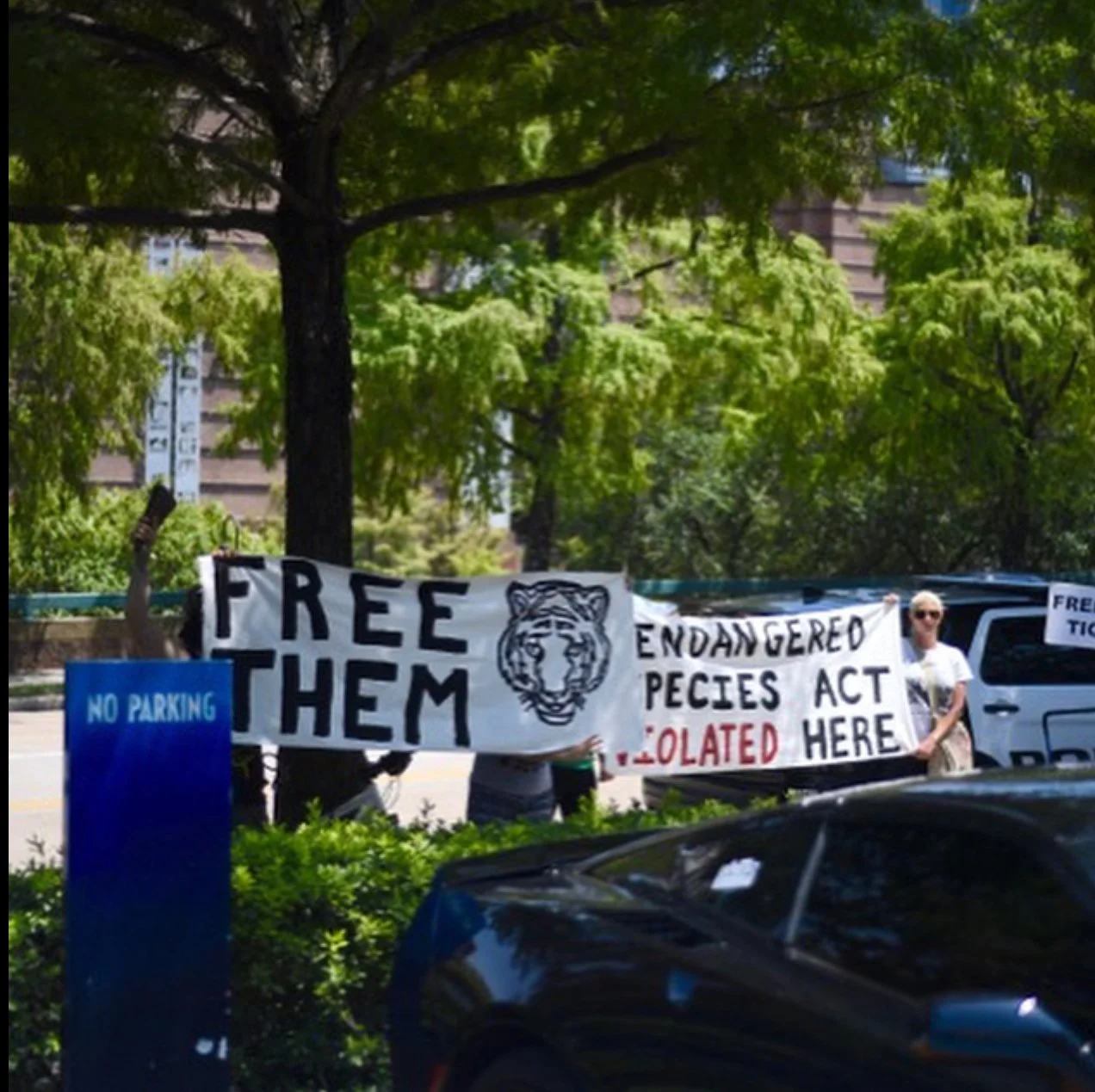
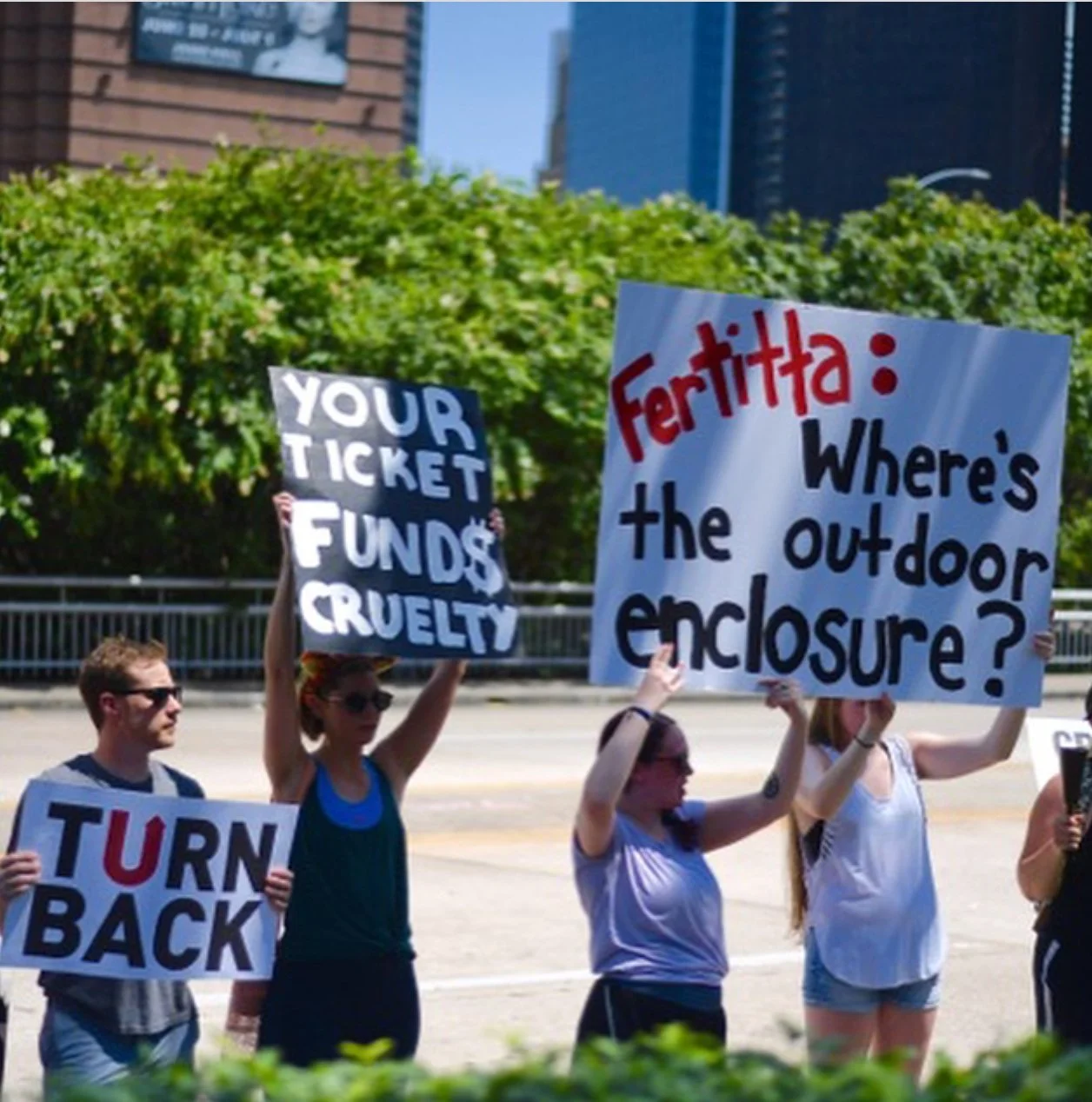
Demonstrators line the sidewalk outside the Downtown Aquarium, February 11, 2019. The protest drew several dozen people; Landry's Inc. declined to meet with organizers. Photo: Jim Towers / Houston Heights Independent.
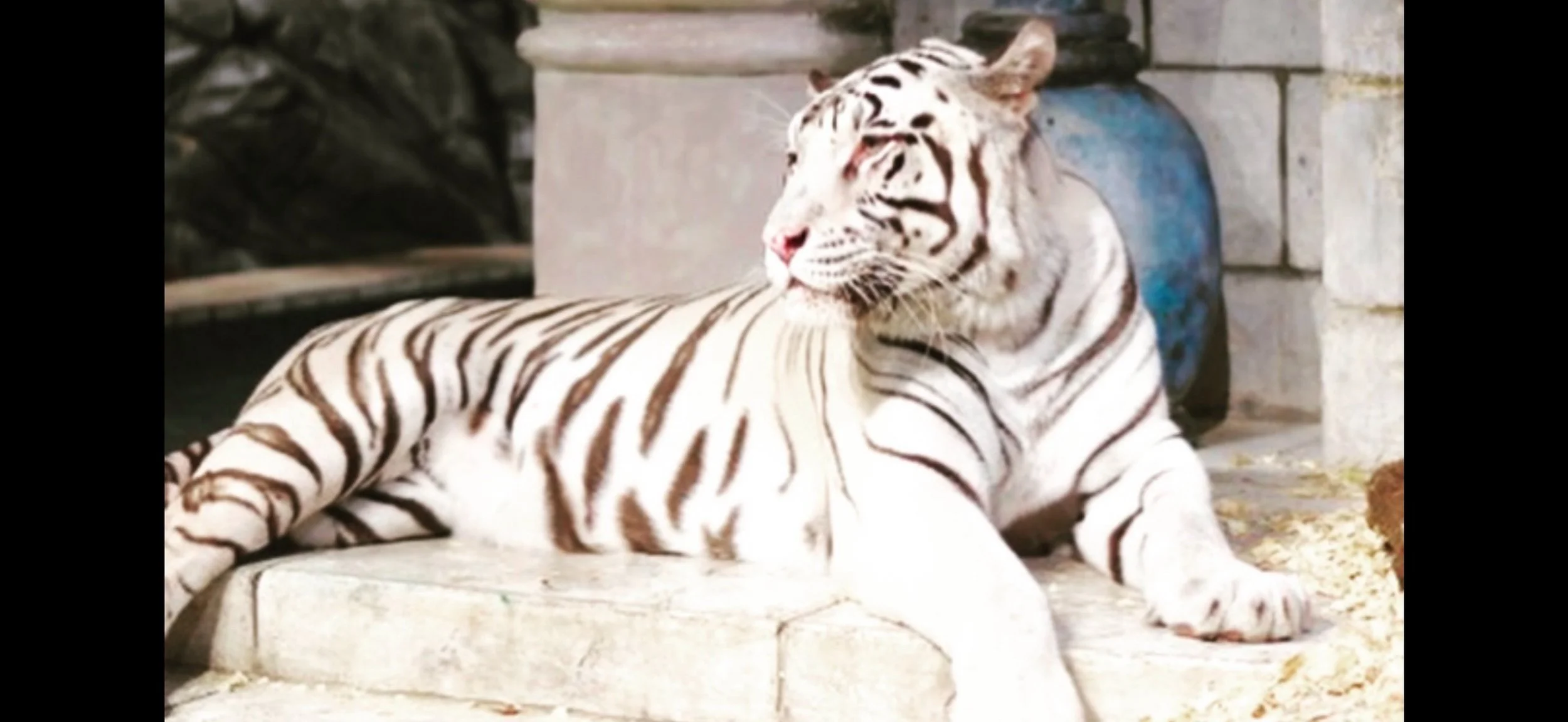
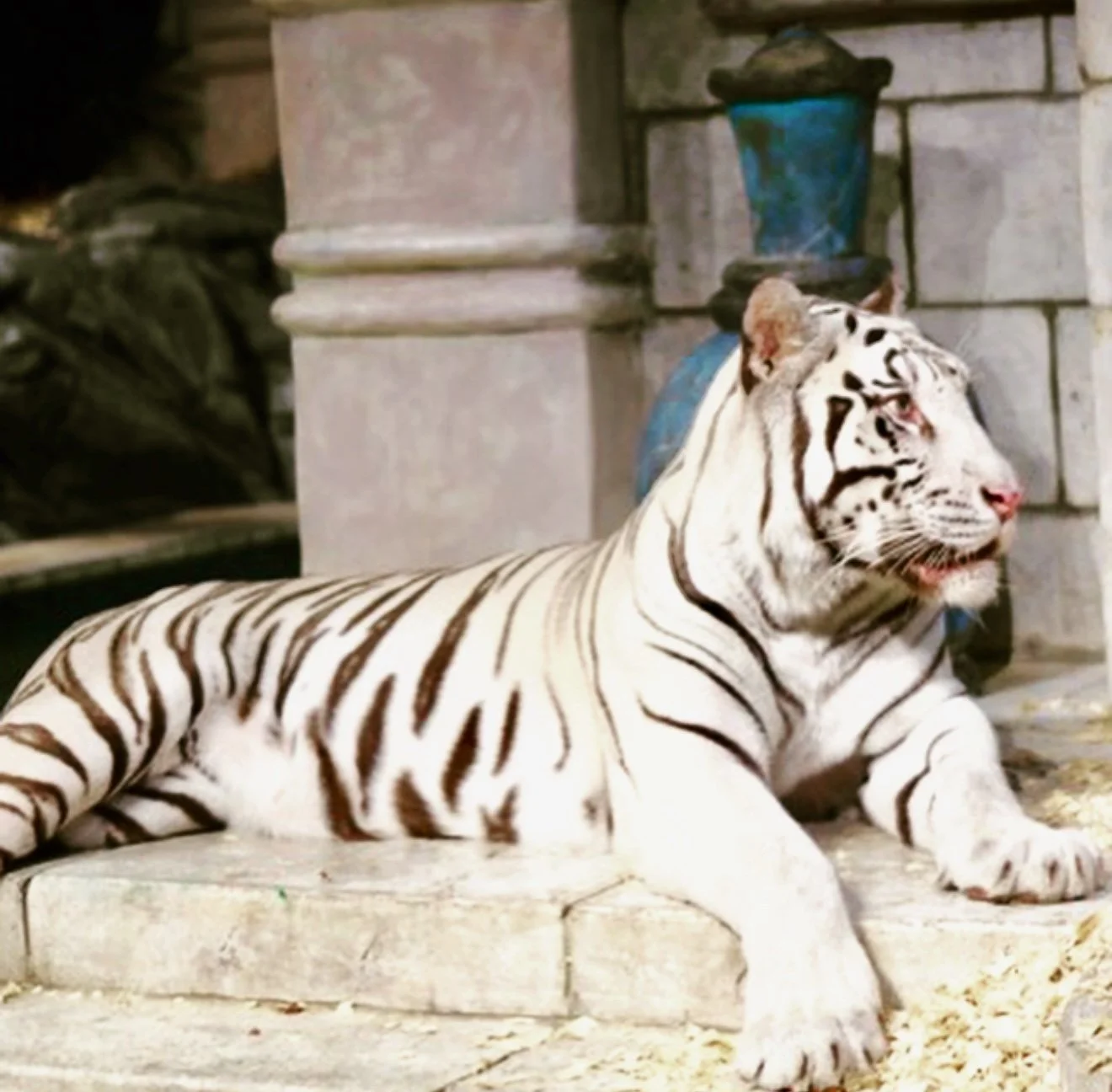
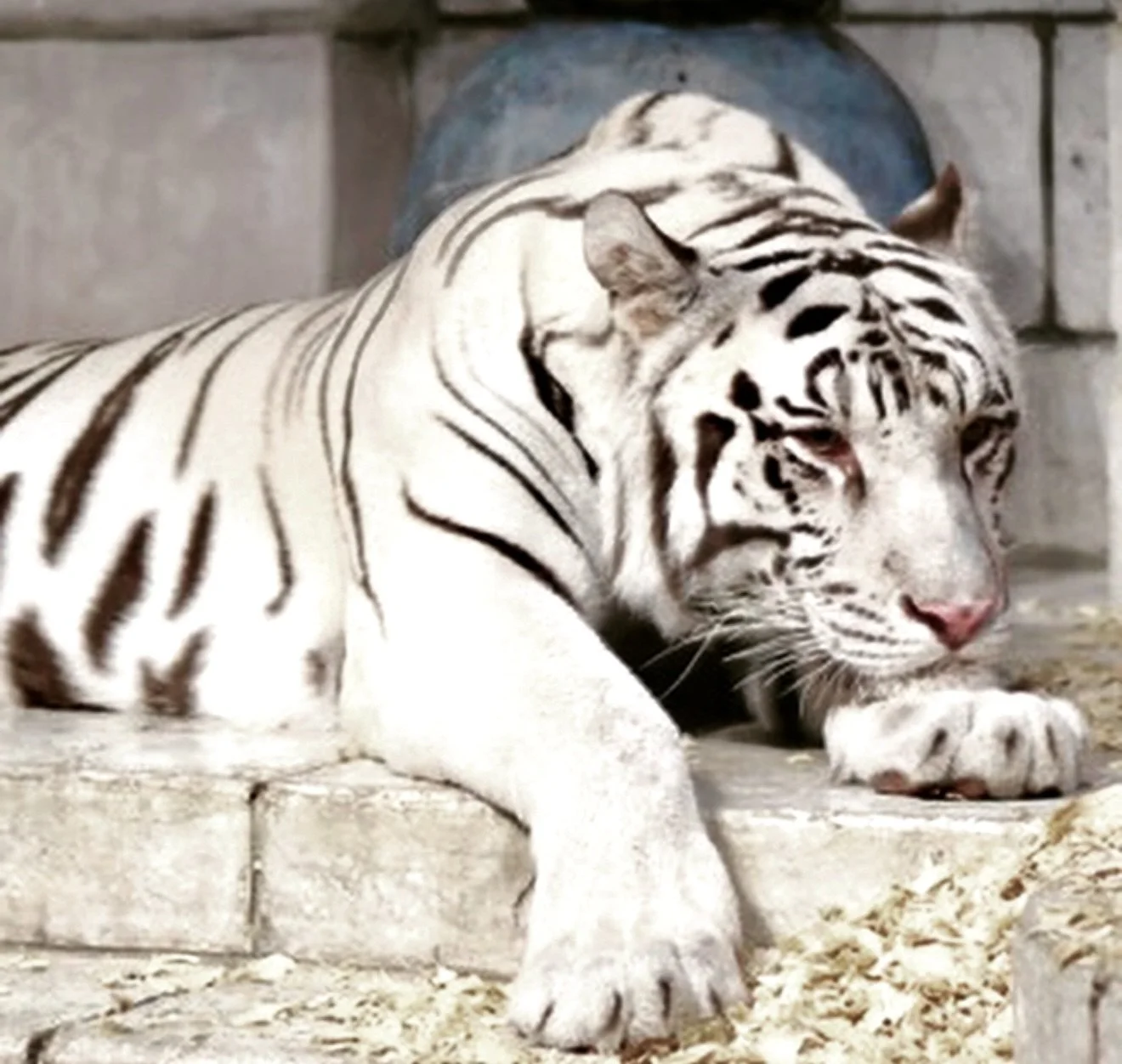
One of the Downtown Aquarium's four white Bengal tigers in the public-facing Maharaja's Temple exhibit, photographed February 11, 2019 — the same day as the protest outside. Behind this enclosure, a KHOU investigation had documented holding cages measuring approximately ten feet by ten feet. Photo: Jim Towers / Houston Heights Independent.
THE LAWSUIT
In 2016, the Animal Legal Defense Fund served the Downtown Aquarium with notice of intent to sue under the Endangered Species Act. The notice cited deplorable living conditions for the tigers and the facility's failure to provide adequate access to sunlight, fresh air, or natural surfaces.
The following year, the ALDF filed suit.
The facility is owned by Landry's, Inc., the Houston-based restaurant and hospitality conglomerate controlled by billionaire Tilman Fertitta. Landry's denied wrongdoing. The company maintained its tigers were well cared for.
The KHOU investigation told a different story. So did the protesters
A protester addresses demonstrators outside the Downtown Aquarium, February 11, 2019. Photo: Jim Towers / Houston Heights Independent.
FEBRUARY 11, 2019
On a Tuesday morning in February 2019, several dozen protesters gathered on the sidewalk outside the Downtown Aquarium on Bagby Street. They carried signs naming Fertitta directly. One read: Fertitta: Where's the Outdoor Enclosure? Another cited the Endangered Species Act by name. A third was in Spanish.
This reporter was present. I photographed the protest from the street, then entered the facility and photographed the tigers on the same day.
Inside, the Maharaja's Temple enclosure presented the animals in a vaulted stone room lit with artificial light, decorated with carved columns and Hindi script. It was designed to look ancient. It was designed to look like a habitat.
What the cameras behind the exhibit wall had already found — what KHOU had documented a year earlier — was not visible from the public side. The holding cages were not on the tour.
THE ENCLOSURE THAT CAME TOO LATE
In December 2019 — ten months after the protest, sixteen months after the KHOU investigation aired — Landry's opened a new outdoor tiger habitat at the Downtown Aquarium. The facility reported a cost of four million dollars. The new enclosure offered grass, a pool, and direct sunlight.
Nero, Marina, Coral, and Reef were moved in.
They had waited thirteen years for a patch of sky. By then, they were old animals.
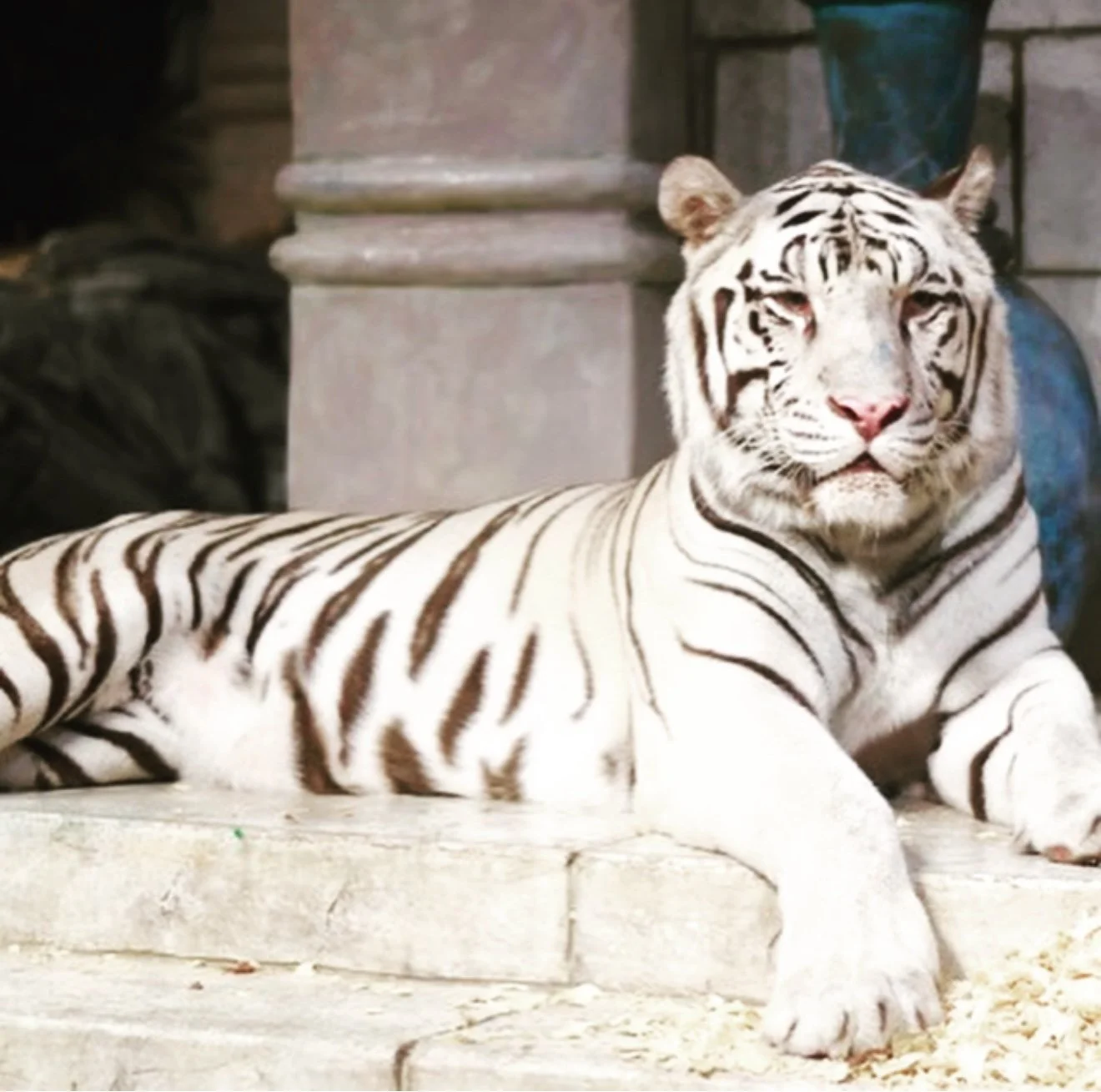
A white Bengal tiger inside the Downtown Aquarium's Maharaja's Temple exhibit, February 11, 2019. The four tigers — Nero, Marina, Coral, and Reef — had been housed at the facility since 2006. An outdoor enclosure would not open for another ten months. Photo: Jim Towers / Houston Heights Independent.
THE DEATHS
Coral died first, in 2021, of cancer. Nero and Reef both died in 2024 — Reef on December 17.
Marina outlasted the others. She was the last of the four animals who had spent the majority of their lives in the facility's back rooms, cycling through a concrete enclosure on a rotation schedule, twenty hours a day in a ten-by-ten cage.
She died in August 2025. She was twenty-one years old — the oldest tiger of any subspecies living in an AZA-accredited facility at the time of her death. The Downtown Aquarium currently houses three tigers: Apollo, a Bengal tiger born in December 2020, and two Sumatran tiger sisters, Zara and Kirana, born in October 2023. The exhibit is open daily. Tickets are available at the door.
The Animal Legal Defense Fund filed its suit because the law said the conditions were illegal. The protesters marched because they believed the conditions were wrong. KHOU pointed a camera at what was behind the wall.
None of it came in time to matter to Coral, Nero, Reef, and Marina.
They were all dead by 2025.
Two of the Downtown Aquarium's white Bengal tigers in the Maharaja's Temple exhibit, February 11, 2019. Federal court records later confirmed the animals spent up to twenty hours per day in individual concrete holding cages behind this display area. Photo: Jim Towers / Houston Heights Independent.

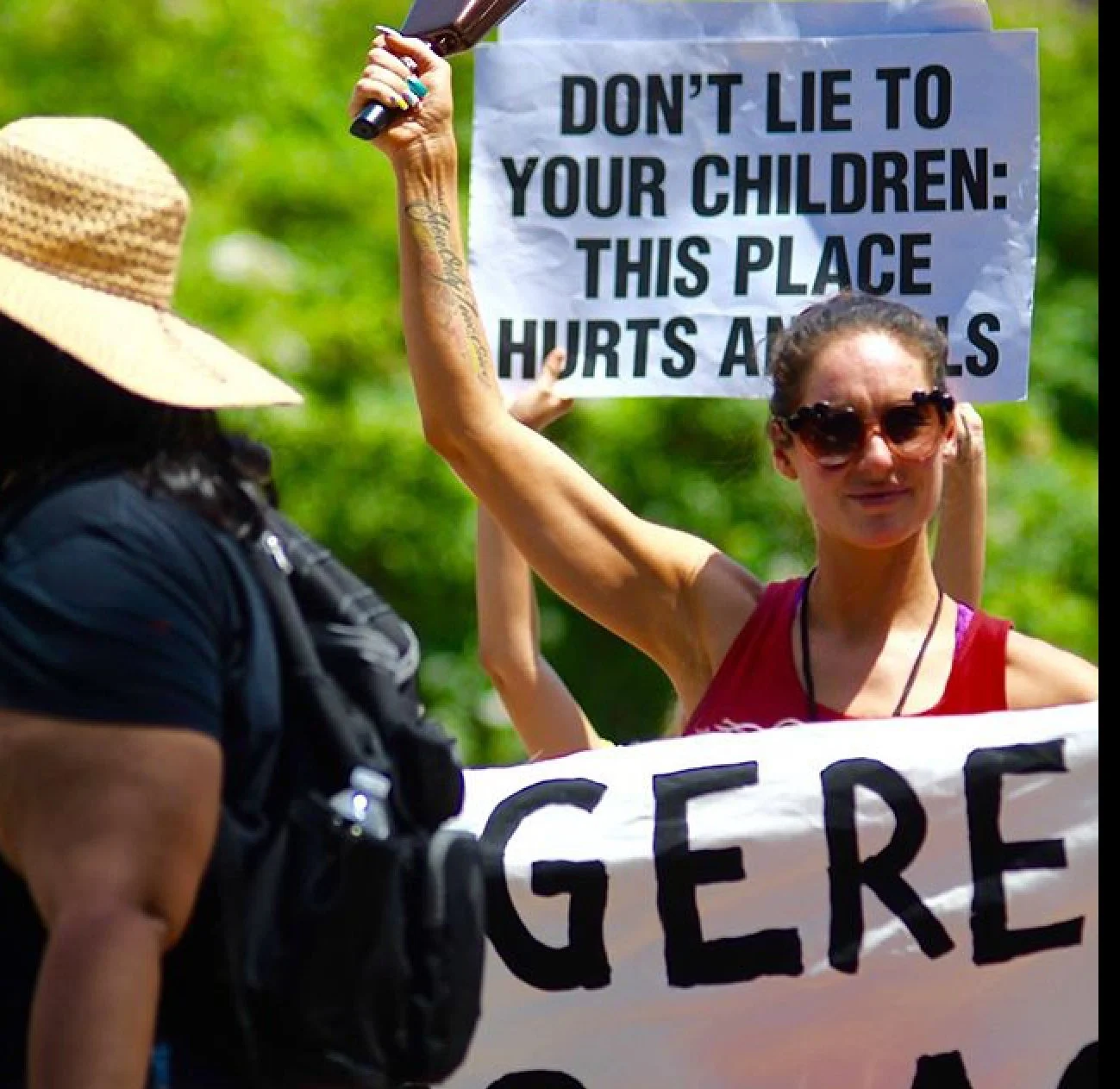
A Sea Shepherd Conservation Society supporter at the February 11, 2019 protest outside the Downtown Aquarium. Demonstrators cited the Animal Legal Defense Fund's Federal Endangered Species Act lawsuit, filed in 2017. Photo: Jim Towers / Houston Heights Independent.
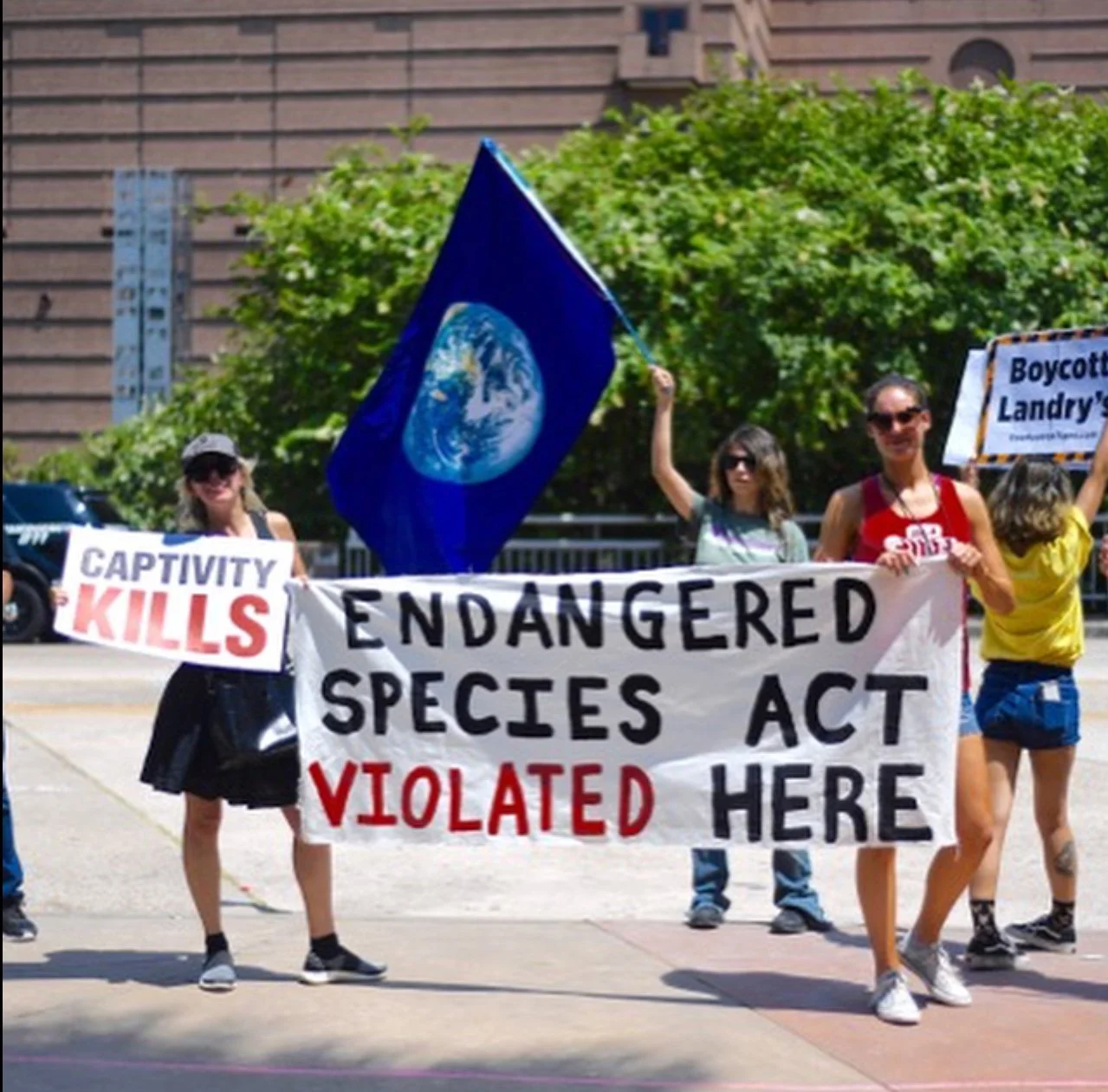
Protesters outside the Downtown Aquarium on Bagby Street, February 11, 2019. The demonstration drew animal rights advocates, legal observers, and Houston residents. Photo: Jim Towers / Houston Heights Independent.
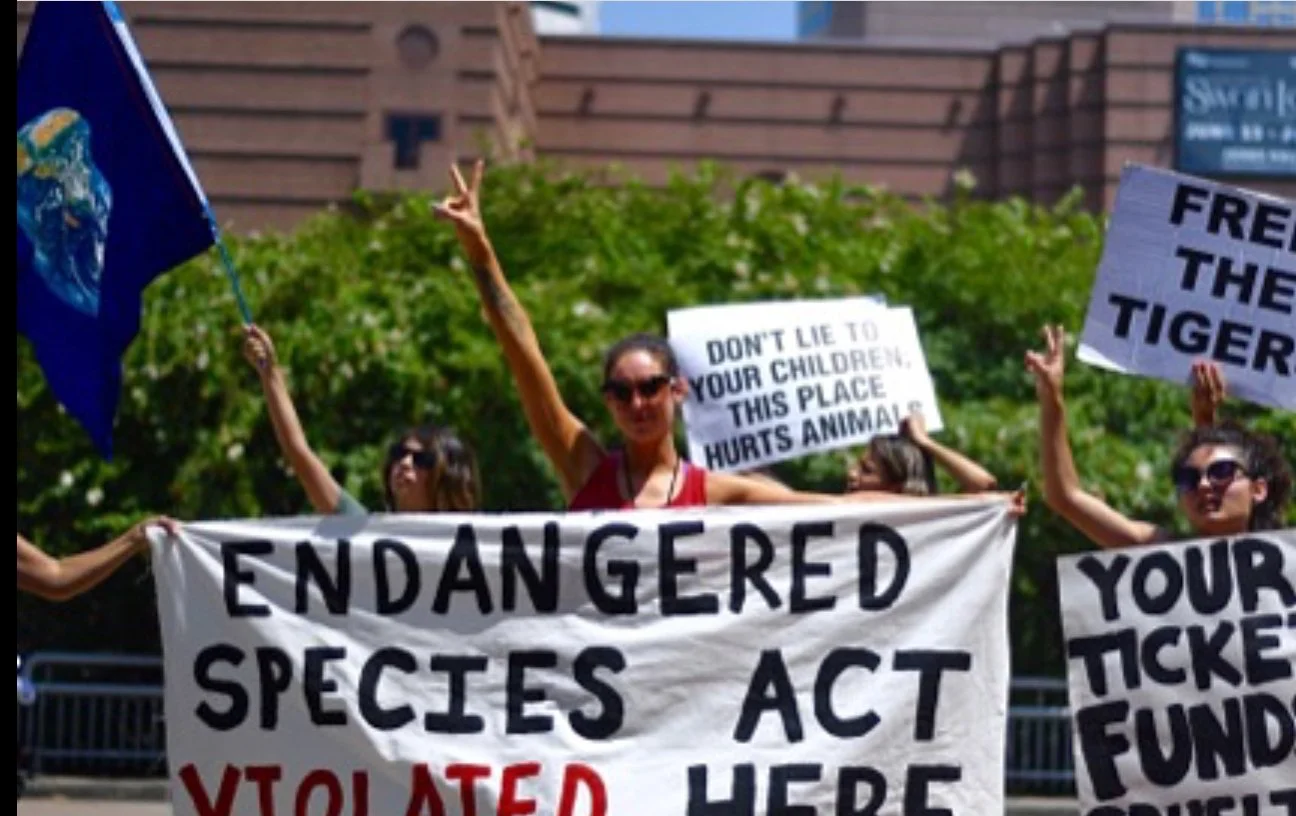
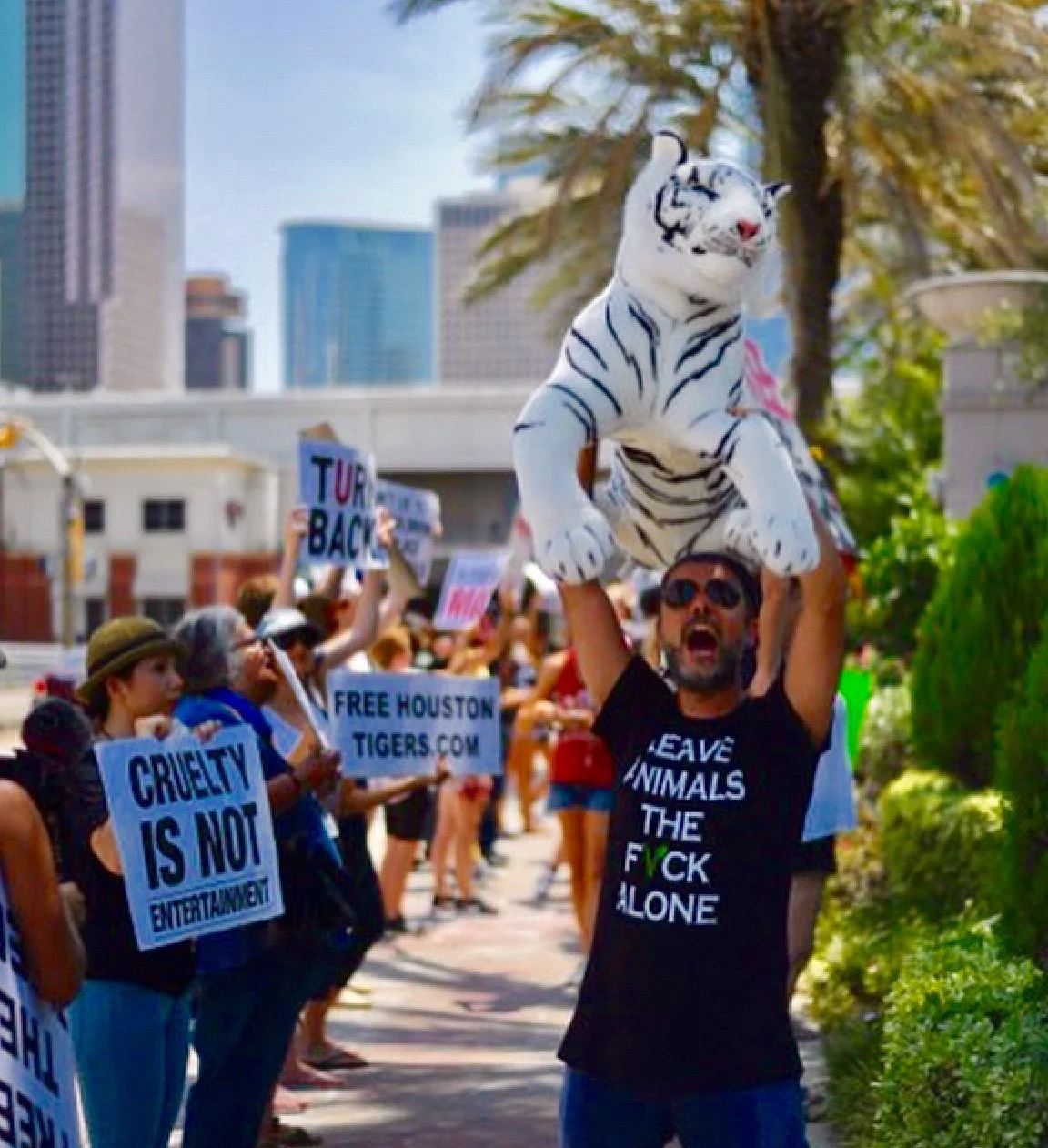
Protesters protesting passionately about their cause.
EDITOR'S NOTE
A personal dispatch written by this reporter on the day of the February 11, 2019 protest — based solely on what was visible from the public side of the facility — is published separately in our Features section. That piece reflects what one reporter saw on the ground that day. It does not reflect the conditions documented by KHOU in 2018 or the findings of the Animal Legal Defense Fund lawsuit, which this reporter learned of fully only after subsequent investigation. The two pieces should be read together.
Texas Public Information Act requests for USDA Animal Welfare Act inspection records pertaining to the Downtown Aquarium tiger exhibit are pending. This report will be updated upon receipt.
— The Editors, Houston Heights Independent
ATTENTION ASSIGNMENT DESKS & MEDIA PRODUCERS:
All text, video, and original photography covering this story are the exclusive property of the Houston Heights Independent. Broadcast, digital replication, or social scraping of these assets without an active license is strictly prohibited. To license clean, high-density, unwatermarked frames for TV broadcast or regional news print, contact our newsroom immediately, at houstonheightsindependent@gmail.com. or 210-288-3034. Standard licensing fees apply.
© 2026 Houston Heights Independent. All rights reserved. Registered under Jim Torres, AA. BS.MJA.JD. No part of this publication, including text, layout, and original photography, may be reproduced, distributed, broadcast, or transmitted in any form or by any means without prior written permission from the Editor-in-Chief. For media licensing inquiries or syndication requests, contact at houstonheightsindependent@gmail.com. or 210-288-3034. Standard licensing fees apply.
Houston Heights Independent covered this story on the ground. HHI is a civic journalism publication operating on the Murrow standard.
